TruSkin Vitamin C Serum vs CeraVe Vitamin C Serum: Which Is Better in 2026?
Two of the most affordable Vitamin C serums on Amazon, both similarly priced — but built on completely different philosophies. TruSkin Vitamin C budget bestseller leads with 148,000+ reviews and sheer popularity. CeraVe ceramide-enriched Vitamin C leads with dermatologist backing and a disclosed 10% L-ascorbic acid concentration. Which approach actually delivers better skin?
Quick Verdict: CeraVe wins on formula transparency and barrier support. TruSkin wins on proven real-world results at scale. Both are excellent budget Vitamin C serums — pick CeraVe if your skin is sensitive or reactive, TruSkin if you want the formula that 148,000 people have validated.
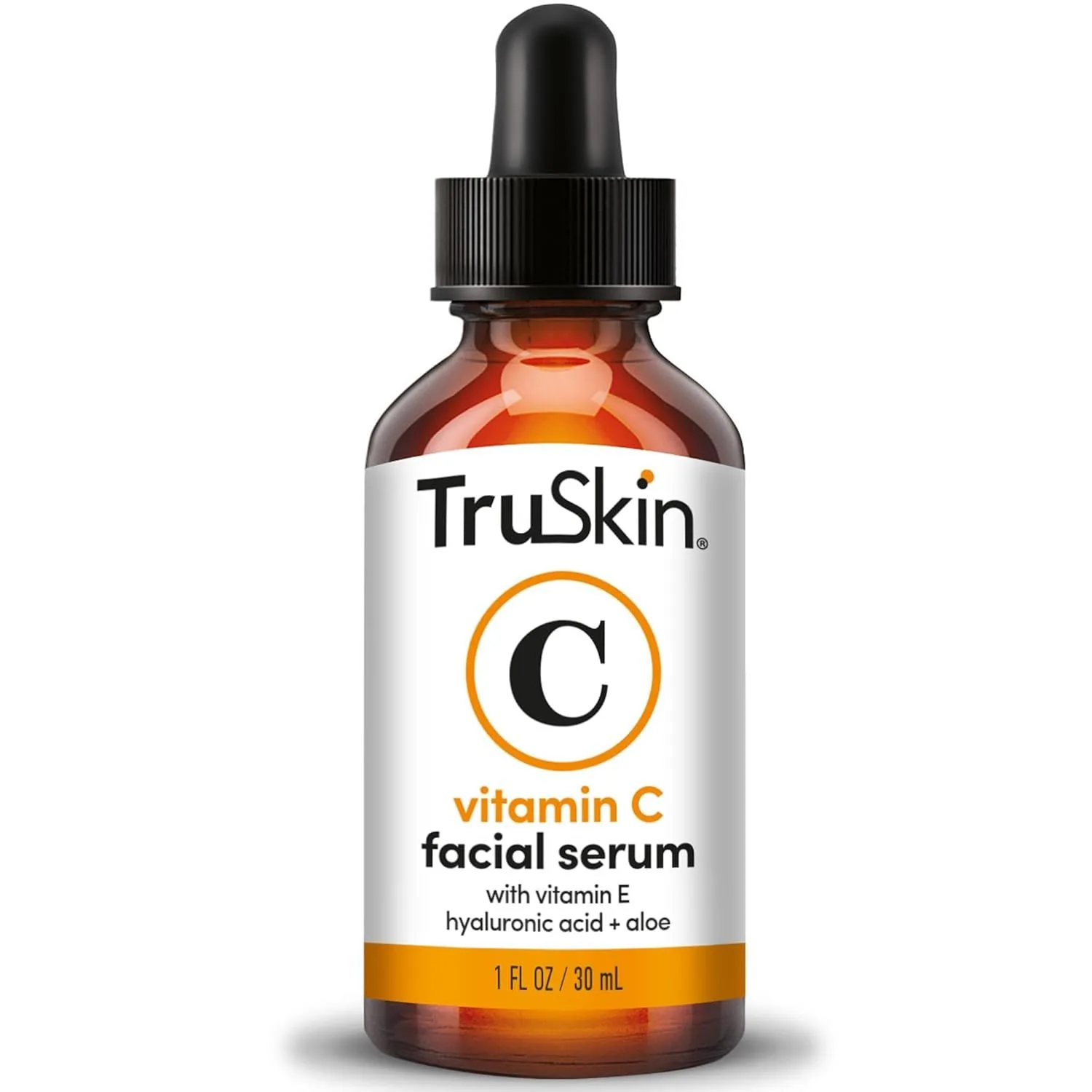
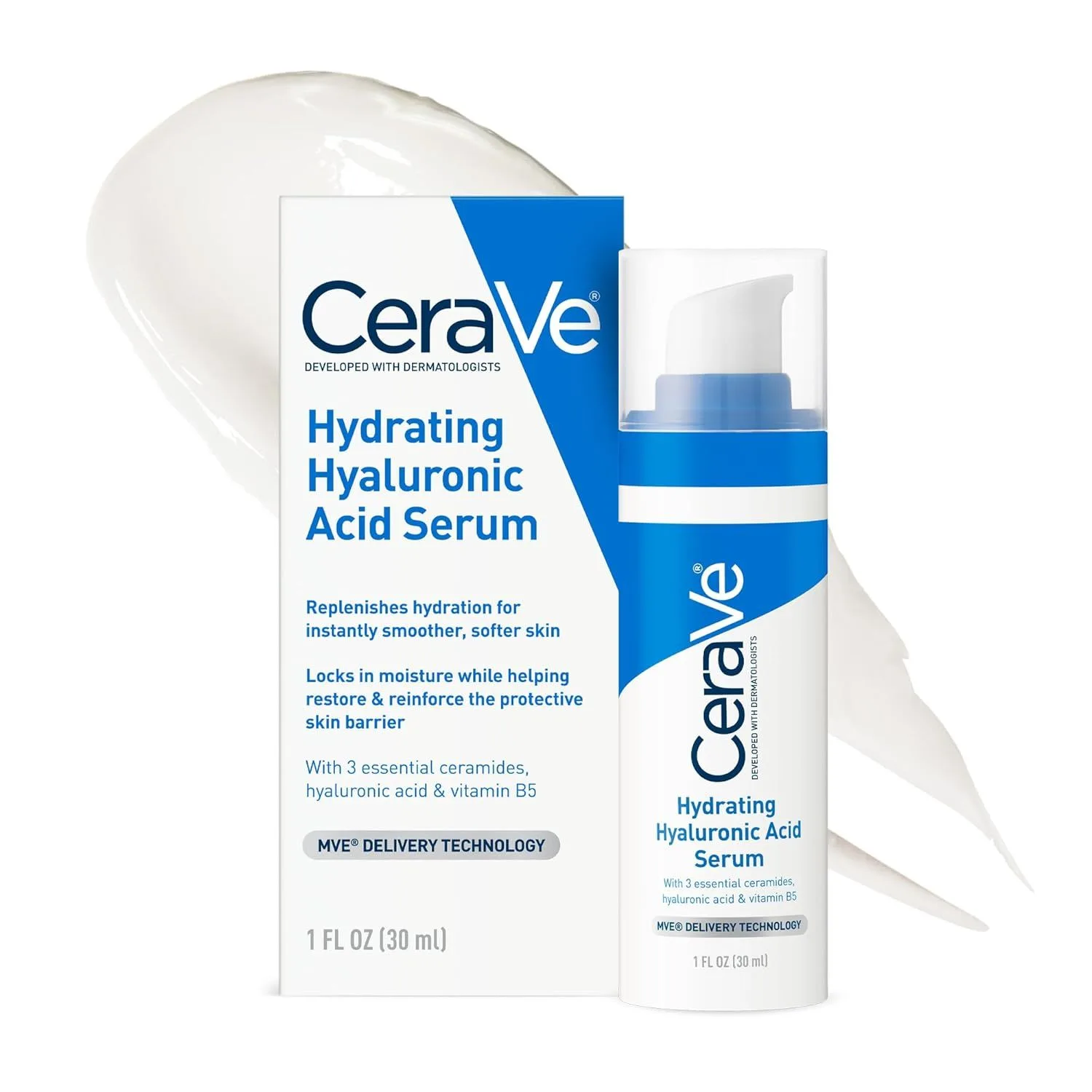
At a Glance
| Feature | TruSkin Vitamin C Serum | CeraVe Vitamin C Serum with Hyaluronic Acid |
|---|---|---|
| Price Range | Under $25 | Under $25 |
| Size | 30ml / 1 fl oz | 30ml / 1 fl oz |
| Best Skin Type | All skin types | Sensitive & all skin types |
| Key Ingredient | Vitamin C (L-Ascorbic Acid) | 10% L-Ascorbic Acid + Ceramides |
| Active Concentration | Not disclosed | 10% L-Ascorbic Acid |
| Texture | Lightweight liquid serum | Lightweight cream-serum |
| Fragrance | Fragrance-free | Fragrance-free |
| See Availability | See Availability |
Does Disclosing the Concentration Actually Matter?
CeraVe prints "10% L-Ascorbic Acid" right on the box. TruSkin does not disclose its Vitamin C concentration at all. That transparency gap matters if you care about knowing exactly what you are putting on your face. CeraVe's 10% sits in the clinically studied range (10-20%) where research confirms efficacy. TruSkin's undisclosed concentration leaves you guessing — it could be 5%, it could be 15%. The results suggest it is effective, but you are trusting anecdotal evidence over published data. We recommend starting here.
Concentration disclosure also affects how you build the rest of your routine. Knowing CeraVe delivers 10% L-ascorbic acid lets you make informed layering decisions — you know not to pair it with a glycolic acid toner at high concentration on the same evening, because the combined acid load on skin is calculable. With TruSkin's undisclosed percentage, you cannot calculate the total active acid exposure your skin receives in a given session. This matters less for simple three-step routines. It matters more for anyone running a multi-active protocol with AHAs, BHAs, retinoids, and niacinamide — where knowing each product's concentration prevents irritation from stacking too many actives at once.
148,000 Reviews vs 24,000 — Does the Crowd Know Best?
TruSkin has six times more reviews than CeraVe on Amazon, with a comparable 4.3-star average. That volume of feedback provides something no clinical study can: real-world diversity. Users across every skin type, climate, and age group have weighed in. CeraVe's 24,000 reviews are still substantial, but the collective data set is smaller. When a product works for 148,000 people, the consistency signal is hard to argue with.
The review composition tells a deeper story. TruSkin's negative reviews cluster around two recurring complaints: oxidation speed and the oily finish on combination skin. CeraVe's negative reviews cluster around texture grittiness and the packaging pump occasionally clogging after months of use. Neither product has a meaningful pattern of allergic reactions or breakout complaints — a strong safety signal at this volume. The one-star reviews also reveal what each formula is NOT: TruSkin is not a heavy-duty dark spot corrector (users expecting prescription-level fading are disappointed), and CeraVe is not a glow-producing brightener in the first two weeks (users expecting instant radiance switch to flashier formulas too soon). Reading the frustrated reviews often teaches more than reading the positive ones.
What Happens When Your Barrier Needs Help?
This is where CeraVe separates itself. Three essential ceramides — the same lipids that naturally exist in healthy skin barriers — work alongside the Vitamin C to repair and strengthen. If your skin gets irritated by active ingredients, the ceramide buffer makes a real difference. TruSkin relies on jojoba oil and Vitamin E for supporting ingredients. Both are fine emollients, but they do not actively rebuild the barrier the way ceramides do. For skin that tends to react, CeraVe's formula is the safer bet.
Oxidation Race: Which Goes Orange First?
TruSkin's dropper bottle exposes the formula to air with every use. Most users report noticeable oxidation (the serum turning orange) within 2-3 months. CeraVe's airless pump limits oxygen exposure, extending usable shelf life. Neither formula includes ferulic acid, which would slow oxidation further — but the packaging difference alone gives CeraVe a measurable stability advantage. If you use Vitamin C daily and finish a bottle within 6-8 weeks, both are fine. If you are a slower user, CeraVe lasts longer.
The visual oxidation test is simple but unreliable as a precise potency indicator. A serum that has shifted from clear to pale gold still retains most of its active Vitamin C — the first traces of color change reflect a small percentage of total degradation. Once the color reaches medium amber, roughly 30-40% of the L-ascorbic acid has converted to dehydroascorbic acid, which has weaker antioxidant activity. By the time the serum turns dark orange or brown, the formula is functionally spent. TruSkin users who track this color progression typically see the useful window close around week 10-12 in a dropper bottle. CeraVe users rarely observe color change at all because the airless pump prevents the oxygen exposure that triggers the reaction in the first place.
Texture and Daily Wearability
TruSkin is a thin, watery serum that absorbs quickly into clean skin. The jojoba oil base gives it a slightly slippery finish that oily skin types sometimes find too much. CeraVe is a cream-serum hybrid — thicker on application but it dries down matte. The ascorbic acid particles create a brief grainy texture that smooths out within 30 seconds. For more Vitamin C options across all price tiers, see our best vitamin C serums roundup. If you prefer a lightweight liquid, TruSkin feels more elegant. If you prefer a serum that dries completely, CeraVe finishes cleaner.
Makeup wearers face a specific texture calculation. TruSkin's residual oil film can cause foundation to slide on combination and oily skin zones — the T-zone develops a slip that liquid foundation reads as excess moisture, leading to patchiness by midday. A mattifying primer between TruSkin and foundation solves this, but it adds a step and a product. CeraVe's matte finish acts as its own primer in many cases — foundation adheres directly to the dry surface without an intermediary layer. For anyone whose morning routine already feels long enough, CeraVe's self-priming finish removes one decision from the equation.
Eight Weeks Side by Side: How Results Diverge Over Time
Week one is nearly identical for both serums. The skin adjusts to L-ascorbic acid, and neither produces visible brightening yet. TruSkin's thinner texture makes the morning application slightly faster — three drops, spread, done in ten seconds. CeraVe's cream-serum consistency requires twenty seconds of patting to absorb fully, but the matte dry-down means sunscreen layers immediately without waiting.
By week three, the first visible difference emerges. TruSkin's users typically notice a subtle glow — an overall brightness that colleagues might comment on without identifying why. CeraVe's brightening appears more targeted: specific dark spots and post-inflammatory hyperpigmentation marks begin fading before the overall tone shifts. The ceramide barrier repair running alongside the Vitamin C means CeraVe addresses the inflammation that causes dark spots while simultaneously brightening them — a two-pronged approach that TruSkin's simpler formula does not replicate.
At the eight-week mark, both serums have delivered on their brightening promise, but the skin's overall condition differs. TruSkin users have brighter, more even-toned skin with the same underlying sensitivity and barrier condition they started with. CeraVe users have brighter skin AND a measurably stronger barrier — less reactive to weather changes, less prone to the tightness and flaking that often accompanies active ingredient use. The ceramide component quietly transformed the skin's resilience while the Vitamin C handled the visible brightening. For someone who plans to add retinol after establishing Vitamin C tolerance, CeraVe's barrier prep makes the retinol transition smoother and less irritating.
The twelve-week mark is where the divergence becomes most telling. TruSkin's bottle, if not finished by now, has likely shifted color — the oxidation process has reduced the effective Vitamin C concentration in whatever remains. Users continuing with the same bottle are applying a weaker formula than they started with, and the brightening benefits plateau or slightly regress. CeraVe users at week twelve are still applying full-strength serum thanks to the airless pump, and the cumulative ceramide repair has visibly reduced baseline redness and improved the skin's texture independent of the brightening effect. The barrier improvement persists even if you eventually switch products — the ceramides have rebuilt structural lipid layers that remain intact for weeks after discontinuing use. TruSkin offers no equivalent lasting structural benefit once the bottle runs out.
Building a Complete Morning Routine Around Each Serum
TruSkin fits a streamlined four-step morning routine. Gentle cleanser (cream or milk-based — avoid foaming cleansers with sulfates that strip the skin before Vitamin C application). TruSkin on slightly damp skin — three to four drops spread across the face and neck. Wait sixty seconds for the hyaluronic acid to bind moisture and the L-ascorbic acid to begin absorbing. Lightweight moisturizer (gel-cream for oily skin, lotion for normal). SPF 50 as the final step. The jojoba oil in TruSkin provides a light emollient layer that reduces the amount of moisturizer needed — oily skin types can sometimes skip the separate moisturizer entirely if their SPF provides enough hydration.
CeraVe Vitamin C integrates into a routine that prioritizes barrier health at every step. Gentle ceramide cleanser (CeraVe Hydrating Cleanser is the natural pairing — same ceramide philosophy from first to last step). CeraVe Vitamin C applied to clean skin — one to two pumps from the airless packaging, patted across the face until the initial graininess smooths. The matte finish means no waiting time before moisturizer. CeraVe Moisturizing Cream or Lotion layered on top — the triple-ceramide-on-triple-ceramide pairing creates the strongest barrier reinforcement available at any price point in drugstore skincare. SPF 50 finishes the routine. The entire five-step protocol costs less than a single premium serum, and every product speaks the same ceramide language.
How Skin Type Changes the Calculation
Oily skin faces a genuine dilemma with TruSkin. The jojoba oil base, while technically non-comedogenic, adds a visible sheen to already-oily complexions by midday. The workaround — three drops instead of five, a two-minute wait before moisturizer, a mattifying SPF on top — adds complexity to what should be a simple routine. CeraVe's cream-serum dries matte without intervention. For oily skin that wants Vitamin C without managing shine, CeraVe removes the friction. For oily skin that prefers the lightest possible texture and is willing to blot at noon, TruSkin's watery consistency actually feels less heavy despite the oil-based finish.
Dry skin benefits more from TruSkin than the ingredient list suggests. The jojoba oil provides light occlusion that helps trap the hyaluronic acid's moisture, creating a mini hydration sandwich effect that dry skin welcomes. In winter, when indoor heating drops humidity below thirty percent, TruSkin's oil layer prevents the HA from pulling moisture upward and losing it to dry air — a problem that water-based HA serums without an occlusive component face. CeraVe's ceramides offer superior long-term barrier repair for dry skin, but the matte finish means adding a richer moisturizer is mandatory, not optional. Both work for dry skin. TruSkin provides more immediate hydration comfort. CeraVe provides more lasting barrier rehabilitation.
Sensitive skin — including skin recovering from over-exfoliation, post-procedure redness, or eczema-adjacent conditions — should default to CeraVe without hesitation. The ceramide buffer actively calms while the Vitamin C works. In clinical settings, dermatologists recommend CeraVe's ceramide formulations as the first skincare reintroduction after chemical peels and laser procedures precisely because the barrier repair happens concurrently with any active ingredient delivery. TruSkin lacks this safety net. The formula is gentle enough for most people, but "most people" does not include those with actively compromised barriers who need their skincare to repair while it brightens.
Acne-prone skin adds another variable. TruSkin's jojoba oil is technically non-comedogenic, but the oil film can trap bacteria and sebum on skin that already overproduces both. Users with active acne report mixed results — some find the Vitamin E and jojoba soothing, others notice increased congestion in the chin and jawline areas where oil accumulates. CeraVe's oil-free, matte-finish formula avoids this risk entirely. The ceramides strengthen the barrier without adding any occlusive film that could trap breakout-causing bacteria. For acne-prone skin that wants antioxidant protection without risking new breakouts, CeraVe is the lower-risk option. For acne-prone skin in a dry climate where the additional moisture from jojoba is welcome, TruSkin can work — but patch testing on the jawline for two weeks before full-face application is a practical precaution that saves you from discovering a breakout pattern the hard way.
Age also shifts the calculation. In your twenties, when the primary goal is preventive antioxidant protection against photoaging, TruSkin's lighter formula and faster absorption suit a generation that wants efficacy without a clinical routine feel. The jojoba oil provides just enough moisture for younger skin that does not yet need heavy barrier repair.
In your forties and fifties, the barrier naturally thins and ceramide production declines. CeraVe's triple-ceramide formula addresses a structural deficit that TruSkin's botanicals cannot. The Vitamin C brightens accumulated sun damage while the ceramides rebuild what time has depleted — a dual action that becomes more valuable with each passing decade of cumulative UV exposure.
Hormonal fluctuations add another variable that neither brand addresses directly. During pregnancy, perimenopause, or hormonal acne cycles, the skin's reactivity increases unpredictably — products tolerated for months can suddenly cause stinging, redness, or breakouts. CeraVe's ceramide buffer provides more insulation against these hormonal sensitivity spikes. The barrier support acts as a shock absorber between the active Vitamin C and temporarily reactive skin. TruSkin's simpler formula offers no such buffer — if hormonal changes make your skin reactive to L-ascorbic acid, TruSkin delivers the irritation without mitigation. For anyone whose skin tolerance varies with their cycle, CeraVe's built-in barrier protection reduces the chance of needing to abandon your Vitamin C during reactive phases.
The Packaging Problem That Nobody Talks About
TruSkin's amber glass dropper bottle looks premium on a bathroom shelf. The glass protects from some light degradation, and the amber tint filters UV. But every time you unscrew the dropper, you expose the entire bottle's contents to air. Oxygen degrades L-ascorbic acid. Over sixty to ninety days of twice-daily opening, the cumulative air exposure turns the formula orange and reduces potency by an estimated thirty to forty percent before the bottle is empty. The last third of a TruSkin bottle is measurably less effective than the first third.
CeraVe's airless pump eliminates this degradation curve. The vacuum mechanism pushes product up without letting air in. The first pump and the last pump deliver the same concentration. No oxidation gradient. No watching the formula darken and wondering if it still works. For someone who applies once daily and takes three months to finish a bottle, the airless pump means CeraVe is still full-strength when TruSkin would be noticeably degraded. For someone who applies twice daily and finishes in six weeks, the packaging difference matters less — both formulas remain effective within that compressed timeline. Your usage speed determines whether the packaging gap is a dealbreaker or irrelevant.
The storage implications extend beyond oxidation. TruSkin's dropper bottle benefits from refrigerator storage — the cold slows oxidation and can stretch the effective window from eight weeks to twelve. The cool glass feels pleasant on application, and the refrigerator door is the perfect spot. CeraVe's airless pump does not need refrigeration — the sealed system protects the formula at room temperature. This distinction matters for anyone who travels frequently or keeps products at multiple locations. CeraVe travels in a toiletry bag without degradation anxiety. TruSkin performs best when it lives in one temperature-controlled spot and gets used consistently before oxidation catches up to exposure. For a primary bathroom serum that never leaves the house, both work. For a serum that needs to survive a gym bag, an office drawer, or a carry-on, CeraVe's engineering handles the real world more gracefully.
Who Should Get Which?
Get TruSkin Vitamin C Serum If...
- You want the most field-tested budget Vitamin C formula on the market
- Your skin is not particularly sensitive and does not need barrier support
- You prefer a thin, lightweight serum texture over a cream-serum
- You use up products quickly (within 2 months of opening)
Get CeraVe Vitamin C Serum If...
- You have sensitive or reactive skin that benefits from ceramide barrier repair
- You want a disclosed 10% L-ascorbic acid concentration backed by clinical data
- Shelf stability matters — you take longer to finish a bottle
- You prefer a cream-serum that dries down matte for layering under SPF
Frequently Asked Questions
Which serum brightens skin faster — TruSkin or CeraVe?
Both show visible brightening within 3-4 weeks. TruSkin tends to produce slightly faster initial results due to its thinner consistency and faster absorption, but CeraVe's 10% disclosed concentration builds more consistent results over an 8-week period.
Can I use either serum if I have sensitive skin?
CeraVe is the better pick for sensitive skin. The three ceramides actively repair the skin barrier while the Vitamin C works, reducing the chance of irritation. TruSkin's jojoba oil base is gentle, but it lacks the dedicated barrier-support system.
Do both serums oxidize at the same rate?
TruSkin tends to oxidize faster — often turning orange within 2-3 months. CeraVe's airless pump packaging limits air exposure, giving it a longer shelf life once opened. Store both away from direct sunlight regardless.
Which one layers better under sunscreen?
CeraVe's cream-serum texture layers more predictably under most sunscreens. TruSkin's jojoba oil base can occasionally feel tacky under water-based SPFs. Let either fully absorb for 60 seconds before applying sun protection.
Are TruSkin and CeraVe Vitamin C serums fragrance-free?
Both are fragrance-free. TruSkin has a faint botanical scent from its plant oils that disappears within seconds. CeraVe has a mild clinical scent typical of its ceramide-based formulations.
Watch: Dr. Arsalan Aspires's take on the truskin vitamin c serum vs cerave vitamin c serum

Final Verdict
Both serums punch well above their weight. CeraVe edges ahead on formula sophistication — the ceramide trio and disclosed 10% concentration reflect real pharmaceutical thinking backed by decades of dermatological research. TruSkin wins on sheer volume of social proof and a lighter application feel that many users prefer as their daily-wear texture. At this price, neither is a wrong choice — both sit comfortably in the budget tier where experimentation costs almost nothing. If you are buying your first Vitamin C serum and want the safest introduction for your skin, CeraVe is the smarter starting point. If you already know your skin handles Vitamin C well and want the formula that 148,000 people have validated across every skin type and climate, TruSkin delivers consistent brightening results. For a full budget strategy, read our luxury skincare on a budget guide.
Track Both Products
We'll email you if either price drops or availability changes.
Only when something changes. Unsubscribe anytime.