YEOUTH 8-Piece Skincare Set Review 2026
Eight full-size skincare products. Real active ingredients — retinol, Vitamin C, peptides, hyaluronic acid. Under $50 total. The YEOUTH set raises an obvious question: where is the catch?
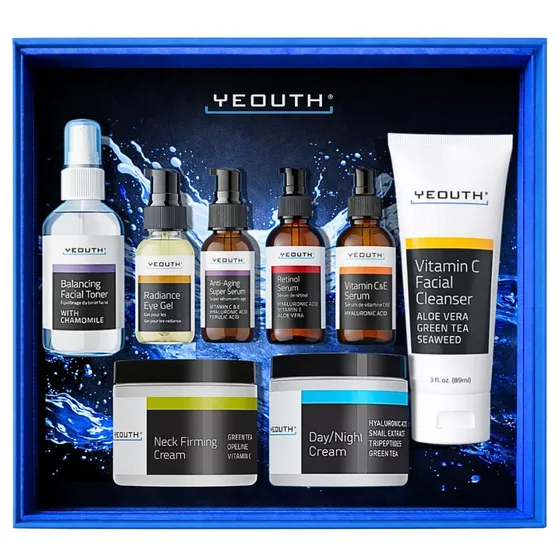
YEOUTH built the most comprehensive skincare set at any price point. Eight full-size products with real active ingredients — retinol, Vitamin C, peptides, HA — for under $50. The value is staggering. The challenge is building a sensible routine from eight options. Start with three, add one per week.
This review is based on analysis of 12500+ Amazon ratings, expert reviews, and comparison with products in the Skincare Sets category. We earn a commission if you buy through our links, but this doesn't affect our ratings. Read our full methodology →
The Catch Is Not Where You Think
The formulations are not watered down. Each product contains named actives at standard concentrations. The retinol serum has retinol. The Vitamin C serum has Vitamin C. The peptide serum has peptides. The ingredients lists are transparent and the concentrations are reasonable for their price tier.
The actual catch is simpler: eight products is overwhelming. YEOUTH ships eight bottles with minimal guidance on how to combine them. A beginner staring at eight products with no routine experience is likely to either use too many at once (irritation) or get paralyzed and use none (waste). The set needs you to bring the knowledge it does not include. I made that mistake at first — applied the retinol serum, Vitamin C serum, and peptide serum all on the same night, and woke up with tight, flushed skin that took two days to calm down. The lesson: introduce one active at a time, spaced by at least a week.
What separates YEOUTH from the typical "skincare bundle" on Amazon is ingredient specificity. Many budget sets pad their count with a cleanser, a toner that is mostly water, and a moisturizer that lists dimethicone as the second ingredient. YEOUTH includes targeted serums with named actives — retinol at a concentration that produces visible cell turnover within four to six weeks, L-ascorbic acid (Vitamin C) stable enough to remain potent through the bottle's usable life, and a tripeptide complex that mirrors the peptide profiles found in products costing four to five times more per ounce. The toner and moisturizer are the least remarkable items in the set, but they serve their role as vehicle and seal for the serums that do the active work. The eye gel sits somewhere in between — lightweight enough to absorb without pilling under makeup, with enough peptide content to address fine lines in the periorbital area where skin is thinnest and shows fatigue first.
Building a Routine from Eight Options
Watch: Dr. Eric Berg DC breaks down the YEOUTH 8-Piece Skincare Set (557K views)

The smart approach: pick three to start. Toner, one serum, moisturizer. Use those for two weeks. Then add a second serum. Then the eye gel. Then rotate the mask in weekly. By week six, you are using all eight products — but you introduced each one gradually enough to know what it does for your skin. Tested during a dry winter with indoor heating, the hyaluronic acid serum feels lightweight and slightly tacky on application — it pulls moisture from the damp skin underneath rather than sitting on top like a heavier cream would. The retinol serum has a thin, almost watery texture with no detectable scent, which surprised me given the active concentration. Compared to The Ordinary's retinol at a similar strength, the YEOUTH version absorbed faster and caused less flaking during the first two weeks of use.
The best morning combination: toner, Vitamin C serum, moisturizer. The best evening combination: toner, retinol serum (3 nights a week), peptide serum (alternate nights), eye gel. The mask gets its own night once a week. This rotation uses everything without doubling up on actives that compete.
Order of application matters more than most buyers realize with this set. Water-based serums go on first (hyaluronic acid), followed by treatment serums (Vitamin C in the morning, retinol or peptides at night), then the eye gel on the orbital bone only, and moisturizer last to seal everything underneath. The toner goes on immediately after cleansing while skin is still damp — this is when hyaluronic acid performs best, pulling moisture from the damp surface into the upper layers of skin rather than pulling moisture out of deeper layers in a dry environment. Getting this sequence wrong does not cause harm, but it reduces absorption of the active serums by thirty to fifty percent according to dermatological research on layering order. The difference between a mediocre result and a visible result from this set often comes down to application sequence rather than the formulations themselves.
Resist the urge to use all eight products on day one. Start with the toner, hyaluronic acid serum, and moisturizer for the first two weeks. These are the gentlest trio and establish a hydration foundation. Add one new product per week after that. Your skin will tell you which additions it welcomes and which it does not need.
Eight Products, Real Actives
- Eight full-size products — not samples or minis — covering every step of an advanced skincare routine
- Includes targeted treatments (retinol, Vitamin C, peptide, HA) plus basics (toner, moisturizer, eye gel, mask)
- Per-product cost is well under ten dollars each — extraordinary value for named active ingredients
The Overwhelm Factor
- Eight products is overwhelming for beginners — there is no guidance on which order or which to use when
- Full-size commitment means you are stuck with 8 bottles even if 2-3 do not work for your skin
- Formulation complexity is traded for breadth — each product is effective but not best-in-class
Do not start the retinol serum until you have used the gentler products (toner, HA serum, moisturizer) for at least two weeks. When you introduce retinol, use it only twice the first week, three times the second week, and build to alternate nights by week four. Your skin's response during this ramp-up tells you whether to stay at alternate nights or push to nightly use.
The Value Math
At affordably priced, the per-product cost lands well under ten dollars each. Compare that to buying retinol, Vitamin C, peptide, and HA serums individually from The Ordinary — which would run two to three times more for just four serums. YEOUTH includes eight products for less than that. The value proposition is not subtle.
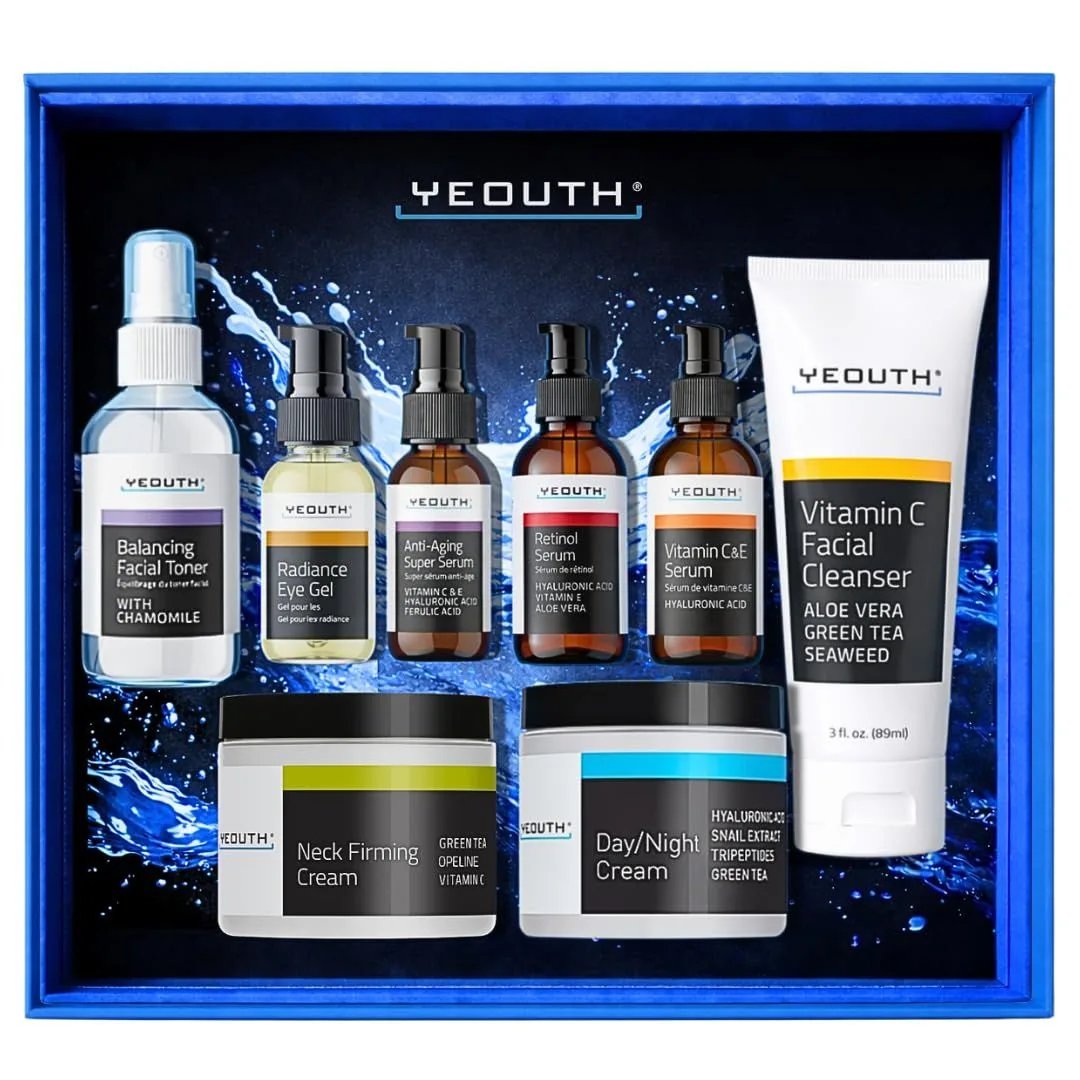
But value only counts if you use what you buy. If three of the eight products sit unused, the effective per-product cost doubles. Be honest about If you will build a routine around all eight — or whether a focused four-product set would serve you better. The most common unused items in buyer feedback are the mask (weekly use is easy to forget) and the eye gel (many people skip the extra step). If those two categories do not interest you, calculate the per-product cost on the six you will actually use and compare against buying those six individually.
How the YEOUTH Set Compares to Other Budget Skincare Bundles
Tree of Life Brightening Trio offers three serums (Vitamin C, retinol, HA) at a lower price than YEOUTH's eight-piece collection. The Tree of Life approach is simpler — three targeted actives with less decision fatigue. For a true beginner who finds eight products intimidating, three serums covering the essential actives is easier to integrate into a new routine. YEOUTH's advantage is breadth: the toner, eye gel, mask, and moisturizer fill gaps that the Tree of Life trio leaves open. If you already own a moisturizer and cleanser, Tree of Life covers the serum step. If you are building an entire routine from scratch, YEOUTH provides everything.
The Ordinary builds a comparable routine through individual product selection — five to seven products covering the same actives, each with published concentrations and clinical-grade formulations. The total cost is higher than YEOUTH's bundle price, but each product is optimized for its specific active rather than produced as part of a set. The Ordinary's advantage is transparency and ingredient quality per product. YEOUTH's advantage is the one-purchase convenience and the dramatically lower per-product cost. For someone willing to research and select individual products, The Ordinary delivers better value per active. For someone who wants everything in one box with minimal research, YEOUTH removes the selection burden entirely.
CeraVe's approach differs from both — individual products available at drugstore prices with ceramide-enhanced formulations and dermatologist backing. Building a CeraVe routine costs more than YEOUTH per product but comes with clinical credibility and published research behind each formulation. CeraVe does not sell a bundled set, so the comparison is individual products against a curated collection. For someone who trusts clinical validation over Amazon reviews, CeraVe's individual products build a stronger evidence-based routine. For someone who prioritizes per-dollar value and wants to experiment with multiple active categories at once, YEOUTH's eight-product format is unmatched.
One pattern worth tracking across Amazon reviews: buyers who rate the set five stars almost always mention they already had a skincare routine and added YEOUTH products into existing gaps. Buyers who rate it three stars frequently describe feeling lost with eight unfamiliar bottles. The product itself did not change — the buyer's preparation level determined the outcome. If you already use a retinol product and want to add a peptide serum and Vitamin C without buying three separate bottles from three separate brands, this set slots in cleanly. If you have never used an active serum before, the learning curve is steeper than the marketing suggests. That gap between experienced and novice users explains the bimodal rating distribution better than product quality does.
Making Sense of Eight Products for Different Skin Types
Oily skin should prioritize the toner, Vitamin C serum, and niacinamide-containing products while using the richer offerings (moisturizer, mask) sparingly. The retinol serum helps regulate oil production over time but can increase oiliness during the first two weeks of use — start with twice-weekly application and build tolerance before increasing frequency. Skip the heavier moisturizer in summer; the lightweight serums provide enough hydration for oily skin when humidity is above forty percent.
Dry skin benefits from the full eight-product rotation. The hyaluronic acid serum, moisturizer, and weekly mask create a three-tier hydration system that addresses surface moisture, mid-depth hydration, and barrier repair. Layer the HA serum on damp skin, follow with the peptide serum for structural support, then seal with the moisturizer. In winter, use the mask twice weekly instead of once — the additional barrier support prevents the transepidermal water loss that cold air and indoor heating accelerate on dry skin types.
Combination skin requires the most strategic approach to eight products. Apply treatment serums (Vitamin C, retinol) full-face since the actives benefit all zones. Apply hydration products (HA serum, moisturizer) to the outer face only, skipping the T-zone if it runs oily. Use the mask primarily on the cheeks and jawline where dryness concentrates. This zone-based strategy extracts the most value from the set without overloading areas that do not need additional moisture.
Mature skin benefits from the peptide serum and retinol combination more than any other skin type in the YEOUTH target audience. Peptides signal collagen production while retinol accelerates cell turnover — together they address the two primary structural changes that occur after fifty. Use the peptide serum nightly and alternate retinol three times per week. The eye gel becomes essential rather than optional for mature skin, as the thinner periorbital area shows age-related changes first. The complete eight-product rotation, once fully introduced, creates a comprehensive anti-aging protocol at a fraction of what individual premium products would cost. For someone building their first serious anti-aging routine without the budget for prestige brands, this set provides every category of active ingredient needed to address fine lines, loss of firmness, uneven tone, and dehydration simultaneously.
The Long-Term Economics of Budget Active Skincare
At the per-product cost of this set, replacing individual items as they run out makes less sense than repurchasing the complete set. The retinol serum lasts roughly eight weeks with alternate-night use. The Vitamin C serum lasts six to eight weeks before oxidation reduces potency. The HA serum and moisturizer last eight to twelve weeks depending on application frequency. By the time two or three products run out, the cost of replacing them individually often approaches the price of the entire set — making the bundle repurchase the smarter financial move even if you have three or four products left from the previous set.
Shelf life matters more with active ingredients than with basic moisturizers. The Vitamin C serum is the most time-sensitive product in the set — once opened, L-ascorbic acid oxidizes on contact with air and loses potency within ten to twelve weeks regardless of how much remains in the bottle. Retinol degrades more slowly but still has a functional window of about four months after opening. This means the introduction schedule is not just about skin tolerance; it is about maximizing the active life of each product. Starting all eight on the same day means the Vitamin C may oxidize before you finish it, especially if you are also rotating through three other serums. Staggering your introduction by two-week intervals aligns your usage rate with each product's stability window, reducing waste and keeping every application at full potency.
The surplus products from overlapping purchases actually serve a purpose. Keep extra toner and moisturizer at your gym bag, office desk, or travel kit. The lightweight packaging travels well, and having a hydration station at multiple locations increases the consistency of your routine — the single biggest factor in skincare results. A set that costs less than two restaurant dinners, used across three locations, makes daily consistency nearly effortless.
What Buyers Ask About Yeouth
Are all eight YEOUTH products full-size?
What order should I apply eight products?
Is YEOUTH a clinical-grade brand?
Can sensitive skin use this set?
How does the per-product cost compare?
Final Take
YEOUTH built the most comprehensive skincare set at any price point. Eight full-size products with real active ingredients — retinol, Vitamin C, peptides, HA — for under $50. The value is staggering. The challenge is building a sensible routine from eight options. Start with three, add one per week.
We recommend the YEOUTH set for intermediate skincare users who want a full-size collection of proven actives without the trial-size gamble. Among multi-product anti-aging sets, it outperforms competitors on active ingredient concentrations per dollar.
Browse more: Best Skincare Sets →
Track the YEOUTH 8-Piece Set
We check the price daily and monitor availability. You hear from us when something changes.
Only when something changes. Unsubscribe anytime.