Tree of Life Brightening & Hydrating Trio Review 2026
Three full-size serums. The three most important actives in skincare. Under $25. The Tree of Life Brightening Trio is not trying to compete with prestige formulas — it is trying to get you started.
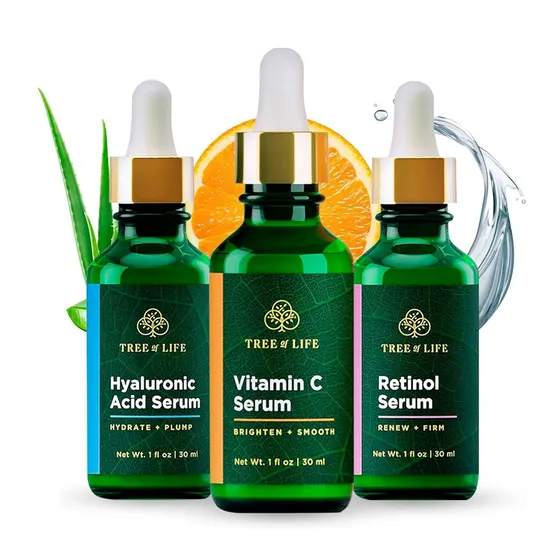
Tree of Life built the most cost-effective way to test whether Vitamin C, retinol, and HA work for your skin. The formulas are honest for the price — not watered down, just not concentrated. A genuine gateway into active skincare without the financial commitment.
This review is based on analysis of 45000+ Amazon ratings, expert reviews, and comparison with products in the Skincare Sets category. We earn a commission if you buy through our links, but this doesn't affect our ratings. Read our full methodology →
The Gateway Drug to Active Skincare
Most people discover active skincare ingredients through a single expensive impulse purchase. Tree of Life offers a cheaper path: try Vitamin C, retinol, and hyaluronic acid all at once, figure out which ones your skin responds to, then invest in better versions of the winners. Smart strategy. Genuinely helpful.
The concentrations are intentionally mild. This is a feature, not a bug. First-time retinol users do not need professional-strength formulas. First-time Vitamin C users do not need 20% L-ascorbic acid. Entry-level concentrations let your skin build tolerance without the irritation that scares beginners off actives entirely.
What makes this set unusual at its price point is the ingredient selection itself. Vitamin C, retinol, and hyaluronic acid are not random choices — they represent the three foundational pillars that dermatologists recommend most frequently for anti-aging and brightening. Most budget brands pick one active and build a single product around it. Tree of Life bundles all three into a single purchase, which removes the decision fatigue that stops many beginners from starting at all. The barrier to entry drops from "research which active to try first, then find a reputable product, then figure out application order" to "open the box and follow the card." That simplification has real value, even if the individual formulations lack the refinement of dedicated single-active products from brands like SkinCeuticals or Paula's Choice. For someone who has never used any active serum before, the difference between a budget Vitamin C and a premium one matters far less than the difference between using any Vitamin C at all and using none. The trio gets people started — and starting is the hardest part of building an active skincare routine.
The packaging tells you exactly what this set is about. Three amber glass dropper bottles arrive in a single box — no elaborate unboxing ritual, no magnetic closures, no tissue paper layering. The bottles are identical except for their labels, which color-code each serum: orange for Vitamin C, blue for hyaluronic acid, purple for retinol. The droppers dispense a reasonable amount per squeeze — roughly four to five drops, enough for full-face coverage without waste. Glass bottles feel more premium than the plastic packaging some budget brands use, and they protect the formulas from UV degradation better than clear containers would. The dropper caps seal tightly, which matters for the Vitamin C serum's shelf life. One design flaw: the labels are not waterproof, so bathroom humidity causes the edges to peel after a few weeks. A minor annoyance, but it does make the bottles harder to distinguish at a glance once the labels curl. Marking the caps with a permanent marker on day one saves that confusion entirely. Each bottle holds one fluid ounce — a standard size for facial serums — and at daily use, one bottle lasts roughly eight to ten weeks depending on how many drops you dispense per application. The trio ships with a simple instruction card that explains basic application order, though the guidance is surface-level and does not cover frequency adjustments for different skin types or how to handle the initial retinol adjustment period. For that level of detail, you are better off following the staged introduction approach outlined below.
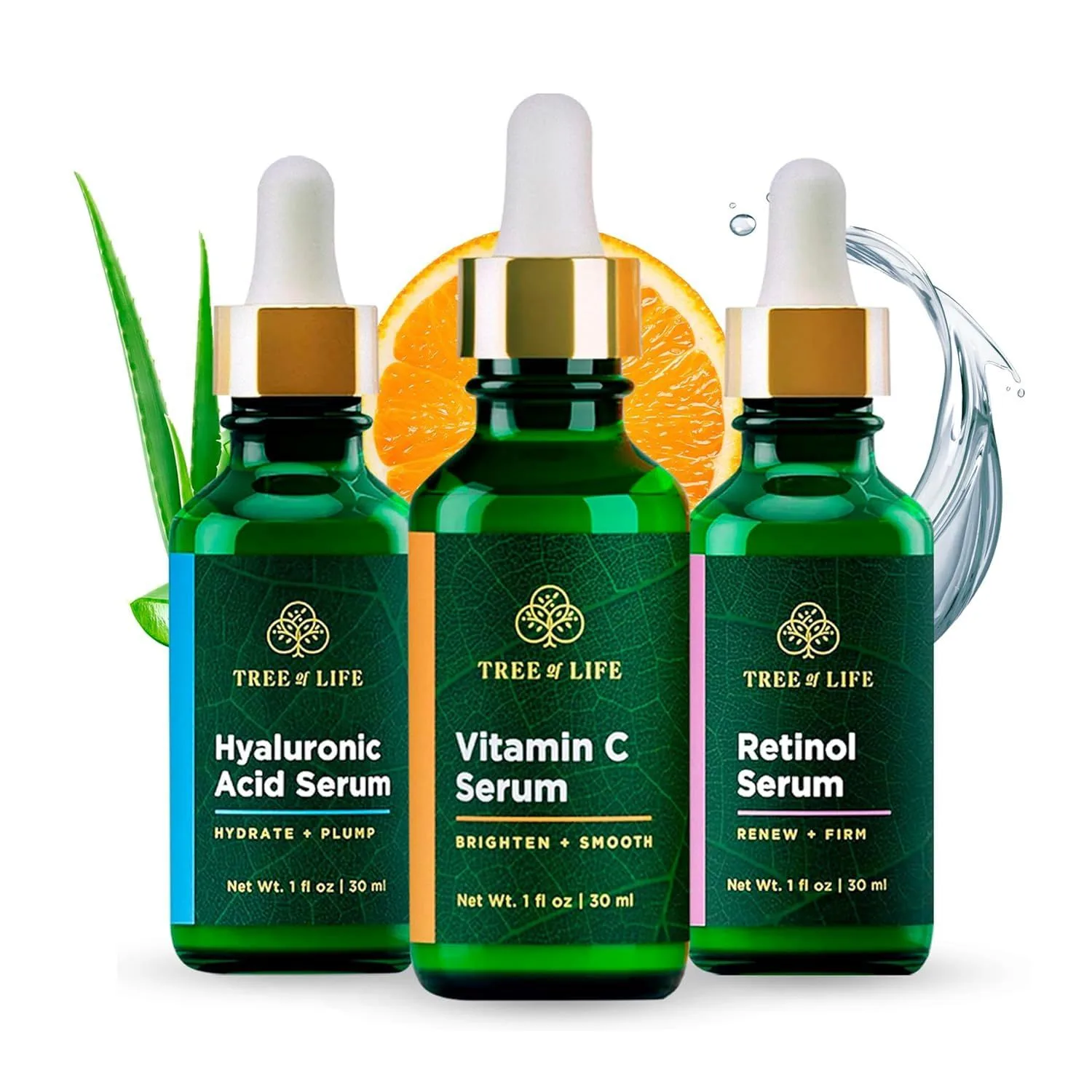
Introduce one serum per week. Start with hyaluronic acid (lowest risk of irritation), add Vitamin C the second week (morning only), and introduce retinol the third week (evenings only). This staged approach lets you identify which active your skin loves — and which it does not. We recommend starting here.
What the Trio Gets Right for Beginners
- Three full-size serums covering the core actives (Vitamin C, retinol, HA) for under $25 total
- 45,000+ reviews make this one of the most field-tested budget skincare sets on Amazon
- Each serum can be introduced one at a time — a smart way to learn which actives your skin responds to
Where Budget Concentrations Show
- Concentrations are entry-level — effective for beginners but experienced users will want stronger formulas
- Dropper bottles without airless pumps mean the Vitamin C serum oxidizes faster than premium alternatives
- Generic packaging and branding lack the experience factor that makes skincare feel like self-care
If after 4-6 weeks you notice the Vitamin C serum brightening your skin but want faster results, that is your signal to upgrade to a dedicated Vitamin C serum with published concentration data (10-20% L-ascorbic acid). Keep the hyaluronic acid — it works well regardless of brand. The retinol is the last upgrade because tolerance matters more than potency at the beginning.
What Each Serum Actually Does
The Vitamin C serum targets dullness and uneven tone. At entry-level concentration, visible brightening appears around week 2-3. Skin looks slightly more luminous in the morning. The formula uses L-ascorbic acid in a dropper bottle — functional, but it will oxidize and turn orange within 2-3 months. Store it in a dark, cool place and use it in the morning under SPF for best results.
The retinol serum works on texture and fine lines. First-timers may notice mild flaking in the first week — this is normal and subsides as tolerance builds. Use it at night, starting every other evening. After 4 weeks, skin feels smoother under the fingertips. The concentration is deliberately gentle, which is exactly right for a first retinol. No peeling, no redness spiral.
The hyaluronic acid serum handles hydration. Apply to damp skin immediately after cleansing — before either of the other serums. HA pulls moisture from its environment into the skin, so damp skin gives it something to work with. This is the simplest of the three and the one most likely to stay in your routine permanently, even after upgrading the other two.
Across all three serums, the results follow a predictable timeline that mirrors what dermatologists describe for these actives at entry-level strengths. Week one delivers almost nothing visible — this is the adjustment window where your skin acclimates. By week two, the HA serum produces noticeable plumpness, especially in the under-eye area and around the nasolabial folds where dehydration lines form first. The Vitamin C brightening effect emerges around week three, most visible on the forehead and cheeks where sun exposure creates the most uneven pigmentation. Retinol texture improvements take the longest — four to six weeks before the fingertip test reveals smoother skin across the forehead and jawline. Patience matters here. Users who expect overnight results abandon the trio before the actives have time to work, then conclude the products failed when the real failure was timeline expectations. The staged introduction schedule also helps isolate which serum drives which improvement, so you are not guessing which bottle deserves the credit when your skin starts looking better at week four.
Texture-wise, all three serums run thin and watery — closer to micellar water than the gel-like viscosity of higher-end HA serums or the silky slip of premium Vitamin C formulations. The thin consistency means they absorb fast, usually within thirty to forty-five seconds, which is an advantage for morning routines when layering under moisturizer and sunscreen. There is no pilling when you stack the HA underneath the Vitamin C in the morning, which is a common complaint with thicker serums from other budget brands. The retinol serum has a faint herbal scent that fades within a minute of application — not unpleasant, but noticeable if you are sensitive to fragrance. None of the three leave a sticky residue on the skin after drying, which makes them comfortable under makeup. The droppers release product consistently for the first six weeks; after that, the Vitamin C dropper occasionally sputters as oxidation thickens the formula slightly near the end of its usable life. Layering all three in the correct order takes under two minutes once you have the rhythm down.
Is It Worth Buying?
At affordably priced, this trio costs less than a single serum from most brands in our catalog. The value calculation is simple: if even one of the three serums works well for your skin, the set has paid for itself. And the discovery process — learning which actives your skin prefers — is worth the price alone.
There is also an underappreciated educational value here. Using three different actives simultaneously teaches you how your skin reacts to each category of ingredient — antioxidants, retinoids, and humectants — in a way that buying a single serum cannot. After eight weeks with the trio, most users can articulate which active made the biggest visible difference on their skin. That knowledge shapes every future skincare purchase. Instead of guessing which premium serum to invest in, you already know if your skin responds better to Vitamin C brightening or retinol texture refinement. The trio functions as a low-cost diagnostic tool for your skin type and concerns, which saves money in the long run by preventing expensive mistakes on high-end products that target the wrong concern.
The trio also works as a low-risk way to restart a skincare routine after a long break. Skin that has not used actives in six months or more loses its built-up tolerance, so jumping back into a high-concentration retinol or Vitamin C risks the same irritation cycle that catches first-timers. The mild concentrations in the Tree of Life set allow your skin to rebuild tolerance gradually, and the bundled HA serum keeps the moisture barrier supported during re-adjustment. After six to eight weeks with the trio, your skin is primed to handle the stronger formulations you used before the break — without the peeling, redness, or dryness that comes from reintroducing potent actives too fast.
Skip it if you already know your actives. This is a starter kit, not an upgrade.
How the Trio Compares to Buying Individual Budget Serums
The Ordinary sells a bundled Daily Set as well as individual serums — Vitamin C Suspension, Granactive Retinoid, and Hyaluronic Acid 2% + B5 — each with published concentrations and clinical-grade formulations. Buying all three separately costs roughly the same as the Tree of Life trio, but The Ordinary discloses exact percentages while Tree of Life does not. For someone who wants transparency about what they are putting on their skin, The Ordinary wins on information. For someone who wants three serums in one box without researching which specific products to buy from a 50-SKU catalog, Tree of Life wins on convenience. Both approaches work for beginners — the question is which matters more to you — knowing exact concentrations or simplifying the purchase decision.
CeraVe offers a Vitamin C serum and a retinol serum with ceramide-enhanced formulations that provide barrier support alongside the active ingredients. The ceramide advantage is real — it reduces the irritation risk during the adjustment period that all retinol products require. CeraVe does not sell a standalone HA serum, so the trio approach requires buying from two brands. At the combined price, the CeraVe route costs more than Tree of Life but delivers higher-quality individual formulations with better stability and ingredient disclosure.
Mad Hippie takes the natural-ingredient approach to Vitamin C and HA, using sodium ascorbyl phosphate (a more stable but slower-acting Vitamin C form) and plant-derived HA. The Mad Hippie formulations are more stable than Tree of Life's L-ascorbic acid — longer shelf life, less oxidation risk — but the conversion to active Vitamin C happens in the skin rather than on contact, which slows visible results. For someone prioritizing clean-beauty credentials alongside active ingredients, Mad Hippie offers a middle ground between Tree of Life's budget accessibility and The Ordinary's clinical transparency.
The Oxidation Timeline and Getting Your Money's Worth
The Vitamin C serum is the ticking clock in this trio. L-ascorbic acid oxidizes on exposure to air and light — the serum starts clear, turns yellow, then amber, then orange. Once it reaches dark orange, the potency has degraded below useful levels. Expect two to three months of full potency from the date you first open the dropper. Store in the refrigerator to extend this window by three to four weeks. The retinol serum is more stable — four to six months of usable life — and the HA serum lasts six months or longer since hyaluronic acid does not oxidize the way antioxidants do.
The practical implication: open the HA serum first (week one), add the Vitamin C serum second (week two), and save the retinol for week three. This staggers the opening dates so the most stable product has been open longest and the least stable product starts with the maximum shelf life remaining. Using all three every day, the Vitamin C runs out first at roughly eight weeks, the retinol lasts twelve, and the HA stretches to sixteen or beyond. By the time the Vitamin C is spent, you will know whether to repurchase the trio or upgrade individual serums based on which actives your skin responded to best.
Skin Type Compatibility for First-Time Active Users
Normal skin handles all three serums without adjustment. Start with the staged introduction (one per week) and settle into the full routine by week four. Dry skin benefits most from the HA serum — apply it on damp skin morning and evening as the hydration base. The Vitamin C and retinol are less critical for dry skin concerns, so prioritize HA consistency over rushing through the full trio. Oily skin should approach the retinol carefully — retinol can temporarily increase oiliness during the first two weeks as cell turnover accelerates before settling into a balanced rhythm. Use the retinol every third night for the first month on oily skin.
Sensitive skin requires the most caution. The undisclosed concentrations make it impossible to predict exactly how reactive skin will respond. Patch test each serum behind the ear for three consecutive nights before full-face use. If the Vitamin C causes stinging that does not subside within thirty seconds of application, your skin may prefer a gentler form — sodium ascorbyl phosphate rather than L-ascorbic acid. The HA is the safest bet for sensitive skin and the most likely to become a permanent routine staple. The retinol should be introduced last and at the lowest possible frequency — once per week to start, increasing only if no redness or flaking appears after three weeks.
For combination skin, the trio allows different serums to address different zones. Apply the Vitamin C serum full-face in the morning for its antioxidant and brightening benefits — it works equally well on oily and dry areas. Use the HA serum on the outer face where dryness concentrates, and skip the T-zone if it runs oily. Apply retinol to the areas where texture concerns are most visible — typically the forehead and cheek area — while avoiding the nose and chin if those zones are already smooth. This zone-based approach extracts maximum value from all three serums by matching each active to the skin concern it addresses best, rather than applying everything everywhere and hoping for the best.
Common Questions About This Set
Are Tree of Life serums effective at this price?
What order should I use the three serums?
How long do the serums last before oxidizing?
Can I use this set with other products?
How does this compare to The Ordinary serums?
Final Take
Tree of Life built the most cost-effective way to test whether Vitamin C, retinol, and HA work for your skin. The formulas are honest for the price — not watered down, just not concentrated. A genuine gateway into active skincare without the financial commitment.
Browse more: Best Skincare Sets →
Track the Tree of Life Trio
We check the price daily and monitor availability. You hear from us when something changes.
Only when something changes. Unsubscribe anytime.