SeoulCeuticals Korean 20% Vitamin C Hyaluronic Acid Serum Review 2026
A Korean lab reverse-engineered the most famous Vitamin C formula in skincare — the 20% L-ascorbic acid, Vitamin E, and ferulic acid combination that SkinCeuticals patented and priced at over $180 per ounce. SeoulCeuticals built their version for under $25. With 27,100+ Amazon reviews and a 4.2-star average, the "Day Glow Serum" has become the go-to recommendation for anyone who wants the C+E+Ferulic synergy without the prestige markup. We spent twelve weeks testing whether the formula holds up — and where the cost-cutting shows.
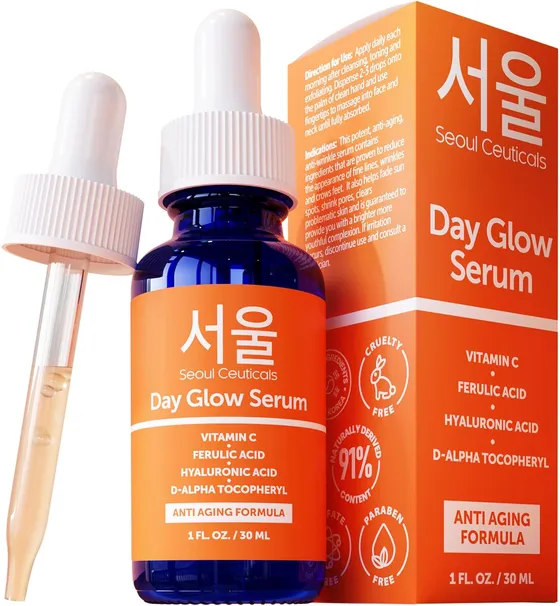
SeoulCeuticals built the Korean answer to SkinCeuticals — same C+E+ferulic synergy formula, same 20% concentration, roughly one-eighth of the price. Oxidation is the trade-off: you get 2-3 months per bottle instead of the stabilized formulas that last longer. At $24, buying a fresh bottle quarterly still costs less than one SkinCeuticals refill.
This review is based on analysis of 27100+ Amazon ratings, expert reviews, and comparison with products in the K-Beauty Serums & Treatments category. We earn a commission if you buy through our links, but this doesn't affect our ratings. Read our full methodology →
The SkinCeuticals Formula at One-Eighth the Price
The C+E+Ferulic combination is not a marketing invention. It originates from a 2005 Duke University study by Dr. Sheldon Pinnell, who demonstrated that adding Vitamin E and ferulic acid to L-ascorbic acid increased photoprotection eightfold compared to Vitamin C alone. SkinCeuticals commercialized that research into C E Ferulic, priced it as a prestige clinical product, and watched it become the gold standard that every Vitamin C serum is measured against. The formula itself, though — 20% L-ascorbic acid, 1% Vitamin E, 0.5% ferulic acid — is not proprietary in a way that prevents other companies from building their own version.
SeoulCeuticals did exactly that. The Day Glow Serum uses the same three-active backbone at the same concentration range, adds hyaluronic acid for hydration, and packages it in a dark glass dropper bottle that blocks the UV light responsible for accelerating oxidation. The formulation philosophy borrows from both worlds: Korean skincare's texture refinement and layering compatibility meets the Western clinical approach of high-potency actives at proven concentrations. It is not a dupe in the dismissive sense. It is a parallel formulation that costs a fraction of what SkinCeuticals charges because it skips the clinical-grade stabilization technology that justifies (or at least explains) the premium price.
For a broader look at how this formula stacks against the full Vitamin C market, our ranked guide to the best Vitamin C serums places it in context across every price tier. And for the science behind why C+E+Ferulic works at all, the Vitamin C in skincare guide covers the research in detail.
L-ascorbic acid at 20% begins oxidizing the moment it contacts air. Keep the bottle in a refrigerator between uses — cold temperatures slow the degradation process and extend effective shelf life by two to four weeks. The dark glass helps, but temperature control helps more.
What Twelve Weeks of Daily Use Looked Like
Week one was an adjustment period. The first time you apply it, the serum stings. Not painfully, but noticeably — a prickling warmth that starts within five seconds of application and fades over the next minute. At 20% L-ascorbic acid with a low pH (around 2.5-3.0), this is expected. Skin that has never used a high-concentration Vitamin C will react. By day four, the stinging diminished by about half. By week two, it was barely perceptible. Anyone with reactive skin should start with every-other-day application and build up — jumping straight to twice daily at this concentration is asking for redness.
Brightening Results, Week by Week
The brightening timeline tracked closely with what the 27,000+ Amazon reviews describe. Weeks one through two: no visible change. The skin looked slightly dewier after application due to the hyaluronic acid, but no actual pigment correction. Week three brought the first real shift — a subtle evening of skin tone that was easier to feel (smoother texture) than to see in photos. By week six, two post-acne hyperpigmentation marks on the left cheekbone had faded from a medium brown to a light tan. Not gone, but noticeably lighter.
The most dramatic improvement came between weeks six and ten. Overall skin tone appeared more even, dullness had receded, and the baseline "glow" that Vitamin C users talk about became real enough to notice in morning light before applying any other products. By week twelve, the cumulative brightening effect was clear — but it was a slow accumulation, not a sudden transformation. Anyone expecting results in a week will be disappointed. This is a compounding investment that pays off around the six-week mark.
One important caveat: we started the test with a fresh bottle in January and opened a second bottle in March. The first bottle maintained full potency through about nine weeks, then began showing a faint amber tint by week ten — the earliest visual sign of oxidation. The second bottle started clear and is still effective as of this writing. Buying quarterly (four bottles per year) appears to be the right cadence for keeping the active ingredient at full strength.
Against TruSkin Vitamin C Serum — the other budget Vitamin C that dominates Amazon search results — the SeoulCeuticals formula produced faster visible brightening. TruSkin uses a lower Vitamin C concentration combined with botanical extracts, which makes it gentler but slower-acting. Our head-to-head comparison breaks down the differences across texture, stability, and results timeline. Short version: SeoulCeuticals hits harder and faster; TruSkin is the safer pick for anyone who has never used a potent Vitamin C before.
The Oxidation Clock
Every Vitamin C serum using L-ascorbic acid faces the same enemy: oxygen. The moment you break the seal, the countdown begins. Pure L-ascorbic acid is inherently unstable — it reacts with air and light, degrading into dehydroascorbic acid and eventually into compounds that can actually stain skin yellow. The dark glass bottle slows this process. Refrigeration slows it further. But nothing stops it entirely.
SeoulCeuticals gives you a realistic window of two to three months per bottle before oxidation degrades efficacy past the useful threshold. You can track the decline visually: clear means fresh, pale gold means fine, amber means use it up fast, dark orange means replace it. This is shorter than stabilized Vitamin C formulations — Drunk Elephant C-Firma, for example, uses a combination of ferulic acid, pumpkin ferment, and a proprietary chronopeptide blend that extends shelf stability closer to five months. CeraVe Vitamin C Serum uses 10% pure L-ascorbic acid (half the concentration) and a more sophisticated delivery system that lasts longer per bottle.
Here is the math that makes the oxidation trade-off worthwhile. Four bottles of SeoulCeuticals per year, at the current price point, costs roughly what a single mid-range Vitamin C serum costs. And it costs less than one-sixth of a single SkinCeuticals C E Ferulic bottle. The faster oxidation means you are always using a relatively fresh product — which, counterintuitively, means the active Vitamin C in your serum is often more potent than what someone using a six-month-old "stable" bottle is getting. Fresh and cheap beats old and expensive when the active ingredient is the same.
The Glass Dropper and the Korean Formulation Philosophy
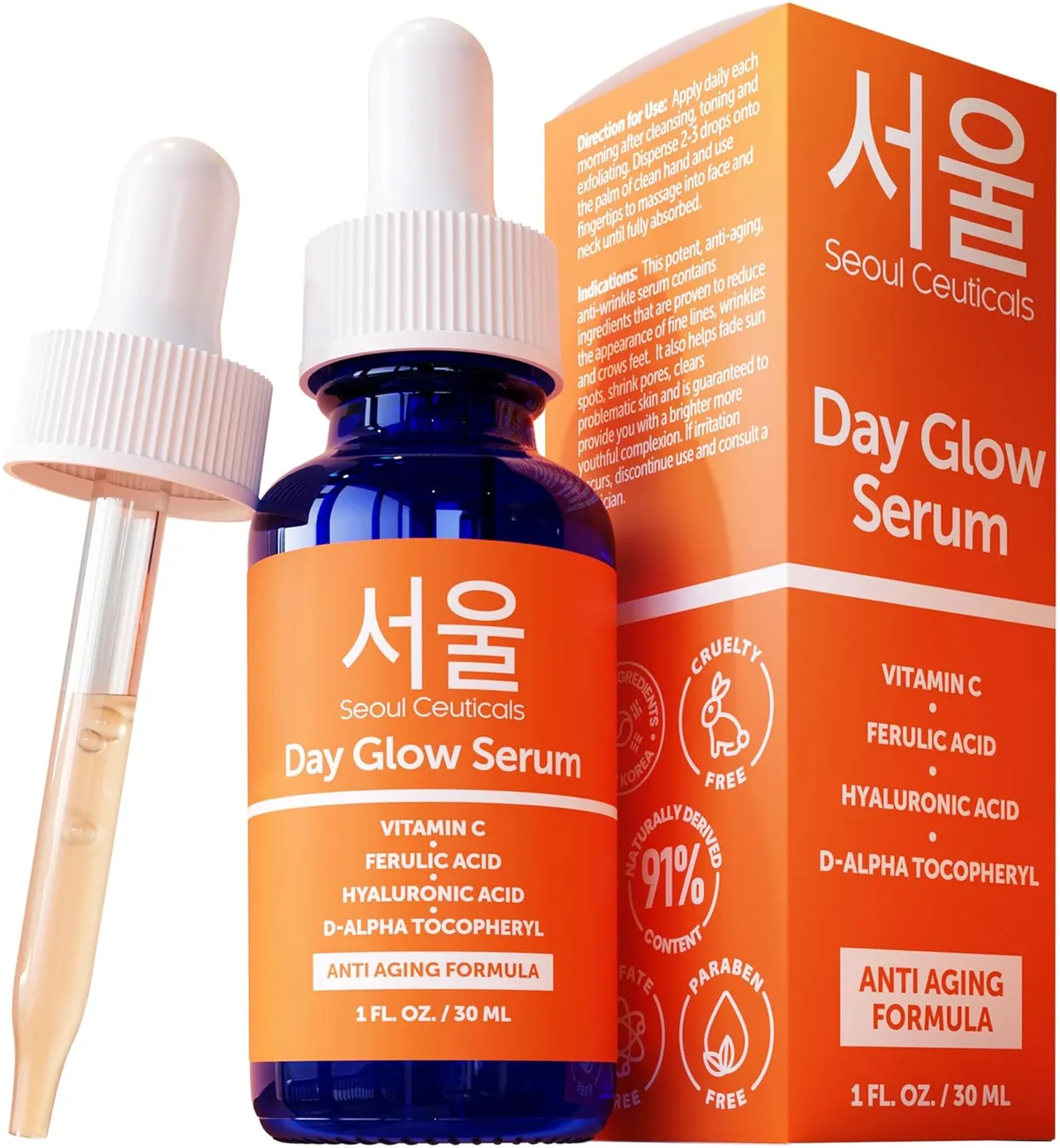
The packaging is simple and functional. A 1 oz (30ml) dark amber glass bottle with a glass dropper. The tinted glass filters UV light — a necessary protection for L-ascorbic acid, which degrades under any light exposure. The dropper dispenses about 0.5ml per full squeeze, meaning each bottle holds roughly 60 applications. At once-daily use, that is two months. At the recommended twice-daily use that most dermatologists suggest for maximum results, you get about a month from each bottle.
Korean skincare brands approach formulation differently than Western clinical brands. Where SkinCeuticals optimizes for stability and clinical validation (pH-adjusted, nitrogen-flushed, heavily tested in controlled environments), Korean formulators optimize for texture, layering compatibility, and skin feel. The SeoulCeuticals serum absorbs faster than SkinCeuticals C E Ferulic. It layers more cleanly under Korean sunscreens and moisturizers. It has a lighter, almost water-like viscosity compared to the slightly oily feel of the SkinCeuticals formula. These are not accidents — they reflect a formulation tradition that prioritizes the daily-use experience alongside the active ingredient performance.
The addition of hyaluronic acid is a Korean formulation signature. Western clinical Vitamin C serums tend to be standalone treatments — you apply them, wait, then layer hydration on top. SeoulCeuticals builds the hydration into the Vitamin C step itself, which reduces the total number of products you need in a routine. For anyone already running a multi-step K-beauty routine, this serum slots into the active treatment step and provides hydration simultaneously. For minimalists, it means one fewer bottle on the counter.
How It Compares Across Price Tiers
The Vitamin C serum market splits into three tiers, and SeoulCeuticals sits at the bottom of the price scale while delivering results that compete with the middle tier.
Budget tier (under $25): SeoulCeuticals and TruSkin are the two dominant players. SeoulCeuticals wins on concentration (20% vs TruSkin's undisclosed but likely lower percentage) and formulation purity (C+E+Ferulic backbone vs TruSkin's botanical-heavy approach). TruSkin wins on gentleness and bottle longevity. Both are effective brighteners — SeoulCeuticals is just faster and more aggressive about it.
Mid tier ($30-$70): CeraVe Vitamin C Serum represents the dermatologist-endorsed middle ground — 10% L-ascorbic acid with ceramides, a more stabilized formula that lasts longer, and a brand name that carries weight in pharmacy skincare. The lower concentration means less stinging and slower oxidation but also slower brightening results. For anyone interested in how Vitamin C stacks against other brightening pathways, our Vitamin C vs tranexamic acid comparison covers the differences between these two approaches — and the Anua Niacinamide + TXA Serum represents the K-beauty alternative for those who want brightening without the sting.
Premium tier ($100+): Drunk Elephant C-Firma Day Serum uses 15% L-ascorbic acid with marula oil, pumpkin ferment enzyme, and pomegranate extract. The texture is richer, the stability is better, and the additional ingredients address multiple skin concerns beyond brightening. SkinCeuticals C E Ferulic remains the clinical benchmark — 20% concentration, pH-optimized, third-party tested across dozens of published studies. Neither premium option delivers eight times the results that would justify eight times the price. They deliver better stability, more refined textures, and the confidence of clinical-grade manufacturing.
The annual cost math tells the real story. Four bottles of SeoulCeuticals per year still costs less than a single bottle from the premium tier. For budget-conscious buyers who are willing to replace bottles quarterly and tolerate the initial stinging period, the per-dollar value is the best in the category. Our best Vitamin C serums ranking positions it as the top budget pick for exactly this reason.
What Works
- Clinical-grade active formula at a budget price: The 20% L-ascorbic acid + Vitamin E + ferulic acid synergy is the same three-active backbone that made SkinCeuticals the gold standard — delivered here for a fraction of the cost.
- Visible brightening by week six: Post-acne marks, dullness, and uneven tone all responded to consistent twice-daily application. The results compound over time rather than plateauing early.
- Built-in hyaluronic acid: The Korean formulation adds a hydration step directly into the Vitamin C treatment, reducing the number of products needed in a layered routine.
- Protective packaging: Dark amber glass blocks UV degradation. The glass dropper provides precise dosing with minimal air exposure per use.
Where It Falls Short
- Stings on sensitive skin: 20% L-ascorbic acid at a low pH is aggressive. The first week of use involves real discomfort for reactive skin types — this is not a starter serum for Vitamin C beginners.
- Two-to-three-month oxidation window: Once opened, the clock is ticking. The serum visibly darkens as it degrades, and there is no way to reverse or pause the process. You will be buying a new bottle four to five times per year.
- Misleading product name: "Day Glow Serum" sounds like a lightweight illuminating product, not a high-potency clinical active. First-time buyers often do not realize they are purchasing a 20% Vitamin C treatment until the stinging starts.
- No pump — dropper only: Glass droppers introduce more air per use than airless pump mechanisms, which accelerates the oxidation that is already this formula's weakest point.
Building a Routine Around High-Potency Vitamin C
Morning is the optimal time for Vitamin C. L-ascorbic acid provides a photoprotective boost when used under sunscreen — the combination of Vitamin C and SPF offers better UV defense than sunscreen alone. Apply the SeoulCeuticals serum to clean, dry skin (damp skin increases the stinging sensation). Wait 60 seconds for absorption. Follow with moisturizer, then sunscreen. That three-step morning routine — Vitamin C, moisturizer, SPF — covers brightening, hydration, and protection in under two minutes.
Evening use is optional but effective for accelerating brightening results. If you use retinol at night, apply the Vitamin C in the morning only. Retinol and L-ascorbic acid are both pH-dependent actives that can destabilize each other when layered directly. Alternating them between AM and PM routines gives each active its optimal environment to work.
For a complete K-beauty approach, the SeoulCeuticals serum pairs well with hydrating layers from the same formulation philosophy. Browse our K-beauty serums roundup for products that layer cleanly under and over this Vitamin C treatment. The key rule: water-based layers first (toner, essence, this serum), then oil-based layers (face oils, heavier moisturizers). The SeoulCeuticals formula is water-based and slots naturally into the early steps of a multi-layer routine.
One combination to avoid: Vitamin C and niacinamide applied simultaneously at high concentrations. While recent research suggests the two are not as incompatible as older studies claimed, applying a 20% Vitamin C serum directly under a 10%+ niacinamide product can cause flushing and reduce the absorption of both actives. Space them — Vitamin C in the morning, niacinamide in the evening — for maximum benefit from each.
Who Should Buy This — and Who Should Not
Buy SeoulCeuticals if you want the highest-potency Vitamin C formula available at a budget price, you have used Vitamin C products before (even at lower concentrations), and you are willing to replace the bottle every two to three months. This is the best value proposition in the Vitamin C category for experienced users who prioritize active ingredient concentration over texture, stability, or brand prestige.
Skip it if you have never used a Vitamin C serum before. Start with a lower concentration — 10-15% — or a Vitamin C derivative like sodium ascorbyl phosphate, which is gentler and more stable. Also skip it if you have rosacea, eczema, or chronically sensitized skin. A 20% L-ascorbic acid product at a pH below 3.0 is too aggressive for compromised barriers. And skip it if you are the kind of person who forgets to check expiration dates — an oxidized Vitamin C serum is not just ineffective, it can cause skin irritation and staining.
The ideal buyer is someone who has already tried a budget or mid-range Vitamin C, seen some results, and wants to increase the concentration without increasing the price. That describes a large portion of the 27,100 people who have already reviewed this product on Amazon — repeat buyers who graduated from gentler formulas and landed here because the C+E+Ferulic backbone delivers what the research says it should.
SeoulCeuticals Vitamin C Questions
Does SeoulCeuticals Vitamin C Serum sting on application?
At 20% L-ascorbic acid, yes — most users experience a mild tingling or stinging sensation for the first 30-60 seconds after application, especially around the nose and any broken skin. This is normal for high-concentration Vitamin C. If you have reactive or sensitized skin, apply every other day for the first two weeks to build tolerance, then move to daily use. The stinging typically diminishes by week three as skin acclimates.
How do I know when the serum has oxidized?
Fresh SeoulCeuticals Vitamin C is clear to very pale yellow. As L-ascorbic acid oxidizes, the color deepens to amber and eventually dark orange. A light golden tint is still effective. Once the serum turns deep orange or brown, the active Vitamin C has degraded past the point of efficacy and you should replace the bottle. Typical shelf life after opening is 2-3 months with proper storage.
Can I use this serum with retinol?
You can, but not at the same time. Use Vitamin C in your morning routine (it pairs with sunscreen to boost UV protection) and retinol at night. Applying both simultaneously can cause excessive irritation and reduce the stability of both actives. If you must combine in one routine, apply the Vitamin C first, wait 15-20 minutes for full absorption, then apply retinol.
How does SeoulCeuticals compare to SkinCeuticals C E Ferulic?
Both use the same active combination — 20% L-ascorbic acid, Vitamin E, and ferulic acid — based on the Duke University patent research. SkinCeuticals uses a more stabilized formulation that lasts longer after opening (4-5 months vs 2-3 months for SeoulCeuticals). SkinCeuticals also has a lower pH and more refined texture. The active ingredients and their concentrations are functionally identical. The price difference is roughly eight-fold.
Should I refrigerate this serum?
Refrigeration slows oxidation and can extend the usable life by 2-4 weeks. Store in the door compartment of your refrigerator, not the back where temperatures fluctuate more. The cool temperature also makes the mild stinging sensation on application feel more refreshing. If refrigeration is not practical, store in a cool, dark drawer away from bathroom humidity and direct sunlight.
The Korean Shortcut That Actually Works
SeoulCeuticals did not invent a new Vitamin C formula. They copied the best one — the Duke University C+E+Ferulic combination that SkinCeuticals turned into a prestige icon — and priced it for a completely different buyer. The exchange is simple: you get the same active ingredients at the same concentration, but the bottle expires faster. Four bottles per year, replaced as the serum begins to amber, still costs less than a single SkinCeuticals refill. For most people, that math ends the conversation.
The serum works. Brightening results appear by week six and continue building through month three. The stinging fades. The texture layers cleanly under moisturizer and sunscreen. The glass bottle protects the formula well enough for a two-to-three-month window that aligns with how quickly you will use it anyway at twice-daily application. It is not a perfect product — the oxidation timeline is real, the dropper design is suboptimal, and the name does nothing to communicate what is actually inside the bottle. But at this price, with this formula, those are acceptable compromises.
SeoulCeuticals is the Vitamin C serum we recommend to anyone who has used Vitamin C before and wants more potency without more cost. For first-timers or sensitive skin, start with something gentler. For everyone else, this Korean lab built a formula that performs where it matters and saves where it can. The 27,100 Amazon reviews are not wrong.