La Roche-Posay Retinol B3 Serum Review 2026
The retinol middle ground is surprisingly hard to find. Too weak and results stall. Too strong and your face peels for two weeks. La Roche-Posay landed at 0.3% pure retinol with a high-dose niacinamide buffer and said: this is where most people should be. After eight weeks, they might be right.
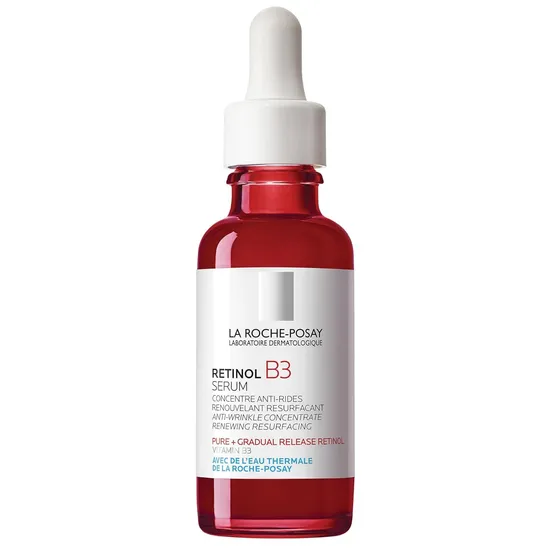
This is the retinol you recommend to friends who are ready to move past beginner formulas but are not quite ready for professional-grade. The niacinamide pairing is more than marketing — it measurably reduces the irritation window from weeks to days.
This review is based on analysis of 6200+ Amazon ratings, expert reviews, and comparison with products in the Retinol & Retinoid Treatments category. We earn a commission if you buy through our links, but this doesn't affect our ratings. Read our full methodology →
Why 0.3% Matters More Than You Think
The concentration debate in retinol is misleading. Higher is not always better. Clinical studies show 0.3% pure retinol triggers real collagen synthesis, accelerates cell turnover, and reduces wrinkle depth in controlled trials. Going to 0.5% or 1% increases irritation faster than it increases results.
La Roche-Posay chose the research-backed sweet spot. And then they did something clever: they paired it with a high concentration of niacinamide (Vitamin B3). The niacinamide calms inflammation in real time, which means the retinol can work without the redness and peeling that higher concentrations provoke. Two actives, one formula, complementary mechanisms.
The Niacinamide Partnership
Niacinamide is not just a soothing agent here. It is a co-star. While retinol accelerates cell turnover from below, niacinamide strengthens the barrier from above, reduces oil production, and fades hyperpigmentation through a separate biochemical pathway. The combination addresses wrinkles, texture, tone, and pore size simultaneously.
After four weeks, the niacinamide benefits appeared before the retinol ones. Pores around the nose looked visibly tighter. Oil production at midday decreased. A light brightness emerged that was distinctly different from the glow that Vitamin C serums produce — less luminous, more refined. Then the retinol kicked in.
Week one: apply Tuesday and Friday nights only. Week two: add Sunday. Week three: every other night. Week four onward: nightly. This ramp-up eliminates peeling for most skin types. If mild flaking appears at any stage, hold that frequency for an extra week before advancing.
Eight Weeks at the Sweet Spot
The fluid texture absorbs fast. Maybe too fast — it almost feels like water on skin, and for a moment you wonder if enough product actually landed on your face. Within five seconds it is gone, and there is a slight tackiness that resolves after a minute. No residue under the night cream that followed.
Weeks one through three: niacinamide-driven improvements. Smoother texture. Calmer redness around the cheeks. Less midday oil. The skin looked healthier before the retinol had time to restructure anything.
Weeks four through eight: the retinol arrived. Fine lines around the eyes softened measurably. Two forehead creases that were visible in raking morning light became shallower. The skin felt denser — firmer when pressed. Not taut, but structurally more supported. And the surface had a polished quality, like the rough patches had been gently sanded away over weeks.
The 30ml bottle lasted the full eight weeks with nightly use, dispensing about three drops per application. One detail stood out: the formula oxidized more slowly than expected for a dropper-format retinol. By week six, the liquid had shifted from pale yellow to a slightly deeper gold — normal for retinol exposed to air — but the efficacy showed no visible decline. Storage matters here: keeping the bottle in a nightstand drawer rather than a lit bathroom shelf likely helped preserve potency. Retinol is photosensitive even inside its packaging, and a cool, dark environment between uses extends the active life of the formula beyond what bathroom cabinet storage allows.
One comparison that surprised us: the texture refinement from Retinol B3 was more uniform across the entire face than what higher-concentration retinols typically deliver. Stronger formulas tend to produce uneven results — smoother forehead, still-rough jawline — because thinner skin responds faster than thicker skin. At 0.3%, the slower pace of change meant every zone caught up. By week eight, the cheeks, forehead, chin, and under-eye area all showed similar improvements in smoothness. That evenness is harder to achieve than raw speed, and it is one of the quiet advantages of staying at a moderate concentration.
No peeling. No ugly phase. Two mornings brought mild tightness that faded after moisturizer. That was the extent of the irritation at 0.3%.
The Right Retinol for Most People
- Research-calibrated concentration: 0.3% pure retinol sits at the clinically proven minimum effective dose — visible results without excessive irritation.
- Niacinamide synergy: The B3 partnership reduces inflammation while retinol resurfaces. Complementary actives working simultaneously, not fighting each other.
- Thermal spring water base: La Roche-Posay's mineral-rich water adds a soothing foundation that their clinical studies support as anti-inflammatory.
What Holds It Back
- Ceiling for advanced users: If you have been using retinol for over a year and want more aggressive results, 0.3% will feel mild. Medik8's retinaldehyde or Obagi's professional-grade formulas hit harder.
- Glass dropper vulnerability: The dropper bottle exposes the retinol to air with each opening. Retinol degrades with oxygen exposure. A sealed pump or tube would preserve potency longer.
- Tacky absorption phase: The initial tackiness after application lasts about 60 seconds. If you apply moisturizer too quickly, the two layers can pill slightly on the surface.
After applying the serum, count to 90 before your moisturizer. The formula needs a full 90 seconds to absorb completely. Rush it and the niacinamide base pills under cream textures. Patient layering produces a smooth, settled feel by morning.
How Retinol B3 Compares to the Competition
CeraVe Retinol Serum sits below this at an entry-level price point with ceramide barrier protection. The CeraVe formula is gentler — better for absolute beginners or people whose skin reacts to almost everything. But the retinol concentration is lower and the results are more subtle. If the CeraVe stopped delivering visible improvement after three months, La Roche-Posay Retinol B3 is the logical next step. The jump in concentration is modest enough to avoid starting over with a new adjustment period, and the niacinamide partnership means the transition feels nearly effortless.
For a direct side-by-side analysis, see our CeraVe Retinol Serum vs La Roche-Posay Retinol B3 comparison.
Medik8 Crystal Retinal 10 sits above this, using retinaldehyde instead of retinol. Retinaldehyde is one conversion step closer to retinoic acid — the form that actually acts on skin cells — which makes it faster-acting. Medik8 delivers more dramatic texture refinement in half the time. The trade-off: a harder adjustment period (expect two weeks of peeling), higher price, and no niacinamide buffer. If you have already used Retinol B3 for six months and want to escalate, Medik8 is the step up. If you are still building retinol tolerance, stay here.
Obagi Professional-C + Retinol Complex is the aggressive option — a medical-grade formula with higher retinol concentrations prescribed by dermatologists. It works faster and hits harder than anything over-the-counter. But the irritation is proportional. Obagi is for people who have already proven their skin can handle retinol and want maximum anti-aging velocity. La Roche-Posay Retinol B3 is for everyone else — and that everyone else is the majority of people who use retinol.
The Dermatological Trust Factor
La Roche-Posay partners with over 90,000 dermatologists worldwide. The Retinol B3 formula is one of the most frequently recommended over-the-counter retinol products in dermatology practices — not because of marketing agreements, but because dermatologists see the patient compliance data. A retinol that patients actually continue using for six months delivers more cumulative benefit than a stronger retinol that gets abandoned after two weeks of peeling. Adherence is the variable that determines long-term results, and this formula optimizes for adherence above all else.
The ingredient list itself tells a story about formulation philosophy. Hydroxypinacolone retinoate — a next-generation retinoid ester — appears alongside the pure retinol, providing an additional anti-aging pathway with lower irritation potential. Glycerin and hyaluronic acid sit high in the formula, pulling moisture into the skin while the retinol accelerates surface cell turnover. The adenosine inclusion targets wrinkle depth through a non-retinoid mechanism, which means multiple anti-aging actives work in parallel without competing for the same receptors. This layered approach to formulation is what separates pharmaceutical-heritage brands from the direct-to-consumer retinol market, where formulas often rely on a single hero active at a headline concentration and little else supporting it.
The thermal spring water base is not decorative. La Roche-Posay's water source in central France has documented mineral composition — high selenium, low calcium — with published studies showing anti-inflammatory and antioxidant properties on skin. The brand built a dermatology center at the thermal spring that treats over 10,000 patients annually for chronic skin conditions. That institutional credibility extends to every product in the range, including this retinol. When the formulation team says 0.3% is the optimal concentration, the claim comes from a brand with a 50-year track record of dermatological testing, not from a marketing department interpreting a single clinical trial.
Long-Term Use and When to Level Up
After six months of nightly Retinol B3 use, the question becomes: stay or graduate? The answer depends on what your skin still needs. If fine lines have softened, texture has refined, and your skin looks consistently healthy — stay. There is no rule that says you must increase retinol concentration over time. Maintenance at 0.3% preserves results with minimal risk and zero irritation budget.
A common mistake is adding a second retinol product while still using Retinol B3 — layering a retinol eye cream on top of a full-face retinol serum, for example. The periorbital skin is thinner and absorbs more retinol per square centimeter than the cheeks or forehead. Doubling up creates a localized overdose around the eyes, leading to the exact dryness and peeling that the 0.3% concentration was designed to prevent. If the under-eye area needs extra attention, switch to a peptide-based eye treatment on retinol nights and save the retinol eye cream for off-nights. Alternating keeps total retinoid exposure in the therapeutic range without pushing the most vulnerable skin past its tolerance threshold. The same logic applies to retinol body lotions — if you are using Retinol B3 on your face, skip retinol-based hand or neck creams on the same nights to avoid cumulative overexposure across adjacent skin zones.
If you want more aggressive wrinkle reduction or faster dark spot fading, graduating to Medik8 Crystal Retinal 10 is the cleanest upgrade path. The retinaldehyde technology picks up where retinol leaves off, and six months of Retinol B3 has already trained your skin to handle accelerated cell turnover. The transition is smoother than starting Medik8 from scratch — expect one week of mild adjustment instead of the usual two to three weeks of peeling that retinaldehyde-naive skin experiences.
Skin Type Compatibility
Normal to combination skin gets the most complete experience from this formula. The fluid texture absorbs cleanly without adding oil, the niacinamide controls sebum on the T-zone, and the retinol works on a skin type that tolerates active ingredients well. Oily skin types benefit from the niacinamide's oil-regulating properties — some users report less midday shine after three weeks of consistent use. Dry skin should layer a rich moisturizer on top, since the serum alone does not provide enough overnight hydration for lipid-depleted skin. The retinol can temporarily increase dryness during the first two weeks of use as cell turnover accelerates, so a ceramide-based night cream as a follow-up step prevents the flaking that dry skin types sometimes experience during the adjustment period.
Reader Questions
What makes 0.3% retinol the "sweet spot" concentration?
Research shows 0.3% pure retinol is the lowest concentration that produces clinically visible anti-aging results in controlled studies, while causing significantly less irritation than 0.5% or 1% formulas. It is strong enough to trigger meaningful cell turnover without the aggressive peeling that higher concentrations demand.
Can sensitive skin tolerate La Roche-Posay Retinol B3?
Most sensitive skin types can tolerate it with the right introduction protocol. The high-dose niacinamide actively calms inflammation while the retinol works. Start with twice weekly for two weeks, then every other night, building to nightly use over a month. The thermal spring water base adds an additional soothing layer.
Should I use retinol in the morning or at night?
Night only. Retinol degrades in UV light and can increase sun sensitivity. Apply to clean, dry skin at night, follow with moisturizer, and always apply SPF 30+ the next morning. Consistent nighttime use with daytime sun protection is the non-negotiable protocol.
How does niacinamide complement retinol?
Niacinamide (Vitamin B3) reduces the inflammation and barrier damage that retinol can cause. It strengthens the skin barrier, controls oil production, and fades hyperpigmentation through a different pathway than retinol. Together, they address wrinkles, uneven tone, and texture without doubling irritation.
When will I see results from La Roche-Posay Retinol B3?
Fine lines typically show improvement at 6-8 weeks. Skin texture and pore refinement are noticeable by week 4. Dark spot fading takes 8-12 weeks. The niacinamide provides visible pore-tightening and brightness improvements faster than the retinol component alone.
The Goldilocks Retinol
La Roche-Posay Retinol B3 is the retinol you recommend without hesitation. The 0.3% concentration works. The niacinamide partnership prevents the drama. The results at eight weeks — firmer texture, softer lines, refined pores — are real and earned without a single day of peeling.
Beginners who have outgrown CeraVe's entry-level formula should come here next. Advanced users who want retinaldehyde speed should look at Medik8. Everyone in between will find this serum does exactly what most skin needs: steady, evidence-based retinol without the punishment. The niacinamide buffer is the biggest difference between this and other mid-range retinols — it transforms retinol from a commitment into something your skin actually enjoys using every night. La Roche-Posay Retinol B3 is the best mid-range retinol for the step-up from beginner formulas, and we recommend it as the natural graduation from CeraVe.
Track the La Roche-Posay Retinol B3
We check the price daily and monitor availability. You hear from us when something changes.
Only when something changes. Unsubscribe anytime.