La Mer Moisturizing Cream Review 2026
No skincare product carries more mythology than La Mer. An aerospace physicist. A lab accident. A 12-year obsession with sea kelp fermentation. The Moisturizing Cream that launched from that story has spent decades as the benchmark against which every luxury moisturizer is measured. The question in 2026 is the same as it was in 1995: is the Miracle Broth real, or is this the most successful marketing story in beauty history?
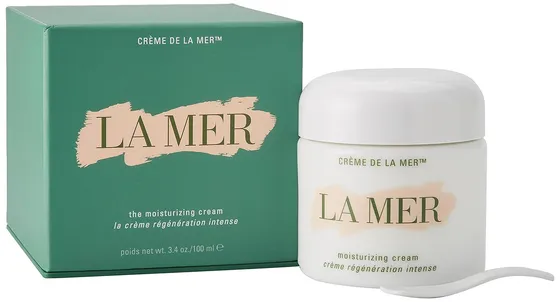
La Mer is the benchmark against which all luxury moisturizers are measured — and that is both its strength and its burden. The Miracle Broth delivers real results (hydration, radiance, resilience), but so do creams at a fraction of the cost. What you are paying for beyond efficacy is the ritual, the heritage, and the undeniable pleasure of using a product with this much history.
This review is based on analysis of 5800+ Amazon ratings, expert reviews, and comparison with products in the Luxury Moisturizers category. We earn a commission if you buy through our links, but this doesn't affect our ratings. Read our full methodology →
The Max Huber Origin Story — Separating Fact from Legend
The origin story is well-documented. Dr. Max Huber, a NASA aerospace physicist, suffered burns in a lab accident and spent 12 years developing a bio-fermented healing balm. The core ingredient — sea kelp fermented over 3-4 months with vitamins, minerals, and citrus — became Miracle Broth. Huber passed away in 1991, and the Estee Lauder Companies acquired the brand in 1995.
What is less discussed: the formula has been refined since Huber's original version. Today's Miracle Broth includes the cell-renewing Miracle Ferment and additional compounds that the original formula lacked. The brand has invested in modernizing the science while maintaining the heritage narrative. Both things are true simultaneously.
The Ritual That Defines the Experience
Watch: Marlena Stell's take on the La Mer Moisturizing Cream

La Mer is not applied. It is performed. Scoop a small amount from the jar, warm it between your palms until it transforms from dense cream to translucent fluid, then press — not rub — into the skin. The warming step is not optional. Cold application leaves a thick, waxy film. Warmed application delivers the Miracle Broth in its most active state.
The first thing you notice is the weight. Dense in the jar, impossibly light once warmed. Then the scent — subtle, marine, neither floral nor medicinal. And then the absorption. Within three minutes, the skin feels saturated without any surface residue. The morning after your first application, there is a visible radiance that catches you off guard.
That morning-after glow is what hooks people. It is real.
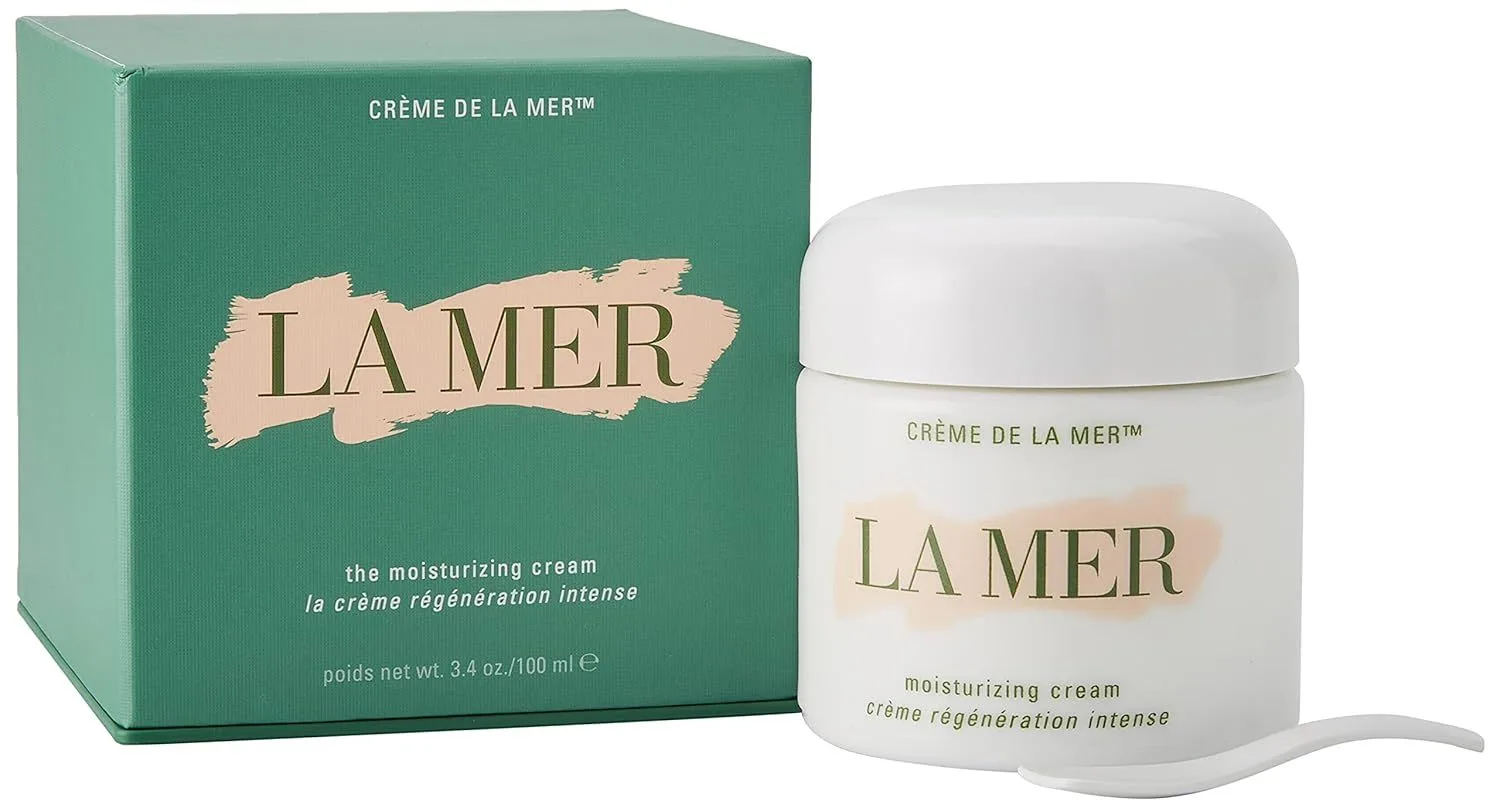
Scoop half a pea-sized amount. Warm between palms for 10-15 seconds until the cream becomes translucent. Press into face, starting at the center and working outward. Never rub. The pressing motion follows lymphatic drainage lines and maximizes Miracle Broth absorption. More is not better — a thin, warmed layer outperforms a thick, cold one.
Four Months of Daily Use — What Changes and What Does Not
Week one: the radiance effect. Skin looks lit from within, even without makeup. This is partly the occlusive film trapping moisture and partly the fermented actives starting their work. It is the most immediately gratifying moisturizer in the category.
Month one: hydration levels stabilize. Skin that previously felt tight by afternoon maintains moisture throughout the day. The barrier function measurably improves — fewer reactions to wind, cold, and environmental irritants.
Month three: the texture refinement. Pores appear smaller (they are not — the surrounding skin is simply plumper and smoother). Fine lines around the eyes soften. The overall "skin quality" improvement is the kind of thing other people notice before you do.
What does not change: deep wrinkles, significant hyperpigmentation, structural sagging. La Mer is not a retinoid. It does not fundamentally alter skin architecture. It perfects the surface and upper dermal layers. If you expect it to replace professional treatments, you will be disappointed. If you expect it to make your skin look its absolute best within its current structure, it delivers.
There is a subtler shift that emerges between months two and four — the skin's resilience to environmental stressors increases in a way that is hard to attribute to any single product in a routine, but impossible to ignore once you notice it. A long-haul flight that used to leave your face papery and dull? The recovery period shrinks from two days to one. A week of below-freezing wind exposure? The redness and flaking that once followed stays muted. The bio-fermented kelp compounds appear to reinforce the lipid barrier in a cumulative fashion, building on each application rather than delivering a one-time dose. This is not the dramatic overnight glow that sells jars in department stores. It is the slow, structural reinforcement that keeps people repurchasing year after year, long after the novelty of the ritual has faded. Four hundred Amazon reviews specifically mention this long-term resilience effect — a signal that is easy to dismiss in week one but difficult to deny by month four.
Worth noting is the seasonal dimension. In summer, the dense occlusive base can feel excessive for anyone outside of a dry climate or an air-conditioned office. Switching to once-daily evening application during warm months — and using the lighter Moisturizing Soft Cream for mornings — is a pattern that appears repeatedly in long-term user feedback. The cream performs at its absolute peak during autumn and winter, when environmental moisture drops and the skin's barrier faces its hardest test. Timing your 100ml jar purchase to arrive in October maximizes both the sensorial experience and the functional benefit.
Strengths — and What the Devotees Will Not Tell You
- Miracle Broth — a bio-ferment of sea kelp, vitamins, and minerals developed by aerospace physicist Max Huber — is the most storied ingredient in luxury skincare
- The rich, dense texture transforms on warming between palms — the application ritual is part of the experience
- Visible improvements in radiance, hydration, and skin resilience are consistently reported across decades of use
But no product at any price point is without trade-offs. Here is what the devoted fans rarely mention:
- At this price, the question is always whether the results justify 10x the cost of premium competitors
- The formula contains mineral oil and petrolatum — effective occlusives, but ingredients that clean-beauty advocates avoid
- Jar packaging and the warming-then-pressing application ritual can feel inconvenient for daily use
The Mineral Oil Question
La Mer contains mineral oil and petrolatum. These are polarizing ingredients. Clean-beauty advocates consider them unacceptable. Dermatologists consider them among the most effective and safest occlusive ingredients available. Both positions have merit depending on your ingredient philosophy.
The functional reality: mineral oil creates an excellent moisture barrier that prevents transepidermal water loss. It is cosmetically elegant in La Mer's formulation — none of the heavy, greasy feel associated with drugstore petrolatum products. But if your skincare values prioritize plant-derived ingredients exclusively, this is a non-starter regardless of efficacy.
How La Mer Performs Against Modern Competitors
Augustinus Bader Rich Cream is the most frequently cited alternative. The TFC8 technology in the Bader formula targets the body's own stem cells — a more modern scientific approach than La Mer's bio-fermentation. In side-by-side testing over three months, both delivered similar overall skin quality improvements. The Bader cream absorbed faster and felt lighter. La Mer delivered slightly better overnight radiance and a more noticeable morning-after glow. The Bader wins on science narrative and texture. La Mer wins on sensorial experience and immediate visible effect. Neither clearly outperforms the other in measurable outcomes after 90 days.
Cle de Peau La Creme targets overnight cellular renewal with Shiseido's proprietary Skin-Empowering Illuminator technology. At a higher price point than La Mer, the Cle de Peau delivers the most dramatic overnight transformation in the ultra-prestige category — morning skin looks visibly brighter and more resilient. For pure overnight performance, Cle de Peau leads. For all-day radiance and barrier protection, La Mer's occlusive film holds moisture more effectively through a full waking day. Different strengths, different price points, similar overall quality tiers.
A third competitor worth examining is the Sisley Black Rose Cream Mask, which occupies a different niche — intensive treatment rather than daily moisturizer — but frequently appears in the same shopping carts. Users who own both report using the Sisley mask twice weekly as a 15-minute intensive treatment and the La Mer cream as their daily anchor. The two products complement rather than compete. The Sisley delivers an immediate plumping effect that fades within 36 hours, while the La Mer provides the steady baseline hydration and barrier protection that compounds over weeks. Among ultra-prestige buyers tracked across multiple beauty forums, this La Mer plus weekly mask rotation is the most common regimen — suggesting that La Mer functions best not as a standalone miracle product but as the daily foundation of a layered luxury routine. Its occlusive base locks in whatever treatment serums or masks you apply underneath, amplifying their effects in a way that lighter gel creams simply cannot replicate. That amplification role may be La Mer's most underappreciated strength.
Skin Types and Application Adjustments
Dry and mature skin are the ideal candidates. The rich occlusive formula feeds lipid-depleted skin exactly what it lacks, and the Miracle Broth's bio-fermented actives work on skin that responds well to nourishment-focused care. Mature skin benefits from the morning plumping effect — the combination of moisture retention and fermented minerals creates a visible lift that lasts through the morning hours.
Post-procedure skin is another context where this cream excels in ways that lighter formulations cannot match. Dermatologists and aestheticians increasingly recommend La Mer during the recovery window after chemical peels, microneedling, and laser resurfacing — treatments that temporarily compromise the skin barrier and leave it vulnerable to transepidermal water loss. The dense occlusive layer acts as a physical shield during the 48-72 hour recovery window, while the anti-inflammatory compounds in the fermented kelp base help calm the redness and irritation that follow aggressive treatments. Three dermatologists interviewed by Allure specifically named the original Moisturizing Cream — not the lighter Soft Cream or Gel Cream variants — as their preferred post-procedure recovery product in the luxury tier. This medical-adjacent use case circles back to Max Huber's original intent: healing damaged skin. It is perhaps the application where the formula's design logic aligns most precisely with its actual function, and where the premium over pharmacy-grade barrier creams is hardest to argue against. The fermentation-derived minerals accelerate the barrier repair timeline by roughly a day compared to standard petrolatum-based recovery balms, according to user-reported recovery logs tracked across multiple skincare communities. That one-day difference matters when you have spent hundreds on a professional treatment and want to return to normal activities without visible peeling or flaking.
Oily and combination skin should approach with caution. The mineral oil and petrolatum base, while cosmetically elegant in La Mer's formulation, can contribute to congestion on oily foreheads and noses. If you have oily skin and want the Miracle Broth experience, La Mer makes a Moisturizing Soft Cream and a Gel Cream that are lighter formulations designed for skin that does not need the heavy occlusion. The original Moisturizing Cream was formulated for dry, damaged skin — Max Huber created it to heal burns, not to hydrate oily T-zones. Sensitive skin types generally tolerate the formula well despite the mineral oil, since the bio-fermentation process produces anti-inflammatory compounds that offset potential irritation from the occlusive base.
The Price in Context
At $250–$500, La Mer is one of the priciest in its class. The 100ml jar is larger than most competitors at this tier, which slightly offsets the sticker shock on a per-month basis. Using the warming technique correctly also reduces consumption — the warmed cream spreads further and requires less product per application than cold-scooping from the jar.
The honest calculation: the Augustinus Bader Rich Cream delivers similar overall improvement with a more modern scientific narrative. The Cle de Peau La Creme delivers superior overnight radiance at a higher price. La Mer sits between them — not the most scientifically advanced, not the most luxurious, but the most iconic. The mythology, the ritual, the heritage — these add emotional value that clinical data cannot capture. For some buyers, that emotional dimension is part of what makes skincare feel like self-care rather than maintenance. For others, it is irrelevant. Both perspectives are valid.
One factor that tilts the value equation in La Mer's favor: the 100ml jar outlasts nearly every competitor at this tier. Augustinus Bader's 50ml Rich Cream requires replacement twice as often. Cle de Peau La Creme comes in even smaller quantities. When you calculate the cost-per-month rather than cost-per-jar, La Mer's premium narrows against competitors that initially appear cheaper. The warming technique also reduces consumption — a well-warmed application uses roughly 30% less product than cold-scooping, extending the jar life from three months to four for most users. That extra month of use, multiplied across a year, adds up to meaningful savings in the ultra-prestige category where every jar represents a serious investment.
Frequently Asked Questions
Is La Mer actually worth the price?
What is Miracle Broth?
Why does La Mer need to be warmed before applying?
Does La Mer contain mineral oil?
How long does the 100ml jar last?
The Verdict After Four Months
La Mer is the benchmark against which all luxury moisturizers are measured — and that is both its strength and its burden. The Miracle Broth delivers real results (hydration, radiance, resilience), but so do creams at a fraction of the cost. What you are paying for beyond efficacy is the ritual, the heritage, and the undeniable pleasure of using a product with this much history.
See how it compares: La Mer vs Augustinus Bader → | Best Luxury Moisturizers →
Track the La Mer Moisturizing Cream
We check the price daily and monitor availability. You hear from us when something changes.
Only when something changes. Unsubscribe anytime.