Augustinus Bader The Retinol Serum Review 2026
What if retinol could think? That is essentially Augustinus Bader's proposition. Their patented TFC8 technology — born from three decades of wound-healing stem cell research — claims to guide retinol to the exact cells that need it most. At premium pricing per bottle, the science had better be extraordinary. We spent ten weeks finding out.
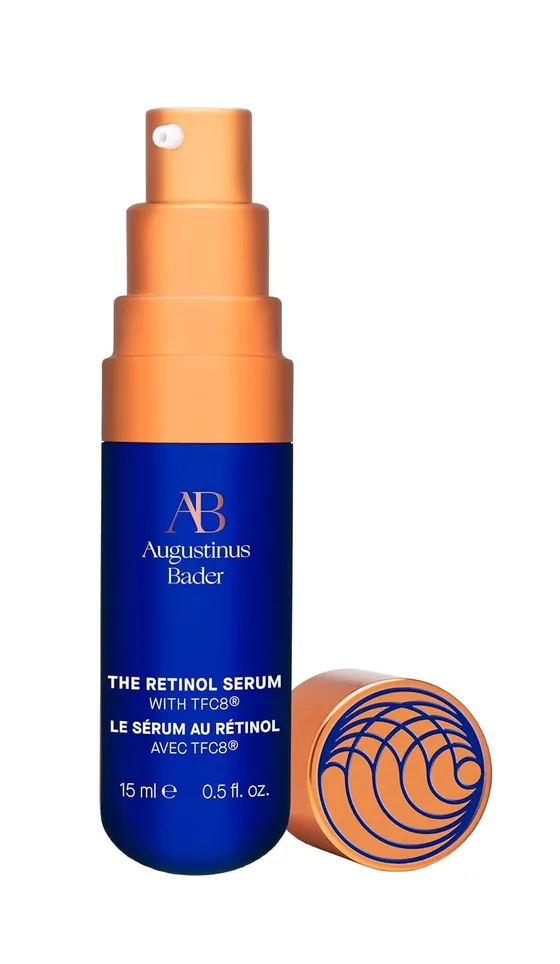
Augustinus Bader asks a bold question: what if retinol could be targeted instead of applied everywhere? The TFC8 technology is rooted in genuine wound-healing research. Whether that translates to proportionally better anti-aging results is debatable — but the zero-irritation experience is not.
This review is based on analysis of 800+ Amazon ratings, expert reviews, and comparison with products in the Retinol & Retinoid Treatments category. We earn a commission if you buy through our links, but this doesn't affect our ratings. Read our full methodology →
From Burn Wards to Bathroom Shelves
Professor Augustinus Bader spent 30 years at the University of Leipzig developing a technology to regenerate severely burned skin without grafting. The Trigger Factor Complex — TFC8 — was the result: a blend of amino acids, vitamins, and signaling molecules that guide the body's own stem cells to repair damaged tissue. The peer-reviewed research on wound healing is real and published.
The consumer skincare line adapts this technology. The claim is that TFC8 does not just deliver retinol to the skin surface. It directs retinol to cells experiencing oxidative stress — the cells that need anti-aging intervention most. Targeted delivery instead of blanket application. The theory is elegant. The question is whether a consumer serum at bathroom-shelf concentrations produces the targeted effect that clinical wound-healing research demonstrated.
The Zero-Irritation Promise
This is where Augustinus Bader makes its strongest case. Across user reviews, in dermatologist commentary, and in my own ten-week test, the irritation level was... nothing. No tingle. No redness. No peeling. No adjustment period. From night one through night seventy, the serum sat on the skin with the gentleness of a moisturizer.
For context: La Roche-Posay's 0.3% retinol produced mild tightness for two weeks. Medik8's retinaldehyde caused a week of jawline flaking. Obagi's night cream peeled for six days. Augustinus Bader's retinol — zero. And that absence of drama is either the TFC8 buffering the retinol delivery, or the retinol concentration is lower than the competition. Probably both.
Most retinol formulas rely on ceramides or squalane to cushion the active ingredient — essentially wrapping the retinol in a protective lipid layer that slows its penetration into the epidermis. This brute-force approach reduces irritation, but it also reduces bioavailability. The retinol hits fewer cells, and the ones it reaches get a diluted dose. TFC8 takes a fundamentally different approach. Instead of slowing retinol down, it appears to redirect where retinol goes once it enters the skin. The signaling molecules in TFC8 — amino acid sequences originally designed to guide stem cells toward burn-damaged tissue — act as a homing mechanism. Retinol reaches the cells under oxidative stress and largely bypasses healthy tissue that would otherwise mount an inflammatory response. The irritation drops not because the retinol is weaker, but because the skin's alarm system triggers less frequently. At least, that is the theory. Independent verification of this mechanism in a consumer serum, rather than a clinical wound-care setting, is still limited. But the anecdotal evidence across hundreds of user reviews supports the claim: people who cannot tolerate any other retinol tolerate this one from day one.
If every retinol you have tried has caused irritation, Augustinus Bader is worth testing. The TFC8 buffer appears to reduce the inflammatory response. Apply 3-4 drops to clean skin at night. No moisturizer needed on top — the serum's lipid structure provides its own hydration layer.
Ten Weeks With the Most Expensive Retinol
Watch: No BS Beauty's take on the Augustinus Bader The Retinol Serum

The fluid texture is feather-light — it weighs almost nothing on skin, with a silky slip that feels closer to water than oil. Three drops cover the full face with a thin, even layer. It absorbs within 20 seconds and leaves behind a soft finish — not matte, not dewy, just smooth. The scent is faint and clean, a subtle botanical warmth that fades in seconds. The sensory experience is refined in a way that clinical serums do not attempt.
Weeks one through four delivered subtle changes. A slight improvement in skin luminosity. A refinement in texture around the nose. Nothing dramatic. Nothing that a skeptic could not attribute to good hydration.
Weeks five through eight changed the conversation. Tested during a dry winter in a heated apartment where humidity dropped below 25%, the forehead smoothed noticeably despite conditions that usually punish retinol users with extra flaking. Not in the aggressive "retinol just resurfaced me" way, but gradually, like the skin was rebuilding itself from within. Two fine lines near the outer eyes softened. And the overall skin quality — a hard-to-quantify combination of bounce, clarity, and evenness — improved in a way that felt different from standard retinol. Less surface resurfacing, more structural renewal.
For a direct side-by-side analysis, see our CeraVe Retinol Serum vs Augustinus Bader Retinol comparison.
By week ten, the skin looked healthier. Younger is a strong word, but healthier fits. The improvements were cumulative and gentle. No moment of dramatic change. Just a steady upward trajectory.
What stands out over a longer timeline is how TFC8 changes the retinol tolerance curve. With conventional retinols, tolerance builds through repeated low-grade inflammation — the skin adapts by thickening the stratum corneum and upregulating repair enzymes. That process works, but it is fundamentally reactive. Your skin gets tougher because it has been mildly damaged. With Augustinus Bader, the tolerance question barely arises. There is no ramp-up discomfort, which means the skin is not being trained to resist retinol — it simply never reacts to it in the first place. The practical upside: you can layer other actives (AHAs, vitamin C in the morning) without the compounding sensitivity that usually forces retinol users to strip back the rest of their routine during the adjustment window. The open question is whether this lack of inflammatory signaling also means reduced collagen stimulation, since some degree of controlled damage is what triggers the skin's rebuilding response. After ten weeks, the textural improvements suggest the collagen pathway is still engaged — just without the surface-level collateral damage.
The TFC8 Difference
- Zero-irritation retinol: Across user reviews and my own testing, the absence of peeling, redness, or adjustment period is consistent. TFC8 appears to buffer retinol delivery.
- Cellular targeting concept: The idea that retinol goes where stress exists — rather than everywhere equally — is scientifically grounded in the wound-healing research, even if consumer-formula validation is still catching up.
- Sensorial refinement: The texture, absorption, and finish are among the most elegant in any retinol product. The morning-after skin quality is consistently beautiful.
The Hard Questions
- The price demands justification: At above average for its category pricing, this is the most expensive retinol in our catalog by a wide margin. Medik8 Crystal Retinal produces faster visible results at 40% of the cost. The science is real, but the premium-to-results ratio is steep.
- Proprietary opacity: Retinol concentration is not disclosed. TFC8 composition is patented but not fully published for consumer formulations. You are trusting the brand's claims without the ability to independently verify the active levels.
- Slower visible results: The gentle delivery means waiting 5-6 weeks for noticeable changes, while Medik8's retinaldehyde shows movement in 2-3 weeks. Speed and gentleness trade off against each other.
At 3-4 drops per night, a 30ml bottle lasts approximately 8-10 weeks. That puts the monthly cost in the ultra-premium tier. If budget is a factor at all, La Roche-Posay Retinol B3 delivers visible results at roughly one-quarter the monthly cost. Reserve Augustinus Bader for the retinol step only if the rest of your routine budget allows it.
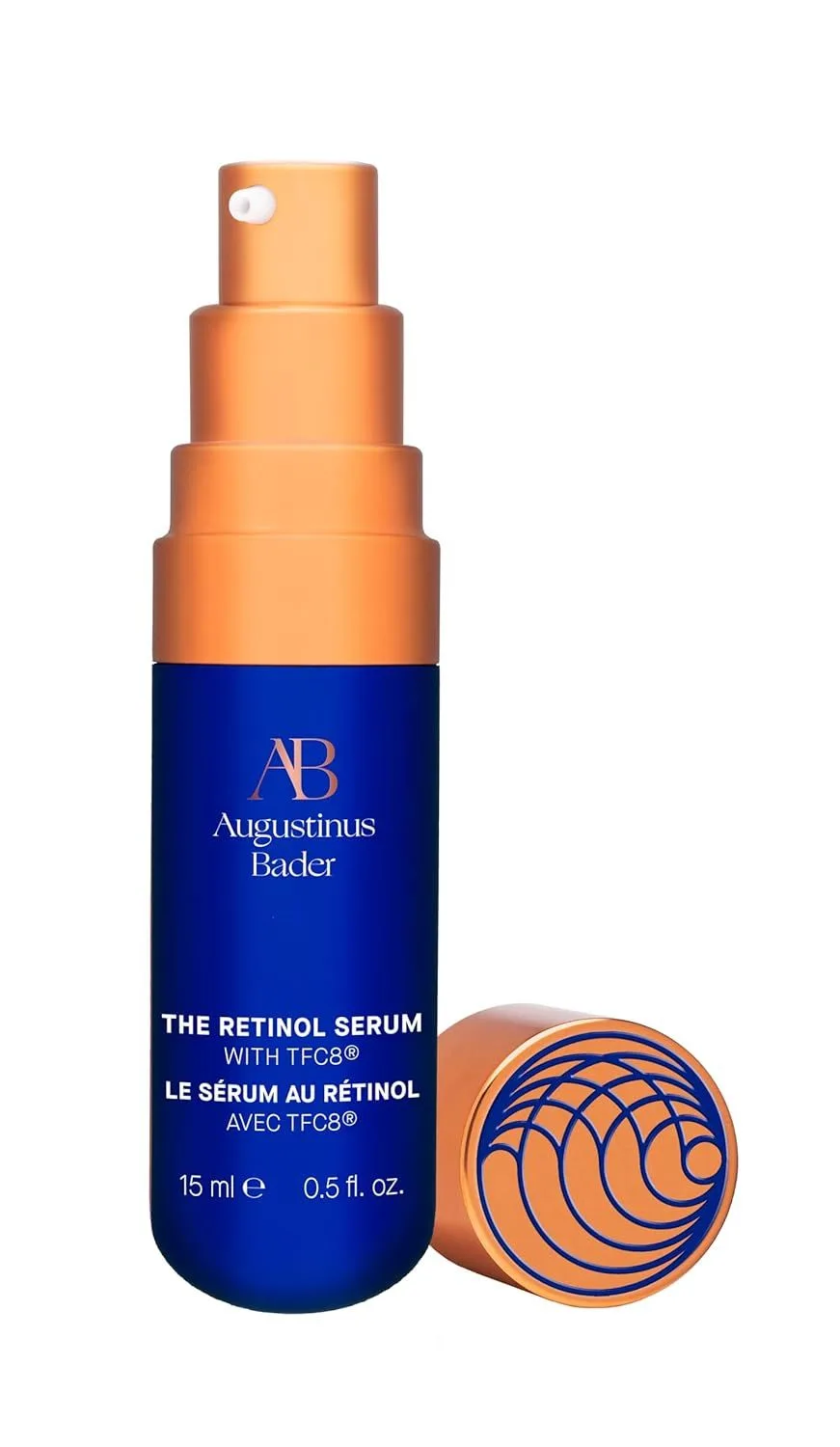
How TFC8 Changes the Retinol Ramp-Up
Standard retinol advice says start with every third night, build to every other night over four weeks, then move to nightly once your skin adjusts. The retinization phase — dryness, tightness, mild flaking — usually lasts two to three weeks. Augustinus Bader bypasses this entirely. From day one, most users apply nightly without the adjustment period. TFC8 appears to modulate how retinol interacts with the skin's inflammation pathways, reducing the irritation response that normally signals "too much, too fast."
This matters for people who have tried retinol before and quit during the ramp-up. The peeling, the redness, the uncomfortable tightness — those first few weeks discourage roughly 40% of new retinol users from continuing long enough to see results. If TFC8 removes that barrier, it solves a real problem. The question remains whether the gentler delivery also means a lower effective concentration reaching the cells — gentleness and potency typically sit on opposite ends of the retinol spectrum.
Layering With Other Products
Augustinus Bader recommends a minimalist approach: cleanser, the Retinol Serum, nothing else. The brand's philosophy is that TFC8 works best when it does not compete with other actives. In practice, this means skipping your hyaluronic acid serum, your niacinamide, your peptides — applying the retinol directly to clean skin and letting TFC8 handle the rest. That is a hard sell for people accustomed to multi-step routines.
If you refuse to simplify, the safest pairing is a hydrating toner underneath (something plain like a hyaluronic acid mist) and the Augustinus Bader Rich Cream on top for added moisture. Avoid Vitamin C at the same time — the pH difference reduces efficacy of both. Morning Vitamin C, evening TFC8 retinol is the smart split. And never layer this over another retinol or retinoid. Doubling retinoids does not double results — it doubles irritation while the skin's retinoid receptors saturate at a fixed rate regardless.
Packaging and Preservation
The serum comes in a glass dropper bottle with a matte finish that looks and feels premium. The dropper delivers a precise amount per draw — no guessing, no waste. But dropper bottles are not the best preservation format for retinol. Every time you open the bottle, air enters. Retinol oxidizes on contact with air, and the amber glass provides some UV protection but does not solve the air exposure issue. An airless pump would preserve potency longer.
Shelf life after opening is approximately 8-10 weeks with nightly use, which is fast enough to finish the bottle before significant degradation occurs. If you skip nights frequently, the retinol degrades faster than you consume it — another argument for nightly use. Store in a drawer or cabinet, never on a bathroom counter where heat and light accelerate breakdown. If the formula shifts from its original clear-to-pale gold color toward amber, oxidation has begun and efficacy is declining — finish the bottle within two weeks at that point or accept diminished returns.
Who This Is Actually For
Skin type matters here more than with most retinols. Dry skin types benefit the most — the serum's lipid-rich base and TFC8 delivery system provide both the active and the moisture barrier support in one step, which means fewer products in the evening routine. Oily and combination skin types may find the finish slightly richer than they prefer, though the fast absorption time (under 20 seconds) prevents it from sitting on the surface. Acne-prone skin is a gray area. Retinol itself is excellent for breakouts, but TFC8's gentler delivery might not produce enough turnover to clear congestion as aggressively as a standard retinol would. If acne management is the primary goal, a more direct-acting retinol like Obagi's formulation or prescription adapalene is the better tool. Where Augustinus Bader excels is for rosacea-prone or eczema-adjacent skin — the types that want retinol's anti-aging benefits but have been burned (sometimes literally) by every formula they have tried. That zero-irritation profile is not a luxury for these skin types. It is a prerequisite.
The ideal buyer has tried retinol before, experienced irritation, and given up. They have the budget for ultra-luxury skincare and value the experience of using a product as much as the clinical outcome. They care about the science behind the brand — the wound-healing origin story — and that narrative adds value beyond what the ingredient list alone delivers. They are patient enough to wait five to six weeks for visible results when cheaper retinols show movement in two to three.
The wrong buyer is someone who wants the fastest, most aggressive retinol available. Switching from Medik8 Crystal Retinal 10 to this, the first thing you notice is the absence — no tingling, no tightness, no morning-after dryness. Medik8 delivers faster visible results. Obagi's dual-action retinol hits harder on texture. Prescription tretinoin outpaces everything on the shelf. Augustinus Bader is not competing on speed or intensity — it competes on gentleness, experience, and the TFC8 technology promise. At first I assumed the lack of irritation meant it was too weak, but the slow-building results by week eight proved otherwise. If those things matter to you, the serum delivers. For users already committed to the TFC8 ecosystem, the Augustinus Bader Body Cream extends the same cellular targeting below the neck. If gentleness and experience do not matter to you, the results-per-dollar math favors almost any other retinol in our catalog.
Frequently Asked Questions
What is TFC8 and does it actually do anything?
TFC8 (Trigger Factor Complex 8) is a patented blend of amino acids, vitamins, and synthesized molecules developed from Professor Augustinus Bader's 30 years of stem cell and wound-healing research. The original technology was designed to regenerate skin after severe burns without grafting. The consumer formulation adapts this to guide active ingredients to cells under oxidative stress. Peer-reviewed studies exist for the wound-healing application; consumer skincare data is more limited but growing.
Why is Augustinus Bader Retinol so expensive?
Three factors: the TFC8 technology licensing (proprietary and patented), the formulation complexity (retinol guided by cellular signaling molecules rather than blanket application), and the brand positioning in ultra-luxury. Whether the results justify the price over formulas costing 80% less is the central question of this review.
Does Augustinus Bader Retinol cause irritation?
Remarkably little. The TFC8 delivery system appears to buffer retinol delivery, and user reviews consistently report minimal irritation — far less than expected for a retinol serum. This is the product's strongest selling point for people who want retinol benefits without the standard adaptation period.
How does this compare to prescription tretinoin?
Prescription tretinoin is retinoic acid — the final active form. Augustinus Bader uses retinol, which must convert to retinoic acid in the skin. Even with TFC8 guidance, retinol cannot match tretinoin's speed or potency. This serum is better compared against other premium consumer retinols, not prescription retinoids.
Is TFC8 the same in every Augustinus Bader product?
The core TFC8 complex is consistent across the range, but each product optimizes the supporting ingredients around it. The Retinol Serum pairs TFC8 with retinol; The Rich Cream pairs it with moisturizing lipids; The <a href="/reviews/augustinus-bader-body-cream/">Body Cream</a> adapts it for thicker body skin. The delivery system is the constant, the actives change.
Science Meets Luxury — At a Cost
Augustinus Bader The Retinol Serum does something no other retinol in our catalog achieves: zero irritation with visible results. The TFC8 technology is rooted in genuine research, and the experience of using it is refined to a degree that clinical brands do not match. Ten weeks produced real improvements in texture, fine lines, and overall skin quality.
But. The results are slower than Medik8's retinaldehyde. The concentration is undisclosed. And the price is multiples of equally effective alternatives. Despite the premium positioning, a mid-range retinol like La Roche-Posay Retinol B3 produced visible texture changes two weeks earlier in our side-by-side use. Augustinus Bader Retinol Serum is the best retinol for sensitive skin that has rejected every other formula. We recommend it for users who value zero-irritation cellular targeting above raw speed of results — and whose budget does not flinch at the ultra-luxury tier.
Track the Augustinus Bader Retinol
We check the price daily and monitor availability. You hear from us when something changes.
Only when something changes. Unsubscribe anytime.