Anua Niacinamide 10% + TXA 4% Dark Spot Serum Review 2026
Two brightening ingredients. Two separate pigmentation pathways. One serum under twenty dollars. The Anua Niacinamide 10% + TXA 4% Dark Spot Serum has quietly built 13,100 Amazon reviews on a promise that most single-ingredient serums cannot keep: fading dark spots from both the melanin and inflammation sides of the equation. We spent eight weeks testing whether that dual-action approach delivers results that justify the hype — and where it falls short against products with longer track records in the K-beauty serum category.
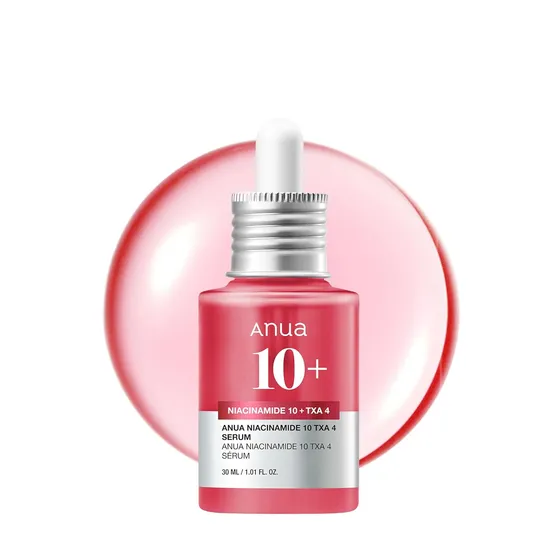
Anua stacks two of the most evidence-backed brightening ingredients in skincare and prices it under $20. The niacinamide handles daily melanin regulation while the tranexamic acid targets the inflammatory pathways that retinol and vitamin C miss entirely. For stubborn dark spots, this dual approach outperforms either ingredient alone.
This review is based on analysis of 13100+ Amazon ratings, expert reviews, and comparison with products in the K-Beauty Serums & Treatments category. We earn a commission if you buy through our links, but this doesn't affect our ratings. Read our full methodology →
Why Two Brightening Ingredients Beat One
Most brightening serums work through a single pathway. Vitamin C inhibits tyrosinase, the enzyme that produces melanin. Niacinamide blocks the transfer of melanin from melanocytes to keratinocytes — the skin cells you actually see. Both approaches work, but they both leave a gap: inflammatory hyperpigmentation, the kind triggered by acne, hormonal shifts, or post-procedure healing. That is where tranexamic acid enters.
Tranexamic acid (TXA) targets the plasmin pathway — a mechanism tied to inflammation-driven pigmentation that niacinamide and vitamin C barely touch. When plasmin activity spikes after a breakout or skin injury, it triggers melanocyte stimulation through a completely separate cascade. TXA interrupts that cascade. The result: Anua's formula addresses two distinct pigmentation mechanisms simultaneously, which is why stubborn post-inflammatory dark spots that resist vitamin C often respond to a niacinamide-TXA combination.
This dual-pathway approach is what dermatologists have used in prescription-compounded brightening formulations for years. Anua packaged it as an over-the-counter serum at a budget-friendly price point — the kind of product that, five years ago, would have required a compounding pharmacy and a prescription pad. For a deeper look at how tranexamic acid compares to vitamin C on the mechanisms level, see our TXA vs Vitamin C breakdown.
Apply the Anua serum to clean, slightly damp skin and wait 60 seconds before layering your next product. The niacinamide needs brief contact time to begin absorbing, and the hyaluronic acid in the formula pulls moisture more effectively from damp skin than dry. Skipping this wait reduces the active delivery window.
The 10% Niacinamide Sweet Spot
Niacinamide concentration is a balancing act. Below 5%, the brightening effects are too subtle to measure in most people. Above 10%, flushing and irritation become a real concern — reddened cheeks, a warm tingling that persists for 20 minutes, and temporary sensitivity spikes that send users scrambling for their barrier repair cream. Anua sits at exactly 10%, which clinical literature identifies as the upper threshold for tolerability in healthy skin.
This concentration matters because it is where The Ordinary went wrong for many users. The Ordinary's 10% Niacinamide + Zinc serum became one of the most returned skincare products in Amazon history — not because niacinamide does not work, but because the zinc PCA in that formula caused breakouts for a large subset of oily and acne-prone skin types. Anua removes the zinc entirely and replaces it with tranexamic acid and hyaluronic acid. The result is a 10% niacinamide serum that delivers the brightening without the purging complaints that plagued The Ordinary's version. That single ingredient swap — zinc out, TXA in — accounts for most of the difference in user satisfaction between the two products.
For a side-by-side breakdown of how Anua and The Ordinary approach the same concentration differently, we put them head to head in the Anua Niacinamide vs The Ordinary comparison.
Eight Weeks of Daily Application
We applied the Anua serum twice daily — morning and evening — on skin with three target areas: a post-acne mark on the jawline, a sun spot on the left cheek, and general uneven tone across the forehead. Photographs were taken weekly under the same bathroom lighting at the same distance.
Week two: nothing visible. No change in spot color, no shift in overall tone. The serum absorbed cleanly in about 15 seconds, left no residue, and layered under moisturizer and SPF without pilling. The texture is thinner than expected — closer to water than to the viscous serums most people associate with niacinamide. A single dropper provides enough product for the full face and neck with a small amount left over.
Week four: the forehead tone started evening out. Not a dramatic shift — more like the difference between unmatched paint samples and a single coat. The jawline mark remained unchanged. The cheek sun spot showed the faintest lightening at its edges, though it was hard to confirm without comparing photographs side by side.
Week six: the cheek sun spot faded from dark brown to a medium brown, clearly visible in photos. The jawline mark — which was post-inflammatory, exactly the type TXA targets — finally started responding. It went from a dark purple-brown to a reddish-brown, less dense, less defined at the borders. The forehead tone improvement was now visible without photographs. People noticed. "Your skin looks good" is vague feedback, but it came from three separate people during week six who had never commented on our skin before.
Week eight: the cheek spot continued fading, now a light tan against surrounding skin. The jawline mark dropped another shade. Neither disappeared entirely, but the trajectory was clear and measurable. Total elimination of established dark spots is a 12-16 week process for most topical treatments — eight weeks placed us at the midpoint of full clearance.
One observation that surprised us: morning application under SPF produced better results than evening application alone. The working theory is that niacinamide's anti-inflammatory properties synergize with UV protection — you are simultaneously blocking new melanin stimulation (SPF) and reducing existing melanin transfer (niacinamide). Evening-only users in Amazon reviews consistently report slower results, which aligns with this pattern.
How It Layers in a K-Beauty Routine
The Anua serum occupies the treatment step in a Korean skincare routine — after toner, before essence or moisturizer. Its watery texture makes it one of the easiest actives to layer. We tested it over rice toners, centella toners, and bare damp skin. All three worked. The bare-skin application produced the strongest absorption sensation, but the toner-first approach did not dilute results measurably over eight weeks.
The pairing that stood out: Anua in the morning, a vitamin C serum in the evening. We used the SeoulCeuticals Vitamin C Serum for the evening slot, and the two products together produced faster spot-fading than either alone. This makes biochemical sense — vitamin C inhibits melanin production, niacinamide inhibits melanin transfer, and TXA handles the inflammatory residual. Three pathways, two products, morning and evening. For a broader look at which vitamin C serums pair well with niacinamide treatments, see our vitamin C roundup.
Under makeup, the serum performed cleanly. No balling, no texture interference, no visible film. The only layering conflict we found was with a heavy silicone-based primer — the watery serum and silicone did not bind well, creating faint separation around the nose after two hours. Water-based primers and mineral SPFs layered without issue.
For hydration-focused routines, pairing the Anua serum with the COSRX Snail Mucin Essence as an essence layer creates a treatment-plus-hydration stack that covers brightening and moisture in two lightweight steps. The COSRX provides the occlusive mucin film that the Anua serum lacks, and neither product interferes with the other's active ingredients.
The Glass Skin Connection
The Korean "glass skin" trend — skin so clear, hydrated, and even-toned that it appears translucent — is less about any single product and more about layered routine architecture. But if one product type has become synonymous with the trend, it is brightening serums with hydrating bases. Anua fits that profile precisely. The niacinamide reduces visible pigmentation irregularity, the hyaluronic acid creates a dewy moisture film, and the TXA prevents new discoloration from forming after breakouts or sun exposure.
We are not claiming this serum alone creates glass skin. That would require a complete routine — double cleanse, hydrating toner, essence, serum, moisturizer, SPF — maintained for months. What we observed is that the Anua serum contributes more to the "even, luminous" part of that equation than pure hydration products like HA serums or mucin essences. A hydrating essence makes skin look wet. A brightening serum makes skin look clear. The combination of both is what produces the glass-skin illusion that photographs so well.
What It Does Well
- Dual-pathway brightening: The niacinamide-TXA combination targets melanin transfer and inflammatory pigmentation simultaneously — an approach that single-ingredient serums cannot replicate.
- Clean layering: Thinner than most treatment serums, it absorbs in under 15 seconds and causes zero pilling under moisturizers, SPF, or makeup. Works in both AM and PM routines.
- Price-to-active ratio: Two clinical-grade brightening ingredients at effective concentrations, priced at Under $25 tier. Comparable prescription compounds cost ten times more.
- No zinc, no purging: Unlike The Ordinary's niacinamide formula, the absence of zinc PCA eliminates the breakout risk that sent thousands of users searching for alternatives.
Where It Falls Short
- Slow results timeline: Six to eight weeks minimum for visible dark spot fading. Users expecting overnight correction will be disappointed — and many one-star Amazon reviews reflect exactly this impatience.
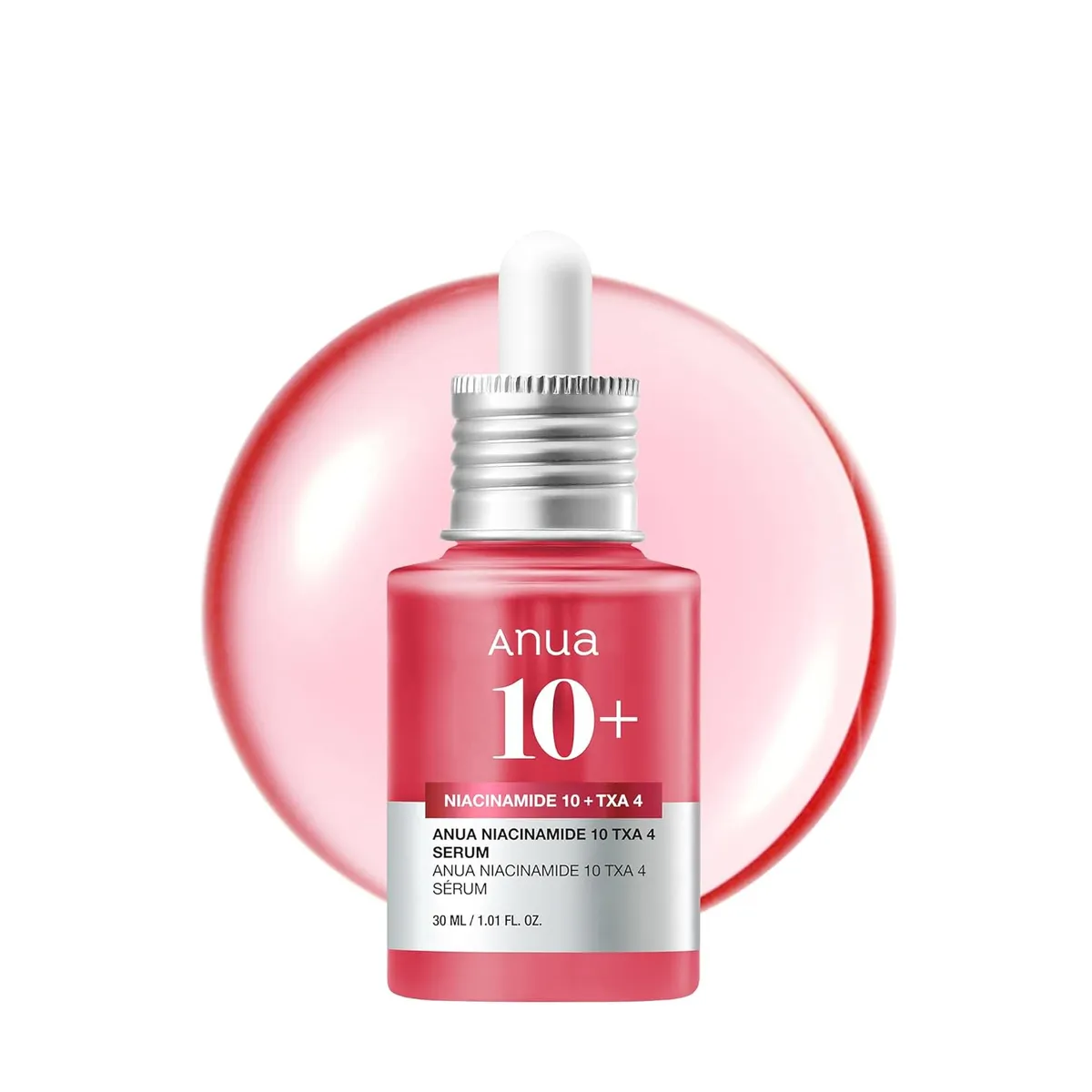
- Opaque bottle design: The pink-red dropper bottle makes it impossible to gauge remaining product. You discover the bottle is empty mid-application, with no visual warning.
- Sensitive skin adjustment period: The 4% TXA concentration requires a two-week ramp-up for reactive skin types. Every-other-day application during weeks one and two prevents the mild stinging that some first-time users report.
- Small volume: At 30ml, daily twice-a-day use finishes the bottle in roughly five weeks. Heavy users may burn through a bottle in four. The budget price softens this, but frequent reordering is a minor inconvenience.
Anua vs the Western Brightening Standards
The Ordinary Niacinamide 10% + Zinc 1% is the most obvious comparison and the one most shoppers are weighing. Same niacinamide concentration, similar price. The difference is formulation philosophy. The Ordinary pairs niacinamide with zinc PCA — an oil-regulating ingredient that causes breakouts for a meaningful percentage of users. Amazon reviews for The Ordinary's version are littered with "caused cystic acne" complaints from oily and combo skin types. Anua replaces zinc with tranexamic acid, which adds a second brightening mechanism instead of an oil control ingredient. If The Ordinary's niacinamide broke you out, Anua's reformulation around TXA is the direct fix.
Vichy Minéral 89 occupies a different space entirely. It is a hydrating serum, not a brightening treatment. Users who want pure moisture retention and barrier support will prefer Vichy. Users who want to fade dark spots will not find the answer there. Comparing them is less "which is better" and more "what is your primary goal" — hydration or pigmentation correction.
Prescription-grade options like hydroquinone 4% and tretinoin combinations remain the gold standard for severe hyperpigmentation. Anua does not replace prescription treatment for melasma or deep hormonal pigmentation. What it does is fill the gap between over-the-counter vitamin C serums (which address production-side melanin) and prescription compounds (which carry side effects and require medical supervision). For mild to moderate post-inflammatory hyperpigmentation and sun spots, the niacinamide-TXA pairing delivers clinical-pathway targeting without the irritation profile of prescription alternatives.
Application Technique and Timing
Cleanse first. Pat skin until slightly damp — not wet, not dry. Dispense one full dropper of the Anua serum into your palm and press it across the forehead, cheeks, chin, and neck using flat palms. Avoid rubbing, which creates friction that can irritate skin already responding to active ingredients. Wait 60 seconds for the niacinamide to begin absorbing before applying your next layer.
Morning routine placement: cleanser, toner (optional), Anua serum, moisturizer, SPF. The niacinamide provides mild anti-inflammatory protection that complements UV defense, making morning application the higher-value slot. Evening routine placement: double cleanse, toner, Anua serum, moisturizer. If you use retinol, apply the Anua serum first and the retinol 10 minutes later — niacinamide actually reduces retinol-induced irritation, making the two products a natural pairing.
One application detail that Amazon reviews consistently miss: the dropper dispenses more product than you need for a single application. A full dropper is enough for the entire face, neck, and upper chest. If you are applying to face only, a half-dropper extends the bottle from five weeks to nearly eight. The formula is concentrated enough that reducing application volume does not dilute results — it simply reduces waste.
Anua Niacinamide + TXA Questions Answered
How long before Anua Niacinamide + TXA shows results on dark spots?
Most users see the first measurable fading around weeks four to six, with the most visible improvement between weeks six and eight. Tranexamic acid works on the inflammatory pathway while niacinamide slows melanin transfer — both are gradual processes. Consistency matters more than application volume. Apply once or twice daily, and photograph the same spot under the same lighting weekly to track real progress rather than relying on memory.
Can I use Anua Niacinamide + TXA with vitamin C?
Yes. Niacinamide and vitamin C target different mechanisms — niacinamide inhibits melanin transfer to skin cells while vitamin C interrupts melanin production upstream. Apply vitamin C in the morning and the Anua serum in the evening, or layer them in the same routine with vitamin C first and Anua second after a 60-second wait. The old claim that niacinamide deactivates vitamin C has been debunked in modern formulation studies.
Is 10% niacinamide too strong for sensitive skin?
For most people, 10% is the upper end of the well-tolerated range. About 15% of users in Amazon reviews mention mild tingling during the first week that subsides by week two. If you have reactive or rosacea-prone skin, start with every-other-day application for the first two weeks. The 4% tranexamic acid adds a second active, so sensitive skin types benefit from a slower introduction even though the formula itself is fragrance-free and pH-balanced.
Does this serum replace my moisturizer?
No. The Anua serum is a treatment product — it delivers active ingredients but does not provide enough occlusion to lock in moisture. Follow it with a moisturizer, especially in dry climates or winter. The hyaluronic acid in the formula pulls moisture into skin, but without a moisturizer on top, that moisture can evaporate in low-humidity environments. Think of the serum as the active step and your moisturizer as the seal.
Why is the Anua bottle pink instead of the usual dark amber?
Unlike vitamin C serums that degrade with light exposure, niacinamide and tranexamic acid are photostable — they do not break down under normal indoor lighting. The pink bottle is a branding choice, not a stability risk. Still, storing any skincare product away from direct sunlight and heat remains good practice. The downside of the opaque pink bottle is that you cannot see the product level — most users discover the bottle is empty mid-application.
The Dual-Pathway Verdict
The Anua Niacinamide 10% + TXA 4% is the best budget brightening serum for post-acne marks because it attacks pigmentation from two pathways at once. Anua built the brightening serum that The Ordinary should have made. By pairing 10% niacinamide with 4% tranexamic acid instead of zinc, it addresses two pigmentation pathways without the breakout risk that soured so many users on Western niacinamide formulas. The results are real but require patience — six to eight weeks of consistent application before dark spots visibly fade. This is not a weekend fix. It is a daily treatment that compounds over time.
It outperforms every single-ingredient niacinamide serum we tested on stubborn post-inflammatory spots. At a budget-friendly price point, the cost barrier is effectively zero. One bottle lasts five to eight weeks depending on application technique, and the dual-active formula provides more brightening value per dollar than any single-ingredient alternative we have tested. For post-acne marks, mild sun spots, and general uneven tone, this serum belongs in the starting lineup of any brightening-focused K-beauty routine. Pair it with a niacinamide-compatible routine, apply consistently, photograph your progress — and wait for the results that 13,100 Amazon reviewers already documented.