Medik8 Crystal Retinal 10 vs Obagi Retinol + PHA Cream: Which Is Better in 2026?
Two advanced retinoid treatments built for people who have outgrown beginner formulas. Medik8 Crystal Retinal encapsulated treatment uses retinaldehyde — a molecule one conversion step ahead of retinol with 11x faster results in published research. Obagi Retinol + PHA night cream pairs traditional retinol with polyhydroxy acid exfoliation for a dual-action approach. With Obagi modestly more expensive than Medik8, the question is whether next-generation chemistry or dual-pathway formulation delivers more for your skin.
Quick Verdict: Medik8 wins on retinoid science and speed of conversion. Obagi wins on resurfacing depth through its dual retinol + PHA approach. Choose Medik8 if you want the most advanced retinoid available without a prescription. Choose Obagi if you want aggressive overnight resurfacing from two complementary pathways.
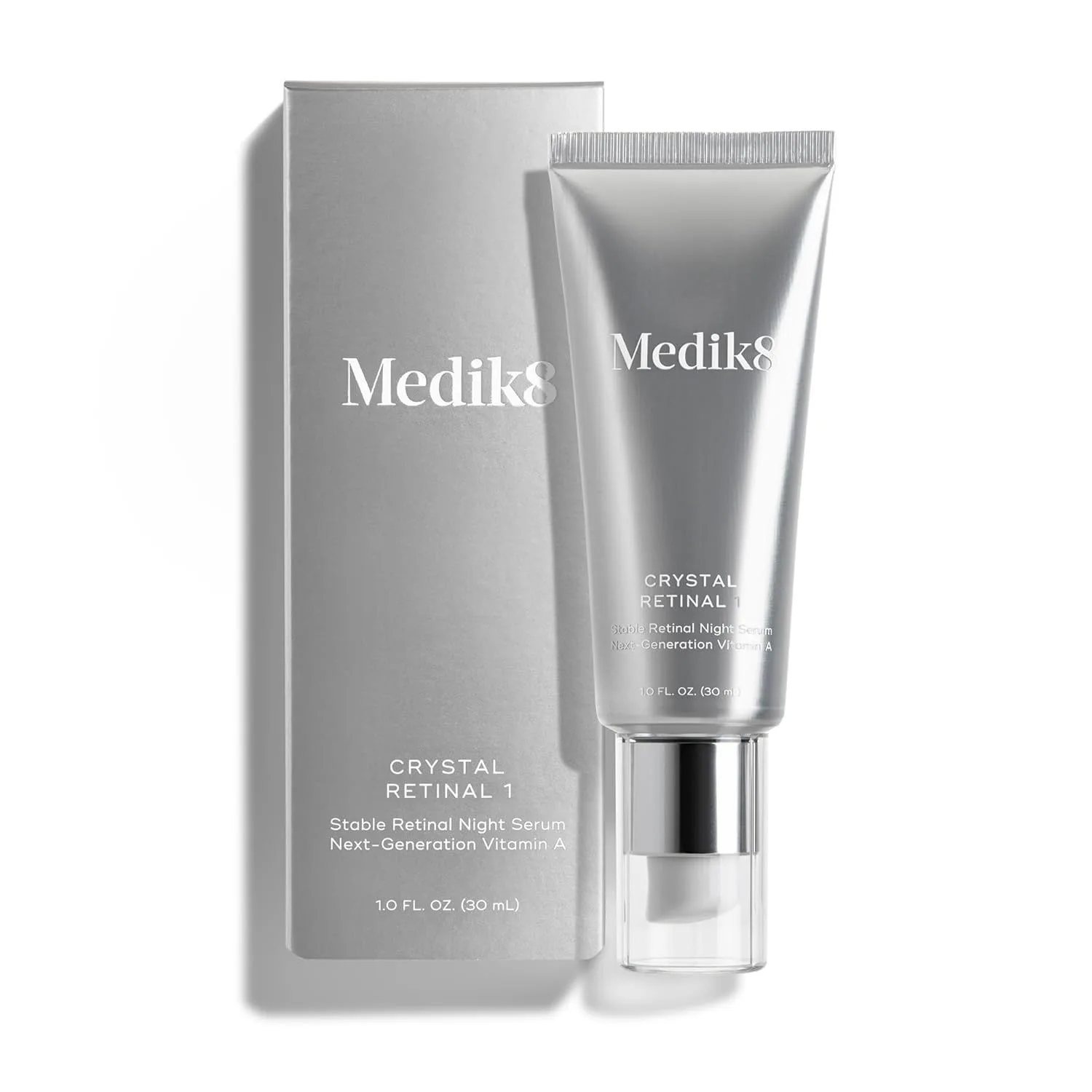
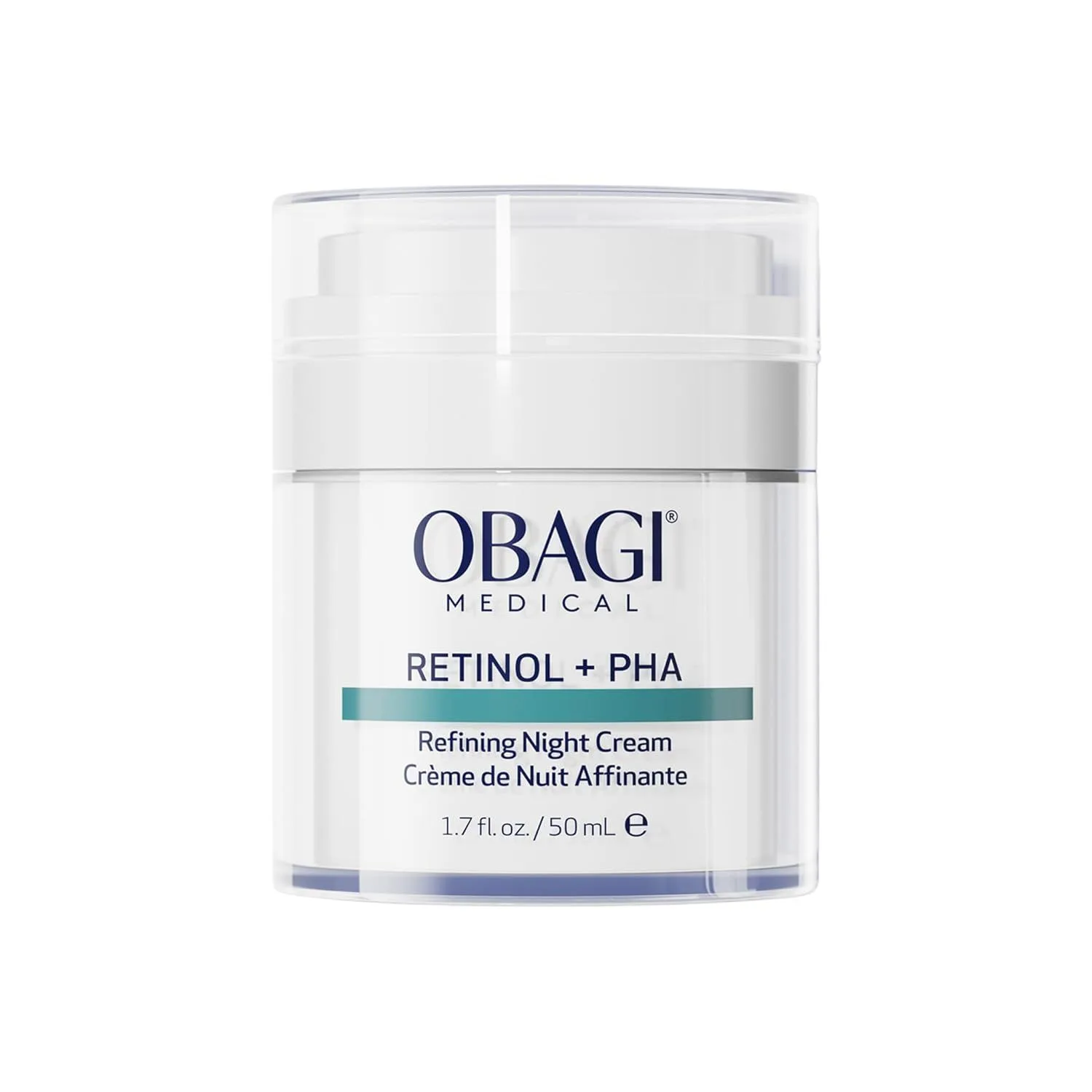
At a Glance
| Feature | Medik8 Crystal Retinal 10 | Obagi Retinol + PHA Refining Night Cream |
|---|---|---|
| Price Range | $100–$250 | $100–$250 |
| Size | 30ml / 1 fl oz | 30ml / 1 fl oz |
| Best Skin Type | Retinol-experienced skin | Normal to dry, resilient skin |
| Key Ingredient | 0.10% Retinaldehyde | Retinol + Polyhydroxy Acids |
| Active Concentration | 0.10% Retinaldehyde | Professional-grade (undisclosed) |
| Texture | Balm-cream hybrid | Rich night cream |
| Fragrance | Fragrance-free | Fragrance-free |
| See Availability | See Availability |
Retinaldehyde vs Retinol: Does the Chemistry Gap Really Matter?
Medik8's retinaldehyde sits one biochemical step closer to retinoic acid than Obagi's retinol. In published studies, retinaldehyde converts to the active form 11 times faster. That conversion speed translates to faster results with potentially less irritation — your skin spends less energy on the conversion process itself. Obagi's retinol takes the longer conversion path, but the concentration and PHA pairing compensate for the slower molecular journey. The chemistry gap is real, and it favors Medik8 for pure retinoid efficiency.
One Active vs Two: Does Dual Action Double the Results?
Obagi's formula attacks texture from two angles simultaneously. Retinol stimulates cell turnover from within. Polyhydroxy acids dissolve dead cells on the surface. Two resurfacing mechanisms working in parallel is aggressive — and the overnight results reflect that intensity. Medik8 relies on retinaldehyde alone, trusting the molecule's faster conversion to compensate for not having a second active. For sheer surface-level smoothing and texture refinement, Obagi's dual approach produces more dramatic overnight results. For deeper cellular-level renewal, Medik8's retinaldehyde goes further.
The PHA component in Obagi deserves closer attention because polyhydroxy acids are not interchangeable with their AHA cousins. PHAs have a larger molecular structure than glycolic or lactic acid, which means they cannot penetrate as deeply — but that limitation is actually an advantage here. The larger molecules exfoliate the outermost dead cell layer without reaching the deeper living tissue where retinol is already working. This creates a two-depth system: PHAs clearing the surface while retinol remodels underneath. If Obagi had used glycolic acid instead, the dual penetration would likely cause excessive irritation for most users. The PHA selection is not an accident — it is precision engineering that keeps both actives operating in their own lane.
Encapsulation Technology: Whose Delivery System Wins?
Medik8's double-layered crystal encapsulation controls the release rate of retinaldehyde — it dissolves gradually instead of flooding the skin all at once. This engineering reduces irritation without sacrificing efficacy. Obagi does not use encapsulation; the retinol and PHAs are released immediately in a rich cream vehicle. The cream base provides some buffering, but it is not a controlled-release system. For irritation management and sustained overnight delivery, Medik8's encapsulation technology is the more sophisticated approach.
Texture at Midnight: What Goes on Your Skin?
Obagi is a rich night cream — dense, nourishing, designed to sit on the skin through the entire repair window. It replaces your usual night moisturizer. Medik8 is a balm-cream hybrid — lighter than Obagi, but heavier than a serum. You can layer a light moisturizer on top if needed. For dry skin types, Obagi's richness is a benefit. For combination or oily skin, Medik8's lighter profile breathes more freely overnight. Your skin type should drive this decision.
The Sustainability and Transparency Question
Medik8 is B Corp certified with full ingredient transparency and documented sustainability commitments. The brand publishes concentration details, sourcing information, and environmental impact data. Obagi keeps its retinol concentration proprietary — you know it is "professional-grade" but not the exact percentage. For consumers who value transparency and ethical business practices alongside skincare efficacy, Medik8's openness is a clear differentiator.
Packaging also reflects this philosophical divide. Medik8 uses airless pump tubes that minimize product waste and protect the retinaldehyde from oxidation — every application delivers a consistent, fresh dose. The packaging is recyclable and the brand publishes specific recycling instructions for each component. Obagi's jar format exposes the product to air each time you open it, which accelerates retinol degradation over the life of the product. The last third of an Obagi jar is measurably less potent than the first third simply from repeated air exposure. Medik8's airless system maintains full potency from the first squeeze to the last.
Building Tolerance: The First Eight Weeks
Both formulas require a ramp-up period, but the irritation profiles differ. Medik8's encapsulated retinaldehyde releases gradually, producing a mild tingle that most users describe as "warm" rather than "burning." The retinization phase (dryness, slight peeling, sensitivity) typically lasts 2-3 weeks and is manageable without additional buffer products. Obagi's combination of retinol and PHA creates a more intense first experience — the PHA exfoliation adds surface-level tingling on top of the retinoid adjustment. Users report 3-4 weeks of noticeable peeling before the skin stabilizes.
The practical difference: Medik8 users can often move from every-third-night to nightly within 4-5 weeks. Obagi users typically need 6-8 weeks to reach nightly tolerance because the dual-active load is heavier. For more retinoid options ranked by strength, see our best retinol treatments roundup. Neither product should be applied to damp skin — wait until your face is completely dry after cleansing, then apply. Damp skin increases penetration speed and amplifies the sting of both formulas.
If irritation becomes uncomfortable during the ramp-up, the buffering strategy differs by product. For Medik8, apply your regular moisturizer first, then the retinaldehyde on top — the moisturizer buffer slows penetration without eliminating it. For Obagi, skip one night entirely and apply a thick layer of ceramide moisturizer instead — the dual-action formula responds better to a full rest night than to buffering.
Long-Term Results: What Changes After Six Months
At the six-month mark with consistent use, both products deliver measurable anti-aging improvement — but the results look different. Medik8 users report smoother texture, reduced fine line depth, and improved skin tone uniformity. The retinaldehyde's closer proximity to retinoic acid means it stimulates collagen more efficiently, and the results feel like the skin itself has changed at a structural level. The improvement is gradual and builds — month four looks better than month two, and month six looks better than month four.
One factor that rarely appears in retinoid comparisons is how these products affect skin's response to other treatments over time. After six months of consistent Medik8 use, the accelerated cell turnover means your skin responds better to hydrating serums, antioxidants, and even professional treatments like chemical peels. The retinaldehyde primes the skin to absorb follow-up products more efficiently because the surface cell layer is fresher and more uniform. Obagi users experience a similar priming effect, but the PHA component adds a secondary benefit — the ongoing gentle exfoliation keeps the skin's surface perpetually receptive to whatever you apply next. Dermatologists who recommend either product often note that their patients' entire routines perform better after six months, not just the retinoid step.
Obagi users at six months report more dramatic texture changes on the surface. The combination of retinol-driven cell turnover and PHA exfoliation produces a resurfacing effect that makes the skin feel physically smoother to the touch. Pore size appears reduced, post-acne marks fade faster, and the overall complexion has a "polished" quality that friends notice. The surface-level results are more immediately visible than Medik8's deeper structural improvements, even though both are working on collagen stimulation underneath.
Pairing With the Rest of Your Routine
Medik8 Crystal Retinal pairs well with a simple routine: gentle cleanser, the retinaldehyde, and a moisturizer. The controlled-release encapsulation means you do not need to buffer it with extra products unless your skin is particularly sensitive. In the morning, Vitamin C serum plus SPF completes the protocol — retinaldehyde at night for cell turnover, Vitamin C in the morning for antioxidant protection. Medik8 specifically designs its retinal and Vitamin C products to work as AM/PM partners.
Obagi's rich cream texture replaces your night moisturizer entirely — do not layer additional cream on top unless your skin is extremely dry. The PHA component provides its own gentle exfoliation, so skip any additional exfoliating acids (glycolic, lactic, salicylic) on nights you apply Obagi. Over-exfoliating with multiple acid sources weakens the barrier rather than improving it. Reserve your AHA or BHA exfoliant for a once-weekly treatment on a night you skip the Obagi.
Neither product should be combined with benzoyl peroxide on the same night. Benzoyl peroxide degrades retinol and retinaldehyde on contact, neutralizing the active ingredient before it reaches your cells. If you use benzoyl peroxide for acne, apply it in the morning and keep your retinoid for the evening. The 12-hour separation is sufficient for both to work without interference.
Niacinamide deserves special mention in the context of retinoid routines. Applied before either product, a niacinamide serum strengthens the skin barrier and reduces the inflammation that retinoids can trigger during the adjustment period. Medik8 actually includes niacinamide-compatible formulations in their product line specifically for this purpose. Obagi users can add any standalone niacinamide serum — apply it first, wait two minutes for absorption, then follow with the retinol + PHA cream. The combination of niacinamide's barrier support and retinoid cell turnover is one of the most well-documented pairings in dermatology, and both products benefit from it.
Peptide serums present a different layering consideration. Copper peptides — found in products from brands like NIOD and The Ordinary — can interfere with retinoid activity. The copper ion destabilizes both retinol and retinaldehyde molecules on contact. If peptide serums are part of your routine, use them on alternate nights rather than layering them with either Medik8 or Obagi. Standard signal peptides (like Matrixyl) do not have this interference issue and can be layered freely with both formulas.
Who Should Get Which?
Get Medik8 Crystal Retinal 10 If...
- You want the most advanced retinoid technology available without a prescription
- Controlled-release delivery and minimizing irritation matter to you
- Brand transparency, B Corp certification, and sustainability influence your choices
- You have combination or oily skin that prefers lighter nighttime textures
Get Obagi Retinol + PHA Cream If...
- You want aggressive dual-pathway resurfacing (retinol + PHA exfoliation)
- Your skin is resilient and responds well to intensive overnight treatments
- You prefer a rich night cream that replaces your moisturizer step
- You trust Obagi's professional-grade heritage from dermatology clinics
Frequently Asked Questions
What is the difference between retinaldehyde and retinol?
Retinaldehyde is one conversion step closer to retinoic acid (the active form) than retinol. Your skin converts retinol → retinaldehyde → retinoic acid. By starting one step ahead, retinaldehyde works faster — published research shows 11x faster conversion rate. Medik8 uses retinaldehyde; Obagi uses retinol.
Can I use either of these every night from day one?
Not recommended. Both are advanced formulas. Start with every third night for the first two weeks, move to every other night for weeks 3-4, then nightly once your skin has adjusted. Rushing frequency is the most common cause of retinoid irritation.
Why does Medik8 Crystal Retinal have a yellowish tint?
Retinaldehyde has a natural yellow-orange color. This is inherent to the molecule, not an indication of oxidation. It can temporarily stain lighter pillowcases. Apply, wait 10 minutes before bed, and use darker pillowcases if staining concerns you.
Which is better for deep wrinkles specifically?
Obagi's dual-action approach (retinol + PHA exfoliation) addresses wrinkles from two angles — resurfacing and stimulating cell turnover simultaneously. Medik8's retinaldehyde converts faster but works through a single pathway. For deep wrinkles specifically, Obagi's dual mechanism has an edge.
Are these safe for sensitive skin?
Medik8's encapsulation technology controls the release rate, making it gentler than raw retinaldehyde. Obagi combines retinol with PHAs, which are the gentlest chemical exfoliant class. Both are tolerable for moderately sensitive skin. If your skin is very reactive, start with a lower-strength retinol first.
Skin Type Suitability: Dry, Oily, and Everything Between
Medik8's lighter balm-cream texture suits combination and oily skin types well. It absorbs without leaving a heavy residue, and the encapsulated retinaldehyde does not interact with excess sebum in a way that triggers congestion. Dry skin types may want to layer a richer moisturizer on top, which the formula accommodates without pilling. The flexibility to layer up or wear alone makes it adaptable across skin types.
Obagi's rich night cream texture is designed for normal to dry skin. Oily skin types often find it too heavy — the dense cream base can feel occlusive on skin that already produces ample sebum, and the combination of retinol irritation plus PHA exfoliation on top of excess oil can create a congestion cycle. If you have oily or acne-prone skin and want Obagi's dual-action approach, apply a thinner layer and skip your regular moisturizer entirely. The cream is rich enough to serve as your only PM product.
The Prescription Question: When to Move Beyond Both
Both Medik8 and Obagi represent the ceiling of over-the-counter retinoid technology. If you have used either consistently for 6-12 months and your skin has plateaued — improvements have stalled and you want more — the next step is prescription tretinoin (retinoic acid). Tretinoin bypasses the conversion steps that both retinaldehyde and retinol require, delivering the active molecule directly. It is more irritating but more potent. A dermatologist can prescribe concentrations from 0.025% (comparable to strong OTC retinoids) to 0.1% (well beyond anything available without a prescription).
Medik8's retinaldehyde is the closer stepping stone to tretinoin — users who have tolerated Crystal Retinal 10 nightly for six months typically adjust to low-dose tretinoin faster than users coming from standard retinol. The single-step conversion difference means your skin has already adapted to a molecule that is closer to the prescription active. Obagi users may need a slightly longer adjustment period when stepping up to tretinoin because retinol requires two conversion steps rather than one, and the PHA component in the Obagi formula was handling some of the resurfacing that tretinoin will now do alone.
Travel and Lifestyle Factors
Retinoids increase photosensitivity, which means travel destinations with intense sun require planning. If you are heading to a beach holiday or tropical climate, consider dropping retinoid frequency to every other night and doubling down on SPF 50. Both formulas are stable enough for travel — Medik8's tube packaging is more suitcase-friendly than Obagi's jar, which takes up more space and risks lid separation during transit. Neither product needs refrigeration, but both should stay out of direct sunlight and temperatures above 30°C.
For shift workers and people with irregular schedules, Medik8's controlled-release encapsulation has a practical edge. If you sometimes apply at 10pm and sometimes at 2am, the gradual release still works on the same timeline regardless of when your "night" begins. Obagi's immediate-release formula is less forgiving of timing inconsistency — applying a dual-active cream to already-fatigued skin at 3am after a long shift can amplify irritation that the same application at 10pm would not cause. Both products should be stored below 25°C for optimal potency — a bathroom cabinet is fine, but leaving either on a sunny vanity table degrades the retinoid faster than you would expect.
Seasonal considerations also shape how these products fit into real life. During winter months when indoor heating strips moisture from the air, Obagi's rich cream texture provides a welcome barrier against transepidermal water loss — the retinol works on cell turnover while the cream base locks in hydration that dry air would otherwise steal. Medik8's lighter texture may need a heavier moisturizer on top during the same period. In summer, the equation flips: Medik8's lighter profile feels comfortable even on warm nights, while Obagi's density can feel suffocating when ambient temperature and humidity are already high.
Many users rotate between them. Dermatologists increasingly endorse this seasonal strategy for year-round comfort without sacrificing results.
Final Verdict
Medik8 represents the future of retinoid chemistry — retinaldehyde in a controlled-release system from a transparent, certified brand. For irritation management and conversion speed, Medik8 beats Obagi with next-generation retinaldehyde science. Obagi represents the proven professional approach — retinol amplified by PHA exfoliation in a rich clinical vehicle. For aggressive overnight texture resurfacing, Obagi wins on dual-pathway power that no single-active formula can replicate. Both are premium investments in advanced anti-aging. For cutting-edge retinoid science, Medik8 is the forward-looking choice. For maximum overnight resurfacing power, Obagi's dual-action formula hits harder. Your skin type and your values should make the decision clear. For broader ingredient guidance, see our anti-aging skincare buying guide.
Track Both Products
We'll email you if either price drops or availability changes.
Only when something changes. Unsubscribe anytime.