Best Luxury Skincare for Winter
Winter turns even low-maintenance skin into high-maintenance skin. Cold outdoor air and heated indoor air create a double assault on your moisture barrier. The right winter skincare strategy focuses on barrier repair, deeper hydration, and richer textures — without abandoning the actives that keep your skin healthy year-round.
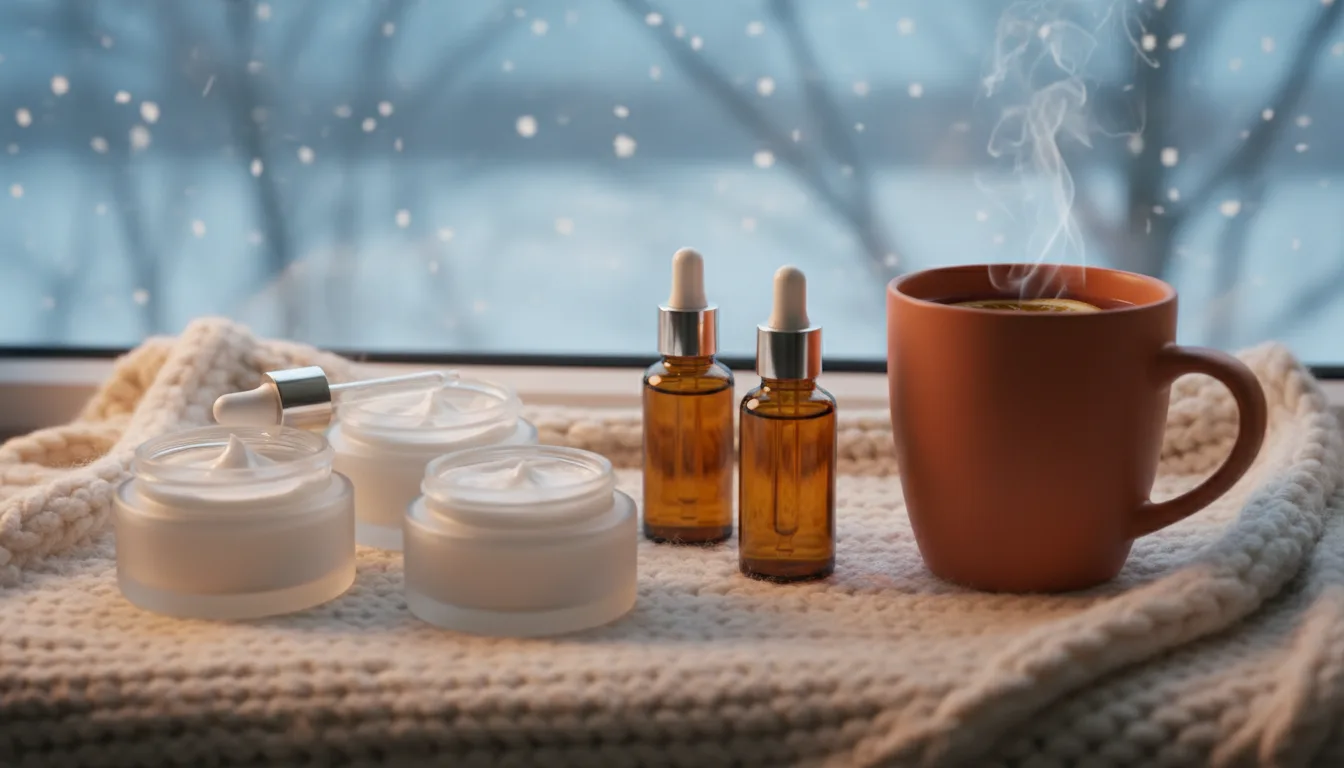
What Cold Weather Does to Your Skin
Cold air holds less moisture than warm air. Step outside in January and your skin immediately starts losing water faster than it can replace it. Walk back inside and heated air continues the dehydration. This cycle weakens the lipid barrier — the protective layer of ceramides and fatty acids that keeps moisture in and irritants out.
A compromised barrier leads to a cascade: tightness, then flaking, then redness, then increased sensitivity to products that worked fine in September. Wind amplifies the damage — gusts strip the thin protective oil layer from exposed skin faster than still air, which is why cheeks and the bridge of the nose (the areas most exposed to wind) crack first. People who commute on foot or spend time outdoors during winter months often notice that one side of their face — the side facing prevailing wind — develops dryness and irritation before the other. The fix is not more products. It is richer versions of the products you already use.
Altitude compounds the problem for anyone living above 3,000 feet or traveling to ski destinations during winter months. Higher elevation means thinner atmosphere, stronger UV exposure, and even lower ambient humidity. Skin at altitude loses moisture roughly 25% faster than at sea level under equivalent temperatures. If your winter involves mountain travel or high-altitude living, factor that into your product choices — what works at sea level in Boston may be insufficient in Denver or Aspen.
Keep your morning serum and actives the same. Swap two things: upgrade your moisturizer from lightweight to rich, and add a hydrating serum layer before it. These two changes address 80% of winter skin issues without disrupting your routine.
Our Winter Skincare Picks
Rich Moisturizer: Augustinus Bader The Rich Cream
The Augustinus Bader Rich Cream earns its name in winter. The TFC8 technology targets cellular repair, and the rich texture provides an occlusive seal that lighter creams cannot match. Apply after your serum, morning and night, during cold months. The 120+ industry awards are not just prestige — they reflect consistently reported results across thousands of users.
Dewy Moisture: Tatcha The Dewy Skin Cream
Tatcha Dewy Skin Cream fights the matte, ashy look that winter creates on dry skin. Japanese purple rice and Okinawan algae deliver antioxidant-rich hydration with a dewy finish. The "glass skin" effect counteracts winter dullness. Best for dry to normal skin types — combination skin may find it too dewy in the T-zone.
Barrier-Repair Hydration: La Roche-Posay Hyalu B5
The La Roche-Posay Hyalu B5 goes beyond standard hyaluronic acid with Madecassoside, a wound-healing extract from Centella Asiatica. In winter, your barrier needs repair alongside hydration. This serum provides both. Apply to damp skin — that moisture gives the HA something to pull into your skin rather than drawing water from deeper layers.
Nourishing Cleanse: ELEMIS Pro-Collagen Cleansing Balm
The ELEMIS Cleansing Balm replaces foaming cleansers that strip moisture during winter. The balm-to-oil transformation dissolves makeup and sunscreen while depositing rose and mimosa wax onto the skin. You finish cleansing with skin that feels nourished, not tight. Worth the upgrade from a standard cleanser when temperatures drop.
Overnight Seal: Drunk Elephant Virgin Marula Oil
Drunk Elephant Marula Oil works as the final layer in your evening routine — after serum and moisturizer. Omega 6 and 9 fatty acids create an occlusive seal that prevents overnight moisture loss. Two drops mixed into your night cream extend its hydrating effect through six to eight hours. Light enough to absorb without greasing your pillowcase.
If you have chronically dry skin, rosacea, eczema-prone skin, or spend extended time outdoors in cold climates, the barrier-repair formulations in prestige-tier products like Augustinus Bader genuinely justify their higher price point. The concentration of active lipids and repair complexes in these formulas is measurably different from mass-market alternatives. If your skin is oily or combination and you live in a mild winter climate, you can likely get by with a mid-range ceramide moisturizer and a pharmacy-grade HA serum like the La Roche-Posay — no need to invest at the ultra-prestige tier for seasonal use alone. A strong mid-range option is the Caviar of Switzerland Regeneration Cream, which pairs caviar-derived omega fatty acids with collagen peptides for winter barrier nourishment.
Winter humidifier tip: Running a cool-mist humidifier in your bedroom raises ambient moisture levels to 40-60%, giving hyaluronic acid something to pull from the air rather than from deeper skin layers. It costs nothing in skincare terms but amplifies everything you apply.
Winter Skincare Mistakes to Avoid
- Hot showers on the face. Hot water strips natural oils faster than cold. Lukewarm is the maximum temperature for face washing in winter.
- Over-exfoliation. Resist the urge to scrub flaking skin. Exfoliation removes the barrier your skin is trying to rebuild. Hydrate instead.
- Skipping SPF. UV rays penetrate clouds and reflect off snow. Winter SPF is not optional, especially at higher altitudes.
- Same lightweight moisturizer year-round. A gel-cream that works in July will not protect your barrier in January. Seasonal swaps are practical, not indulgent.
Another common mistake: applying products in a rush on dry skin and walking out the door. In winter, the two minutes between cleansing and moisturizing matter more than in summer. Leaving freshly washed skin exposed to dry indoor air — even briefly — accelerates moisture loss before your products have a chance to form a protective layer. Pat your face to just slightly damp, apply your serum immediately, and follow with moisturizer within 60 seconds. Treating your post-cleanse window as a race against evaporation sounds dramatic, but dermatologists consistently identify this gap as one of the most overlooked contributors to winter dehydration.
The Indoor Heating Problem
Central heating drops indoor humidity to 20-30% — comparable to airplane cabin air. You spend 16+ hours per day in this environment during winter months. The cumulative dehydration from heated indoor air often causes more skin damage than the cold outdoor air you spend 30 minutes in. The solution is environmental, not just topical: a cool-mist humidifier in your bedroom and at your desk raises ambient moisture to 40-60%, giving hyaluronic acid in your products something to pull from the air rather than from your deeper skin layers.
Forced-air heating is worse than radiant heating for skin. Forced air blows dry, warm air directly across your face (especially if you sit near a vent), accelerating transepidermal water loss. Radiant heat (baseboard, in-floor) warms objects and surfaces without moving air around. If you have forced-air heating and your desk sits near a vent, redirect the vent or move your workspace. That one change reduces daytime facial dehydration more than adding a third serum layer to your morning routine.
Office workers face a specific winter challenge: dry eyes leading to eye rubbing, which damages the thin periorbital skin and worsens dark circles and fine lines. Artificial tears (lubricating eye drops) address the root cause. An eye cream with peptides and caffeine (applied morning and night) helps repair the cumulative friction damage. The eye area shows winter stress first because the skin is thinnest there — less than 0.5mm compared to 2mm on the rest of your face.
Layering for Maximum Winter Protection
Winter skincare is about layering — multiple thin layers of hydration sealed with an occlusive barrier. The sequence matters because each layer has a different molecular weight and function. Apply in order of thinnest to thickest: hyaluronic acid serum (Vichy Mineral 89 or La Roche-Posay Hyalu B5) on damp skin first, followed by your treatment serum (retinol, Vitamin C), then a rich moisturizer (Augustinus Bader, Tatcha), and finally a facial oil (Drunk Elephant Marula) as the sealing layer.
The damp skin step is critical in winter. Hyaluronic acid is a humectant — it pulls moisture from its environment. On dry skin in a dry room, it pulls water from your deeper skin layers, making dehydration worse. On damp skin, it binds the surface water and holds it in the outer layer. Mist your face lightly with water or a thermal spray before applying HA, then immediately layer your moisturizer on top to seal it. This 10-second step changes whether hyaluronic acid helps or hurts in winter conditions.
Your evening routine in winter should be richer than your morning routine. At night, your skin enters repair mode — it is more permeable and absorbs products more effectively. This is the window for your thickest moisturizer, your facial oil, and your active treatments. The morning routine stays lighter for comfort under SPF and makeup. Think of the PM routine as rebuilding and the AM routine as protecting.
For those building a winter-specific layering routine from scratch, the cost of ownership varies widely depending on which tier you choose. A full four-step winter layering routine (HA serum, treatment, rich moisturizer, facial oil) at the pharmacy-dermatologist tier — La Roche-Posay and similar brands — falls in the moderate price range and lasts roughly three months of daily use. Moving to a prestige tier with products like Augustinus Bader and Drunk Elephant places the total investment at a premium level, but the per-application cost over a full winter season is more reasonable than the sticker price suggests, especially if you reserve prestige products for PM use and rely on accessible options for your AM routine. We recommend starting here.
Transition Seasons: When to Switch Your Routine
The worst skin weeks of the year are late October and early March — the transition periods when you need winter products but are still using summer ones (or vice versa). Most people wait until their skin is already cracked and flaking before switching to richer formulas. By then, the barrier is damaged and needs repair rather than just prevention.
Switch to your winter routine when overnight low temperatures drop below 40°F (4°C) consistently — not when you first feel dry. This proactive swap prevents barrier damage before it starts. In spring, switch back to lighter formulas when overnight lows rise above 50°F (10°C) for a week straight. Gradual transitions are smoother than abrupt ones: add the rich moisturizer for PM first while keeping your lighter formula for AM, then swap both once temperatures are consistently cold.
Hands, Lips, and the Forgotten Zones
Most winter skincare advice focuses on the face and ignores the areas that dry out first. Hands are exposed to cold air, frequent washing, and alcohol-based sanitizers — three dehydrating forces that most faces never encounter simultaneously. A thick hand cream (shea butter or ceramide-based) applied after every hand wash prevents the cracking that develops once damage accumulates. Keep one at every sink in your house and one in your coat pocket. Prevention is faster than repair — once hands crack, healing takes 2-3 weeks of consistent moisturizing.
Lips have no sebaceous glands, which means they produce zero natural oil. In winter, lips lose moisture faster than any other skin surface. Standard lip balm with petroleum or beeswax provides an occlusive seal. Avoid lip products with menthol, camphor, or phenol — these create a cooling sensation that feels soothing but actually irritate the lip surface, causing a cycle of application and further drying. A plain petrolatum-based balm applied before bed and throughout the day is more effective than any flavored or medicated formula.
The neck and decolletage deserve the same winter attention as your face. The skin on the neck is thinner than facial skin and produces less sebum, making it the first area to show winter dryness as crepe-like texture and visible flaking. Extend every product you apply to your face — serum, moisturizer, SPF — down to your collarbone. This takes five extra seconds per application and prevents the visible line where cared-for facial skin meets neglected neck skin that becomes obvious by February.
Frequently Asked Questions
Why does my skin get so dry in winter?
Cold air holds less moisture than warm air. Indoor heating strips humidity further. Your skin barrier loses water faster in these conditions through transepidermal water loss (TEWL). The result is tightness, flaking, and increased sensitivity — your barrier is working overtime and losing the battle.
Should I switch my entire routine for winter?
No — swap two products at most. Keep your cleanser gentle and your actives the same, but upgrade your moisturizer to a richer formula and add a hydrating serum underneath. Most winter skin problems come from insufficient moisture, not wrong actives.
Can I still use retinol in winter?
Yes, but reduce frequency if your skin is already compromised. Retinol can worsen dryness and flaking on an already-stressed barrier. Drop from nightly to every other night, and apply a heavier moisturizer on top. If peeling becomes excessive, pause retinol for two weeks while your barrier recovers.
Is facial oil enough as a winter moisturizer?
No. Oil creates an occlusive seal but does not add water to skin. You need a humectant (hyaluronic acid serum) to pull moisture in, then a moisturizer with emollients, then optionally oil to seal everything. Oil alone on dehydrated skin just locks in the dryness.
How often should I exfoliate in winter?
Reduce exfoliation to once per week maximum. Over-exfoliation in winter strips an already-thin barrier, making dryness and sensitivity worse. If your skin is actively flaking, resist the urge to scrub — apply a rich moisturizer instead and let the hydration loosen dead cells naturally.
Do I need different products for daytime vs. nighttime in winter?
Yes, and the distinction matters more in winter than any other season. During the day, your skin needs protection from cold wind, UV exposure, and dry indoor air — a medium-weight moisturizer with SPF and a hydrating serum underneath handles this well. At night, your skin shifts into repair mode with increased permeability, so this is the window for your richest cream, facial oil, and active treatments like retinol. Splitting your routine this way prevents the heavy, greasy feeling that discourages people from using winter-weight products during the day while still giving skin the deep nourishment it needs overnight.
What ingredients should I prioritize in a winter moisturizer?
Look for ceramides, squalane, shea butter, and glycerin as core ingredients. Ceramides directly replenish the lipid barrier that winter conditions strip away. Squalane mimics your skin's natural sebum and absorbs without a heavy residue. Glycerin is a humectant that draws water into the outer skin layers, while shea butter provides a long-lasting occlusive seal. A moisturizer containing at least two of these four ingredients will outperform most lightweight gel-creams during cold months, regardless of price point.
Get Our Top 3 Picks
Get our top 3 picks for your budget — one email, then only updates.
Only when something changes. Unsubscribe anytime.
Watch: kelly breaks down the Best Luxury Skincare for Winter (770K views)

Ready to Buy? Start Here
Based on this guide, our #1 recommendation:
Augustinus Bader The Rich Cream Best cold-weather barrier repair — TFC8 complex rebuilds winter-damaged skin Read Full Review →