Best Luxury Skincare for Travel
Airplane cabins have 10-20% humidity — drier than the Sahara Desert. Hotels use different water. New climates stress your skin in ways your bathroom mirror at home never reveals. But abandoning your routine mid-trip guarantees returning home with dull, dehydrated skin. The solution is not more products. It is the right products in the right formats.
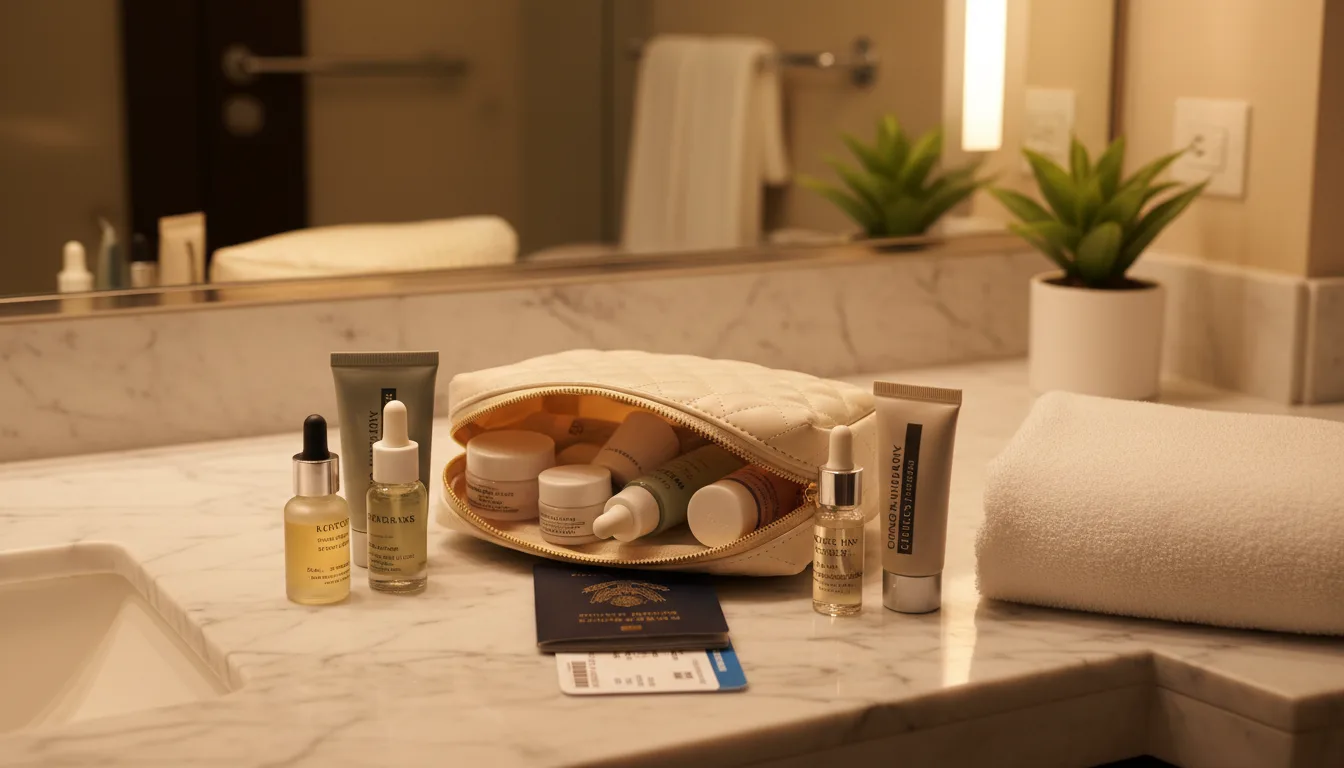
The Travel Skincare Problem
Three things assault your skin during travel. Cabin pressure and recirculated air during flights strip moisture faster than any winter day. Hard water at hotels deposits minerals that interfere with cleansing and irritate the barrier. And stress — the invisible factor — triggers cortisol spikes that increase sebum production and slow the skin repair cycle. Jet lag compounds the damage by disrupting your circadian rhythm, which governs when your skin enters its overnight repair phase. Cross three or more time zones and your skin's renewal cycle falls out of sync with your actual sleep schedule, reducing the effectiveness of PM products for the first 2-3 nights at your destination.
A heavy travel routine adds bulk without solving these problems. A smart travel routine addresses all three with fewer products. Water quality is another variable most travelers overlook — hard water in European and Middle Eastern hotels deposits calcium and magnesium that leave a film on skin after cleansing, and soft water in tropical resorts can make it difficult to fully rinse off oil-based cleansers. Knowing whether your destination has hard or soft water helps you choose the right cleanser format before you pack. Micellar water handles both extremes well because it does not require rinsing at all, making it the safest backup cleanser for any destination. For trips longer than five days, pack a small bottle regardless of what other cleanser you bring — it doubles as a makeup remover and a no-water option for early morning flights.
Our Travel Skincare Picks
In-Flight Hydration: Tatcha The Serum Stick
The Tatcha Serum Stick was practically designed for airplane seats. 80% squalane in a solid twist-up format means no liquid restrictions, no spills, and no digging through a quart bag. Apply over makeup without disruption. The Hadasei-3 complex (rice, algae, green tea) adds antioxidant protection beyond pure moisture. Target dry patches around the nose and cheeks mid-flight.
TSA-Friendly Actives: Mad Hippie Travel Serum Set
The Mad Hippie Travel Set packs Vitamin C and retinol into TSA-compliant sizes. The stable Vitamin C derivative (sodium ascorbyl phosphate) will not oxidize in your bag — a real advantage over L-ascorbic acid formulas that degrade with temperature changes. Clean ingredients and cruelty-free formulations for travelers who maintain standards on the road.
Universal Hydration Base: Vichy Mineral 89
Vichy Mineral 89 at 50ml is just over the TSA limit, but the brand offers travel sizes that fit perfectly. The mineral-rich volcanic water base strengthens your barrier against environmental stress — exactly what your skin needs after a cross-country flight. Apply to damp skin immediately after cleansing for maximum absorption.
No-Rinse Cleansing: ELEMIS Pro-Collagen Cleansing Balm
The ELEMIS Cleansing Balm dissolves travel grime, sunscreen, and airplane pollution in one step. The solid balm format travels well (no liquid leaks) and the rose wax base leaves skin nourished rather than stripped — counteracting the drying effects of hotel water. Emulsify with a warm washcloth for a spa-like experience in any hotel bathroom.
Budget-Friendly Travel Kit: e.l.f. Holy Hydration Kit
Not everyone needs prestige products on the road. The e.l.f. Holy Hydration Kit delivers a complete hydration-focused routine at a fraction of the cost of the picks above. The compact sizes travel well, the formulas are gentle enough for stressed travel skin, and the price means losing a product in a hotel room does not sting. A practical choice for budget-conscious travelers or as a backup kit you keep permanently packed in your carry-on.
Apply your full routine (including a thick layer of moisturizer) 30 minutes before boarding. Your skin absorbs products better at sea-level humidity. Once airborne, the moisture is locked in and the barrier holds. Mid-flight, touch up with the Tatcha Serum Stick on dry areas.
Packing Strategy: The 4-Product Travel Kit
- Cleanser: Cleansing balm or micellar water (handles hard hotel water better than foaming cleansers).
- One serum: Hydrating (HA) or multi-active. If you must pick one, hydration wins on travel days.
- Moisturizer: Mid-weight cream that works in both humid and dry climates.
- SPF: Broad-spectrum 30+. Non-negotiable regardless of destination.
Who should invest in a dedicated travel kit versus decanting from full-size products? Frequent travelers — anyone flying more than four or five times per year — benefit from keeping a pre-packed pouch of travel-size products ready at all times. This eliminates last-minute packing stress and prevents the risk of forgetting a core product. Occasional travelers can decant from their existing collection into reusable silicone tubes, though this introduces a small contamination risk if containers are not sanitized between trips. If you already own the products listed above, the cost of assembling a travel kit is minimal since most of these brands sell dedicated mini sizes at lower price tiers than the full-size equivalents.
Hotel water hack: Hard water deposits minerals that disrupt cleansing. If you notice your cleanser does not lather or your skin feels filmy after washing, do a final rinse with bottled water or micellar water on a cotton pad. This removes mineral residue.
Climate Adaptation Cheat Sheet
- Tropical/humid: Lighten everything. Gel moisturizer, skip facial oil, blotting papers for midday shine. Your skin produces more sebum in humidity.
- Dry/desert: Layer hydration. HA serum + rich moisturizer + facial oil seal. Reapply SPF more frequently — dry air amplifies UV exposure.
- Cold/alpine: Barrier protection is priority. Rich cream, lip balm with SPF, wind-exposed areas get extra moisturizer. Altitude increases UV intensity by 10-12% per 1,000 meters.
- Urban/polluted: Double cleanse every evening. Antioxidant serum (Vitamin C) in the morning to neutralize pollution-generated free radicals.
If your trip is under 48 hours and domestic with no flight longer than three hours, a simplified approach works fine. Bring your regular cleanser, moisturizer, and SPF — skip the dedicated travel products entirely. The skin stress from a short domestic hop is negligible compared to a transatlantic red-eye. Reserve the full protocol for flights over five hours or trips involving significant climate changes.
Long-Haul Flights: A Skin Survival Protocol
Flights over six hours create a sustained assault on your moisture barrier. The cabin is pressurized to the equivalent of 6,000-8,000 feet altitude, which means lower oxygen saturation in your blood and reduced circulation to the skin surface. Combined with 10-20% humidity (your bathroom at home sits around 40-60%), the result is transepidermal water loss at a rate your skin never experiences on the ground. Passengers on 12-hour flights lose measurably more moisture from their skin than those on 3-hour hops — duration matters.
The protocol: 30 minutes before boarding, apply a hydrating serum (Vichy Mineral 89 or any hyaluronic acid formula) to damp skin, followed by a rich moisturizer. This creates a hydration reservoir. At the 4-hour mark, apply the Tatcha Serum Stick to your cheeks, forehead, and any areas that feel tight. At the 8-hour mark, repeat if the flight continues. On landing, cleanse with the ELEMIS Cleansing Balm to remove cabin air residue, recirculated-air particles, and accumulated sebum. Follow with your normal routine adapted for the destination climate.
Skip retinol and Vitamin C for the 24 hours surrounding a long-haul flight. Both are pH-dependent actives that work best on healthy, hydrated skin. Applying them to dehydrated, barrier-compromised skin increases irritation risk without increasing efficacy. Resume your actives on the second night at your destination, once your skin has rehydrated and adjusted to the new environment.
Hotel Room Skincare: Managing the Variables
Every hotel room is a new skincare environment. The water is different — hard water in many cities deposits calcium and magnesium on your skin, creating a film that interferes with cleansing and can trigger dryness, irritation, or breakouts in sensitive types. Air conditioning runs at full blast regardless of your skin's preferences. And the temptation to use the hotel's complimentary products introduces unknown ingredients into a routine your skin has adapted to.
Bring your own cleanser and skip the hotel face wash. A cleansing balm (ELEMIS) handles hard water better than foaming cleansers because the oil phase dissolves mineral deposits along with dirt and makeup. If you notice a filmy residue after rinsing, do a final wipe with micellar water on a cotton pad. This removes what the tap water left behind and resets your skin's surface to a clean starting point for serums.
Air conditioning dehydrates your room to airplane-level dryness overnight. If you wake up with tight, uncomfortable skin, run the shower on hot for five minutes with the bathroom door open before bed. The steam raises room humidity enough to make a noticeable difference. Alternatively, drape a damp towel over the desk chair near the bed — low-tech, but effective for adding ambient moisture.
Protecting Your Products: Temperature and Light
Vitamin C serums with L-ascorbic acid degrade in heat and light. A bottle left on a sunny hotel windowsill or in a hot car for an afternoon can oxidize and lose potency. The serum turns from clear or pale yellow to amber or brown — once it darkens past light amber, efficacy is reduced. Keep Vitamin C in your toiletry bag, away from direct light, and do not leave it in checked luggage that may sit on a tarmac in summer heat.
Retinol is similarly sensitive to light and air but more stable against heat than Vitamin C. The bigger risk with retinol while traveling is accidentally increasing sun sensitivity in a destination with stronger UV than home. If you are traveling from a northern winter to a tropical beach, consider switching from retinol to a peptide serum for the trip duration. Peptides deliver anti-aging benefits without photosensitivity — one less variable to manage when your UV exposure changes dramatically.
Solid and anhydrous products (cleansing balms, serum sticks, facial oils) are the most travel-stable formats. They do not separate, oxidize slowly, and survive temperature swings better than water-based serums. Building a travel kit around solid and oil-based formats reduces the risk of arriving at your destination with compromised products. The Tatcha Serum Stick and ELEMIS Cleansing Balm are both solid formats specifically because the brand formulators understood that stability matters as much as efficacy for products that leave the bathroom shelf. If you must travel with a water-based serum, wrap it in a zip-lock bag inside your toiletry case — pressure changes during flight can cause caps to loosen and leak, and replacing a spilled bottle mid-trip is both expensive and inconvenient.
Re-Entry: Getting Your Skin Back to Normal After Travel
The first three days home are recovery days. Travel-stressed skin needs gentle treatment, not an aggressive return to your full routine. On the first evening back, double cleanse to remove any residual buildup from travel. Apply a hydrating mask or a thick layer of your richest moisturizer as an overnight treatment. Skip retinol and exfoliants for the first night — your barrier needs to restabilize before being challenged by actives.
On day two, reintroduce your normal serums one at a time. Start with the gentlest (hyaluronic acid, niacinamide) and add your retinol back on day three. If you traveled across multiple time zones, your circadian rhythm — and your skin's repair cycle — needs recalibration. Maintain a consistent PM routine at your home bedtime to resync your skin's overnight repair window. By day four or five, your routine should feel normal again, and any travel-related dullness or dehydration should have resolved. If it has not, add an extra layer of hydrating serum for the rest of the week. Consider the re-entry window an opportunity — your skin is primed for absorption after the intense hydration recovery, and a well-timed sheet mask or overnight treatment on night three can push your complexion back to baseline faster than passive recovery alone.
Frequently Asked Questions
How do I pack skincare for a carry-on only trip?
TSA allows liquids in 3.4 oz (100ml) containers in a single quart-size bag. Most luxury serums already come in 30ml bottles — they are carry-on friendly. Decant your cleanser and moisturizer into travel containers. Solid formats like the Tatcha Serum Stick bypass liquid restrictions entirely.
Why does my skin break out when I travel?
Three factors converge: recirculated cabin air dehydrates skin (airplane humidity drops to 10-20%), stress hormones increase sebum production, and time zone changes disrupt your skin repair cycle. Pre-flight hydration and a simplified routine minimize breakouts.
Should I simplify my routine while traveling?
Yes. Travel is not the time for a 10-step routine. Carry a gentle cleanser, one multi-purpose serum, a moisturizer, and SPF. Skip exfoliants and strong actives during transit — stressed, dehydrated skin reacts more to potent ingredients.
What is the best in-flight skincare strategy?
Before boarding, apply a thick layer of hydrating serum and moisturizer. Skip makeup — it settles into dehydrated fine lines at altitude. Mid-flight, reapply hydration with a solid serum stick or facial mist. On landing, cleanse and apply your normal routine for the destination climate.
How do I adapt my routine to different climates?
Humid destinations: switch to lighter, gel-based moisturizers and skip facial oils. Dry or cold destinations: layer a hydrating serum under a richer moisturizer. Altitude (mountains, planes): increase hydration and apply SPF more liberally. Your core actives stay the same — only texture and hydration levels change.
How much should I budget for a travel skincare kit?
A well-built travel kit does not require buying entirely new products. Many premium brands offer travel or mini sizes at a fraction of the full-size price — often in the mid-tier range rather than the full luxury price point. If you already own the Tatcha Serum Stick and ELEMIS Cleansing Balm, your only additional cost is a travel-size SPF and possibly a decanted moisturizer. Budget-conscious travelers can substitute the Vichy Mineral 89 travel size as an affordable hydration base and pair it with the Mad Hippie Travel Set for actives, keeping total outlay well below what a single full-size prestige serum would cost.
Can I use sheet masks on the plane?
You can, but whether you should depends on your comfort level with the social aspect. Sheet masks are not restricted by TSA since the liquid is contained within the mask packet. From a skincare perspective, a 15-20 minute sheet mask applied during cruise altitude delivers concentrated hydration directly to dehydrated skin. The occlusive barrier of the mask prevents the dry cabin air from pulling moisture away during application. If you prefer a less conspicuous option, the Tatcha Serum Stick provides comparable hydration benefits without drawing attention from fellow passengers.
Get Our Top 3 Picks
Get our top 3 picks for your budget — one email, then only updates.
Only when something changes. Unsubscribe anytime.
Watch: Dr. Sam Ellis breaks down the Best Luxury Skincare for Travel (335K views)

Ready to Buy? Start Here
Based on this guide, our #1 recommendation:
Tatcha Dewy Serum Stick Best travel skincare — TSA-friendly solid format, no-spill hydration Read Full Review →