Best Luxury Skincare for Men
Men's skincare does not need a dedicated aisle or special formulations. The active ingredients that work on skin — retinol, Vitamin C, hyaluronic acid — do not check your gender before working. What men need is a streamlined approach: fewer products, clear instructions, and formulas that work without fuss. This guide strips away the noise and gives you exactly that.
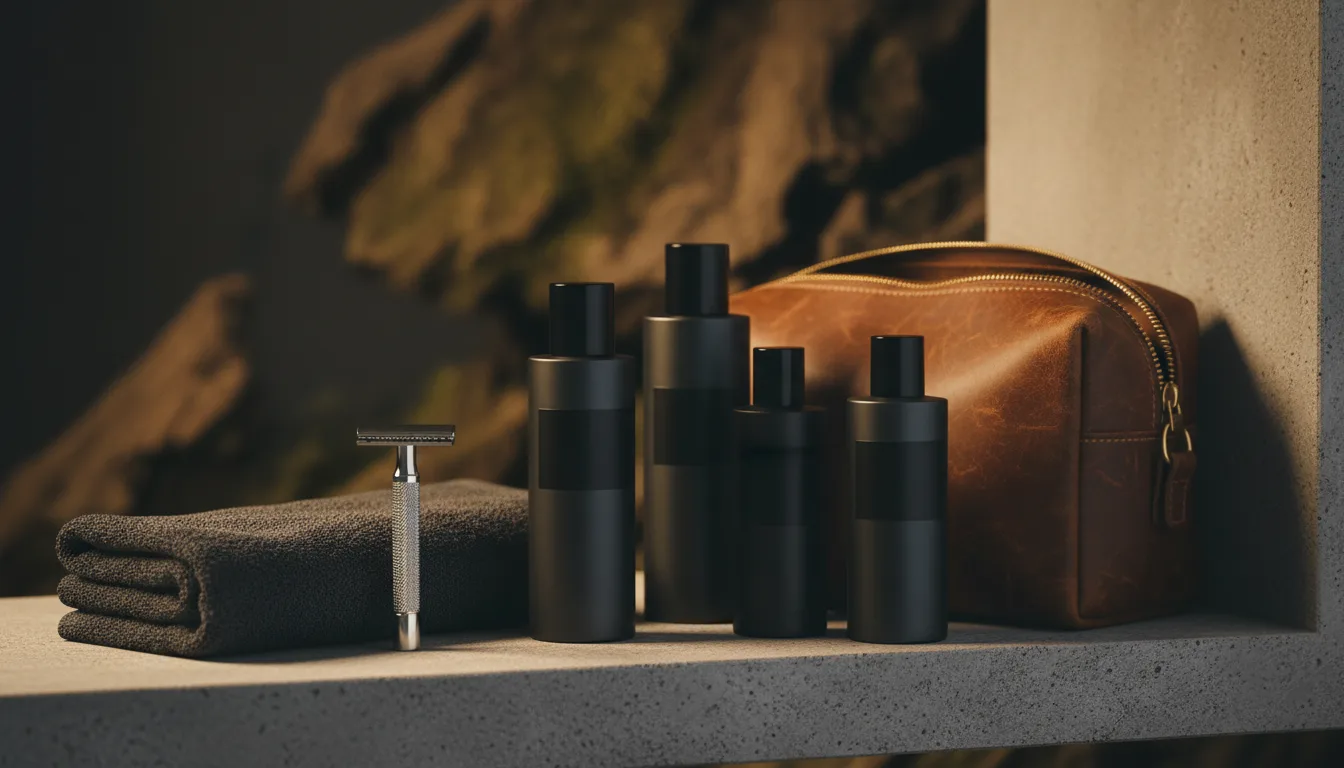
What Makes Male Skin Different
Men's skin is approximately 20% thicker than women's, with higher collagen density and greater sebum production. This means two practical things: men's skin tolerates stronger active ingredients with less irritation, and most men need lighter moisturizers to avoid excess shine.
Men also shave — which is daily physical exfoliation. This removes dead cells but also compromises the moisture barrier on the lower face and neck. Post-shave, skin is more receptive to products but also more sensitive to irritants.
There is also a pH consideration worth understanding. Male skin tends to have a slightly lower resting pH than female skin, which contributes to better natural defense against bacterial colonization but also means that high-pH products (many bar soaps and foaming cleansers) cause a more dramatic disruption to the acid mantle. Choosing a cleanser formulated at pH 5.0-5.5 preserves this natural advantage and keeps the skin's microbial balance intact, reducing the likelihood of post-cleanse tightness or irritation that drives many men away from skincare entirely.
The 3-Product Routine
This is the minimum effective routine. Three products, under two minutes, covering the essentials.
- Cleanser: Any gentle gel or cream cleanser. Wash your face morning and night. Not bar soap — bar soap is too alkaline (pH 9-10) for facial skin (pH 4.5-5.5).
- Moisturizer: Kiehl's Ultra Facial Cream. Lightweight, works on every skin type, provides 24-hour hydration. No fragrance, no nonsense. This has been a men's grooming staple since before "men's skincare" was a category.
- SPF (morning): Broad-spectrum SPF 30+. Prevents sun damage, which causes roughly 80% of visible aging. This single step does more for your skin than any serum.
Your skin is most receptive to products immediately after shaving — the dead cell layer has been removed and active ingredients penetrate more effectively. Apply your serum within 60 seconds of patting dry. This is the optimal absorption window for retinol and Vitamin C.
Men's Kits: The Shortcut to a Full Routine
If building a routine product-by-product feels like too much research, a curated set does the work for you. The MARLOWE Men's Essential Face Kit covers cleanser, moisturizer, eye cream, and SPF 50 in a single box at a budget-friendly price — the fastest zero-to-routine path available. For men who want an AM/PM split with exfoliation built in, the Tiege Hanley Level 1 system numbers every step so there is no guesswork. And if oily skin and clogged pores are your primary concern, the Lumin Smooth Operator Kit uses Korean-formulated charcoal to target congestion with a two-month supply per kit. See our full best men's skincare sets roundup for detailed rankings.
Adding Active Ingredients
Once the 3-product routine is habit (give it 2-3 weeks), add one active serum. Pick the one that matches your primary goal.
For Anti-Aging: CeraVe Retinol Serum
CeraVe Retinol Serum is the best starting retinol for men. Encapsulated delivery reduces irritation, ceramides reinforce the barrier, and the budget-friendly price removes any reason not to start. Apply every other evening after cleansing. Men's thicker skin means you may tolerate nightly use sooner than the typical 4-6 week ramp-up.
For Hydration: Vichy Mineral 89
Vichy Mineral 89 absorbs in seconds and leaves zero residue — the kind of product men who hate the "sticky serum feeling" actually enjoy using. Mineral-rich volcanic water strengthens the barrier while hyaluronic acid hydrates. One pump, 10 seconds, done.
For Brightening: TruSkin Vitamin C Serum
TruSkin Vitamin C Serum is morning-use only, before moisturizer and SPF. L-ascorbic acid neutralizes free radicals and fades dark spots from sun damage. The budget pricing means you can test whether Vitamin C makes a noticeable difference before investing in premium alternatives.
The shaving-retinol interaction: On days you shave, skip retinol on the shaved areas. Freshly shaved skin plus retinol equals unnecessary irritation. Apply retinol to the upper face (forehead, temples, around eyes) and skip the jawline and neck on shave days.
Common Mistakes Men Make
- Using body wash on the face. Body wash and bar soap are formulated for thicker body skin at higher pH levels. Facial skin needs a dedicated gentle cleanser.
- Skipping SPF. "I don't burn" is not a skincare strategy. UV damage accumulates invisibly for decades before showing up as wrinkles, spots, and leathery texture in your 40s and 50s.
- Too many products too fast. If you are starting from zero, add one product per week. Cleanser first. Moisturizer second. SPF third. Serum fourth. Your skin needs time to adjust. A starter kit like the MARLOWE Men's Essential Face Kit or the Tiege Hanley Level 1 solves the sequencing problem by including all steps in a numbered order.
- Aftershave with alcohol. Alcohol-based aftershave stings because it is damaging your barrier. Switch to an alcohol-free post-shave balm or simply apply your moisturizer after shaving.
Another mistake that rarely gets discussed: inconsistent application. Applying retinol three nights in a row, then skipping a week, then applying four nights straight creates a cycle of irritation and recovery that never lets the skin adapt. Consistency at a lower frequency — say, every other night without fail — outperforms sporadic bursts of daily use. Set a recurring reminder on your phone for the first month until the habit sticks. Skincare works through cumulative exposure over weeks and months, not through occasional intensive sessions.
The Beard Factor: Skincare Under Facial Hair
Facial hair creates a unique set of skincare challenges. The skin beneath a beard still needs cleansing and moisturizing, but product access is limited by hair coverage. Beard dandruff (seborrheic dermatitis) is common and caused by the same yeast that causes scalp dandruff — the skin beneath facial hair is warm, humid, and oil-rich. A gentle cleanser worked into the beard during face washing addresses this. Follow with a lightweight oil (jojoba or squalane) rather than a heavy cream — oil penetrates through hair to reach the skin underneath, while cream sits on top of the beard and feels greasy.
For bearded men who want to use active ingredients, apply serums to the beard-free zones (forehead, cheeks above the beard line, nose, around the eyes) and let the beard area benefit from whatever product migrates downward naturally. Retinol applied directly under a dense beard can cause irritation that you cannot see until it becomes itchy or flaky. Apply retinol to the beard zone only if the hair is short (stubble to short beard) where you can monitor the skin's reaction.
The Aging Timeline: What to Add at Each Decade
20s: Cleanser, moisturizer, SPF. That is all. Your skin is producing plenty of collagen and oil. The goal is protection, not treatment. Building the SPF habit now prevents the damage you would spend thousands treating in your 40s.
30s: Add retinol (CeraVe Retinol Serum is the ideal entry). Collagen production is measurably declining. Starting retinol at 30 is preventative — you are maintaining collagen production rather than trying to restart it later. Add a Vitamin C serum in the morning for antioxidant protection if you spend time outdoors.
40s: Upgrade your retinol to a stronger formula (La Roche-Posay 0.3% or Medik8 Crystal Retinal). Add an eye cream — the thin periorbital skin shows aging first on men because they typically never applied product there before. Switch to a richer moisturizer if your skin feels drier — sebum production starts declining noticeably in this decade.
50s and beyond: Everything from your 40s routine, with richer textures across the board. Add a peptide serum for additional collagen support. Consider a facial oil as the final PM step. Your skin is thinner now and loses moisture faster — the multi-layer approach (serum → moisturizer → oil) that seemed excessive at 30 becomes essential at 50. SPF remains non-negotiable.
If you currently use zero skincare products, this guide is built for you — start with the 3-product routine and do not look at serums for at least three weeks. If you already cleanse and moisturize daily but want to address specific concerns like fine lines, dullness, or uneven texture, skip directly to the "Adding Active Ingredients" section and pick one serum that targets your primary concern. Men already using retinol or Vitamin C consistently should look at our Anti-Aging Skincare Guide for more advanced protocols, including layering strategies and higher-concentration actives that go beyond the foundational approach covered here.
Why "Men's Skincare" Products Are Usually a Waste
Walk into any drugstore and you will find a men's skincare aisle filled with products in dark packaging with names like "Power Recharge" and "Turbo Skin Fuel." These products contain the same active ingredients as their standard counterparts — niacinamide, hyaluronic acid, retinol — at the same or lower concentrations, usually with added fragrance and often at a higher price. The men's label is a marketing segmentation strategy, not a formulation innovation.
There are exceptions. Products formulated specifically for post-shave skin (lower pH, soothing agents like allantoin and bisabolol) serve a genuine need. But for serums, moisturizers, and SPF, the gender-neutral or women's-marketed versions from CeraVe, La Roche-Posay, Kiehl's, and Vichy are identical or superior in formulation. Buy based on ingredients and texture preference, not based on which aisle the product sits on. The products in this guide were chosen for their formulation quality — they happen to work on all skin regardless of who is buying them.
Sun Damage: The Silent Problem Most Men Ignore
Men are statistically worse at wearing sunscreen than women — and the consequences show up in their 40s and 50s as deep forehead lines, crow's feet, and brown spots across the nose and cheeks. Melanoma rates are higher in men partly because of lower SPF usage rates. The fix is simple but requires consistency: SPF 30+ every morning, applied to face and neck, regardless of weather. UV penetrates clouds. UV reflects off snow, water, and concrete. Indoor workers near windows get UV exposure throughout the day.
If the texture of traditional sunscreen is the barrier, switch to a lightweight gel or fluid SPF. La Roche-Posay Anthelios and Supergoop Unseen Sunscreen are two formulas that feel like nothing on the skin — no white cast, no greasy residue, no fragrance. Apply after moisturizer, before leaving the house. The two minutes this adds to your morning routine prevents the damage that no amount of retinol can fully reverse later.
For men who spend extended time outdoors (construction, landscaping, coaching, golf), reapply every two hours. A stick sunscreen kept in your pocket or bag makes midday reapplication practical without needing to wash your hands. The face, ears, back of the neck, and tops of the hands are the areas most men forget — and where sun damage accumulates fastest.
The Gym and Your Skin: Before, During, and After
Exercise is good for skin — it increases blood flow, delivers oxygen and nutrients to cells, and promotes the removal of waste products. But the gym itself is a skin hazard. Sweat mixed with sunscreen, dirt, or pre-workout skincare clogs pores. Shared equipment harbors bacteria. And the post-workout shower, if too hot, strips the moisture barrier. The fix is straightforward: wash your face with a gentle cleanser before working out to remove anything sitting on the skin surface. During the workout, use a clean towel (not your hand) to blot sweat. After, cleanse again within 30 minutes — waiting hours with sweat drying on your skin is how post-gym breakouts happen.
Skip heavy moisturizer and SPF before an indoor gym session. Your skin is about to sweat, and products mixed with sweat create a pore-clogging slurry. A lightweight serum (Vichy Mineral 89) is enough pre-gym hydration. Save your full routine — moisturizer, SPF, active serums — for the post-shower window when your skin is clean and pores are open from the warmth. The 10-minute window after a warm shower is actually the best absorption window of the day for any product you apply.
For men who train early morning and then head to work, the post-gym shower is where your full AM routine happens. Cleanse, apply Vitamin C serum if you use one, follow with moisturizer, then SPF. Treat the gym shower as the start of your skincare day rather than trying to layer products both before and after training. This approach saves time, reduces product waste, and keeps your pores clear during the workout itself.
Frequently Asked Questions
Is men's skincare different from women's skincare?
The ingredients are identical. Retinol, Vitamin C, hyaluronic acid, niacinamide — they work the same on male and female skin. Men's skin is approximately 20% thicker with more collagen and higher sebum production. This means men can tolerate higher concentrations of actives and often need lighter moisturizers.
What is the simplest effective routine for men?
Three steps, two minutes. Morning: cleanser, moisturizer with SPF. Evening: cleanser, one serum (retinol or Vitamin C). That is it. If you do nothing else, cleanser plus SPF handles 80% of skin health. Adding one active serum handles the remaining 20%.
Does shaving affect skincare?
Yes. Shaving is physical exfoliation — it removes the top layer of dead skin cells every time. This means shaving skin is already being exfoliated daily. Skip additional scrubs or AHA exfoliants on days you shave. Apply your serum and moisturizer after shaving to soothe freshly exfoliated skin.
When should men start using anti-aging products?
SPF and antioxidants in your mid-20s. Retinol in your late 20s to early 30s. Men's skin ages slower than women's due to higher collagen density, but the decline eventually catches up — usually becoming noticeable in the late 30s to early 40s. Starting retinol at 30 is ideal prevention.
Do men need different concentrations of retinol?
Men can often start at slightly higher concentrations than women because thicker skin tolerates irritation better. But the same rules apply: start low, build up, and listen to your skin. CeraVe Retinol Serum is an excellent starting point for any skin thickness.
How much should men expect to spend on a skincare routine?
A complete and effective routine does not require premium pricing. The three core products — cleanser, moisturizer, and SPF — can be assembled in the budget-to-mid tier range from brands like CeraVe, Vichy, and La Roche-Posay. Adding one active serum puts total monthly cost at a moderate level, well below what most men spend on a single dinner out. Investing in higher-tier products from brands like Kiehl's or Medik8 increases cost modestly but often delivers better textures and more elegant formulations that encourage daily compliance, which matters more than any single ingredient.
Can men use the same products as their partner?
Absolutely, and this is one of the most practical approaches to building a routine. Sharing a Vitamin C serum, retinol, or moisturizer with a partner reduces cost per person and eliminates the need for duplicate products cluttering the bathroom counter. The only product worth having separately is cleanser, since oilier male skin often benefits from a gel formula while drier skin types prefer a cream. Serums, SPF, and moisturizers are entirely shareable without any loss of efficacy for either person.
Get Our Top 3 Picks
Get our top 3 picks for your budget — one email, then only updates.
Only when something changes. Unsubscribe anytime.
Watch: Vaibhav Keswani's take on the Best Luxury Skincare for Men

Ready to Buy? Start Here
Based on this guide, our #1 recommendation:
Kiehl's Ultra Facial Cream Best no-fuss moisturizer for men — quick absorption, zero fragrance Read Full Review →