La Roche-Posay Vitamin C10 vs Caudalie Vinoperfect: Which Is Better in 2026?
Two European skincare houses, two completely different paths to brighter skin. La Roche-Posay uses proven L-ascorbic acid with a calming peptide. Caudalie skipped Vitamin C entirely and built a brightener around Viniferine — a vine sap extract the brand claims is 62x more effective at targeting dark spots. With Caudalie significantly more expensive than La Roche-Posay, the question is whether the novel approach justifies the step up.
Quick Verdict: La Roche-Posay wins for overall brightening and antioxidant protection. Caudalie wins for targeted dark spot correction. If your main concern is uneven tone and existing hyperpigmentation, Vinoperfect's targeted mechanism is more effective. If you want broad-spectrum brightening plus antioxidant defense, La Roche-Posay's proven Vitamin C delivers.
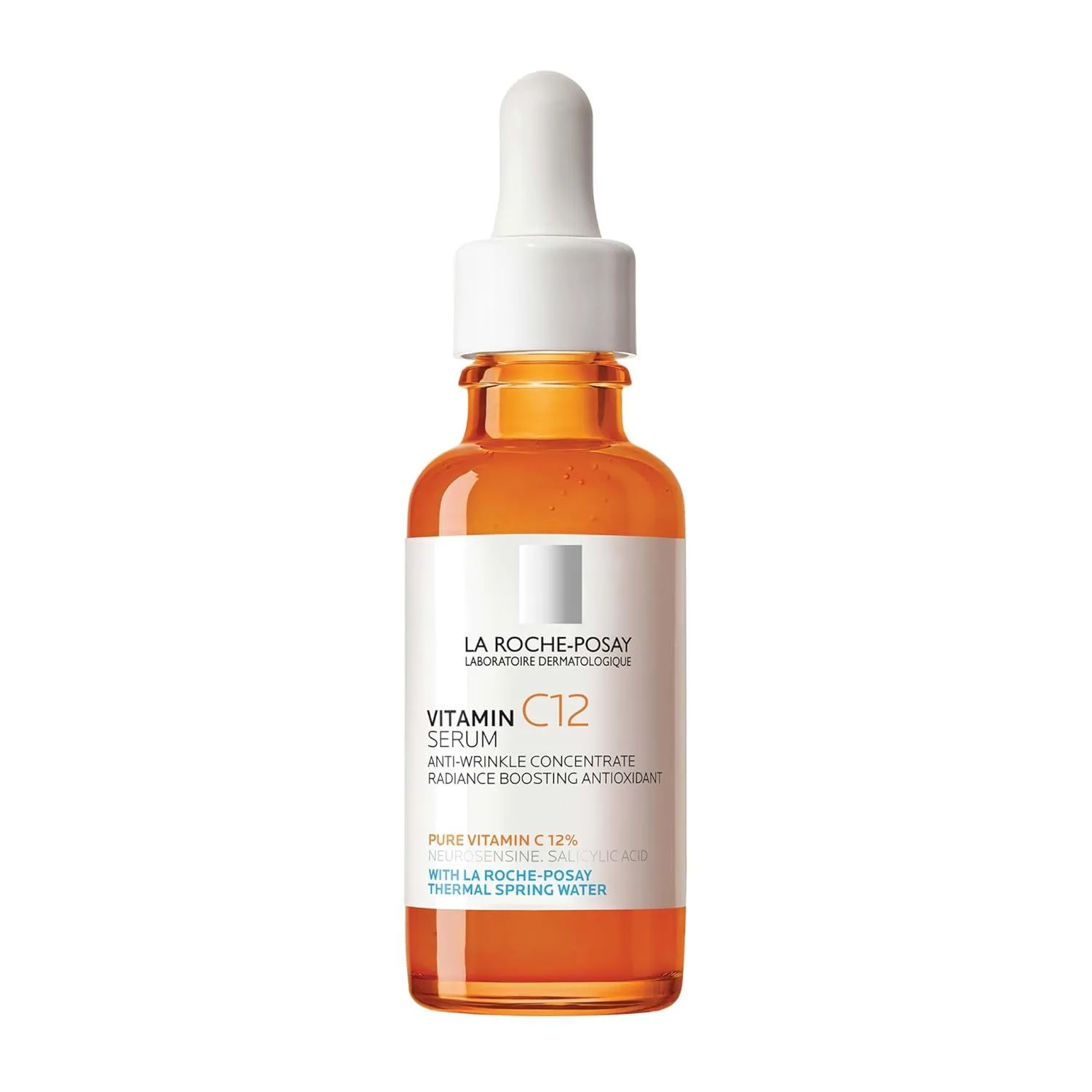
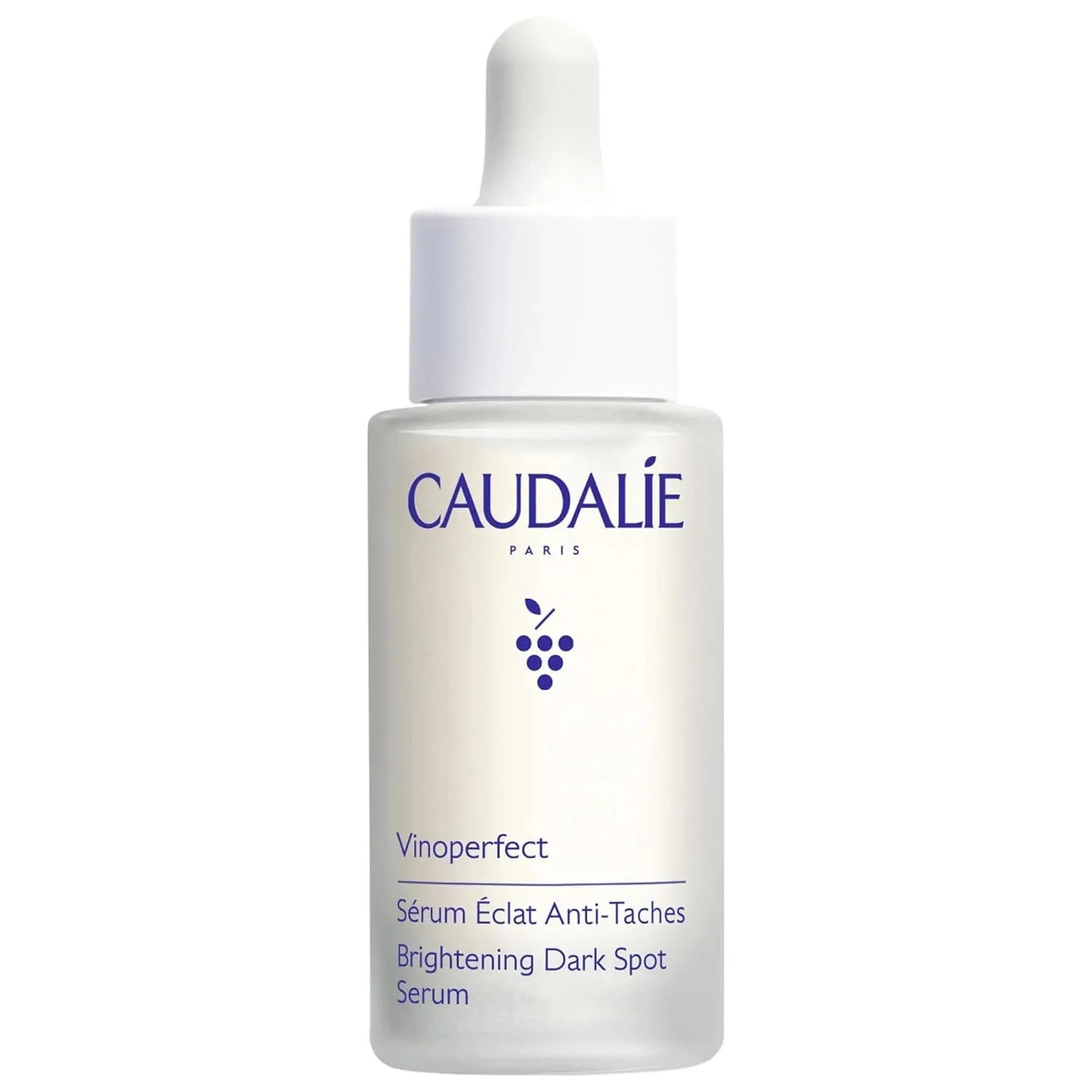
At a Glance
| Feature | La Roche-Posay Pure Vitamin C10 Serum | Caudalie Vinoperfect Brightening Dark Spot Serum |
|---|---|---|
| Price Range | $25–$50 | $50–$100 |
| Size | 30ml / 1 fl oz | 30ml / 1 fl oz |
| Best Skin Type | Sensitive & reactive skin | All skin types, esp. hyperpigmentation-prone |
| Key Ingredient | 10% Vitamin C + Neurosensine | Viniferine (Vine Sap) |
| Active Concentration | 10% Pure Vitamin C | Patented Viniferine complex |
| Texture | Aqua-gel | Lightweight milky serum |
| Fragrance | Fragrance-free | Fragrance-free |
| See Availability | See Availability |
Vitamin C vs Viniferine: Two Different Biochemistry Playbooks
La Roche-Posay uses 10% pure Vitamin C — a well-studied antioxidant that neutralizes free radicals and inhibits melanin production through tyrosinase inhibition. Decades of peer-reviewed research back this mechanism. Caudalie went a different direction with Viniferine, a patented vine sap derivative that the brand says targets melanin through a separate biochemical pathway. The 62x claim comes from in-vitro testing, not head-to-head clinical trials against Vitamin C. Both approaches produce visible brightening, but La Roche-Posay has the deeper evidence base.
The depth of that evidence base matters for informed buyers. L-ascorbic acid appears in hundreds of dermatological studies spanning three decades — its mechanism, optimal concentration, pH requirements, and stability limitations are thoroughly documented in peer-reviewed journals. Viniferine has a narrower research footprint: Caudalie's own studies and a handful of independent evaluations. That does not make Viniferine ineffective — it means the molecule has less independent verification. For buyers who read ingredient studies before purchasing, La Roche-Posay offers more third-party validation. For buyers comfortable with proprietary innovation backed by strong user results, Caudalie's clinical data and 7,800+ Amazon reviews provide a different kind of confidence.
Existing Dark Spots: Which Actually Fades Them?
Caudalie engineered Vinoperfect specifically for this job. The formula targets existing melanin deposits rather than just preventing new ones from forming. User reports consistently show fading of sun spots and post-acne marks within 4-6 weeks. La Roche-Posay's Vitamin C prevents new dark spots and gradually brightens tone, but it is less focused on correcting existing hyperpigmentation. If you are pointing at a specific spot and saying "make this go away," Vinoperfect is the more direct tool.
The type of dark spot also influences which formula performs better. Post-inflammatory hyperpigmentation from acne — the reddish-brown marks left after a breakout heals — responds well to both products, but Viniferine addresses these faster because it specifically disrupts the melanin transfer process that creates the mark. Sun spots from cumulative UV exposure are deeper-set and more stubborn: Caudalie fades them measurably but slowly, typically over 8-12 weeks rather than the 4-6 weeks seen with newer PIH marks. Melasma — hormonally driven hyperpigmentation that appears as larger, diffuse patches — is the hardest target for either formula. Neither product is a standalone melasma treatment; both can supplement a dermatologist-prescribed protocol, but expecting either to resolve melasma alone will lead to disappointment.
How Do They Feel on Reactive Skin?
La Roche-Posay includes neurosensine — a calming peptide specifically designed to reduce sensitivity during active ingredient use. Combined with thermal spring water, it actively soothes while the Vitamin C does its work. Caudalie sidesteps the sensitivity question entirely by not using L-ascorbic acid at all. No acid, no pH-related tingling. Both are excellent for reactive skin, but La Roche-Posay earns the edge for actively including anti-irritation technology rather than just avoiding irritants.
Seasonal skin reactivity adds another dimension. During winter months, when cold air and indoor heating strip the skin barrier, reactive skin becomes more volatile — and the tolerance window for acidic actives shrinks. La Roche-Posay's 10% concentration sits in a comfortable mid-range that most winter-stressed skin can handle, especially with the neurosensine buffering irritation signals. Caudalie's non-acidic formula faces no seasonal tolerance concerns at all, making it the lower-risk option for users whose skin behaves differently across the calendar year. Rosacea-prone skin, in particular, benefits from Caudalie's complete avoidance of the low-pH environment that L-ascorbic acid requires — even a well-tolerated Vitamin C can trigger a rosacea flare during a reactive episode.
Will It Last on Your Shelf?
Viniferine does not oxidize the way L-ascorbic acid does. Caudalie's formula stays stable from first pump to last, with no color changes signaling degradation. La Roche-Posay's Vitamin C in a glass dropper bottle is vulnerable to the same oxidation problem that affects all L-ascorbic acid formulas — air exposure with each use gradually reduces potency. If you are a slow user, Caudalie's stability advantage saves product and money. Our best Vitamin C serums ranked cover stability for every formula in the category.
Layering Under Your Morning Routine
Caudalie's oil-free, lightweight milky texture was designed for layering. It disappears under moisturizer and SPF with zero pilling or tackiness. La Roche-Posay's aqua-gel has a slightly thicker consistency that can occasionally pill under silicone-based sunscreens — you need to test the combination with your specific SPF. For guaranteed smooth layering, Caudalie's formula is more universally compatible.
What Else Is in Each Formula: The Supporting Ingredients
La Roche-Posay pairs its 10% L-ascorbic acid with neurosensine — a calming neuropeptide that reduces skin reactivity at the nerve-ending level. This is not just a soothing agent; it is a functional anti-irritation technology that the brand developed specifically for sensitive skin using Vitamin C. The base also includes La Roche-Posay thermal spring water, rich in selenium, which adds antioxidant support beyond the Vitamin C itself. The formula is aqua-gel textured, free of fragrance, and packaged in a glass dropper bottle — functional but not ideal for Vitamin C stability over time.
Caudalie's Vinoperfect surrounds the patented viniferine with a supporting cast of squalane (lightweight hydration), olive-derived polyphenols (additional antioxidants from the vine family), and a milky emulsion base that feels almost weightless on application. The formula is deliberately oil-free, making it safe for combination and acne-prone skin types. Caudalie uses an airless pump rather than a dropper — a packaging advantage that limits oxidation exposure. Neither formula contains parabens or mineral oils. Both are vegan. The ingredient philosophies align with each brand's identity: La Roche-Posay's pharmaceutical minimalism versus Caudalie's French vineyard-inspired botanical approach.
The Six-Month Test: What Long-Term Use Reveals
Short-term results are easy to measure. Long-term results reveal which formula delivers sustained improvement versus a quick initial glow that plateaus. La Roche-Posay's L-ascorbic acid produces noticeable brightening within two weeks — skin looks more radiant, tone appears more even. By month three, the antioxidant protection has measurably reduced new sun-damage spots on daily users. The challenge is consistency: L-ascorbic acid in a glass dropper gradually oxidizes. By month two of the same bottle, potency has declined. Buying fresh bottles every 8-10 weeks maintains the brightening effect but adds to the annual cost.
Caudalie's viniferine shows a slower initial response — the first two weeks produce subtle improvements rather than dramatic brightening. By week six, targeted dark spots begin visibly fading. The difference from La Roche-Posay becomes apparent at the three-month mark: because viniferine does not oxidize like L-ascorbic acid, the same bottle maintains consistent potency from first pump to last. Users report continued improvement at months four and five from the same tube. The net result is that Caudalie's slower start evens out with La Roche-Posay's faster-but-degrading trajectory. After six months of consistent use, both produce comparable overall brightening — but through different timelines and mechanisms.
The annual cost comparison favors Caudalie when factoring in replacement frequency. La Roche-Posay's lower per-bottle price is offset by needing fresh bottles more often to maintain potency. Caudalie's higher per-bottle price is offset by longer shelf life once opened. Calculate your actual cost per effective month, not cost per bottle.
Skin Types and Climate: Which Formula Adapts Better
La Roche-Posay's aqua-gel texture suits normal to dry skin in temperate climates. The Vitamin C provides antioxidant protection that is especially valuable in high-UV environments — beach towns, high altitudes, sunny climates where free radical exposure is constant. In humid conditions, the gel absorbs cleanly. In very dry or cold climates, the formula can feel slightly insufficient on its own — layering a heavier moisturizer on top resolves this, but it adds a step.
City dwellers face a specific consideration that neither brand emphasizes enough: pollution. Urban environments generate free radicals from exhaust, particulate matter, and ozone — oxidative stressors that accelerate skin aging and darken existing hyperpigmentation. La Roche-Posay's L-ascorbic acid directly neutralizes these pollution-generated free radicals, making it the stronger defensive choice for daily urban commuters. Caudalie's Viniferine targets melanin production but does not offer the same antioxidant shield against environmental oxidative stress. For someone living in a high-pollution city — London, Delhi, Los Angeles during fire season — La Roche-Posay's antioxidant protection provides a functional layer of defense that Caudalie's formula was not designed to deliver.
Caudalie's milky emulsion adapts more broadly. The lightweight texture absorbs effortlessly in humid climates without feeling heavy or triggering shine on oily skin types. In dry climates, the squalane base provides a lipid layer that L-ascorbic acid formulas typically lack — giving Caudalie a slight edge in winter conditions or air-conditioned offices where skin loses moisture throughout the day. For oily and combination skin types, Caudalie's oil-free formula is the safer bet. La Roche-Posay also works on oily skin, but the aqua-gel consistency has slightly more body than Caudalie's near-water-thin milky texture.
Altitude and sun intensity change the calculus for either formula. At higher elevations — ski resorts, mountain hiking destinations, high-altitude cities like Denver or Mexico City — UV intensity increases roughly 10-12% per 1,000 meters of elevation gain. This amplified UV exposure generates more free radicals per hour of outdoor time, making La Roche-Posay's antioxidant defense more valuable at altitude than at sea level. Caudalie's Viniferine does not provide this UV-linked protection, so high-altitude users who choose Vinoperfect should pair it with a stronger SPF to compensate for the missing antioxidant layer.
Seasonal switchers report a pattern worth considering: La Roche-Posay performs best from March through October, when UV intensity justifies its antioxidant defense capabilities. During these months, the Vitamin C actively neutralizes the increased volume of sun-generated free radicals hitting your skin daily. Caudalie fits better from November through February, when UV is lower and the priority shifts from antioxidant defense to maintaining even tone and addressing accumulated summer sun damage.
Rotate by season. You get the best of both formulas that way.
Travel presents a practical consideration. Caudalie's airless pump survives luggage jostling without leaking or losing product. La Roche-Posay's glass dropper bottle is fragile and can open during transit. For frequent travelers, Caudalie's packaging is less stressful to transport.
Under-Eye Use: Can Either Treat Dark Circles?
Dark circles under the eyes have three causes: pigmentation (melanin deposits), vascular (blood vessels showing through thin skin), and structural (volume loss creating shadows). Only the first cause responds to brightening serums. Both La Roche-Posay and Caudalie can help with pigment-based under-eye darkness, but neither addresses vascular or structural dark circles — those require concealer, filler, or laser treatments. Identifying which type you have is step one: press gently on the dark area. If the color temporarily disappears, it is vascular. If it stays, it is pigmentation. If the darkness shifts with your head position, it is structural shadowing. Only pigmentation-based darkness will respond to either of these serums.
La Roche-Posay's neurosensine makes it the safer under-eye choice. The delicate periorbital skin is thinner and more reactive than the rest of the face. Neurosensine's calming effect reduces the risk of irritation from Vitamin C application in this sensitive zone. Apply a small amount — half a drop — to the orbital bone area, not directly on the undereye hollow. Caudalie's milky formula is also gentle enough for under-eye use, and the viniferine targets melanin deposits specifically. Neither product replaces a dedicated eye cream for hydration, but both can supplement your eye area routine for pigmentation concerns.
Results on under-eye pigmentation take longer than facial brightening. Expect 8-12 weeks of consistent application before visible improvement in the periorbital area, compared to 3-6 weeks on the cheeks and forehead. The thinner skin absorbs active ingredients differently, and the melanin deposits in this zone tend to be more stubborn than surface-level facial hyperpigmentation. Patience is required. Document progress with weekly photos taken in the same lighting — the changes are gradual enough that daily mirror checks will not reveal the cumulative improvement that photographs capture clearly over a two-month span.
Pairing Each Serum With the Rest of Your Routine
La Roche-Posay Vitamin C10 works best as the first active serum after cleansing in the morning. Apply to bare, dry skin so the L-ascorbic acid makes direct contact without a buffer layer diluting it. Follow with a hydrating serum (hyaluronic acid) if your skin needs extra moisture, then moisturizer, then SPF. At night, skip the Vitamin C entirely and use your retinol or peptide treatment instead — Vitamin C is most valuable in the morning when UV exposure generates the free radicals it neutralizes.
Caudalie Vinoperfect fits into both morning and evening routines because viniferine is not UV-sensitive. In the morning, apply after cleansing, follow with moisturizer and SPF. In the evening, apply after cleansing and before retinol — the viniferine targets melanin through a separate pathway from retinol, so using both at night gives you dual-mechanism brightening without interaction concerns. The milky texture absorbs fast enough that retinol applied two minutes later sits on clean skin, not residue.
For people using both serums (the "power move" approach), the layering sequence matters. Morning: cleanse → La Roche-Posay C10 on dry skin → wait 60 seconds → moisturizer → SPF. Evening: cleanse → Caudalie Vinoperfect → wait 2 minutes → retinol → moisturizer. This protocol gives each serum its optimal application conditions without conflict between the two brightening mechanisms.
One combination to avoid: using La Roche-Posay C10 and a glycolic acid (AHA) exfoliant in the same routine. Both are acidic, and layering them drops the skin's pH too low, increasing irritation without proportional brightening benefit. Space them apart — Vitamin C in the morning, AHA two or three evenings per week. Caudalie Vinoperfect does not carry this restriction because viniferine is not pH-dependent, making it more flexible in multi-active routines.
Who Should Get Which?
Get La Roche-Posay Vitamin C10 If...
- You want proven Vitamin C antioxidant protection with decades of clinical evidence
- Your priority is overall brightening and tone evening rather than spot correction
- You have sensitive skin and value the neurosensine calming technology
- You prefer a affordably priced option with pharmaceutical heritage
Get Caudalie Vinoperfect If...
- You have specific dark spots or hyperpigmentation you want to target directly
- Formula stability matters — you want the same potency from first drop to last
- You need a serum that layers perfectly under any SPF without pilling
- You are open to a novel brightening pathway beyond traditional Vitamin C
Frequently Asked Questions
Are La Roche-Posay C10 and Caudalie Vinoperfect the same type of brightener?
No. La Roche-Posay uses 10% pure Vitamin C (L-ascorbic acid), a direct antioxidant. Caudalie uses Viniferine, a vine sap derivative that targets melanin production through a different biological pathway. They attack dark spots from different angles.
Can I use both serums together?
You can, but layering two brightening serums is rarely necessary. A better approach: use La Roche-Posay in the morning for antioxidant protection and Caudalie in the evening for dark spot targeting. This gives you both pathways without overloading.
Which one fades dark spots faster?
Caudalie Vinoperfect is specifically engineered for dark spot correction and typically shows targeted results in 4-6 weeks. La Roche-Posay C10 brightens overall tone but is less targeted at existing hyperpigmentation. For existing dark spots, Vinoperfect has the edge.
Will either of these sting on sensitive skin?
La Roche-Posay C10 is specifically formulated for sensitive skin with its neurosensine calming peptide. Most users report zero stinging. Caudalie Vinoperfect is also well-tolerated — no L-ascorbic acid means no pH-related tingling. Both are gentle choices.
Which has better packaging for keeping the formula stable?
Caudalie's lightweight milky formula is inherently more stable because Viniferine does not oxidize like L-ascorbic acid. La Roche-Posay's glass dropper exposes the Vitamin C to air, which is the main stability concern. For longevity, Caudalie wins.
See Both Products in Action


Final Verdict
La Roche-Posay and Caudalie represent two philosophies of brightening. LRP trusts the proven science of L-ascorbic acid and adds a calming peptide to make it work for sensitive skin. Caudalie bets on proprietary innovation with Viniferine — a different molecule targeting a different pathway. Both deliver results. For antioxidant protection and general radiance, La Roche-Posay beats Caudalie on evidence depth and broad-spectrum defense. For targeted dark spot correction, Caudalie outperforms La Roche-Posay through a melanin pathway that traditional Vitamin C does not reach. Your skin's primary concern should make this an easy pick. Our dark spots treatment guide has more targeted strategies for hyperpigmentation.
One thing both products prove: brightening does not require harsh acids or aggressive peels. The days of stripping skin to achieve luminosity are behind us. Both La Roche-Posay and Caudalie deliver visible brightening through gentle, daily-use formulas that treat sensitive and reactive skin types with respect. If you have avoided brightening serums because past Vitamin C products stung or irritated, either of these is worth reconsidering.
For buyers who have tried and abandoned other Vitamin C serums — common with high-concentration L-ascorbic acid products that caused redness, peeling, or a persistent tingling sensation — La Roche-Posay's 10% concentration with neurosensine represents a second chance at the category. The calming peptide actively counteracts the irritation pathway that drives most Vitamin C dropouts. And for buyers who simply do not want to deal with Vitamin C at all — the oxidation management, the pH sensitivity, the storage requirements — Caudalie offers a complete alternative. Viniferine delivers brightening results through a mechanism that requires none of the maintenance rituals L-ascorbic acid demands. That freedom from formula management is a practical advantage worth weighing alongside raw efficacy data.
Track Both Products
We'll email you if either price drops or availability changes.
Only when something changes. Unsubscribe anytime.