La Roche-Posay Hyalu B5 vs Vichy Minéral 89: Which Is Better in 2026?
Sister brands, both owned by L'Oreal, both built around French thermal spring water and hyaluronic acid. But the similarities are surface-deep. La Roche-Posay Hyalu B5 pairs dual-weight HA with Madecassoside — a wound-healing compound that pushes it into repair territory. Vichy Mineral 89 leads with volcanic mineral water — 15 rare minerals that strengthen the skin barrier. La Roche-Posay is modestly more expensive than Vichy, and Vichy gives you 20ml more product. This is the most nuanced comparison in our hydration category.
Quick Verdict: La Roche-Posay wins for skin that needs repair alongside hydration — post-procedure recovery, irritated barriers, or skin stressed by retinol. Vichy wins for everyday barrier-strengthening hydration and raw value — more product, more reviews, lighter texture. Both are excellent. Your skin's current condition should decide.
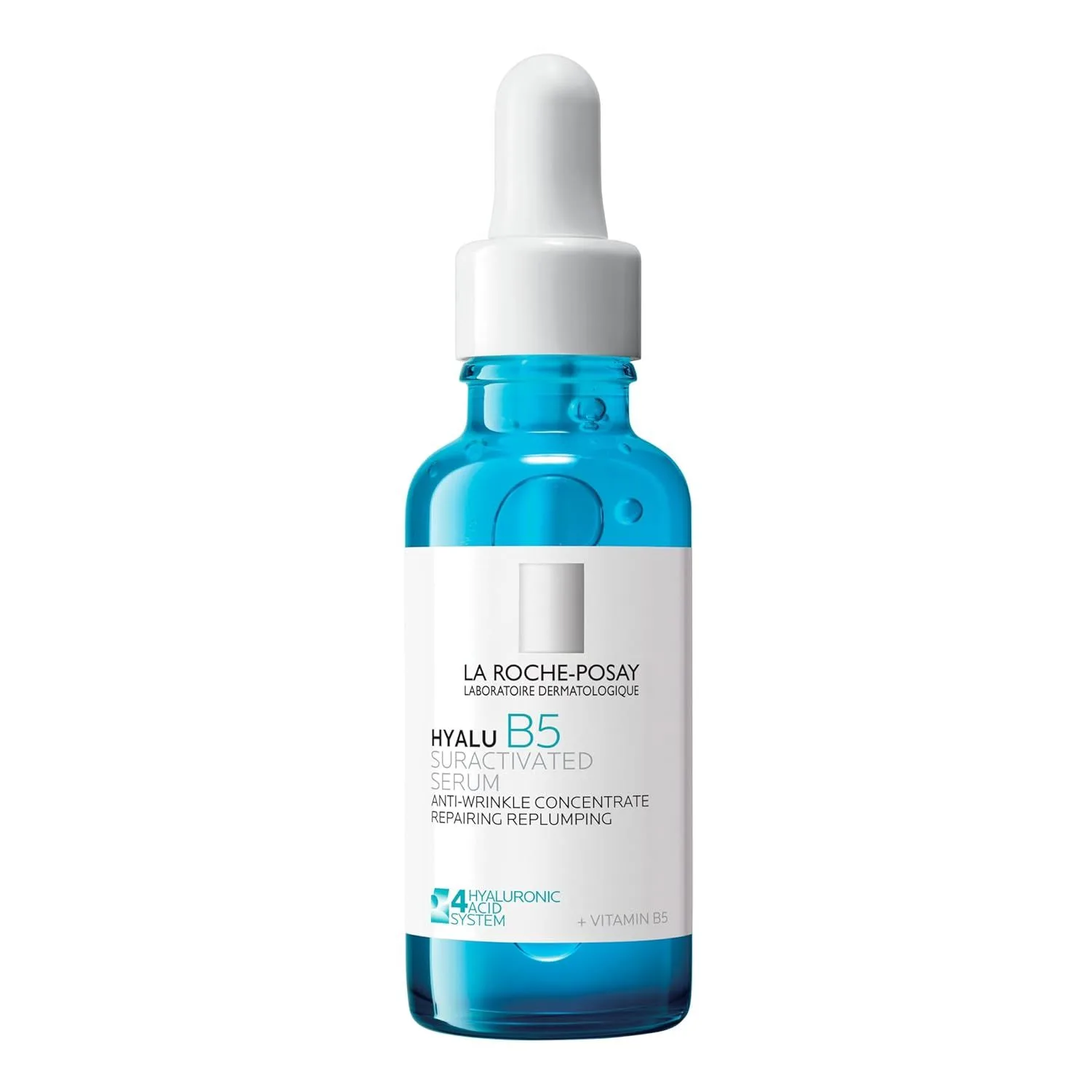
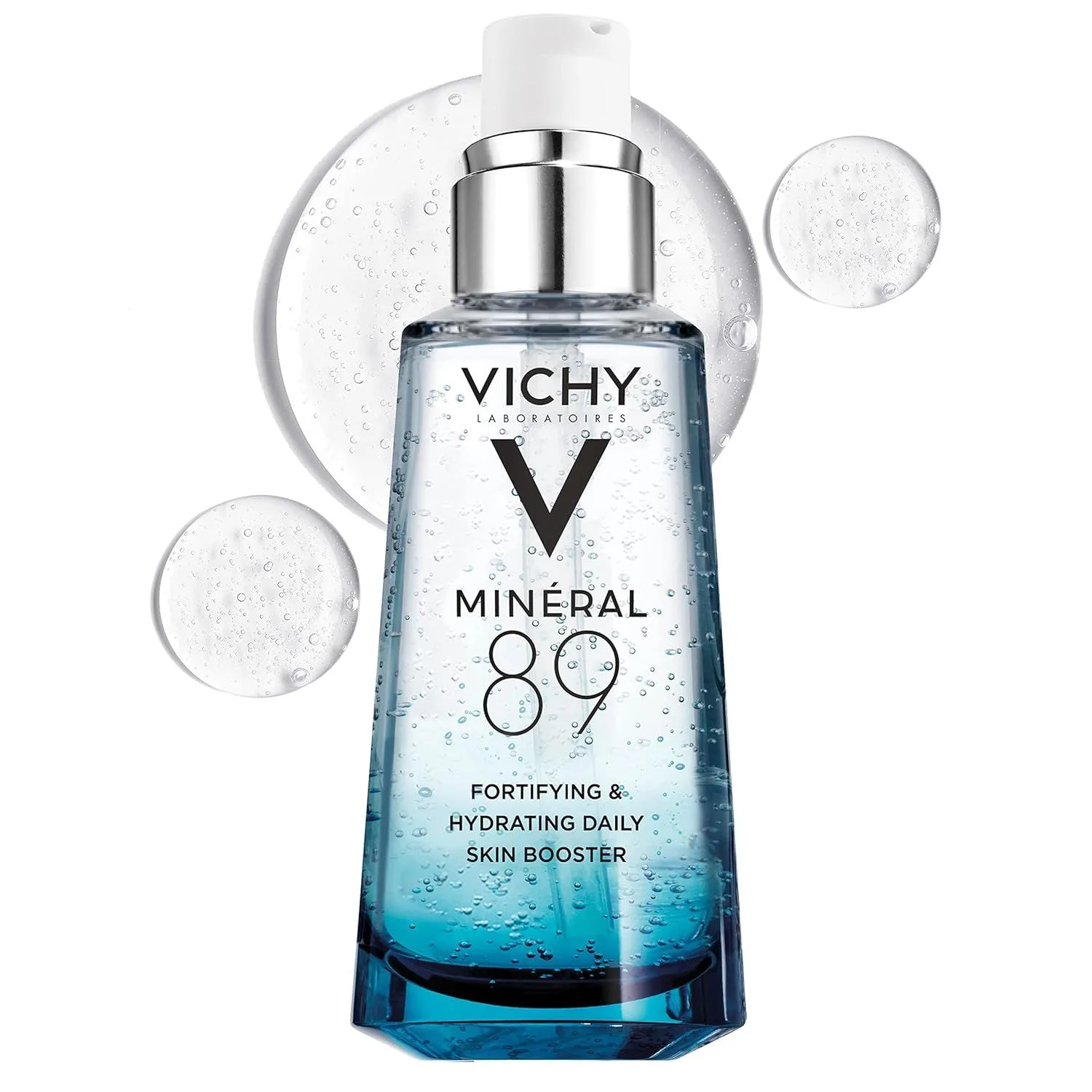
At a Glance
| Feature | La Roche-Posay Hyalu B5 Pure Hyaluronic Acid Serum | Vichy Minéral 89 Hyaluronic Acid Face Serum |
|---|---|---|
| Price Range | $25–$50 | $25–$50 |
| Size | 30ml / 1 fl oz | 50ml / 1.69 fl oz |
| Best Skin Type | All skin types incl. sensitive | All skin types |
| Key Ingredient | Dual HA + B5 + Madecassoside | 89% Vichy Volcanic Water + HA |
| Active Concentration | Dual-weight HA complex | HA + 89% mineral water |
| Texture | Gel-serum | Lightweight gel-serum |
| Fragrance | Fragrance-free | Fragrance-free |
| See Availability | See Availability |
Madecassoside: La Roche-Posay's Repair Ingredient That Vichy Lacks
La Roche-Posay includes Madecassoside — a derivative of Centella Asiatica with documented wound-healing and anti-inflammatory properties. This is the ingredient that dermatologists recommend for post-procedure recovery, and it is what elevates Hyalu B5 from a pure hydrator to a hydration-plus-repair formula. Vichy Mineral 89 does not include Madecassoside or any equivalent repair compound. If your skin is irritated, recovering from a chemical peel, or stressed by retinol, the Madecassoside gives La Roche-Posay a functional advantage that Vichy cannot match.
Madecassoside's wound-healing reputation extends beyond cosmetic skincare. The compound appears in medical literature for its role in accelerating epithelial recovery and reducing post-inflammatory redness. Dermatology clinics that perform ablative laser treatments and deep chemical peels frequently include La Roche-Posay Hyalu B5 in their post-care instructions — not as a brand partnership, but because the Madecassoside delivers measurable recovery benefits that pure HA formulas do not. This clinical credibility is something Vichy, despite its excellent hydration profile, has not established to the same degree. For buyers whose skincare routine includes any active that stresses the barrier — retinol, AHAs, BHAs, or professional treatments — this distinction carries real practical weight.
89% Volcanic Water: Is Vichy's Mineral Story Real or Marketing?
Vichy's volcanic mineral water contains 15 rare minerals that the brand says strengthen the skin barrier. Clinical studies from Vichy show measurable improvements in barrier function after use. The question is how much of that benefit comes from the minerals versus the hyaluronic acid versus simple hydration. Honest answer: it is hard to isolate. But 32,000+ reviews at a 4.6 average suggest the combination — whether it is the minerals, the HA, or both — works. La Roche-Posay's thermal spring water is also mineral-rich but is not the star ingredient. Vichy built its entire formula identity around the water source.
Dual HA vs Single HA: Does Molecular Weight Variety Matter?
La Roche-Posay uses two molecular weights of hyaluronic acid — one for surface hydration and one for deeper penetration. This dual-weight approach provides more thorough hydration across skin layers. Vichy's formula centers on a single HA weight paired with the mineral water base. The dual-weight advantage is real but modest — both formulas hydrate effectively. If you want measurable multi-depth hydration, La Roche-Posay's two-weight approach is the more scientifically complete design.
The 32,000-Review Consensus
Vichy Mineral 89 has 32,000 reviews at a 4.6 average — the highest-rated hydrating serum in our catalog by both count and score. La Roche-Posay Hyalu B5 has 9,800 reviews at a 4.5 average — still strong, but a smaller consensus. When 32,000 people agree that something works, that collective experience covers virtually every skin type, climate, and concern. Vichy's review volume provides the strongest social proof of any hydrating serum we have reviewed.
Digging into the review distribution tells a more nuanced story. Vichy's 32,000 reviews skew toward first-time HA serum buyers — people discovering hyaluronic acid for the first time and finding that it works. La Roche-Posay's 9,800 reviews skew toward more experienced skincare users, including a visible subset of post-procedure patients and retinol users looking for a buffer serum. The audiences are not identical, which means the ratings measure satisfaction among different buyer profiles. Vichy's score reflects broad appeal. La Roche-Posay's score reflects targeted performance for a more specific set of skin concerns.
Volume and Value: Which Jar Goes Further?
Vichy gives you 50ml for its price. La Roche-Posay gives you 30ml for a higher price. The per-milliliter math clearly favors Vichy. Both serums are used daily — one pump each morning. Vichy's larger bottle lasts approximately 3-4 months. La Roche-Posay's smaller bottle lasts 2-3 months. For sustained, long-term hydration where refill frequency and cost per month matter, Vichy delivers better value by a clear margin. Our best hydrating serums ranked cover how both compare to the full category.
The value calculation shifts if you factor in the products each serum replaces. Vichy is a pure hydrator — it supplements your existing routine but does not reduce the number of products you need. La Roche-Posay's Madecassoside component can replace a separate calming or barrier-repair product for some users, particularly those who currently use a standalone Centella serum alongside their HA. Consolidating two functions into one bottle offsets the higher per-milliliter cost. Whether this applies depends entirely on what else sits on your shelf.
Texture and Layering: How Each Fits Into a Multi-Step Routine
Vichy Mineral 89 has a gel-serum consistency that absorbs in seconds. On your face, it feels like a thin film of water that vanishes almost immediately. It layers invisibly under Vitamin C, retinol, moisturizer, and SPF without adding any detectable weight. For oily skin types or anyone who hates the feeling of product sitting on their face, this texture is a real advantage. It also means Vichy works well in humid climates where heavier serums feel suffocating.
La Roche-Posay Hyalu B5 is slightly thicker — more of a gel-cream than a gel-serum. It takes an extra 10-15 seconds to absorb compared to Vichy. The thicker consistency comes from the dual-weight HA and the Madecassoside, which add viscosity. For dry skin types, this extra body is actually a benefit — it provides a noticeable hydration cushion that Vichy's thinner formula does not. Under makeup, both perform well, but Vichy creates a smoother canvas because it leaves zero residue.
Climate Considerations: Humidity, Indoor Heat, and Desert Air
Both serums are HA-based humectants, which means they pull moisture from the surrounding environment. In humid climates (above 50% relative humidity), both work beautifully — there is plenty of atmospheric water for the HA to attract into your skin. The difference emerges in dry climates.
In low-humidity environments (heated offices in winter, desert climates, air-conditioned rooms below 40% humidity), HA can reverse course and pull water from deeper skin layers instead of from the air. Vichy's mineral water base may offer a slight buffer here — the dissolved minerals provide some electrolyte-level hydration that pure HA formulas lack. La Roche-Posay's Madecassoside helps by reinforcing the barrier against moisture loss. But for both serums in dry climates, the same rule applies: apply to damp skin and seal with a moisturizer within 60 seconds. Without the occlusive seal, neither product can prevent the transepidermal water loss that dry environments cause.
Seasonal transitions expose another practical difference. During the shift from summer to fall — when outdoor humidity drops but indoor heating has not yet started — skin enters a dehydration limbo that catches many people off guard. Vichy's lighter texture works well during the humid months but may feel insufficient as air dries out. La Roche-Posay's slightly richer consistency and barrier-repair properties handle the transition more gracefully. Buyers in four-season climates often report switching to La Roche-Posay during the colder months and returning to Vichy in spring, a pattern that aligns with each formula's strengths rather than suggesting either product is universally superior year-round.
Sensitive and Reactive Skin: Which Is Safer?
Both are fragrance-free, paraben-free, and tested for sensitive skin. Neither contains essential oils, alcohol denat, or other common irritants. For most sensitive skin types, both are equally safe choices. The difference is in what happens when sensitivity is already flared.
If your skin is currently irritated — from retinol overuse, a strong chemical peel, windburn, or a barrier disruption — La Roche-Posay's Madecassoside actively helps calm the inflammation and accelerate healing. Vichy hydrates the irritated skin but does not address the inflammation directly. For someone with a compromised barrier who needs both hydration and repair, La Roche-Posay is the clinical choice. For someone with sensitive-but-stable skin looking for daily maintenance hydration, either works equally well.
Dermatologists often recommend La Roche-Posay Hyalu B5 specifically for post-laser and post-microneedling recovery. The combination of hydration and Centella Asiatica-derived repair ingredients makes it a medical-grade recovery serum disguised as a consumer product. Vichy is not typically prescribed in clinical settings — it is an excellent daily hydrator but not a recovery tool.
Long-Term Value: What Six Months of Use Looks Like
Vichy's 50ml bottle lasts approximately 3-4 months with once-daily use (one pump per application). La Roche-Posay's 30ml bottle lasts 2-3 months with the same usage. Over six months, you would buy one bottle of Vichy and be halfway through a second. With La Roche-Posay, you would be on your second or third bottle. The cost difference compounds over time — by the one-year mark, the annual spend on Vichy is measurably lower.
Both serums maintain their effectiveness over long-term use. HA-based hydrators do not lose efficacy the way some actives (like retinol) can plateau. Your skin does not "get used to" hyaluronic acid. What changes over months of consistent hydration is your skin's overall condition — better-hydrated skin has a stronger barrier, fewer dehydration lines, and a smoother texture that makes other actives (retinol, Vitamin C) perform better and cause less irritation.
The repurchase patterns for both products reinforce this point. Amazon's "frequently bought together" data shows that both serums have unusually high repeat purchase rates compared to other skincare categories. Buyers do not try them once and move on — they integrate them as permanent fixtures. Vichy buyers tend to stock up during sales events, purchasing two or three bottles at once, which suggests strong enough loyalty to commit months ahead. La Roche-Posay buyers more often purchase one bottle at a time but reorder with consistent frequency. Neither product shows the boom-and-bust purchase pattern common among trend-driven skincare launches, which quietly confirms that daily HA hydration delivers real, sustained results rather than temporary novelty.
Ingredient Lists Side by Side: What Else Is in Each Bottle
Beyond the headline ingredients, these formulas differ in supporting cast. La Roche-Posay includes Vitamin B5 (panthenol) — a well-documented humectant and skin-soothing agent that works alongside the Madecassoside for barrier repair. The formula also includes its proprietary thermal spring water, rich in selenium (an antioxidant mineral). The complete ingredient list is short and clean — no fragrance, no alcohol denat, no silicones. Every ingredient serves a hydration or repair function.
Vichy's supporting ingredients center on its mineral water base — 15 minerals including calcium, magnesium, and potassium that function as electrolytes for the skin. The formula also includes sugar-derived humectants that reinforce the HA's moisture-binding capacity. Like La Roche-Posay, Vichy keeps the formula clean: fragrance-free, paraben-free, no alcohol. The mineral water itself constitutes 89% of the formula — an unusually high concentration of a single ingredient, which is either the product's greatest strength or a clever marketing framing of what is essentially a well-formulated HA serum in mineral-enriched water.
One difference worth noting: La Roche-Posay has a slightly longer ingredient list because of the Madecassoside and B5 additions. More ingredients is not inherently better or worse — it depends on what those ingredients do. In this case, every addition serves the repair-plus-hydration mission. Vichy's shorter list reflects its focused approach: mineral water, HA, and a few supporting humectants. If ingredient minimalism appeals to you, Vichy is the simpler formula. If you want more functional ingredients working in concert, La Roche-Posay packs more into the bottle.
Pairing With Actives: Which Plays Better With Retinol and Vitamin C
Both serums are designed to sit in the hydration layer of your routine — after cleansing, before treatment actives. But they interact differently with the actives you layer on top. La Roche-Posay's Madecassoside actively calms inflammation, which makes it the better base layer for retinol nights. Retinol causes low-grade irritation by design (that is how it triggers cell turnover), and the Madecassoside buffers that irritation without reducing the retinol's efficacy. Dermatologists who recommend Hyalu B5 for post-procedure recovery use the same logic when pairing it with retinol — it manages the side effects while letting the active do its work.
Vichy Mineral 89 pairs better with Vitamin C in the morning. The lightweight gel absorbs and dries in seconds, creating a clean surface for the Vitamin C to contact skin directly. La Roche-Posay's slightly thicker consistency can create a buffer layer that slows Vitamin C absorption — not enough to nullify it, but enough that some users notice the Vitamin C takes longer to absorb. For a streamlined morning routine where speed matters, Vichy under Vitamin C under SPF is the faster three-step sequence.
Niacinamide is another common pairing worth considering. Both serums layer well under niacinamide products, but La Roche-Posay's anti-inflammatory Madecassoside combined with niacinamide's pore-refining and brightening properties creates a particularly effective stack for acne-prone skin recovering from breakouts. The dual action — calming inflammation while refining texture — addresses post-acne marks from two complementary angles. Vichy under niacinamide works well too, but the combination is additive rather than synergistic. Neither serum conflicts with niacinamide at any concentration, so this pairing is safe regardless of which you choose.
Who Should Get Which?
Get La Roche-Posay Hyalu B5 If...
- Your skin needs repair — post-procedure, post-retinol, or barrier-damaged
- Dual-weight hyaluronic acid for multi-depth hydration appeals to you
- You want the dermatologist-recommended post-treatment recovery serum
- Madecassoside's anti-inflammatory properties match your skin's current needs
Get Vichy Minéral 89 If...
- You want the most universally loved hydrating serum — 32,000+ reviews at 4.6 stars
- Value matters — more product at a lower price with a lighter, faster-absorbing texture
- Your skin is healthy and needs daily hydration, not repair
- Mineral-rich barrier strengthening aligns with your skincare philosophy
Frequently Asked Questions
Are La Roche-Posay and Vichy owned by the same company?
Yes. Both are L'Oreal brands with dermatological positioning. Each uses its own proprietary thermal spring water (La Roche-Posay from the Poitou-Charentes region, Vichy from the Auvergne region). Despite shared ownership, the formulations and positioning are distinct.
Can I use both serums in the same routine?
You could, but there is minimal benefit — both are HA-based hydrators. Layering two HA serums adds volume without proportional hydration gains. Pick one and pair it with a complementary active (Vitamin C, retinol, or peptides) instead.
Which absorbs faster?
Vichy Mineral 89. Its lightweight gel-serum texture absorbs in seconds with almost no residue. La Roche-Posay Hyalu B5 has a slightly higher viscosity that takes a moment longer. Both absorb well, but Vichy is noticeably faster.
Which is better after chemical peels or microneedling?
La Roche-Posay Hyalu B5. The Madecassoside (Centella Asiatica derivative) has documented wound-healing and anti-inflammatory properties. Dermatologists frequently recommend it for post-procedure recovery. Vichy Mineral 89 hydrates but lacks the dedicated repair ingredient.
Do they both work on acne-prone skin?
Both are oil-free and non-comedogenic. La Roche-Posay Hyalu B5 is tested under dermatological control and explicitly safe for acne-prone skin. Vichy Mineral 89 is equally well-tolerated. Neither will trigger breakouts.
Final Verdict
La Roche-Posay Hyalu B5 is the better formula on paper — dual HA weights plus Madecassoside deliver hydration and repair from a single product. For post-procedure recovery, La Roche-Posay beats Vichy with a repair mechanism that Mineral 89 simply does not have. Vichy Mineral 89 is the better value in practice — more product, more reviews, lighter texture, lower price. The biggest difference between them is whether your skin needs active repair or straightforward daily hydration. For skin that needs help recovering, La Roche-Posay is the clinical answer. For skin that needs daily hydration done right, Vichy's 32,000-reviewer consensus is hard to argue with. Our hyaluronic acid explained guide covers HA molecular weights and application techniques. Both are affordably priced and both belong in any serious skincare routine.
Track Both Products
We'll email you if either price drops or availability changes.
Only when something changes. Unsubscribe anytime.