Kiehl's Ultra Facial Cream vs Aug. Bader Soothing Cream: Which Moisturizer in 2026?
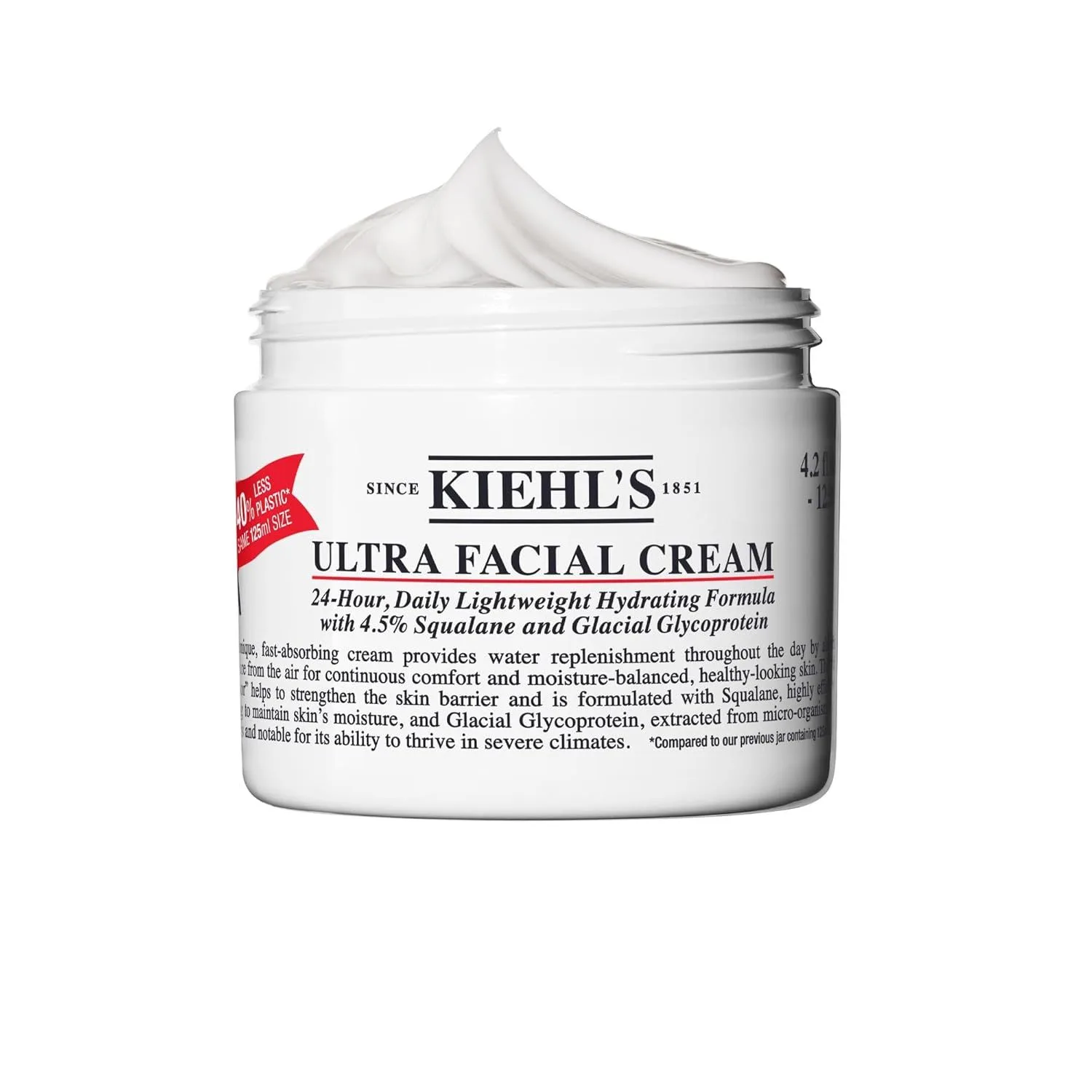
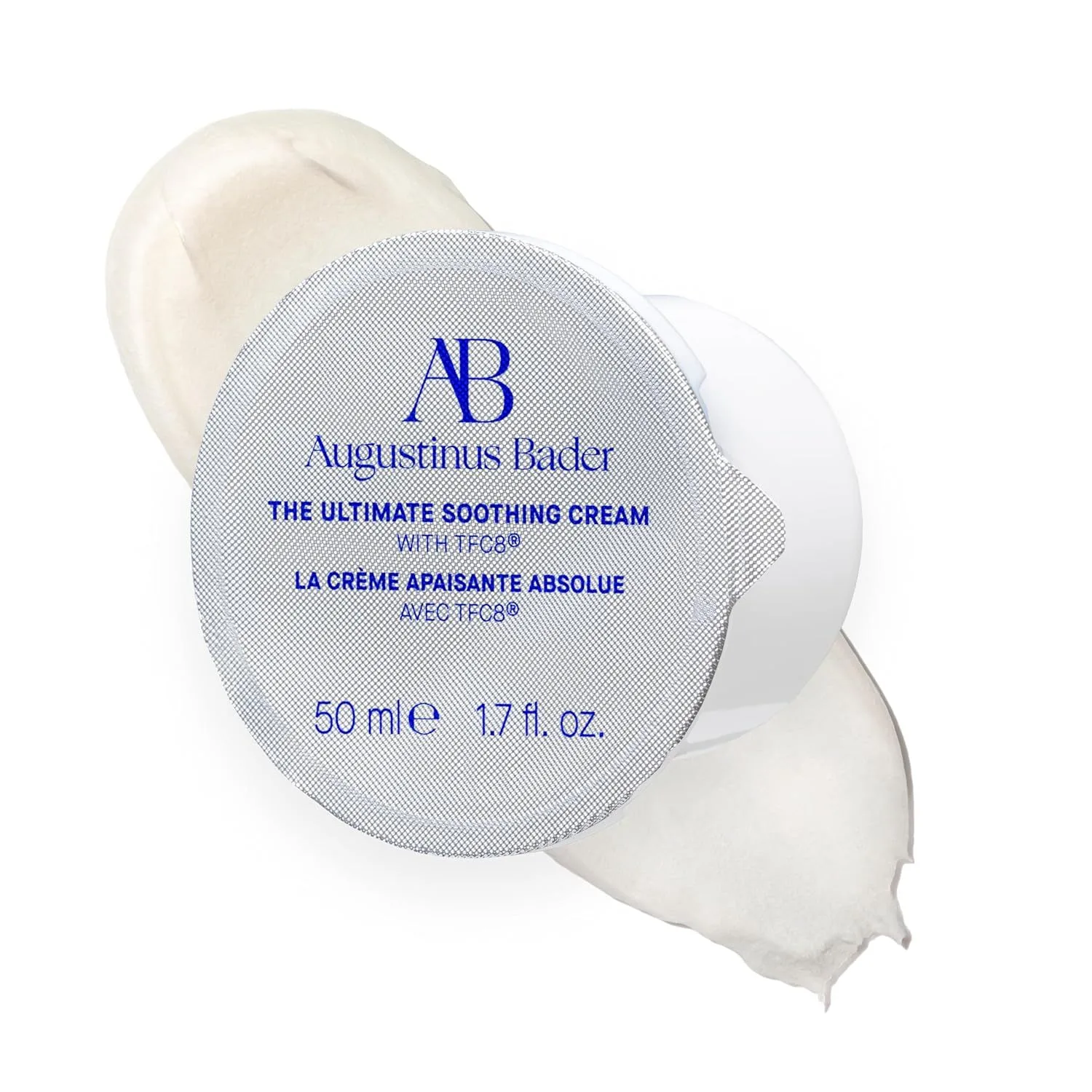
Two 50ml jars of luxury moisturizer sit at opposite ends of the price spectrum. Kiehl's Ultra Facial Cream built its reputation as the reliable, all-skin-type hydrator anchored by glacial glycoprotein and squalane. Augustinus Bader's Ultimate Soothing Cream targets a narrower audience — reactive, stressed, or post-procedure skin — with TFC8 cellular technology and soothing botanicals.
Quick Verdict: Kiehl's wins on value, universal skin type compatibility, consumer proof volume, layering flexibility, and sheer availability. Augustinus Bader wins on soothing reactive skin, cellular repair technology, ingredient sophistication, and fragrance-free formulation for the most sensitive users. Kiehl's is the moisturizer that works for everyone. Augustinus Bader is the moisturizer built for skin that has stopped trusting other creams.
Side-by-Side Specs
| Feature | Kiehl's Ultra Facial Cream | Augustinus Bader The Ultimate Soothing Cream |
|---|---|---|
| Price Range | $25–$50 | $250–$500 |
| Size | 50ml / 1.7 fl oz | 50ml / 1.7 fl oz |
| Best Skin Type | All skin types | Dry, sensitive, stressed skin |
| Key Ingredient | Glacial Glycoprotein + Squalane | TFC8 + Evening Primrose + B3/B5 |
| Active Concentration | Proprietary blend | TFC8-delivered |
| Texture | Lightweight cream | Rich soothing cream |
| Fragrance | Fragrance-free | Fragrance-free |
| See Availability | See Availability |
Glacial Glycoprotein vs TFC8: Two Theories of Moisturizing
Kiehl's Ultra Facial Cream anchors its formula around glacial glycoprotein — a compound sourced from sea glaciers that binds water to the skin's surface and holds it there for up to 24 hours, according to Kiehl's clinical measurements. The supporting cast is squalane (an olive-derived emollient that mirrors the skin's natural lipids) and a deliberately short ingredient list. Kiehl's philosophy is reductive: strip away everything the skin does not need, deliver moisture efficiently, and let the skin breathe. The approach has worked since the original formulation, and the brand has resisted the temptation to complicate it with trendy actives.
Augustinus Bader's Soothing Cream builds on an entirely different premise. TFC8 — Trigger Factor Complex 8 — originated from Professor Augustinus Bader's three decades of stem cell and wound-healing research at Leipzig University. The complex combines amino acids, high-grade vitamins, and synthesized molecules into a delivery system designed to signal skin cells to repair themselves at the site of damage or stress. Evening Primrose oil provides gamma-linolenic acid, which reduces inflammation at the cellular membrane level. Vitamins B3 (niacinamide) and B5 (panthenol) support barrier function and calm redness. The formula was purpose-built for skin that reacts to most products — the target user is someone whose medicine cabinet holds a graveyard of abandoned creams.
The conceptual gap between these two creams is more revealing than the price gap. Kiehl's treats the skin as a surface that needs hydration and protection. Augustinus Bader treats the skin as a cellular system that needs repair signals. Both are valid — but they address fundamentally different problems. Healthy skin that simply needs moisture will not benefit from TFC8's cellular targeting because there is nothing to repair. Stressed, reactive skin that cannot hold moisture due to barrier compromise will benefit more from the repair-then-hydrate approach than from hydration alone.
The 6x Price Gap: What Does the Premium Actually Buy?
Augustinus Bader's Soothing Cream is several times the price than Kiehl's for the same 50ml of product. That gap demands a direct answer: is the TFC8 cream six times more effective at moisturizing? No. Glacial glycoprotein delivers 24-hour hydration that TFC8 does not noticeably surpass for healthy skin. The premium buys three things that Kiehl's does not offer: patented cellular repair technology, a formula specifically engineered for reactive skin, and an ingredient profile that reads like a dermatological treatment rather than a cosmetic cream.
Kiehl's, for its part, is not a budget product pretending to compete at a higher tier. The formulation has been refined by a brand that has operated since 1851, with apothecary-grade sourcing and a loyal following that spans generations. At affordably priced pricing, the Ultra Facial Cream delivers better hydration-per-dollar than almost any moisturizer in the luxury category. The jar packaging is its only real design flaw — airless pumps protect formulas better from air and bacterial exposure — but the cream itself performs at a level that makes the price feel like an oversight. Fourteen thousand Amazon reviews at 4.5 stars do not accumulate by accident. That volume of sustained approval represents a product that consistently delivers on its single promise: reliable hydration for every skin type, every climate, every season.
For the majority of consumers — those with normal, combination, or moderately dry skin that is not actively irritated — Kiehl's represents the smarter allocation of skincare budget. The money saved could fund an entire active serum (retinol, Vitamin C, or peptides) to pair with the Ultra Facial Cream, creating a two-product routine that addresses both hydration and anti-aging. Augustinus Bader's premium makes financial sense only when the alternative is cycling through multiple failed moisturizers, each one triggering a flare. For chronically reactive skin, the Soothing Cream may end the expensive cycle of trial and rejection — and in that context, the price becomes the cost of a solution rather than the cost of a cream.
Consumer Proof: 14,200 Reviews vs 650 Reviews
Kiehl's Ultra Facial Cream carries 14,200+ Amazon reviews at a 4.5-star average — a dataset large enough to draw statistical conclusions about virtually any skin type, climate, or routine combination. The praise clusters around three themes: lightweight feel that works under makeup, genuine 24-hour hydration that survives air-conditioned offices and heated apartments, and compatibility with active serums without pilling or interference. The complaints are equally consistent: the jar packaging feels dated, the cream does nothing for active breakouts or hyperpigmentation (it is not designed to), and the 50ml jar runs out faster than users expect when applied twice daily.
Augustinus Bader's 650 reviews at 4.3 stars tell a more polarized story. The five-star reviews are fervent — users with rosacea, eczema-adjacent sensitivity, and post-procedure skin describe the Soothing Cream as the first product that calmed their skin without causing a secondary reaction. Multiple reviewers mention applying it after laser treatments, chemical peels, and retinoid-induced irritation with immediate relief. The critical reviews follow a pattern seen across Augustinus Bader's product line: the price feels disproportionate to the perceived results, especially for users whose skin is not actively stressed. A healthy-skinned buyer applying the Soothing Cream as a general moisturizer will struggle to feel a difference that justifies a six-fold premium over Kiehl's — and their review will reflect that disappointment.
The review volume disparity matters for purchase confidence. With 14,200 data points, you can predict how Kiehl's will perform on your skin with near-certainty — someone with your exact skin type, in your climate, using your same morning routine, has already reviewed it. With 650 data points, Augustinus Bader requires more trust. The smaller sample is not a quality signal — it reflects a smaller buyer pool at a premium price point — but it does mean less crowdsourced guidance for edge cases. If your skin concern is common (general dryness, seasonal dehydration), Kiehl's dataset covers you. If your concern is specific (chronic redness, post-procedure recovery, product-reactive sensitivity), Augustinus Bader's smaller but more targeted review pool is actually more relevant to your decision.
Calming Reactive Skin: Where the Soothing Cream Earns Its Name
Augustinus Bader did not name this product "Soothing" as marketing shorthand. The formula was engineered around a specific clinical problem: skin that is inflamed, compromised, or sensitized to the point where conventional moisturizers become irritants. TFC8's wound-healing origins are directly relevant here — the complex was designed to accelerate recovery in damaged tissue, and sensitized facial skin shares many biochemical characteristics with mild wound states. The Evening Primrose oil in the formula delivers gamma-linolenic acid, a fatty acid that clinical research has linked to reduced inflammatory markers in skin conditions including eczema and dermatitis. Vitamins B3 and B5 reinforce this anti-inflammatory foundation from different angles: niacinamide calms visible redness while panthenol accelerates epidermal turnover in compromised areas.
Kiehl's Ultra Facial Cream is gentle but not soothing. The distinction matters. Gentleness means the product is unlikely to cause irritation — and for 98% of users, this holds true. But gentleness is passive. The Ultra Facial Cream does not contain targeted anti-inflammatory actives. It does not signal cellular repair. It will not calm a rosacea flare or ease the tight, burning sensation that follows an aggressive retinoid application. Applied to actively irritated skin, Kiehl's provides a hydration layer — useful, but insufficient on its own. Applied to the same skin, Augustinus Bader's Soothing Cream provides hydration plus active calming plus cellular repair signaling — a multi-vector response to an acute skin problem.
For anyone whose primary skin concern is reactivity, sensitivity, or post-treatment recovery, this category is not competitive. Augustinus Bader's Soothing Cream exists precisely for this problem. Kiehl's exists for the broader, more common problem of daily hydration across healthy skin types. The right product depends on your skin's current state, not on which formula is "better" in the abstract. Our sensitive skin guide covers additional options across multiple price tiers for reactive skin management.
Layering, Routine Flexibility, and Daily Wearability
Kiehl's Ultra Facial Cream is one of the most routine-compatible moisturizers in the luxury category. Its lightweight texture absorbs in under 60 seconds and sits comfortably under chemical sunscreens, mineral SPFs, makeup primers, and foundations without pilling, creasing, or destabilizing the layers above it. Morning and evening, it pairs with any serum — retinol, Vitamin C, hyaluronic acid, peptides — without altering their absorption or causing texture conflicts. This flexibility is not an accident. Kiehl's formulated the Ultra Facial Cream as a hydration layer, not a treatment, which means it does not compete with active ingredients for skin attention.
The practical implication: you build your routine around actives, and Kiehl's fills the moisture gap without requiring any accommodation. Swap your retinol for a peptide serum? The moisturizer stays the same. Add a Vitamin C in the morning? The moisturizer stays the same. Travel to a humid climate and drop your heavier night products? The moisturizer still works. This kind of routine permanence — one product that remains constant while everything else rotates — saves both money and decision fatigue over months and years of daily skincare.
Augustinus Bader's Soothing Cream is richer, denser, and more treatment-oriented. It absorbs in 2-3 minutes and leaves a perceptible emollient film that some mineral sunscreens struggle to adhere over. For morning use, it works best under chemical SPFs or on days when you skip sunscreen entirely (not recommended, but realistic for indoor-only days). At night, the richer texture functions well as a final occlusive step. Layering active serums underneath is possible but requires spacing — apply your serum, wait 5 minutes for full absorption, then apply the Soothing Cream. The TFC8 complex benefits from direct skin contact, so less product between the cream and your skin means better cellular targeting.
For multi-step routine enthusiasts who rotate actives by season and concern, Kiehl's adaptability is a genuine advantage. For minimalists who want a single cream that serves as both treatment and moisturizer — especially at night — Augustinus Bader's all-in-one approach reduces the number of products touching irritated skin, which is often the best strategy for reactive types.
Fragrance, Clean Formulation, and Ingredient Transparency
Augustinus Bader's Soothing Cream is fragrance-free — genuinely fragrance-free, not "unscented" (which can still contain masking fragrances). For the 8-15% of the population with confirmed fragrance sensitivity, this is not a preference — it is a medical requirement. The ingredient list is shorter and more focused than most luxury moisturizers, with each component serving a specific functional purpose: TFC8 for cellular signaling, Evening Primrose for anti-inflammatory fatty acids, B3/B5 for barrier support and redness reduction. No filler ingredients exist to pad the formula or create a more luxurious sensory experience at the expense of skin tolerance.
Kiehl's Ultra Facial Cream is also fragrance-free, which puts these two creams on equal footing for fragrance sensitivity. The ingredient profile, while minimal, includes a different philosophy: glacial glycoprotein and squalane handle the hydration, and the formula avoids both controversial and sophisticated actives alike. Kiehl's ingredient transparency is excellent — the brand publishes full ingredient lists with clear descriptions of each component's role. The formula contains nothing that clean-beauty advocates typically flag, though it also does not contain the targeted anti-inflammatory or cellular repair actives that Augustinus Bader includes.
The meaningful difference is depth, not cleanliness. Both formulas are clean by any reasonable definition. Both are fragrance-free. Augustinus Bader adds clinical-grade soothing actives on top of that clean foundation. Kiehl's keeps the formula deliberately simple, trusting that fewer ingredients mean fewer potential triggers. For extremely reactive skin that has been sensitized by over-complicated routines, Kiehl's simplicity is arguably a feature. For skin that needs active calming, simplicity alone is not enough — you need the targeted actives that Augustinus Bader provides.
Availability and Repurchase Convenience
Kiehl's Ultra Facial Cream is available at Sephora, Nordstrom, Kiehl's own retail stores, Amazon, and dozens of international retailers. It is stocked in airports, department stores, and pharmacies in over 40 countries. Running out while traveling is a solvable problem — you will find it. This distribution network reflects a product that has reached mass-luxury scale, and the repurchase convenience should not be underestimated. Skincare routines fail most often not because the product stops working, but because the user cannot easily replace it.
Augustinus Bader's retail footprint is smaller and more selective. Specialty luxury retailers like Violet Grey and Net-a-Porter carry the line, along with select Nordstrom and Neiman Marcus locations, Amazon, and the brand's own website. International availability is expanding but still concentrated in North American and European markets. The refillable jar system — a sustainability feature where you purchase the outer jar once and buy refill inserts thereafter — reduces waste and lowers the per-refill cost, but it requires purchasing through channels that stock the refills specifically. Running out abroad with no replacement source nearby is a realistic scenario.
Who Should Get Which?
Get Kiehl's Ultra Facial Cream If...
- Your skin is generally healthy and your primary need is reliable, daily hydration without complexity
- You rotate active serums by season and need a moisturizer that layers under anything without interference
- Value matters — you want a luxury-grade formula at an accessible price that leaves budget for complementary actives
- You travel frequently and want a moisturizer you can repurchase in any major city worldwide
- You prefer minimal, unfussy skincare — one pump, 60 seconds of absorption, done
- 14,200+ reviews and a 4.5-star average give you confidence that the product works across diverse skin types
Get Aug. Bader Soothing Cream If...
- Your skin is reactive, sensitized, or recovering from professional treatments — and conventional moisturizers trigger flares
- You want cellular repair technology from wound-healing research, not just passive hydration
- Evening Primrose, niacinamide, and panthenol in a single formula replaces multiple soothing products in your rotation
- You prefer a minimalist routine where one product serves as both treatment and moisturizer
- Sustainability appeals — Augustinus Bader's refillable jar system reduces packaging waste on every repurchase
- You have tried multiple sensitive-skin moisturizers that failed, and you need a formula designed from the ground up for compromised skin
Skin Type Mapping: Which Cream Fits Your Skin?
Oily skin: Kiehl's Ultra Facial Cream. The lightweight texture absorbs cleanly, does not add unwanted shine, and will not clog pores with excess emollients. Augustinus Bader's richer formula can feel heavy on oily skin, especially in warm or humid conditions. Unless your oily skin is also reactive, Kiehl's is the more comfortable daily choice.
Dry skin: Both work, but through different mechanisms. Kiehl's glacial glycoprotein binds moisture to the skin surface — effective for mild to moderate dryness. Augustinus Bader's richer texture and TFC8 cellular support address dryness that stems from barrier compromise rather than just moisture deficit. If your dry skin is also tight, flaky, or prone to irritation, Augustinus Bader targets the root cause. If your dry skin is simply thirsty, Kiehl's hydrates efficiently at a fraction of the cost.
Combination skin: Kiehl's works on both the oily T-zone and drier cheeks without requiring different application amounts — the lightweight texture self-regulates well. Augustinus Bader may feel too rich on the T-zone while performing well on drier areas. For combination types, Kiehl's universal texture is the more practical choice.
Sensitive or reactive skin: Augustinus Bader. This is the product's core audience. TFC8's cellular repair targeting, combined with Evening Primrose anti-inflammatory action and B-vitamin barrier support, creates a formula that actively soothes rather than passively avoids irritation. Kiehl's is gentle and unlikely to trigger reactions, but it does not calm existing sensitivity — it simply avoids adding to it.
Post-procedure skin: Augustinus Bader, without question. The Soothing Cream's wound-healing lineage makes it directly relevant for post-laser, post-peel, and post-microneedling recovery. Several dermatologists recommend it as a post-procedure recovery cream, and the Amazon reviews include specific accounts of accelerated healing timelines. Kiehl's provides hydration during recovery but lacks the cellular repair signaling that post-procedure skin benefits from most.
The Verdict: Different Creams for Different Skin Stories
This comparison does not have a single winner because these creams solve different problems for different people. Kiehl's Ultra Facial Cream is the moisturizer equivalent of a perfectly tailored white shirt — it works in every context, never disappoints, pairs with everything, and costs a fraction of what you might expect given its quality. For the vast majority of skincare consumers, it is the right choice. Glacial glycoprotein delivers on the 24-hour hydration promise. The formula layers under actives, sunscreen, and makeup without complaint. Fourteen thousand reviews confirm what the ingredient list suggests: this is a product built for reliability across the widest possible audience.
Augustinus Bader's Ultimate Soothing Cream is not competing for the same audience. It was designed for skin that has been let down by reliable, well-reviewed moisturizers — skin that reacts to products its owners expected to tolerate. TFC8 technology, Evening Primrose oil, and B-vitamin support create a formula that actively calms and repairs rather than simply hydrating. The price reflects patented research, targeted formulation, and a refillable packaging commitment. For the specific user it was built for — reactive, stressed, post-procedure skin — the Soothing Cream ends the search for a moisturizer that does not make things worse. For a broader look at both products against the full luxury moisturizer field, see our best luxury moisturizers roundup.
Your skin's current state determines the right choice more than your budget does. Healthy skin that needs daily moisture gets better value from Kiehl's at any income level — it beats Augustinus Bader on value, layering flexibility, and universal skin-type compatibility. For reactive or post-procedure skin, Augustinus Bader is the clear winner — TFC8's cellular repair technology solves a problem that no amount of glacial glycoprotein can address. Match the cream to the problem, not to the price tag — and if your skin is healthy, count yourself fortunate that the less expensive option is also the better one for you.
Frequently Asked Questions
Is Augustinus Bader worth six times more than Kiehl's Ultra Facial Cream?
Not for general moisturizing. Kiehl's delivers 24-hour hydration across all skin types at a fraction of the cost. Augustinus Bader's premium buys you TFC8 cellular targeting and a fragrance-free, soothing formulation specifically designed for reactive, stressed, or post-procedure skin. If your skin is healthy and you need reliable moisture, Kiehl's does that job without the premium. If your skin is inflamed and rejects most products, the Soothing Cream's cellular repair approach may justify the investment.
Can I use Kiehl's Ultra Facial Cream on sensitive skin?
Yes. Despite not being marketed specifically for sensitive skin, the Ultra Facial Cream is fragrance-free with a short, mild ingredient list. Most sensitive-skin users tolerate it well. The formula lacks targeted soothing actives like Evening Primrose or B-vitamins, so it will not calm active irritation the way Augustinus Bader does — but it also will not cause irritation for the vast majority of users.
Which moisturizer layers better under sunscreen?
Kiehl's Ultra Facial Cream. Its lightweight texture absorbs in under a minute and pairs well with both chemical and mineral sunscreens without pilling. Augustinus Bader's richer texture needs 2-3 minutes of absorption time before sunscreen application, and some mineral SPF formulas with high zinc oxide concentrations can pill over the denser cream.
Do I need a separate serum with either cream?
Kiehl's is designed as a hydration layer — it pairs perfectly with active serums (retinol, Vitamin C, peptides) and does not interfere with their absorption. Augustinus Bader's TFC8 technology includes its own active complex, so adding serums is optional. Many users apply the Soothing Cream alone as a combined treatment-and-moisturizer step, especially on irritated skin where fewer layers reduce potential triggers.
How long does each jar last with daily use?
Both contain 50ml. Kiehl's lightweight texture means most users apply a full pump morning and night, depleting the jar in 6-8 weeks of twice-daily use. Augustinus Bader's richer formula requires less product per application — a thin layer is sufficient — so the jar stretches to 8-10 weeks even with nightly use. The cost-per-day gap narrows when you factor in Kiehl's higher application volume.
Which cream works better after professional skin treatments?
Augustinus Bader. The TFC8 complex was developed from wound-healing research, and the Soothing Cream is specifically formulated for compromised skin. Post-chemical-peel, post-laser, and post-microneedling skin benefits from TFC8's cellular repair signaling and the anti-inflammatory properties of Evening Primrose and B-vitamins. Kiehl's provides hydration but lacks targeted repair ingredients for post-procedure recovery.