Snail Mucin in Skincare | K-Beauty Science
Snail mucin is the ingredient that built K-beauty's global reputation for unconventional science. A filtrate of snail secretion containing glycoproteins, hyaluronic acid, glycolic acid, and allantoin — it hydrates, repairs, and renews through multiple biological pathways in a single product layer.
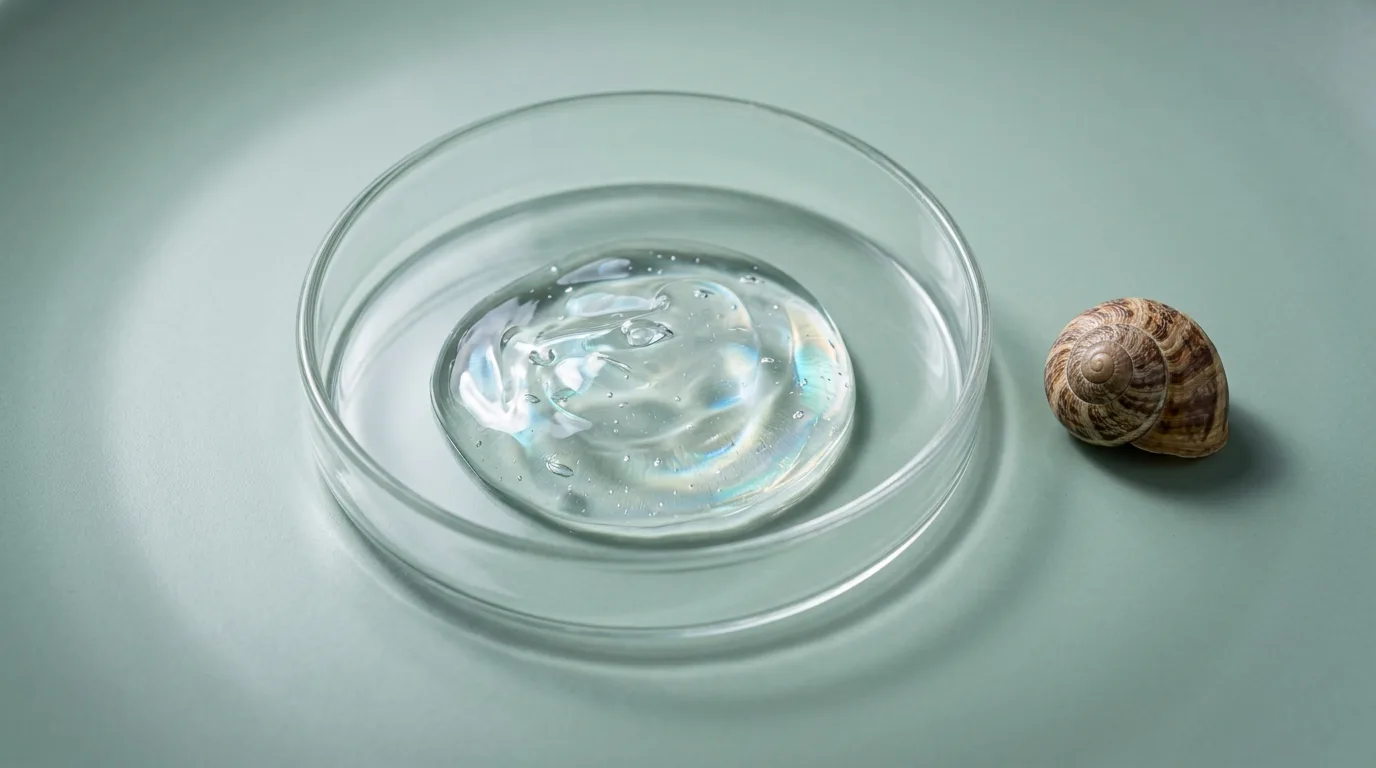
What Snail Mucin Contains and Why It Works
Snail mucin (technically "snail secretion filtrate") is a complex biological fluid containing five active components that together address hydration, repair, and renewal — three pillars Western skincare typically separates into different products.
Glycoproteins. These protein-sugar complexes stimulate fibroblast proliferation — the cells that produce collagen and elastin in the dermis. A 2013 study in the Journal of Dermatological Treatment showed measurable increases in collagen production in vitro when human skin cells were exposed to snail secretion filtrate. The glycoprotein signaling is similar to growth factor serums but delivered in a naturally occurring complex rather than a lab-synthesized peptide.
Hyaluronic acid. Snail mucin naturally contains hyaluronic acid, the same humectant found in dedicated HA serums like The Ordinary Hyaluronic Acid and Vichy Minéral 89. The concentration is lower than in a pure HA product, but it is delivered alongside complementary actives that enhance its hydrating effect. The HA in snail mucin tends to be mid-molecular-weight — large enough to form a hydrating film on the surface, small enough for some dermal penetration.
Glycolic acid. Present at low concentrations, providing gentle exfoliation without the pH manipulation required by standalone glycolic acid products. This mild exfoliation accelerates cell turnover and improves texture gradually — no stinging, no peeling, no adjustment period. For sensitive skin that cannot tolerate dedicated AHA products, the glycolic acid in snail mucin offers a gentler pathway to smoother texture.
Allantoin. A cell-proliferant and anti-irritant compound that promotes wound healing and soothes inflammation. Allantoin is the component most responsible for snail mucin's reputation as a repair ingredient — it accelerates the replacement of damaged tissue with healthy cells. Published dermatology literature recognizes allantoin as safe and effective for wound healing at concentrations as low as 0.5%.
Zinc and manganese. Trace minerals that support enzymatic processes in wound healing and antioxidant defense. Their concentrations in snail mucin are modest but contribute to the overall multi-pathway mechanism that distinguishes snail mucin from single-ingredient serums.
Most skincare actives do one thing well. Hyaluronic acid hydrates. Glycolic acid exfoliates. Peptides signal collagen. Snail mucin delivers all three mechanisms plus wound healing in a single layer. For minimalist routines or sensitive skin that cannot tolerate multiple separate actives, this all-in-one delivery has real practical value — fewer products means fewer potential irritation sources and less interaction risk between separate formulations.
The K-Beauty Philosophy Behind Snail Mucin
Understanding why snail mucin became a K-beauty staple requires understanding the philosophy that produced it. Korean skincare prioritizes barrier health, hydration, and prevention over aggressive correction. Where Western routines center on high-concentration actives (15% vitamin C, 1% retinol, 20% AHA), Korean routines layer gentle, hydrating products that strengthen the skin's own repair mechanisms.
Snail mucin fits this philosophy perfectly. It does not force a biological response the way retinol forces accelerated cell turnover. Instead, it supplies raw materials — glycoproteins, hyaluronic acid, allantoin — that support the skin's natural processes. The approach is additive rather than corrective. You are giving skin what it needs to repair itself rather than chemically overriding its normal cycling.
This philosophical difference explains why "what do Koreans use instead of retinol?" is one of the most-searched questions in skincare. The answer is not a single ingredient substitute — it is a fundamentally different strategy. Instead of retinol's accelerated turnover (which requires adaptation and causes temporary irritation), K-beauty layers snail mucin, centella asiatica, fermented ingredients, and propolis to achieve gradual improvement through barrier support and hydration. The results take longer but arrive without a purging period, without sensitivity spikes, and without the compliance barrier that causes many Western retinol users to quit before seeing results.
COSRX built a category on this ingredient. COSRX Advanced Snail 96 Mucin Power Essence has accumulated over 89,000 Amazon reviews — making it one of the most-reviewed skincare products on the platform. With 40,000+ monthly sales and a 96% snail secretion filtrate concentration, it established snail mucin as a mainstream ingredient outside Korea. The product's success proved that the K-beauty hydration-first approach resonated with Western consumers looking for gentler alternatives to aggressive actives.
How to Use Snail Mucin in Your Routine
Snail mucin fits into routines as a hydrating treatment step — after cleansing and toning, before moisturizer. In the Korean 7-step framework, it occupies the essence/serum position. In a Western 3-4 step routine, it replaces or supplements your hydrating serum.
Morning use: After cleanser, apply snail mucin to damp skin (this enhances HA absorption). Follow with moisturizer and SPF. The glycoprotein and hyaluronic acid components create a hydrating base layer that helps subsequent products adhere better and last longer throughout the day.
Evening use: After cleanser (and after any active treatments like retinol or vitamin C), apply snail mucin as a repair layer. The allantoin and glycoprotein components support overnight healing. If you use retinol, applying snail mucin first creates a hydrating buffer that reduces irritation while the allantoin promotes faster recovery from retinoid-induced barrier disruption.
Compatibility: Snail mucin plays well with virtually everything. No pH conflicts with vitamin C. No interaction concerns with retinol, niacinamide, peptides, or AHAs/BHAs. The only ingredient pairing that warrants caution is high-concentration salicylic acid — the combination can occasionally cause pilling (visual flaking of product) due to texture incompatibility, not a chemical reaction. Space them 5-10 minutes apart if this occurs.
Snail Mucin vs Western Hydrators
The most direct Western comparison is hyaluronic acid serums. Both target hydration as their primary function. But the comparison reveals important differences in approach.
A pure HA serum like The Ordinary Hyaluronic Acid delivers one mechanism at high concentration — humectant hydration that draws water into the stratum corneum. It does this extremely well. But it does nothing for repair, collagen stimulation, or exfoliation. For dry skin that needs hydration only, a dedicated HA serum is the more efficient choice.
Snail mucin delivers five mechanisms at lower individual concentrations. The hydration is less intense than a pure HA serum, but the repair and stimulation components add value that pure HA cannot match. For skin that needs both hydration and healing — post-procedure skin, retinol-irritated skin, environmentally stressed skin — snail mucin's multi-pathway delivery outperforms single-mechanism alternatives. See our HA serum comparison for how different hyaluronic acid approaches stack up on pure hydration metrics.
Vichy Minéral 89 represents a middle ground — volcanic mineral water plus HA in a formulation that adds mineral-based soothing to the hydration equation. It sits between pure HA and snail mucin in terms of multi-pathway delivery but without the repair and collagen components. Our La Roche-Posay Hyalu B5 vs Vichy Minéral 89 comparison explores how French pharmacy hydrators approach the same hydration problem with different co-ingredient strategies.
Who Benefits Most From Snail Mucin
Snail mucin is not a universal solution, but it serves several specific skin situations better than alternatives.
- Retinol users experiencing irritation: The allantoin and glycoproteins accelerate barrier recovery between retinol applications. Using snail mucin before retinol buffers the irritation; using it the morning after supports healing.
- Sensitive skin types who cannot tolerate multiple actives: Instead of layering separate HA, glycolic acid, and peptide products (each introducing potential irritation), one snail mucin product delivers all three pathways. Fewer products, fewer variables, fewer chances for a reaction.
- Post-procedure skin: After chemical peels, microneedling, or laser treatments, skin needs gentle repair support without aggressive actives. Snail mucin's wound-healing properties (allantoin + glycoproteins) make it an ideal recovery product.
- Routine minimalists: If your goal is the fewest possible products with the broadest benefit, snail mucin's multi-pathway delivery eliminates the need for separate hydrating, exfoliating, and repair products.
For those building hydration-focused routines, our hydrating serums roundup ranks all the hydration options in our catalog by mechanism, concentration, and skin-type suitability — including where snail mucin fits relative to HA-based and mineral-based alternatives.
Common Snail Mucin Misconceptions
The ingredient's unconventional source generates more misinformation than most skincare actives. Three claims worth correcting directly.
"Snail mucin is just marketing hype." Published research disagrees. A 2015 randomized, double-blind study in the Journal of Drugs in Dermatology showed measurable improvement in skin hydration, fine lines, and photoaging after 12 weeks of twice-daily snail secretion filtrate application versus placebo. A 2013 study in the Journal of Dermatological Treatment demonstrated accelerated wound healing in vivo. These are peer-reviewed, controlled trials — not brand-funded marketing studies. The evidence base is not as deep as retinol or vitamin C, but it is more substantial than most trending ingredients receive.
"Any percentage of snail mucin works." Concentration matters. Products listing snail secretion filtrate at 96% (like the COSRX Snail 96 Mucin Essence) deliver a meaningfully different result than products listing it at 5-10% as a supporting ingredient buried in a long formulation. When snail mucin appears below the midpoint of an ingredient list, the concentration is likely too low to deliver the multi-pathway benefits described in clinical research. Look for products where snail secretion filtrate is the first or second ingredient.
"Snail mucin can replace my entire routine." It cannot. While it delivers multiple mechanisms, it does not provide SPF protection, it does not deliver the concentrated active correction of retinol or vitamin C, and it does not adequately moisturize very dry skin on its own (the hydration layer needs a moisturizer on top to seal it in). Snail mucin is an excellent middle step — a treatment layer between cleansing and moisturizing — but it does not eliminate the need for a complete routine. It simplifies the treatment step by combining what would otherwise require separate hydrating, exfoliating, and repair products into one application.
Sourcing and Quality Markers
Not all snail mucin is collected or processed equally. Two variables determine product quality beyond the concentration percentage on the label.
Collection method: Ethical brands use mesh or net systems where snails crawl over textured surfaces in controlled environments — stress-free movement produces higher-quality secretion because the mucin composition changes when snails are distressed. Dark room, steam-based, or agitation-based collection methods produce mucin with different glycoprotein ratios. Brands that invest in humane collection typically produce more consistent and bioactive filtrate. COSRX, the category leader, has published their collection process and confirmed cruelty-free standards.
Filtration and processing: Raw snail secretion must be filtered to remove debris, sanitized to eliminate microbial contamination, and stabilized for shelf life. Over-processing (high heat, aggressive chemical sterilization) degrades the glycoproteins and denatures the hyaluronic acid — the two components most responsible for the ingredient's biological activity. Cold filtration and minimal processing preserve the active components but cost more and require stricter manufacturing controls. Premium snail mucin products typically use cold filtration; budget products may use heat sterilization that reduces active content.
When evaluating snail mucin products, look for three indicators: high listed concentration (90%+ filtrate as the first ingredient), specific sourcing claims (named farm or collection method, not vague "ethically sourced"), and texture consistency (genuine high-concentration snail mucin has a distinctive viscous, slightly tacky texture that is difficult to replicate with synthetic thickeners). Products that feel like standard water-based serums with no distinctive texture at claimed 90%+ concentration should be questioned.
Where Snail Mucin Fits in Our Catalog
Our current catalog covers Western hydration options thoroughly. Vichy Minéral 89 delivers volcanic mineral water plus hyaluronic acid — a formulation philosophy that parallels snail mucin's multi-ingredient approach but without the repair-pathway actives. La Roche-Posay Hyalu B5 Serum adds vitamin B5 (panthenol) to hyaluronic acid for barrier repair alongside hydration, which overlaps with snail mucin's allantoin-driven healing pathway. These Western products deliver predictable, well-studied hydration mechanisms. Snail mucin adds the glycoprotein and wound-healing dimensions that no Western hydrator in our lineup currently provides.
The standout snail mucin product on the market is the COSRX Advanced Snail 96 Mucin Power Essence — 96% snail secretion filtrate at under $20 for 100ml, with over 89,000 Amazon reviews. Our COSRX Snail Mucin vs Vichy Minéral 89 comparison breaks down exactly how the K-beauty multi-pathway approach stacks against targeted Western hydration. For more options, browse our full hydrating serums roundup for the complete ranked comparison.
Frequently Asked Questions
What does snail mucin actually do for skin?
Snail mucin delivers a combination of glycoproteins, hyaluronic acid, glycolic acid, and allantoin that together hydrate, promote wound healing, and stimulate collagen production. It is not a single-action ingredient — the complex naturally contains multiple actives that work across hydration, repair, and renewal pathways simultaneously. Published studies show improved skin hydration, reduced fine lines, and faster wound healing with consistent use.
Is snail mucin cruelty-free?
It depends on the brand. Ethical snail mucin collection uses a mesh or steam method that allows snails to secrete mucin without harm — the snails crawl over a textured surface and are returned to their habitat. Major brands like COSRX have publicly stated they use cruelty-free collection methods. Brands that do not disclose their collection process should be viewed skeptically. Look for specific cruelty-free certifications or detailed sourcing statements rather than vague "ethically sourced" claims.
Can I use snail mucin with retinol?
Yes. Snail mucin is an excellent retinol companion because its hydrating and healing properties counteract the dryness and irritation that retinol causes during the retinization period. Apply snail mucin first as a hydrating layer, then retinol on top. The mucin creates a buffer that slows retinol penetration slightly while delivering barrier-supportive ingredients. Many K-beauty routines use this pairing specifically.
What do Koreans use instead of retinol?
Korean skincare philosophy historically favored gentler alternatives: snail mucin for repair and hydration, centella asiatica (cica) for anti-inflammatory healing, fermented ingredients like galactomyces for brightening, and propolis for antioxidant protection. The approach emphasizes barrier support and prevention rather than aggressive correction. Some Korean brands now incorporate low-dose retinol, but the market still centers on hydration-first anti-aging.
How long does snail mucin take to show results?
Hydration improvement is immediate — within the first application, skin feels plumper and more supple. Visible improvement in skin texture and fine lines typically appears at 4-6 weeks of consistent twice-daily use. Wound healing and scar fading benefits take longer, usually 8-12 weeks. Unlike retinol, there is no purging or adjustment period — snail mucin is well-tolerated from day one by virtually all skin types.
Is snail mucin just hyaluronic acid in a different package?
No. While snail mucin naturally contains some hyaluronic acid, it also delivers glycoproteins (which stimulate fibroblast activity for collagen production), allantoin (which promotes cell regeneration and soothes irritation), glycolic acid (which provides mild exfoliation), and zinc and manganese (which support wound healing). A pure HA serum delivers one mechanism — hydration. Snail mucin delivers five, making it more versatile but less concentrated on any single pathway.
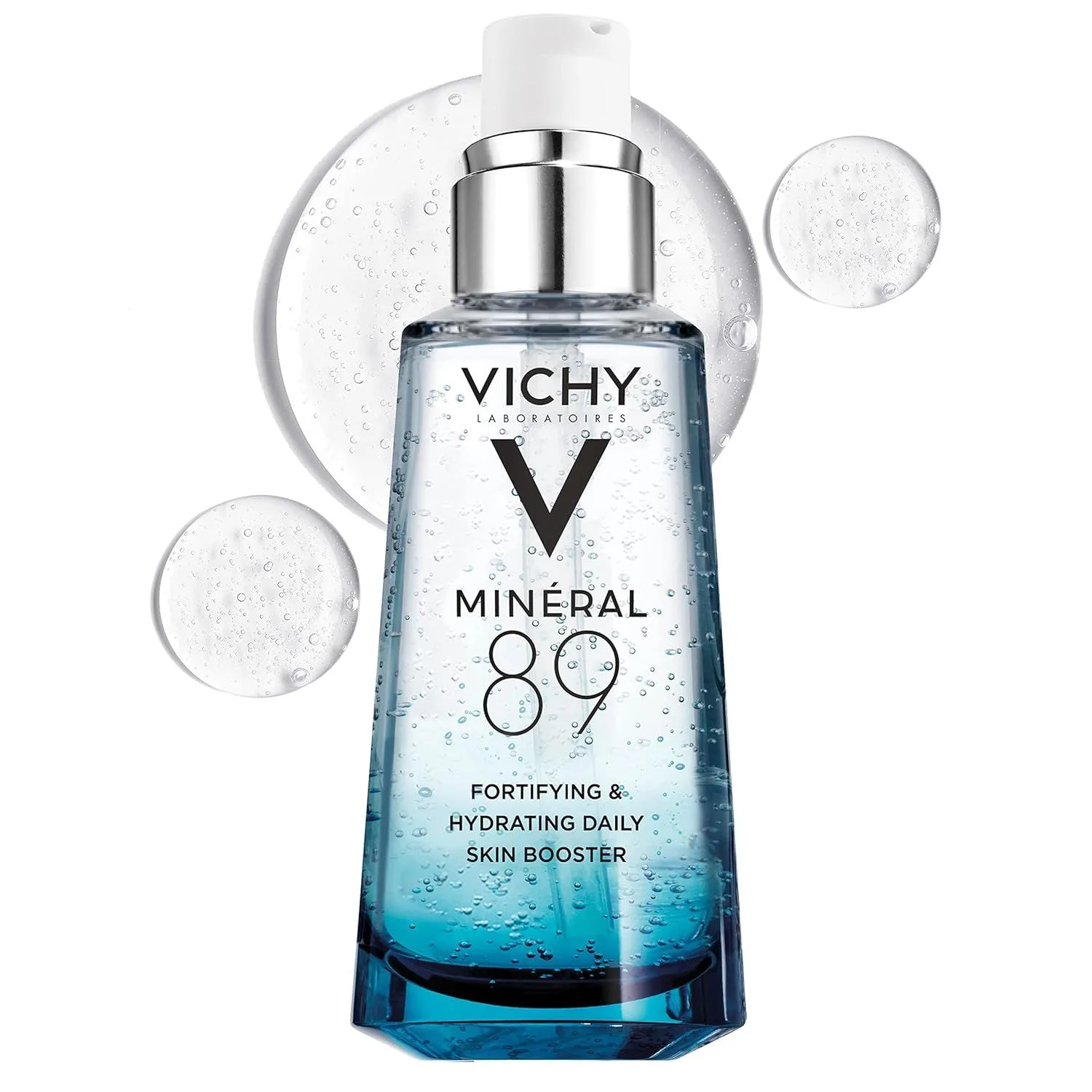
Volcanic mineral hydration with HA — the Western hydrator benchmark in our catalog
Get Luxury Skincare Picks Delivered
One email per week. Honest reviews, no spam.
No spam. Unsubscribe anytime.
Watch: Dr Dray's take on the Snail Mucin in Skincare | K-Beauty Science
