How to Choose a Skincare Set | Buying Guide
Skincare sets promise a complete routine in one box. Some deliver. Many pad the product count with filler, duplicate ingredients across bottles, or undersize the products that matter most. We broke down 15 sets across three price tiers to find the five questions that separate a good set from an expensive mistake.
Five Questions Before You Buy Any Set
Every skincare set looks appealing on the product page. Attractive packaging, a stack of small bottles, a price that appears lower than buying each product separately.
The appeal is real — sets are one of the fastest ways to build or overhaul a routine. But most buyers skip the evaluation step that separates a smart purchase from shelf clutter. These five questions, asked before adding anything to cart, filter out roughly 60% of the sets we reviewed.
1. Does this set cover your actual routine gaps? A cleanser-serum-moisturizer trio is useful only if you need all three. If you already own a cleanser you like, one-third of that set's value is wasted. Before browsing, write down which routine steps you need to fill. Then match sets to those gaps. The The Ordinary Daily Set works precisely because it targets the three foundational steps — cleanser, hydrating serum, moisturizer — without overlap. If you already own a strong moisturizer, it is one-third redundant for you, no matter how good the formulations are.
2. Full-size or travel-size — which matches your intent? Travel sets are testing kits. Full-size sets are commitment purchases. The distinction matters because per-milliliter pricing on travel sizes runs two to four times higher than standard bottles. Buying travel sizes of products you already know you like is the most common overspend in this category. Buying full sizes of products you have never tried is the second most common. Match the size to your confidence level.
3. Does the set match your skin type? A set formulated for dry skin includes heavier creams, richer oils, and occlusive ingredients that will clog oily skin within a week. Most sets specify a target skin type on the packaging, but about one-third of the sets we reviewed listed "all skin types" — a marketing convenience, not a dermatological claim. If you run oily, look for gel textures and oil-free moisturizers. If you run dry, look for cream textures and ceramide or squalane bases. The e.l.f. Holy Hydration Kit works across types because every product in the box is a lightweight hydrator — no heavy creams that overwhelm oily skin, no thin gels that leave dry skin wanting.
4. Same brand across the whole routine, or mix? Single-brand sets are convenient. They also lock you into one company's formulation philosophy. A brand that excels at Vitamin C serums may produce an average cleanser — but they will still include their cleanser in the set because it fills a slot. The YEOUTH 8-Piece Set avoids this trap by offering eight functionally distinct formulations across retinol, Vitamin C, peptides, and hyaluronic acid, each strong enough to stand alone. Most brands cannot say the same about every product in their box.
5. Is the set actually cheaper than buying individually? Add up the individual retail prices of every product in the set. Then compare that total to the set price. We found that roughly 40% of the sets we analyzed offered less than 10% savings over individual purchases — barely enough to justify the loss of choice. Some sets priced "on sale" were never sold at the listed original price. The real value proposition of a set is curation and convenience, not always cost savings. If the discount is the only reason you are considering the purchase, double-check the math.
Before reading any marketing copy, open the ingredient lists for every product in the set. Count how many share the same hero active (Vitamin C, retinol, niacinamide, hyaluronic acid). If three products in a five-piece set all feature hyaluronic acid as the lead active, you are buying one functional product in three different textures. Genuine routine coverage means different actives targeting different skin concerns across the set.
Full-Size vs. Travel-Size: When Each Makes Sense
The full-size vs. travel-size decision comes down to one variable: how well you already know the products. This sounds obvious, but the skincare set market is designed to blur this distinction. Travel kits are packaged to look like complete routines. Full-size sets are priced to look like steep discounts. Both framings push you toward buying before evaluating.
Travel-size sets make sense when: you are trying a brand for the first time, you need a TSA-compliant kit for actual travel, or you want to test an active ingredient (retinol, Vitamin C, AHAs) at low commitment before buying a full bottle. The e.l.f. Holy Hydration Kit is the benchmark here — five products at a total investment under twenty dollars. If any of the five products irritates your skin or sits unused, the loss is minimal. That risk reduction is the entire point of travel sizes.
Full-size sets make sense when: you have already tested the products (through samples or travel sizes) and know they work for you, or the set includes products from a line you already use and trust. The Estee Lauder Dream Skin Set targets this buyer — four full-size products from the Advanced Night Repair line, bundled for someone who already knows ANR works on their skin and wants to expand across the product range. Buying this set without prior experience with the formulas is a gamble, no matter how reputable the brand.
One more angle worth considering: shelf life. Full-size serums with Vitamin C or retinol typically last 6-12 months after opening. If a set includes four serums and you use one at a time, the fourth bottle may degrade before you reach it. Travel sizes sidestep this problem entirely — smaller volumes get used faster, and actives stay potent through the entire bottle.
The Ingredient Overlap Problem
Ingredient overlap is the most common structural flaw in skincare sets, and it is the hardest one to spot without reading ingredient lists.
A set advertises five products. All five contain hyaluronic acid. You are not getting five steps of a routine — you are getting one humectant delivered in five textures. The variety is cosmetic, not functional.
Why does this happen? Brands formulate around hero ingredients. A company built on Vitamin C puts Vitamin C in everything — the serum, the moisturizer, the eye cream, the mask. Each product serves a slightly different delivery mechanism, but the active work is largely duplicated. Your skin does not absorb more Vitamin C because it arrives in four separate products. It absorbs what it can at the concentrations that matter, and the rest washes off or sits on the surface.
The functional test for overlap: can you explain what each product in the set does that no other product in the set already does? A cleanser removes debris. A Vitamin C serum delivers antioxidant protection. A retinol cream accelerates cell turnover. A moisturizer restores the barrier. Each step targets a different mechanism. If two products target the same mechanism through the same active ingredient, one is redundant.
The The Ordinary Daily Set passes this test cleanly: the Squalane Cleanser removes, the Hyaluronic Acid serum hydrates, and the Natural Moisturizing Factors cream seals. Three products, three distinct jobs, zero overlap. Compare that structure to sets that load up on five different serums — each doing some version of the same hydrating or brightening work.
The 70% rule: If two products in a set share more than 70% of their ingredient list, they are functionally the same product in different packaging. This is not a failure of the individual formulations — each may work well on its own. But buying both in a set means you are paying for redundancy. Keep whichever texture you prefer and replace the other with a product that fills a different routine gap.
Budget, Mid-Range, and Premium: What More Money Buys
Skincare sets cluster into three price bands, and what you get at each tier is more predictable than marketing would suggest. The differences are real — but they follow a diminishing-returns curve that flattens sharply above the mid-range.
Budget tier (under $30 for the set): Products at this level use effective but well-established active ingredients — hyaluronic acid, glycerin, niacinamide, basic Vitamin C derivatives. Formulation textures are simpler: thinner serums, lighter moisturizers, basic preservative systems. Packaging is functional (plastic bottles, simple pumps). The active ingredients work. The concentrations are adequate for maintenance routines. Where budget sets fall short: stability of Vitamin C formulations (which oxidize faster in basic packaging), elegance of textures (which affects daily compliance), and size (often travel or sample volumes). The The Ordinary Daily Set and Tree of Life Brightening Trio represent this tier at its best — functional actives, transparent formulations, honest sizing.
Mid-range tier ($30-$70 for the set): This is where the biggest quality jump occurs. Mid-range sets use higher active concentrations, more stable delivery systems (encapsulated retinol, stabilized L-ascorbic acid), and better preservative chemistry that extends shelf life. Textures improve visibly — serums feel silkier, moisturizers absorb faster, cleansers rinse cleaner. Packaging upgrades to airless pumps and opaque bottles that protect light-sensitive actives. The YEOUTH 8-Piece Set delivers eight full-size products with legitimate active concentrations across retinol, Vitamin C, and peptides. The Tiege Hanley Level 1 system takes a different mid-range approach — four products with AM/PM moisturizer split and built-in SPF. The Lumin Smooth Operator Kit focuses its mid-range budget on Korean charcoal formulations targeting oily and combination skin. Three different strategies, all delivering measurably better formulations than budget equivalents.
Premium tier ($70+): Premium sets wrap proven actives in advanced delivery systems, rare botanical extracts, and luxury textures. The OSEA Bestsellers Set uses seaweed-based formulations with clean, vegan chemistry — the kind of ingredient sourcing that costs more but does not inherently change efficacy for most skin types. The Estee Lauder Dream Skin Set delivers the Advanced Night Repair complex across four formats, each optimized for a different absorption window. The Sisley Duo Set pairs two concentrated serums using phyto-complexes with decades of clinical backing. Are these products better formulated than mid-range equivalents? Yes. Are they proportionally better at the two-to-five times price multiple? Rarely. The premium tier is for buyers who value texture, sourcing transparency, and packaging as much as measurable skin outcomes.
Red Flags: Five Signs a Set Is Not Worth Your Money
After evaluating 15 sets across all three tiers, five patterns consistently predicted disappointing purchases. Any one of these should trigger closer scrutiny before buying.
Filler products that inflate the count. Sheet masks, cotton pads, applicator tools, headbands, and cosmetic bags pad the advertised product count without adding skincare value. A "10-piece set" that includes three masks, a headband, and a bag is really a 5-piece set with accessories. Count only the products that contain active formulations.
Undisclosed product sizes. Some sets list the product count without listing milliliter volumes for each item. Others list volumes in small print that requires scrolling past the marketing images. If a set does not prominently display the size of every included product, assume the sizes are smaller than you expect. Compare listed volumes against the brand's standard full-size offerings — some "sets" contain products at 30-50% of standard volume while implying full-size through photography.
Fake reference pricing. "Was $120, now $45" pricing requires proof that the set was ever sold at the higher number. Many sets create a reference price by adding up inflated individual retail values — sometimes listing products at MSRPs that were never the actual selling price on the platform. Ignore the strikethrough price entirely. Evaluate the set on what you would pay for the individual products at their actual selling prices.
Vague ingredient lists. Sets that market "Vitamin C + Retinol + Hyaluronic Acid" without specifying concentrations or derivative types are hiding weak formulations. "Vitamin C" could mean 20% L-ascorbic acid (the gold standard) or 0.5% ascorbyl glucoside (a stable but weaker derivative that requires higher concentrations to produce similar results). "Retinol" could mean 1% retinol or retinyl palmitate, which requires conversion steps before your skin can use it. Specificity is confidence.
No individual product reviews. If the products in a set are not sold individually and have no standalone reviews, you cannot evaluate quality before buying the bundle. Established brands sell their products both individually and in sets. Unknown brands that sell exclusively in bundles remove your ability to research each product on its own merits. This is a structural red flag, not proof of poor quality — but it increases buying risk to the point where travel sizes become the only sensible entry point.
Building a Routine from a Set
A skincare set gives you a starting lineup. Not a final roster.
The products that arrive in the box will not all perform equally well on your skin, and treating a set as a permanent, unchangeable routine is one of the more common mistakes new skincare buyers make. Think of a set as a foundation with planned replacement slots.
Step 1: Use everything in the set for 4-6 weeks. This is the minimum trial period for any skincare routine. Skin cycles (the time for new cells to travel from the basal layer to the surface) take roughly 28 days. Active ingredients like retinol need 8-12 weeks to show full results. You cannot evaluate a product's contribution in less than a month. Use the entire set as directed for at least four weeks before making any changes.
Step 2: Identify the weakest performer. After four to six weeks, one product in the set will be the obvious underperformer. The cleanser might leave your skin tight. The moisturizer might be too heavy for morning use. The serum might pill under sunscreen. Write down what each product does well and where it falls short. The weakest performer gets replaced first.
Step 3: Replace one product at a time. Swapping multiple products simultaneously makes it impossible to attribute improvements or reactions to a specific change. Replace the weakest product, keep everything else constant for another four weeks, and then evaluate again. This patience — the discipline of single-variable changes — is what separates effective routine building from endless product chasing.
Step 4: Add steps the set missed. Most sets skip SPF (it changes the texture equation for other products in the box and has regulatory implications in some markets). Many skip targeted treatments like retinol or chemical exfoliants. After your set-based foundation is stable, add one new product per month to fill genuine gaps. Start with SPF if it was missing — that single addition delivers more long-term value than any treatment serum.
If only two products from a set work well for your skin, the set was still a worthwhile purchase. You identified two reliable routine anchors at a lower per-product cost than buying them individually, and you tested three to five other products without committing to full-size purchases of each. Skincare sets are discovery tools. Expecting every product to be your new favorite sets unrealistic expectations.
Skin Type Matching: A Practical Framework
Skin type determines which textures and ingredients work, and most sets are formulated with a target type in mind — even when the packaging claims universal compatibility. Matching your skin type to the right set structure prevents the most common post-purchase frustration: products that technically work but feel wrong on your skin.
Oily skin: Look for sets built around gel and fluid textures. Avoid sets where the moisturizer contains shea butter, mineral oil, or petrolatum — these occlusives trap sebum and accelerate breakouts on oily skin. Niacinamide-forward sets help regulate oil production over 8-12 weeks. Charcoal-based cleansers (like those in the Lumin Smooth Operator Kit) work specifically for this skin type. Water-based serums absorb without residue. Skip any set that includes facial oils.
Dry skin: Look for sets built around cream textures with ceramides, squalane, or hyaluronic acid as the base. Avoid sets with high concentrations of alpha-hydroxy acids or benzoyl peroxide — both dehydrate already-compromised skin barriers. The ideal dry-skin set includes a non-foaming cleanser (cream or oil-based), a hydrating serum, and a rich moisturizer. If the set includes a toner, it should be alcohol-free and hydrating, not astringent.
Combination skin: The hardest type to match with a set because your needs vary by face zone. Combination skin benefits most from lightweight, non-comedogenic formulations that neither over-moisturize the T-zone nor under-hydrate the cheeks. Sets with separate AM and PM moisturizers (like the Tiege Hanley Level 1 system) solve this partly — lighter formula in the morning, richer formula at night.
Sensitive skin: Fragrance is the primary concern. Avoid sets from brands that lead with fragrance as a selling point — if the marketing mentions how the products smell before what they do, the fragrance load is probably too high for reactive skin. Sensitive-skin sets should list "fragrance-free" (not "unscented," which can still contain masking fragrances) and avoid essential oils, denatured alcohol, and synthetic dyes. Patch-test one product at a time from any new set, starting with the cleanser.
The Value Calculation: Sets vs. Buying Individually
Set pricing is designed to confuse.
The perceived savings of a skincare set depend entirely on which math you use. Brands calculate set savings against manufacturer's suggested retail price (MSRP), which may be higher than the actual selling price on any given platform. The honest calculation uses the current selling price of each individual product on the platform where you are buying the set.
We ran this comparison across all 15 sets in our evaluation. Results varied widely. Some sets offered genuine 25-35% savings over buying individually at actual selling prices. Others offered less than 5% savings — a margin so slim that the forced bundling (getting all products regardless of individual need) wipes out the financial benefit. A few sets actually cost more than buying the included products separately during promotional periods when individual items were on sale.
The honest value framework for sets has three parts. First, financial: does the set cost less than buying only the products you would actually use from it? Not the full bundle — just the products you need. If a five-product set saves you money, but you only need three of the products, calculate savings against those three. Second, convenience: does buying one SKU instead of three to five save you real time and reduce decision fatigue? For first-time buyers, this convenience has real value. Third, discovery: does the set let you test products you would not have tried individually? If two of the five products are outside your normal buying patterns, the set functions as a low-risk sampling opportunity.
The YEOUTH 8-Piece Set scores well on all three dimensions — the per-product cost is genuinely lower than individual purchases, the eight products cover distinct routine steps, and the range includes actives (peptides, retinol, Vitamin C) that many buyers would not trial at full price. The The Ordinary Daily Set scores highest on financial value — three products priced at a tier where the set discount is noticeable relative to total spend.
Now That You Know: Finding the Right Set
Five questions. That is all it takes.
The five-question framework narrows the field fast. Match your skin type, check for ingredient overlap, verify the sizes, ignore the strikethrough pricing, and decide whether you need a testing kit or a routine commitment. Those filters alone eliminate most of the sets that would have collected dust on your shelf.
For the sets that pass all five filters, start with our ranked skincare sets roundup, which applies these same criteria across every price tier. If you already know your budget, the individual reviews go deeper: the The Ordinary Daily Set review breaks down the best budget option step by step, and the e.l.f. Holy Hydration Kit review covers the best travel-size entry point for new buyers.
Skincare Set Questions Answered
How many products should a good skincare set include?
Three to five products covers the core routine (cleanser, treatment, moisturizer) without filler. Sets with six or more products often pad the count with items you already own or formulations that overlap — two Vitamin C products in the same box, for instance. Fewer products per set also means the brand allocated more budget per unit, which usually translates to better formulation quality and larger sizes.
Are travel-size sets worth buying?
Yes, for two specific scenarios: testing a brand before committing to full-size purchases, and maintaining a routine while traveling. Travel sets typically cost 40-60% less than their full-size equivalents, making them low-risk entry points. The math stops working if you already know you like the products — per-milliliter pricing on travel sizes runs two to four times higher than full bottles.
Should all products in my routine come from the same brand?
No. Using one brand across your entire routine is convenient but rarely optimal. Most brands formulate around a narrow range of hero ingredients and textures. A brand known for retinol serums may offer a mediocre cleanser because cleansing is not their R&D focus. Build your routine around best-in-class products per step, mixing brands freely. The one exception: active serums designed as a two-step sequence (like a peel + neutralizer) should stay within the same line.
Can I split a skincare set between AM and PM routines?
Most sets are designed for either one routine or both, and the packaging usually indicates intended timing. Cleanser works for both AM and PM. Retinol and heavy night creams belong in the PM. SPF and antioxidant serums (Vitamin C) go in the AM. If a set includes four products without specifying timing, apply the lightest textures in the morning and the thickest at night. Serums before creams, always.
What is the biggest waste of money in skincare sets?
Filler products. The most common offenders are sheet masks (single-use, minimal long-term benefit), cotton pads or applicators (pennies to manufacture, inflates perceived value), and duplicate formulations sold as different products. A set that advertises eight products but includes two nearly identical serums and a pack of cotton rounds is a three-product set with marketing padding. Check the ingredient lists — if two products share more than 70% of their active ingredients, one is redundant.
Do expensive skincare sets actually work better than budget ones?
Sometimes, but not proportionally to the price difference. The jump from budget to mid-range delivers the biggest quality improvement: better preservative systems, higher active concentrations, and more stable formulations. The jump from mid-range to premium buys you elegant textures, rare botanical extracts, and superior packaging — real differences, but diminishing returns on measurable skin outcomes. A mid-range retinol at 0.5% concentration does the same biological work as a premium retinol at 0.5%, even if the premium version absorbs more pleasantly.
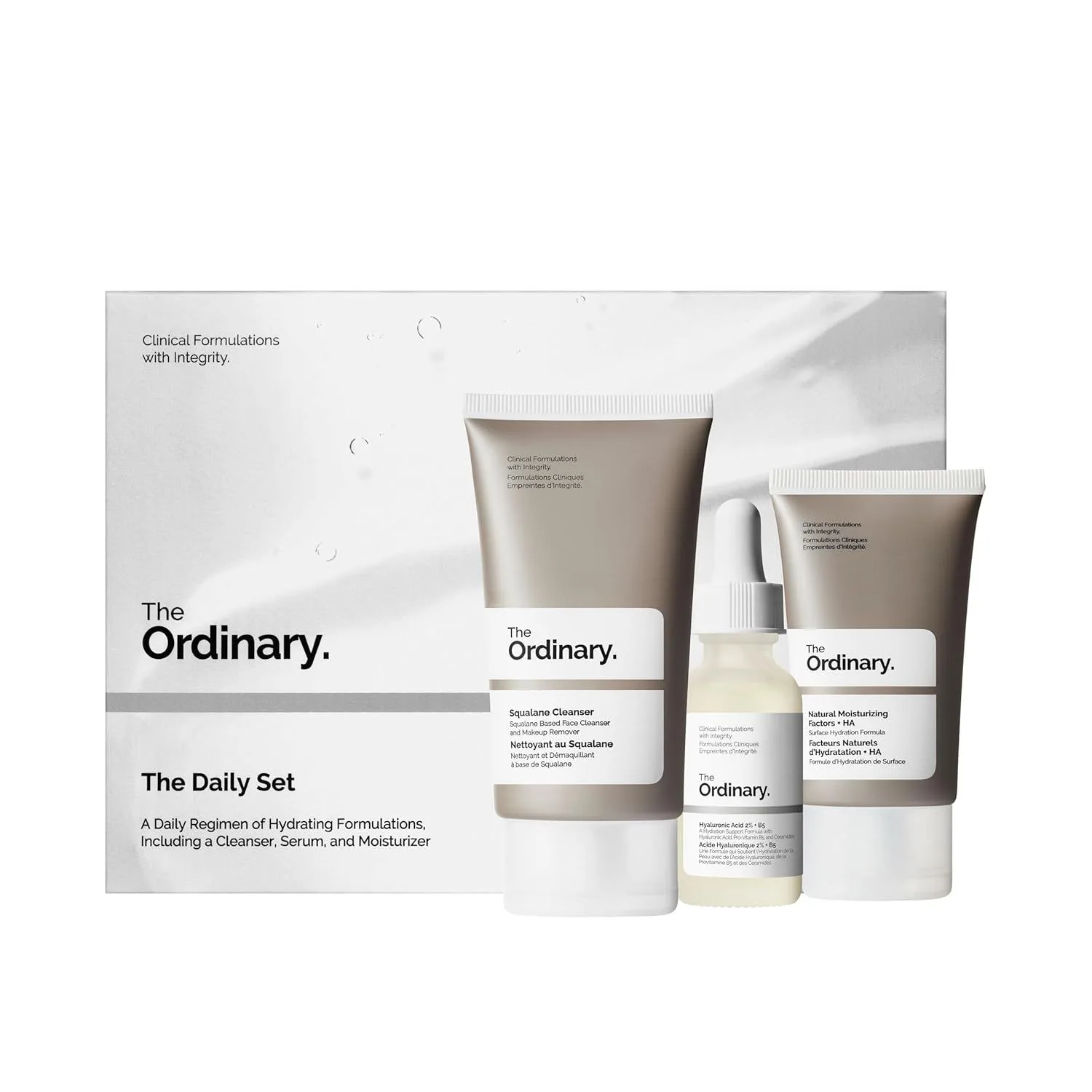
Three full-size essentials — cleanser, hydrating serum, moisturizer — at the budget tier. The fastest path from zero skincare to a functional daily routine.
Get Luxury Skincare Picks Delivered
One email per week. Honest reviews, no spam.
No spam. Unsubscribe anytime.
Watch: Teachingmensfashion breaks down the How to Choose a Skincare Set | Buying Guide (345K views)
