Retinol vs Retinaldehyde Compared
Both retinol and retinaldehyde belong to the retinoid family. Both convert into the same active molecule — retinoic acid — inside your skin. The difference is speed: retinaldehyde sits one conversion step closer to the finish line. That single enzymatic shortcut changes everything about potency, irritation profiles, and the products worth buying.
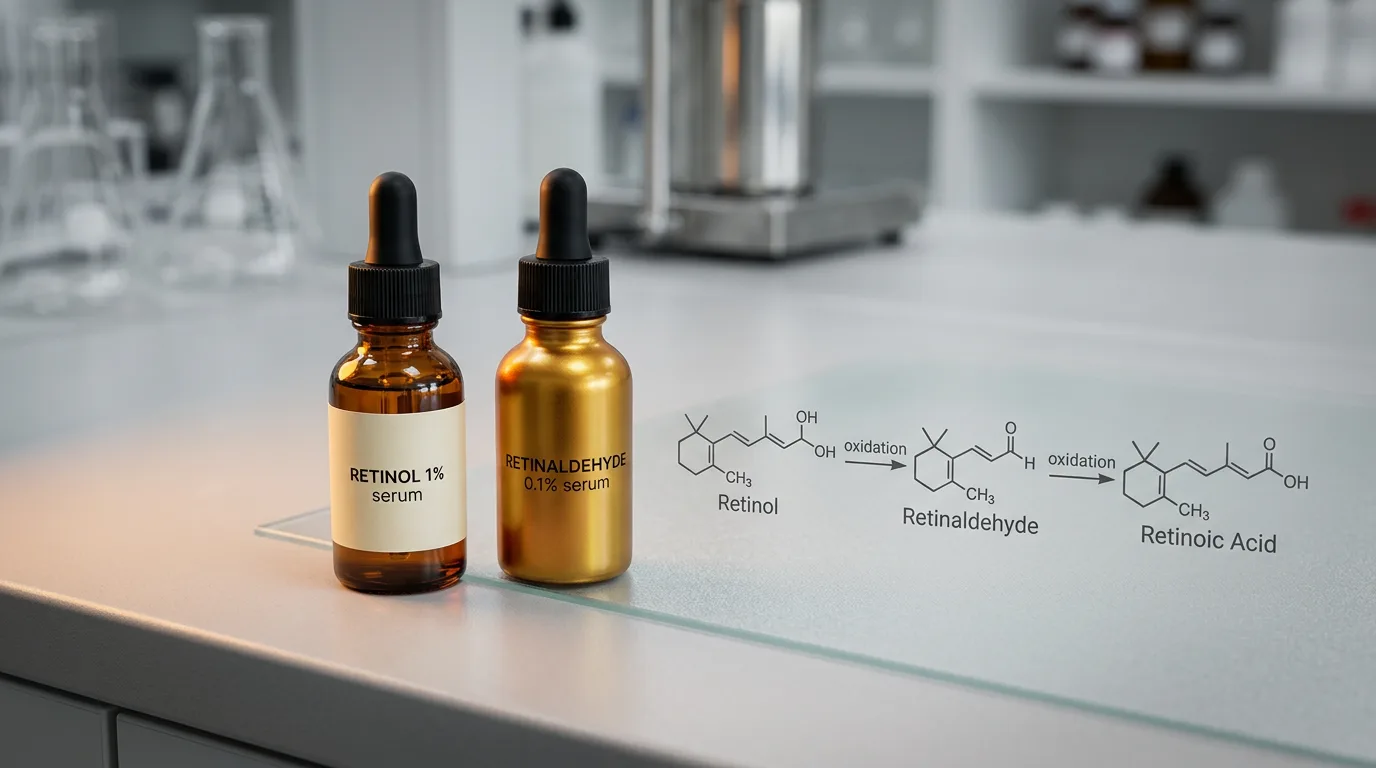
The Conversion Gap Explained
Your skin cannot use retinol or retinaldehyde directly. Both must be enzymatically converted into retinoic acid — the molecule that actually binds to retinoid receptors and triggers collagen production, cell turnover, and pigment regulation. The number of conversion steps separating each ingredient from retinoic acid determines its practical strength.
Retinol requires two enzymatic conversions. First, retinol dehydrogenase converts retinol into retinaldehyde. Then, retinal oxidase converts retinaldehyde into retinoic acid. Each step loses potency — published estimates suggest only 5-10% of applied retinol survives both conversions to become active retinoic acid. The rest is metabolized or degraded before reaching receptors.
Retinaldehyde skips the first step entirely. It enters the skin already one conversion away from retinoic acid. A 2000 study in the Journal of Investigative Dermatology measured retinaldehyde as approximately 11 times more biologically active than retinol at equal concentrations. That is not a marketing number — it is a measured difference in receptor activation. For retinol treatments in our catalog, this distinction shapes which product fits which skin.
A 1.0% retinol and a 0.1% retinaldehyde can deliver similar receptor activation because retinaldehyde's conversion efficiency is so much higher. Comparing percentages across retinoid types is meaningless without accounting for the conversion gap. Always compare within the same retinoid class, or ask what the equivalent retinol dose would be.
Potency vs Irritation: The Real Trade-Off
Stronger does not automatically mean harsher. The relationship between potency and irritation in retinoids is more nuanced than the skincare industry typically acknowledges.
Retinol's two-step conversion happens unevenly across the skin surface. Some areas convert efficiently, others lag behind. The result: patchy activation that can create localized irritation hotspots — the forehead and chin often react before the cheeks. At higher concentrations (0.5-1.0%), retinol overwhelms the conversion enzymes, leading to a buildup of unconverted retinol that irritates without producing proportional results.
Retinaldehyde's single conversion step distributes more evenly and completes more quickly. A 2011 comparative study found that 0.05% retinaldehyde produced equivalent anti-wrinkle results to 0.5% retinol — at one-tenth the concentration — with fewer reports of peeling and redness. The efficiency advantage translates directly into a better results-per-unit-of-irritation ratio.
This is why Medik8 Crystal Retinal can deliver advanced retinoid results at concentrations that look low on paper. The 0.06% retinaldehyde in Crystal Retinal 6 approximates the biological activity of a 0.5-0.6% retinol — the concentration range most dermatologists consider the sweet spot for visible anti-aging without excessive irritation.
Who Should Choose Retinol
Retinol is the right starting point for three groups.
Complete retinoid beginners. If you have never used any retinoid, retinol's gentler conversion curve gives your skin time to build tolerance. Start with 0.1-0.3% retinol (like CeraVe Retinol Serum) two nights per week and increase gradually over 8-12 weeks. The slower onset means fewer surprises during the retinization period.
Sensitive skin types. Skin prone to redness, stinging, or barrier disruption benefits from retinol's buffered delivery. La Roche-Posay Retinol B3 pairs 0.3% retinol with niacinamide specifically to calm the inflammatory response that retinoids can trigger. For rosacea-prone skin, the slower conversion rate is a feature, not a limitation.
Budget-conscious users. Retinol formulations are less expensive to manufacture, and the market is broader. Effective retinol products exist at every price tier, from drugstore to prestige. Retinaldehyde products cluster at the premium end because of the stabilization technology required.
The niacinamide pairing matters. Both CeraVe Retinol Serum and La Roche-Posay Retinol B3 include niacinamide (vitamin B3) alongside retinol. Published research shows niacinamide reduces retinoid-induced irritation by strengthening the skin barrier during the retinization period. This is not coincidental formulation — it is evidence-based design. See how these two retinol strategies compare in our CeraVe vs La Roche-Posay retinol comparison.
Who Should Choose Retinaldehyde
Retinaldehyde earns its higher price for users who meet one of these criteria.
Retinol veterans ready to level up. If you have used 0.3-0.5% retinol nightly for 6+ months with no irritation, retinaldehyde is the next logical step before prescription tretinoin. The potency increase is meaningful without the regulatory barrier and side-effect profile of a prescription.
Results-focused users who want faster timelines. Retinaldehyde's 11x activity advantage means visible changes in fine lines and texture can appear 3-4 weeks earlier than equivalent retinol protocols. For someone preparing for an event or milestone, that compressed timeline has real value. Our best anti-aging serums roundup ranks the retinaldehyde options alongside other high-performance actives.
Users frustrated by retinol plateaus. Long-term retinol users sometimes report diminishing visible improvement after 12-18 months. Switching to retinaldehyde can restart progress by delivering more retinoic acid past the same conversion enzymes. The upgrade path — retinol to retinaldehyde to prescription tretinoin — is the dermatologist-recommended escalation ladder.
Products That Represent Each Side
Our catalog includes retinoids at both conversion levels. Each product reflects a different philosophy about how to deliver vitamin A to skin.
CeraVe Retinol Serum encapsulates retinol inside a ceramide-rich vehicle. The encapsulation releases retinol gradually throughout the night, reducing the peak-concentration spike that causes irritation. Ceramides simultaneously repair the barrier that retinol temporarily weakens. It is the most accessible retinol in our lineup — widely available, affordably priced, and formulated for beginners.
La Roche-Posay Retinol B3 Serum takes a co-ingredient strategy. Niacinamide calms inflammation while retinol works. The B3 component also independently addresses hyperpigmentation, creating a dual-pathway brightening effect that pure retinol cannot match alone.
Medik8 Crystal Retinal is the retinaldehyde benchmark in our catalog. The numbering system (1 through 10) indicates increasing retinaldehyde concentration, letting users titrate up in controlled increments. Time-release encapsulation manages the potency, and the airless pump packaging protects the notoriously unstable retinaldehyde molecule from degradation. For a direct comparison against a PHA-paired alternative, see our Medik8 vs Obagi breakdown.
Augustinus Bader Retinol Serum wraps retinol inside TFC8 technology — the same cellular renewal complex used across the Augustinus Bader line. The approach is different: rather than maximizing retinoid potency, it optimizes the cellular environment for retinoid utilization. Whether that justifies the premium price depends on your philosophy about retinoid delivery. Our Augustinus Bader vs CeraVe retinol comparison breaks down the value question directly.
Concentration Equivalence Chart
Because retinaldehyde and retinol operate at different conversion efficiencies, comparing percentages directly misleads. A rough equivalence based on published receptor activation data:
- 0.03% retinaldehyde ≈ 0.3% retinol — beginner-strength retinoid activity
- 0.05% retinaldehyde ≈ 0.5% retinol — the dermatologist sweet spot for visible anti-aging
- 0.1% retinaldehyde ≈ 1.0% retinol — advanced strength, approaching prescription territory
- 0.2% retinaldehyde — no retinol equivalent exists at over-the-counter concentrations; this is closer to low-dose tretinoin in practice
Medik8's numbering system maps to these tiers. Crystal Retinal 1 starts near the beginner equivalence. Crystal Retinal 6 sits at the intermediate level. Crystal Retinal 10 pushes into advanced territory that most retinol products cannot match without going prescription. The graduated system lets you climb the potency ladder without guessing concentrations — each step up is approximately a 1.5x increase in retinaldehyde content.
One caveat: these equivalences measure receptor activation in controlled conditions. Real-world results also depend on formulation vehicle, encapsulation technology, pH stability, and individual enzyme activity. Two products at the same theoretical potency can perform differently on your skin depending on how the retinoid reaches your cells. This is why the products in our retinol treatments roundup are ranked by real-world performance, not just concentration numbers.
Stability and Storage Differences
Retinaldehyde is less chemically stable than retinol. Both degrade with light, heat, and oxygen exposure, but retinaldehyde degrades faster — roughly 2-3x the oxidation rate in published stability testing. This is why retinaldehyde products require more sophisticated packaging.
Retinol in a dropper bottle (like many drugstore options) loses potency with every use as air enters the container. After 3-4 months of regular opening, measurable degradation occurs. Airless pump bottles extend active life by 30-50%.
Retinaldehyde in a dropper bottle is almost pointless. The molecule oxidizes rapidly once exposed to air, which is why Medik8 uses vacuum-sealed airless pumps exclusively. Store both types in a cool, dark place — not a steamy bathroom shelf. If either product changes from pale yellow to amber or brown, active potency has dropped below the effective threshold.
Mixing With Other Actives
Both retinol and retinaldehyde follow the same compatibility rules as all retinoids. The conversion difference does not change what they pair well with.
- Niacinamide: Safe and beneficial with both. Reduces irritation, strengthens the barrier, and adds independent brightening. Best pairing for retinoid beginners.
- Hyaluronic acid: Safe with both. Apply HA first on damp skin, then retinoid on top. The hydration layer reduces penetration speed and buffers irritation. Products like The Ordinary Hyaluronic Acid and Vichy Minéral 89 make excellent retinoid buffers.
- Vitamin C: Use at different times of day. Vitamin C in the morning (antioxidant protection), retinoid at night (repair and renewal). Mixing at the same pH-sensitive step reduces effectiveness of both. Our best Vitamin C serums roundup covers which forms pair best with nighttime retinoids.
- AHAs/BHAs: Alternate nights, never the same evening. Chemical exfoliation plus retinoids on the same skin overwhelms the moisture barrier. If you must use both, space them 48 hours apart during the first month.
- Peptides: Safe with both, and a strong pairing. Peptides signal collagen production through a different pathway than retinoids, creating complementary stimulation. Medik8 Liquid Peptides is specifically designed to alternate with Crystal Retinal for this reason.
Both retinol and retinaldehyde increase photosensitivity. SPF 30+ every morning is non-negotiable when using any retinoid at night. Retinaldehyde users should be especially diligent — the higher receptor activation means a measurably greater increase in UV vulnerability during the first 8-12 hours after application.
The Verdict: Which Should You Buy?
Retinaldehyde is the objectively stronger molecule. Published research confirms 11x greater biological activity, faster visible results, and a better efficacy-to-irritation ratio at appropriate concentrations. If you have retinoid experience and your budget allows it, retinaldehyde is the superior over-the-counter option.
Retinol remains the better entry point. It is more forgiving of application mistakes, more affordable, available in more formulations, and backed by a larger body of long-term safety data. Starting with retinol and graduating to retinaldehyde after 6-12 months of consistent use is the path most dermatologists recommend.
The wrong choice is skipping retinoids entirely. Both retinol and retinaldehyde outperform every other over-the-counter anti-aging ingredient by a wide margin. Picking one and using it consistently matters more than picking the theoretically optimal one and using it sporadically.
How to Switch from Retinol to Retinaldehyde
The transition is not a straight swap. Even retinol-adapted skin needs a brief adjustment period because retinaldehyde interacts with different conversion enzymes at different rates.
Week 1-2: Drop to every other night, using retinaldehyde at the lowest available concentration. If you were on 0.5% retinol nightly, start with 0.03% retinaldehyde three nights per week. Apply a thin layer after moisturizer for the first week to buffer penetration.
Week 3-4: Move to four nights per week if no irritation beyond mild dryness. Switch to applying directly on clean, dry skin — no moisturizer buffer. This increases delivery efficiency and matches how retinaldehyde is designed to be used in most formulations.
Week 5 onward: Build to nightly use. Most retinol veterans complete the transition in 4-5 weeks without incident. Once stable on the lowest retinaldehyde concentration for 8 weeks, consider stepping up to the next level — Medik8's graduated numbering system makes this decision straightforward.
One mistake to avoid: running both retinol and retinaldehyde simultaneously during the transition. They compete for the same conversion enzymes and receptor binding sites. Using both on the same evening doubles irritation potential without doubling results. Pick one for each night, alternate if needed during the crossover period, and fully retire the retinol once your retinaldehyde tolerance stabilizes.
What about the leftover retinol product? Repurpose it. Retinol works on the neck, chest, and backs of hands — areas that benefit from retinoid activity but tolerate lower potency well. Use your retinol product on the body while using retinaldehyde on the face. Nothing goes to waste, and the areas most people neglect in their anti-aging routine get attention. For more on building multi-area retinoid protocols, see our retinol treatments roundup where we rank products by body-area suitability alongside facial use.
Frequently Asked Questions
What works 11 times faster than retinol?
Retinaldehyde (retinal). Published research shows retinaldehyde is approximately 11x more biologically active than retinol because it requires only one enzymatic conversion step to become retinoic acid, compared to retinol's two. Medik8 Crystal Retinal is the most widely available retinaldehyde product in luxury skincare.
Is retinaldehyde less irritating than retinol?
Not necessarily. Retinaldehyde is stronger per percentage point, so a 0.06% retinaldehyde can match a 0.5% retinol in efficacy while delivering less irritation per unit of result. But if you compare equal concentrations, retinaldehyde is more potent and potentially more irritating. The advantage is efficiency — you need less product to achieve the same outcome.
Can I switch from retinol to retinaldehyde?
Yes, but step down in percentage. If you tolerate 0.5% retinol nightly, start with 0.03-0.06% retinaldehyde every other night. Your skin is retinoid-adapted but not retinaldehyde-adapted — the different delivery mechanism can still cause a brief adjustment period of 1-2 weeks.
Why is retinaldehyde more expensive than retinol?
Formulation difficulty. Retinaldehyde is less chemically stable than retinol and degrades faster when exposed to light and oxygen. Encapsulation technology, airless packaging, and stabilizing co-ingredients all add manufacturing cost. Medik8 uses a time-release encapsulation system that keeps retinaldehyde stable until it contacts skin — that engineering is reflected in the price.
Do dermatologists prefer retinol or retinaldehyde?
Most dermatologists prescribe tretinoin (prescription retinoic acid) for maximum results. For over-the-counter options, retinaldehyde is gaining ground in clinical recommendations because it offers a better efficacy-to-irritation ratio than retinol. But retinol remains the most-studied OTC retinoid with the largest body of published evidence.
What do Koreans use instead of retinol?
K-beauty has historically favored bakuchiol (a plant-based retinol alternative), centella asiatica, and snail mucin for anti-aging rather than traditional retinoids. The Korean skincare philosophy leans toward gentle, hydration-first approaches. Some Korean brands now incorporate low-dose retinol, but the market still emphasizes barrier repair and prevention over aggressive correction.
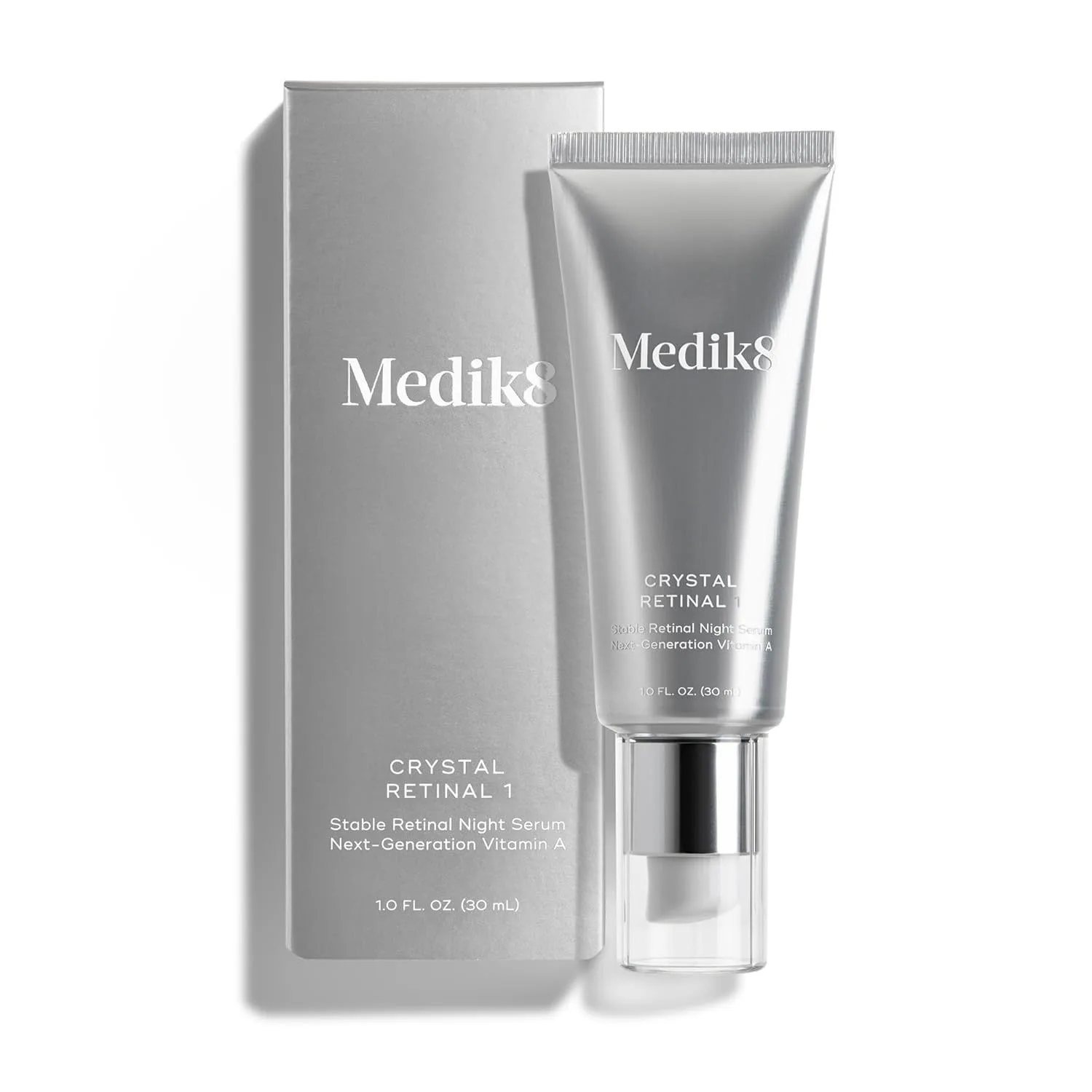
The retinaldehyde benchmark — 11x retinol activity in a time-release system
Get Luxury Skincare Picks Delivered
One email per week. Honest reviews, no spam.
No spam. Unsubscribe anytime.
Watch: Dr Dray's take on the Retinol vs Retinaldehyde Compared
