Peptides in Skincare | Types & Evidence
Peptides are short chains of amino acids (2-50 residues) that act as chemical messengers in the skin, signaling fibroblasts to produce collagen, activating wound-repair enzymes, and reducing inflammation — making them the second most studied anti-aging ingredient class after retinoids in published dermatology research.
The peptide category is broad. Some peptides signal collagen production. Others inhibit muscle contractions to soften expression lines. A third group carries healing minerals like copper into the skin. Not all peptides are equal, and many products list peptides at concentrations too low to produce measurable results. This guide covers the six families that have published clinical evidence, the concentrations that matter, and how to evaluate whether a peptide product is therapeutic or decorative.
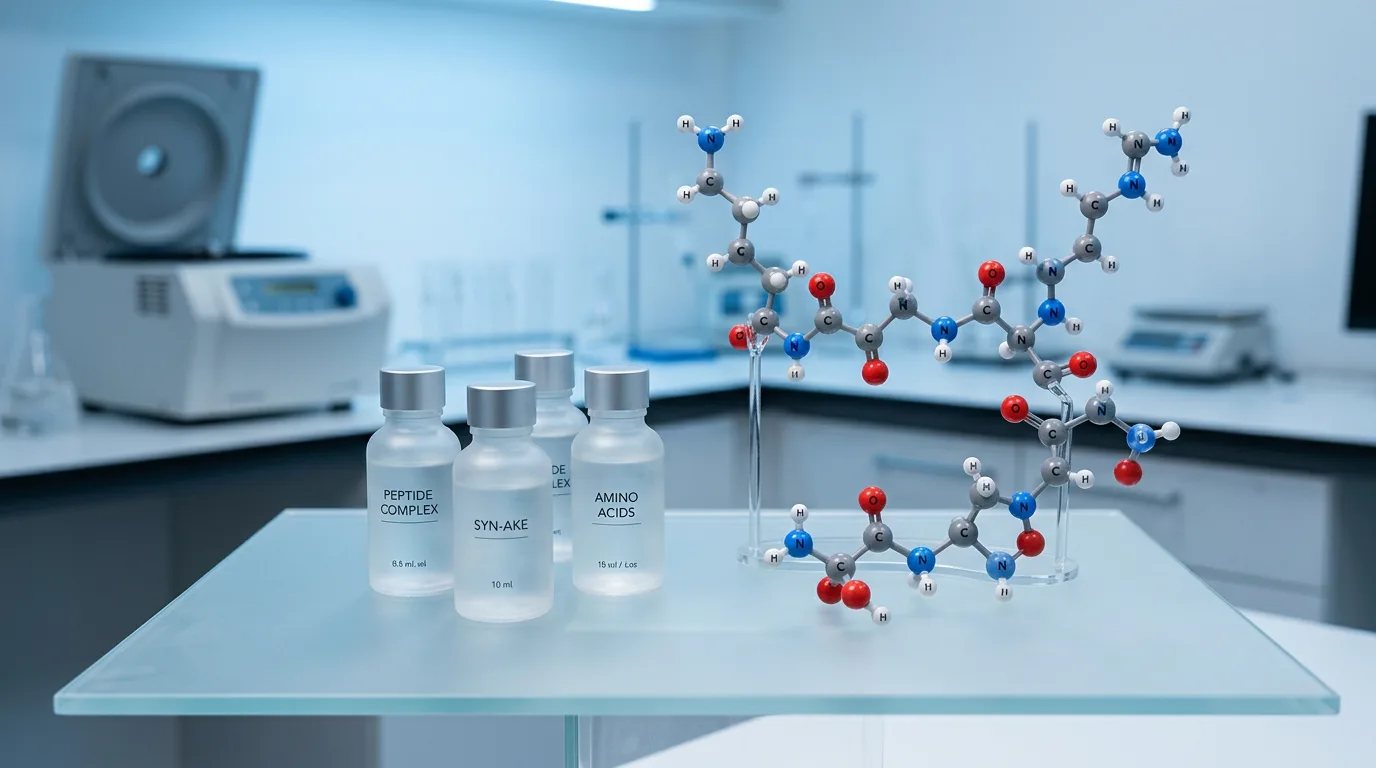
How Peptides Communicate With Your Skin
Your skin already contains peptides. When collagen breaks down naturally, the fragments — small peptide chains — act as signals to fibroblasts in the dermis. These fragments effectively say: "Collagen was destroyed here. Build more." The fibroblasts respond by increasing collagen synthesis. This feedback loop is how your body maintains structural proteins in healthy skin.
Topical peptides exploit this signaling pathway. By applying specific peptide sequences to the skin surface, you can trick fibroblasts into producing more collagen than the current degradation rate demands. The skin receives an excess of "build collagen" signals, and the fibroblasts respond accordingly — even though no extra collagen was actually destroyed. The result is a net increase in dermal collagen density over time.
This mechanism has a ceiling. Peptide signaling cannot force fibroblasts to produce collagen indefinitely. Once receptor sites are saturated, additional peptide molecules have no targets to bind. This is why doubling the concentration of a peptide serum rarely doubles the results — the biological receptors, not the product concentration, are the bottleneck. Effective peptide products deliver enough to saturate receptors during each application window (roughly 8-12 hours), no more.
The Six Peptide Families
Skincare peptides fall into six functional categories. Understanding which family a peptide belongs to tells you what it does, how fast it works, and what to pair it with.
Signal peptides are the most common and best-researched category. They mimic collagen fragments to trigger new collagen synthesis. Palmitoyl pentapeptide-4 (Matrixyl) is the gold standard — a 2005 study in the International Journal of Cosmetic Science showed it doubled collagen I production in human fibroblast cultures. Palmitoyl tripeptide-1 (a component of Matrixyl 3000) activates the TGF-beta pathway for similar collagen-boosting effects. Medik8 Liquid Peptides builds its formulation around multiple signal peptides for layered collagen stimulation.
Carrier peptides transport trace minerals into the skin. The most studied carrier peptide is GHK-Cu (copper tripeptide-1), which delivers copper ions that activate superoxide dismutase (an antioxidant enzyme) and lysyl oxidase (an enzyme that cross-links collagen and elastin fibers). Published research shows GHK-Cu promotes wound healing, increases skin thickness, and improves elasticity. The copper component also has anti-inflammatory properties. Carrier peptides are more potent than signal peptides but require careful formulation — copper ions can destabilize Vitamin C and certain acids.
Neurotransmitter-inhibiting peptides reduce muscle contractions that form expression lines. Acetyl hexapeptide-3 (argireline) is the most well-known, marketed as "topical Botox." It works by inhibiting SNARE complex formation at the neuromuscular junction, reducing the intensity of facial muscle contractions. Published studies show 17-30% wrinkle reduction after 4 weeks at 10% concentration. The effect is temporary — it reverses within 2-3 weeks of stopping application. Unlike Botox, argireline does not paralyze muscles; it moderately relaxes them.
Enzyme-inhibiting peptides block enzymes that break down structural proteins. Soybean peptides and rice peptides inhibit matrix metalloproteinases (MMPs) — the enzymes responsible for collagen and elastin degradation. By slowing breakdown while signal peptides accelerate production, this category creates a two-front attack on collagen loss. Less researched than signal peptides but increasingly appearing in premium formulations.
Antimicrobial peptides (AMPs) fight bacteria on the skin surface without antibiotics. Defensins and cathelicidins are naturally occurring AMPs in human skin. Synthetic versions are appearing in acne-focused and rosacea-focused formulations. Their skincare applications are relatively new, with most clinical evidence coming from wound-care research rather than cosmetic studies.
Structural peptides provide building blocks rather than signals. Collagen peptides (hydrolyzed collagen) and elastin peptides fall into this category. Their topical effectiveness is debated — most collagen peptide molecules are too large to penetrate the stratum corneum meaningfully. Oral collagen peptides have stronger evidence, with multiple studies showing improved skin hydration and elasticity after 8-12 weeks of daily supplementation.
Products that combine signal peptides + carrier peptides + neurotransmitter peptides address collagen loss, mineral delivery, and expression lines simultaneously. Medik8 Liquid Peptides uses this multi-target approach — multiple peptide families in one serum for broader anti-aging coverage than any single peptide can deliver alone.
Peptides vs Retinol: Different Mechanisms, Complementary Results
Peptides and retinol both fight skin aging, but through entirely different biological pathways. Retinol binds to retinoid receptors (RARs) and directly alters gene expression — it forces cells to behave younger by reprogramming their activity. Peptides work through receptor-mediated signaling — they send messages that cells can choose to amplify or ignore.
In practice, retinol is the stronger anti-aging ingredient. It accelerates cell turnover, stimulates collagen more aggressively, regulates melanin, and normalizes oil production. Peptides do not match retinol on any single metric. But peptides add value in three specific situations.
- Daytime anti-aging. Retinol degrades in sunlight and is reserved for evening use. Peptides are UV-stable and work during the day. A peptide serum in the morning plus retinol at night covers both windows. Estee Lauder Advanced Night Repair uses a peptide-rich formula designed for overnight collagen support alongside a retinol step.
- Retinol intolerance. Some skin types — rosacea-prone, post-procedure, severely sensitive — cannot tolerate retinol at any concentration. Peptides provide a milder collagen-stimulating alternative with virtually zero irritation risk. The results are slower but the tradeoff is zero barrier damage.
- Stacking for maximum collagen output. Retinol and peptides stimulate collagen through different pathways. Using both activates more production cascades than either alone. Published evidence on combination therapy is limited but the biological rationale is sound — two independent signals should produce more collagen than one.
The Botox comparison is oversold. Argireline reduces expression line depth by 17-30% in studies. Botox reduces it by 80-100%. Calling argireline "topical Botox" is marketing, not science. It softens lines — particularly crow's feet and forehead creases — but it does not eliminate them. Set expectations for noticeable improvement, not transformation.
What Concentration Actually Works
Peptide concentration is the most opaque area of skincare labeling. Most brands do not disclose peptide percentages, hiding behind phrases like "peptide complex" or "advanced peptide blend." Some guidelines from published research help decode what works.
Signal peptides (Matrixyl, Matrixyl 3000) show measurable collagen stimulation at 2-8% in clinical studies. Below 1%, the effect is marginal. Above 8%, no additional benefit has been demonstrated. Argireline studies use 5-10% for visible wrinkle softening. Copper peptides show wound-healing activity at 0.01-1% — they are potent at very low concentrations because the copper ion, not the peptide chain, does the heavy lifting.
If a product lists its peptide complex after preservatives and fragrance on the ingredient list, the concentration is almost certainly below 1%. Therapeutic peptide products list their active peptides within the first 8-10 ingredients. Price alone does not guarantee concentration — some prestige products contain trace amounts of expensive peptides for label appeal.
Peptide Products That Deliver Real Concentrations
Medik8 Liquid Peptides: Multi-peptide serum combining signal and carrier peptides with niacinamide for skin-smoothing and barrier support. The lightweight liquid texture layers well under moisturizer and SPF. Designed as a daytime anti-aging serum — stable in light, no photosensitivity, pairs with evening retinol. A strong standalone option for peptide-first routines.
Estee Lauder Advanced Night Repair: A multi-active serum with peptide technology, hyaluronic acid, and antioxidants. The peptide component targets overnight collagen synthesis while the HA maintains hydration. A legacy formula that has evolved through seven generations — each iteration updating the peptide complex based on new research.
Clarins Double Serum: Dual-phase formula (water + oil) with turmeric-derived peptides and 21 plant extracts. The dual-phase approach improves peptide penetration by delivering both water-soluble and lipid-soluble actives simultaneously. A prestige option that combines peptide science with botanical anti-aging compounds for a multi-pathway treatment.
Sisley Sisleya Firming Serum: Ultra-prestige peptide formulation targeting skin firmness and density. The Sisleya line uses peptide technology alongside Persian acacia extract to address the loss of structural support that causes sagging. At the premium end of the price spectrum, this is a formulation-first product where peptide concentration and delivery system justify the investment for visible firming results.
How to choose: Budget-conscious buyers who want peptide anti-aging start with Medik8 Liquid Peptides — effective multi-peptide formula at a mid-range price. Legacy prestige fans who trust proven formulas reach for Estee Lauder ANR. Botanical-forward buyers prefer Clarins. Maximum firmness concern points to Sisley. All four deliver peptides at concentrations backed by the brand's clinical testing programs.
The Penetration Problem
The stratum corneum is designed to keep foreign molecules out. Peptides — even short ones — face a penetration challenge. Unmodified peptide chains are hydrophilic (water-loving), which means they struggle to cross the lipid-rich barrier of the stratum corneum. This is the single biggest limitation of peptide skincare and the reason formulation technology matters as much as the peptide itself.
Three strategies improve peptide penetration. First, lipidation: attaching a fatty acid chain (like palmitic acid) to the peptide makes it more lipophilic. Matrixyl (palmitoyl pentapeptide-4) uses this approach — the palmitoyl tag is the delivery ticket, not a therapeutic component. Second, encapsulation in liposomes or nanoparticles protects the peptide during transit and releases it below the stratum corneum. Third, using penetration enhancers — ingredients like propylene glycol or certain surfactants that temporarily loosen the lipid matrix to allow peptide passage.
Products that list raw, unmodified peptide names without lipidation or encapsulation technology are likely delivering those peptides to the skin surface only. Surface-level peptides can still provide hydration and mild anti-inflammatory effects, but the collagen-stimulating signal peptides need to reach the dermis to activate fibroblasts. Look for "palmitoyl," "acetyl," or "myristoyl" prefixes in peptide names — these indicate lipidation for improved penetration.
Building a Peptide-Centered Routine
A practical peptide routine depends on whether you are using retinol alongside.
With retinol: Morning — cleanser, peptide serum (Medik8 Liquid Peptides), moisturizer, SPF. Evening — cleanser, retinol treatment, peptide-containing moisturizer. This setup delivers collagen signals during the day while retinol handles cell turnover at night.
Without retinol (sensitive skin): Morning — cleanser, peptide serum, moisturizer, SPF. Evening — cleanser, peptide serum, niacinamide moisturizer. Double-dosing peptides AM and PM maximizes receptor saturation when retinol is not an option. Add a copper peptide product 2-3 times per week in the evening for additional collagen cross-linking stimulation, keeping it separate from any Vitamin C or acid products in the morning.
Peptide + acid rotation: Some routines alternate peptide nights with acid nights (AHA/BHA on Monday-Wednesday-Friday, peptides on Tuesday-Thursday-Saturday). This avoids any interaction between acids and copper peptides while maintaining both exfoliation and collagen signaling across the week.
Peptide Stability and Storage
Most skincare peptides are chemically stable. They do not oxidize like Vitamin C or degrade in light like retinol. Standard storage conditions — room temperature, away from direct sunlight — are sufficient. Peptide serums do not require refrigeration, amber glass packaging, or airless pumps for stability reasons alone (though airless pumps prevent contamination in any product).
The exception is copper peptides. The copper ion can oxidize in the presence of strong acids or L-ascorbic acid, reducing both the peptide's efficacy and the Vitamin C's potency. Do not layer copper peptide products with direct acid treatments (AHA/BHA) or L-ascorbic acid serums. Use them in separate routines — peptides at night, acids or Vitamin C in the morning.
Peptide Questions Answered
Do peptides actually work for anti-aging?
Yes, with caveats. Signal peptides like Matrixyl (palmitoyl pentapeptide-4) have published clinical evidence showing increased collagen production and reduced wrinkle depth after 12 weeks. The effect is milder than retinol — expect 10-20% wrinkle reduction versus 30-40% from prescription retinoids. Peptides are best used alongside retinol, not instead of it.
Can I use peptides with retinol?
Yes, and this is one of the best pairings in skincare. Retinol accelerates cell turnover while peptides signal collagen production. Apply retinol first, then a peptide serum or moisturizer on top. The peptides also help buffer retinol irritation by supporting barrier repair. Many dermatologists recommend this combination for accelerated anti-aging results.
What is the difference between peptides and proteins?
Size. Peptides are short chains of 2-50 amino acids. Proteins are longer chains (50+) that fold into complex three-dimensional structures. Collagen is a protein your skin builds from amino acids. Peptides in skincare are the signal fragments that tell your skin to build more collagen. They are the instruction, not the building material.
How long do peptides take to show results?
Signal peptides require 8-12 weeks of consistent use for measurable improvement in wrinkle depth and skin firmness. Carrier peptides (like copper peptides) may show wound-healing and texture improvement faster — within 4-6 weeks. Neurotransmitter-inhibiting peptides like argireline can soften expression lines within 2-4 weeks, though the effect is temporary and requires ongoing use.
Are copper peptides the same as regular peptides?
Copper peptides are a specific category — carrier peptides that bind a copper ion (Cu2+) and deliver it into the skin. The copper activates wound-healing enzymes and supports collagen/elastin production. They are more potent than most signal peptides but also more irritating at higher concentrations. Copper peptides should not be used at the same time as Vitamin C or strong acids, which can reduce the copper ion.
Do peptides work in moisturizers or only serums?
Both, but concentration and formulation matter more than product format. A serum with 5% Matrixyl will deliver more peptide per application than a moisturizer with 0.5% Matrixyl. The key is whether the peptide appears high on the ingredient list (ideally in the top 10 ingredients). In moisturizers, peptides are often present at decorative rather than therapeutic concentrations.
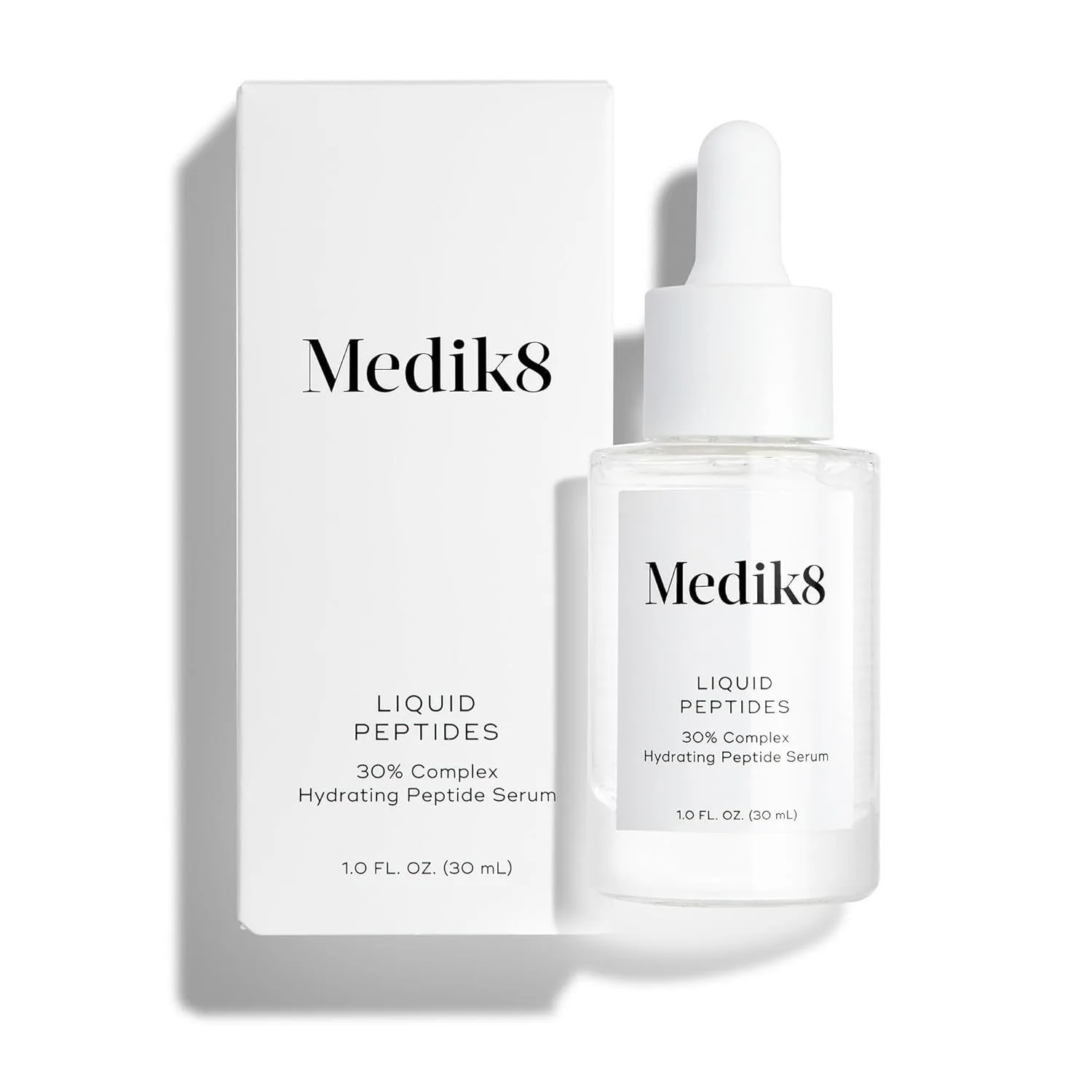
Multi-peptide formula with niacinamide — daytime collagen support that pairs with evening retinol
Get Luxury Skincare Picks Delivered
One email per week. Honest reviews, no spam.
No spam. Unsubscribe anytime.
Watch: Dr Dray breaks down the Peptides in Skincare | Types & Evidence (620K views)
