Luxury Skincare on a Budget
Luxury skincare does not require a luxury budget. The secret is knowing where ingredient quality justifies a premium and where brand markup inflates the price without proportional benefit. This guide shows you exactly where to invest and where to save — building a routine that performs like prestige without the prestige price tag.
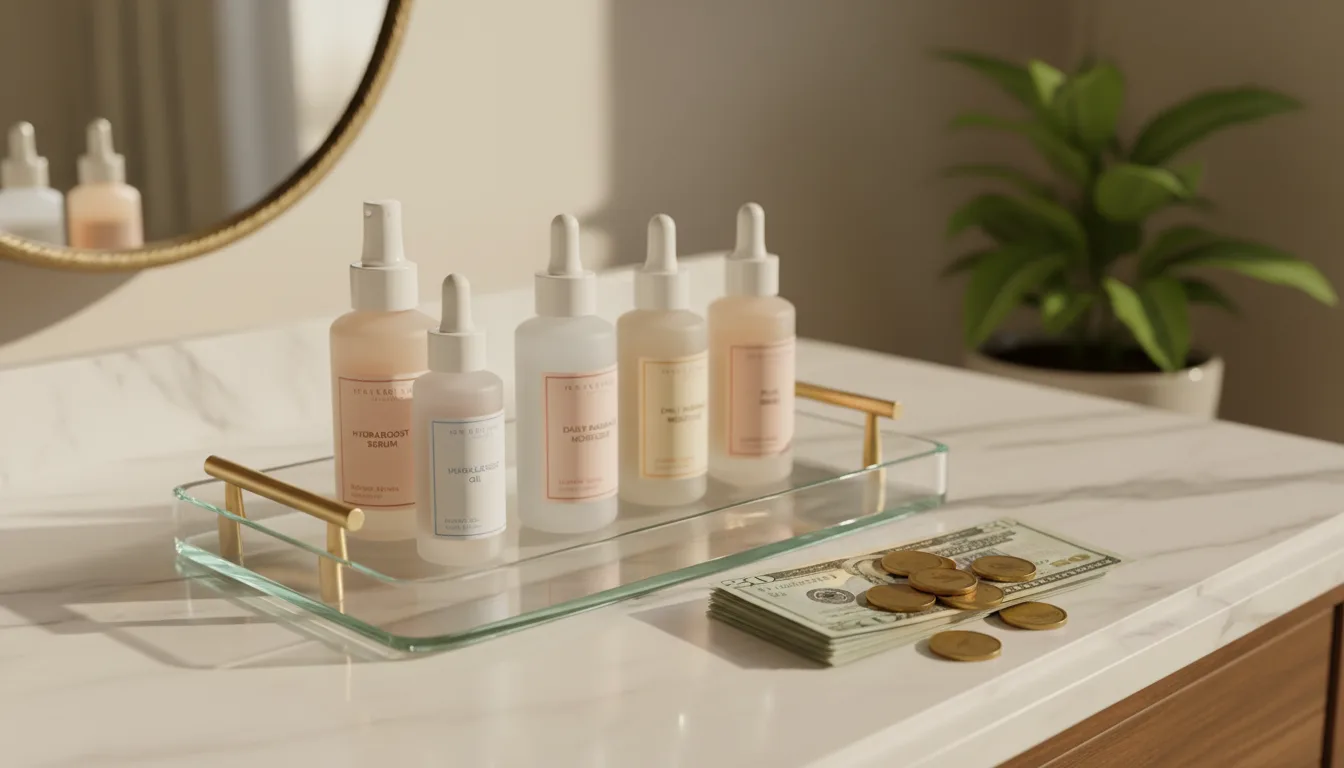
The Splurge-Save Framework
Not every step in your routine needs to be expensive. Some product categories deliver nearly identical results whether they cost $10 or $100. Others improve with investment. Understanding which is which saves hundreds per year without sacrificing results.
The biggest mistake budget-conscious skincare buyers make is spreading their money evenly across every step. A $30 cleanser, $30 serum, $30 moisturizer, and $30 SPF sounds balanced — but it ignores how skincare actually works. Each product category has a different ceiling for improvement. Cleansers hit diminishing returns quickly because they sit on your skin for 30 seconds before rinsing off. Serums, by contrast, absorb and remain active for hours. Dollar for dollar, an upgrade to your serum produces five to ten times the visible improvement of an upgrade to your cleanser. Once you internalize this asymmetry, budget allocation becomes straightforward.
Where to Save (Minimal Quality Gap)
- Cleansers: They wash off. An affordable cleanser with the right pH (4.5-5.5) does its job as well as a luxury one. CeraVe, Cetaphil, and La Roche-Posay make excellent cleansers at budget prices.
- SPF: Sun protection is about UV filters, not brand prestige. Budget mineral and chemical sunscreens from brands like La Roche-Posay and CeraVe match luxury SPF performance.
- Hyaluronic acid serums: HA is HA. The Ordinary Hyaluronic Acid 2% + B5 delivers multi-weight hydration for under $10 — outperforming many serums that cost five times more.
- Basic moisturizers: If your moisturizer's job is just hydration and barrier protection (no anti-aging actives), budget options like Kiehl's Ultra Facial Cream or even CeraVe Moisturizing Cream perform exceptionally.
Where to Invest (Quality Gap Is Real)
- Vitamin C serums: Stability matters. A well-formulated Vitamin C serum with proper packaging stays potent longer and delivers more consistent results. The Drunk Elephant pod system and Obagi's professional-grade 20% formula justify their higher prices.
- Retinoids: Delivery technology matters. Medik8's Crystal Retinal uses double-layered encapsulation that measurably reduces irritation while delivering retinaldehyde. CeraVe's encapsulated retinol is excellent for beginners. The technology behind the delivery is what you pay for.
- Anti-aging treatment serums: Multi-active formulas like Estee Lauder Advanced Night Repair and Clarins Double Serum combine proprietary technologies that budget brands have not replicated. These are where genuine innovation lives.
- Targeted treatments: Products addressing specific concerns (firming, dark spots, deep wrinkles) benefit from higher-quality actives and delivery systems.
Spend 70% of your skincare budget on one or two key actives (serum and treatment). Spend 30% on everything else (cleanser, moisturizer, SPF). This ratio maximizes results per dollar spent.
Building a Prestige-Quality Routine Under $50/Month
This is not about buying cheap products. It is about buying smart products — proven formulas from brands that invest in research rather than marketing.
- Cleanser: Any gentle, pH-balanced cleanser. Budget options work perfectly here.
- Serum (AM): CeraVe Vitamin C Serum — 10% L-ascorbic acid with ceramides, dermatologist-developed. Budget-friendly pricing for clinical-grade brightening.
- Serum (PM): La Roche-Posay Retinol B3 — 0.3% retinol with niacinamide at a mid-range price that delivers beyond its tier.
- Moisturizer: Kiehl's Ultra Facial Cream — glacial glycoprotein, 24-hour hydration, works on every skin type. Affordable luxury that never disappoints.
- SPF: Any broad-spectrum SPF 30+. Budget options are fine.
Track your cost per month, not cost per bottle. A luxury serum at a higher price that lasts 3 months costs less per month than a budget serum at a lower price that runs out in 4 weeks. Always divide total cost by months of use.
The Sample Set Strategy
Before committing to a full-size luxury purchase, test through sample sets. This approach lets you experience prestige formulas at a fraction of full-size pricing.
Sample sets also solve a problem that even experienced skincare buyers underestimate: ingredient sensitivity varies by individual. A serum with 20% Vitamin C might perform brilliantly on one person and cause redness and peeling on another. Buying the full-size bottle to discover this costs three to four times what a sample set would have revealed. Think of sample sets as paid research — you are investing a small amount to gather data about how your skin responds before making a larger commitment. Brands like Drunk Elephant, Tatcha, and Sunday Riley all offer curated trial kits that include their hero products in sizes large enough for two to three weeks of testing, which is the minimum duration needed to observe how your skin adapts.
- Estee Lauder Dream Skin Set — four prestige nighttime products including the ANR serum, at a budget-friendly set price.
- OSEA Bestsellers Set — ocean-based clean beauty trial including face and body products.
- Tree of Life Brightening Trio — three full-size serums covering Vitamin C, retinol, and HA at an ultra-budget price.
- Sadoer 6-Piece Hydrating Set — a complete rice-based routine including eye cream and sleeping mask at the lowest price in our catalog.
- YEOUTH 8-Piece Skincare Set — eight full-size products with retinol, Vitamin C, peptides, and HA at the lowest per-product cost in our catalog.
When Luxury Is Worth Full Price
Some luxury products deliver experiences and results that budget alternatives cannot replicate. These are the items where the premium reflects real innovation rather than packaging and branding.
Augustinus Bader's TFC8 technology, Medik8's retinaldehyde encapsulation, and Drunk Elephant's mix-to-activate freshness system represent genuine engineering advances. Whether they justify their prices depends on your priorities — but the technology is real, not marketing.
The ELEMIS Cleansing Balm is another example. Budget cleansers remove makeup effectively, but the balm-to-oil transformation and post-cleanse skin feel is something no drugstore cleanser replicates. Sometimes the experience is the value.
The Strategic Upgrade Path
Start with a budget routine. Use it consistently for 3-6 months. Learn what your skin responds to. Then upgrade one product at a time — the one that addresses your biggest remaining concern. We recommend starting here.
Patience is the hidden ingredient in this strategy. Skin turnover cycles run roughly 28 days, so any new product needs at least four to six weeks before you can fairly judge its impact. Jumping to the next upgrade before that window closes means you never isolate what each product actually contributes. Keep a simple log — even a note on your phone — tracking when you introduced each product and what changes you noticed. After three upgrade cycles, you will have a personalized map of which ingredients and formulations your skin rewards, and that knowledge prevents every impulse purchase going forward.
Upgrade 1 — Your treatment serum. This is where the biggest quality gap exists between budget and prestige. Moving from a basic retinol to Medik8 Crystal Retinal or from a budget Vitamin C to Drunk Elephant C-Firma produces the most noticeable improvement in results. This single upgrade transforms a budget routine into a performance-focused one.
Upgrade 2 — Your moisturizer (if anti-aging is a priority). Moving from a basic ceramide moisturizer to one with active anti-aging ingredients (Estee Lauder Night Repair as a treatment-moisturizer hybrid, or Tatcha Dewy Skin Cream for hydration depth) adds a second layer of active treatment to your routine. This upgrade makes sense after 6+ months with an upgraded serum.
Upgrade 3 — The luxury splurge. Once your core routine is performing well, one prestige item — Augustinus Bader, La Mer, Sisley — becomes a self-care indulgence rather than a necessity. At this stage, you know enough about your skin to appreciate what the luxury formula delivers. Buying prestige before understanding your skin is gambling with expensive chips.
Seasonal Budget Adjustments
Winter: Your skin needs more moisture. This is when investing in a richer moisturizer pays off — dry, cracked skin undoes the work of every serum underneath. Consider upgrading your moisturizer seasonally rather than year-round. A mid-range ceramide cream during winter and a lighter budget option during summer saves money while addressing seasonal needs.
Summer: SPF becomes more critical. If your budget SPF feels greasy or leaves a white cast that discourages daily use, upgrading to a more elegant formula is justified — a sunscreen you actually enjoy wearing is more effective than a technically superior one you skip. Consistency matters more than formulation at the SPF step.
Sale seasons: Amazon Prime Day, Black Friday, and Sephora seasonal sales discount prestige skincare by 20-30%. Plan your luxury purchases around these events. Stock up on full-size products you have already tested through sample sets. Never blind-buy luxury at full price — the sample-then-commit strategy prevents expensive mistakes.
Common Budget Skincare Traps
The "affordable luxury" trap. Some brands position themselves as accessible luxury — premium packaging and aspirational marketing at mid-range prices. The question to ask: what is the active ingredient concentration, and what delivery technology are they using? If the answer is "we do not disclose" — the premium is packaging, not formulation.
The subscription box trap. Monthly skincare subscription boxes introduce you to dozens of products but rarely include full-size prestige items. The per-sample value looks attractive, but you end up with a drawer full of products you use once and never repurchase. A single well-chosen sample set from a brand you are interested in is more useful than 12 months of random samples.
The "natural is better" trap. Plant-based and organic skincare costs more due to sourcing and certification. But natural ingredients are not inherently superior to synthetic ones — and in many cases (retinol, Vitamin C, niacinamide), the synthetic version is more effective, more stable, and more affordable. Pay for natural when ingredient origin matters to you personally, not because you believe it works better.
The "more products, better results" trap. A ten-step routine is not inherently superior to a four-step routine. Each additional product introduces a new variable — potential irritation, ingredient conflicts, longer absorption wait times, and of course, higher monthly cost. Dermatologists consistently recommend starting with fewer products and adding only when a specific concern demands it. A cleanser, one active serum, a moisturizer, and SPF cover the needs of most skin types. Adding a second serum or a targeted treatment makes sense only after you have identified a gap in your results that your current routine cannot address. The skincare industry profits from complexity, but your skin benefits from consistency and restraint.
How to Calculate True Cost Per Use
The sticker price on a bottle tells you almost nothing about value. A serum that costs twice as much but lasts three months instead of one is actually cheaper per use. The math matters more than the receipt.
For serums, count drops per application (2-3 for most) and estimate how many applications per bottle. A 30ml dropper bottle typically lasts 8-10 weeks with daily use. A 50ml pump bottle lasts 12-16 weeks. Divide the price by weeks of use and you get the weekly cost — which is what actually hits your wallet. An affordable serum that runs out in 4 weeks and a mid-range serum that lasts 12 weeks often cost exactly the same per week.
Moisturizers follow a similar logic. A pea-sized amount per application means a 50ml jar lasts most people 10-14 weeks. Rich creams that require less product per application can be more economical than lightweight gels you need to layer generously. And SPF, which you should apply liberally (a full teaspoon for your face), runs out fastest of any product — factor in reapplication on outdoor days and a bottle of sunscreen rarely lasts more than 6 weeks.
Track your actual usage for one month. Write down the date you open each product. When it runs out, you have real data instead of estimates. After two or three product cycles, you will know exactly what each step costs per month — and that precision transforms how you allocate your budget.
Watch: Aging Naturally with Jodylynn's take on the Luxury Skincare on a Budget

Frequently Asked Questions
Where should I spend the most money in my skincare routine?
Serums. They deliver active ingredients at the highest concentrations and sit on your skin the longest. A budget cleanser followed by a high-quality serum will outperform a luxury cleanser paired with a mediocre serum. Invest where the actives are.
Is drugstore skincare as good as luxury skincare?
For certain categories, yes. CeraVe and La Roche-Posay produce dermatologist-grade serums with published concentrations that match or exceed many luxury formulas. Where luxury earns its premium is formulation elegance — texture, absorption, sensorial experience, and sometimes proprietary delivery technologies.
How can I test luxury products without full-price commitment?
Look for prestige sample sets like the Estee Lauder Dream Skin Set, which includes travel-size versions of full-price products at a fraction of the cost. Department store beauty counters offer free samples. Subscription boxes occasionally feature prestige minis.
Are skincare sets a good deal?
Often, yes. Multi-product sets typically save 30-50% compared to buying each product individually. The best deals are in sets from established brands where you know the individual product quality. Budget sets with unknown brands are riskier — the per-product savings mean less when each formula is entry-level.
Should I buy luxury moisturizer or luxury serum first?
Serum. A prestige serum paired with an affordable moisturizer delivers better results than a luxury moisturizer paired with a basic serum. The serum does the active treatment work. The moisturizer locks it in — and affordable moisturizers do this perfectly well.
How much should a complete luxury skincare routine cost per month?
A strategically built luxury routine runs between $20-60 per month when you factor in product longevity. Budget cleanser ($10 for 3 months), mid-range serum ($40 for 2 months), affordable moisturizer ($15 for 2 months), and budget SPF ($12 for 2 months). Splurge on one prestige item and save on the rest.
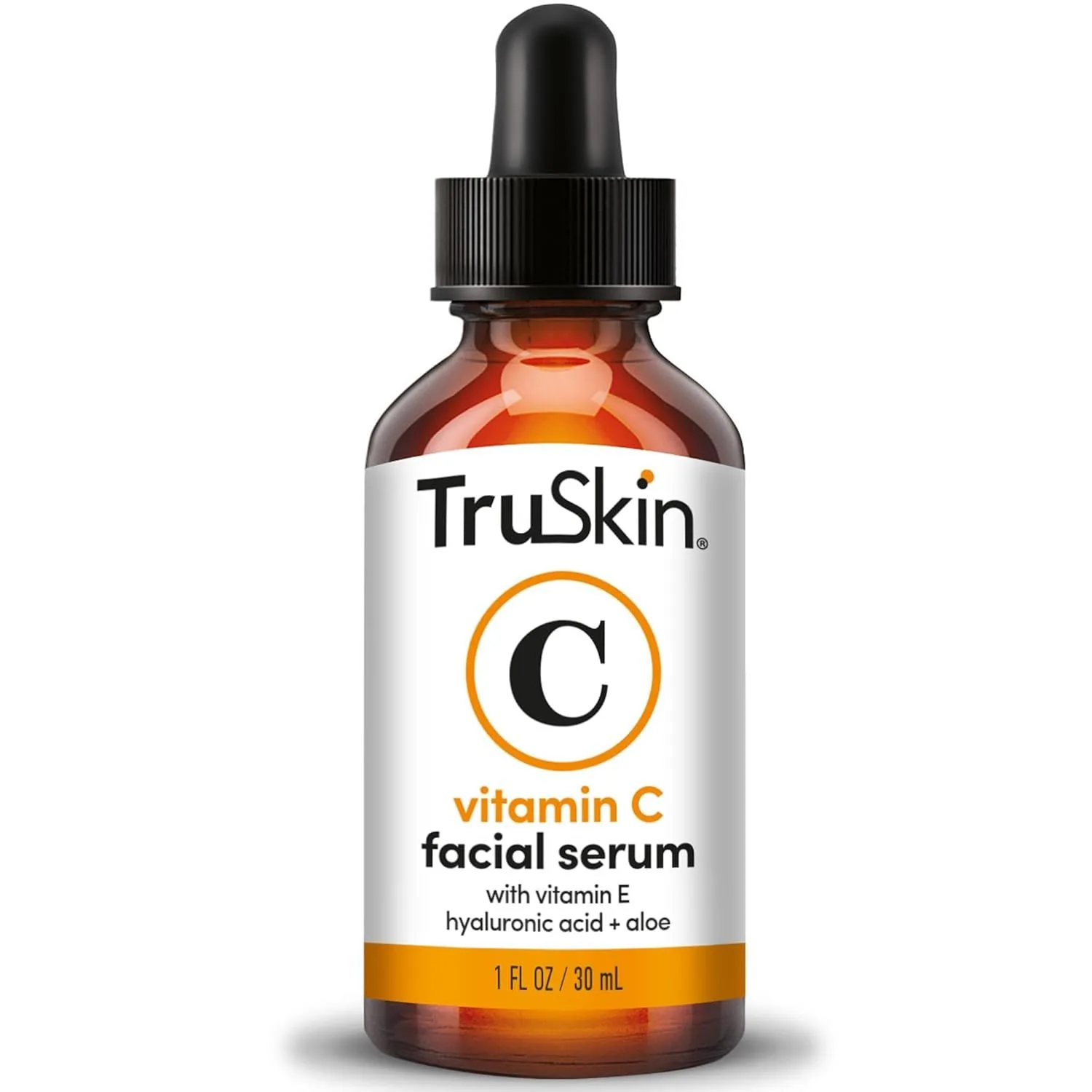
Best luxury results on a budget — 148K+ Amazon reviews validate the value
Get Our Top 3 Picks
Get our top 3 picks for your budget — one email, then only updates.
Only when something changes. Unsubscribe anytime.
Ready to Buy? Start Here
Based on this guide, our #1 recommendation:
TruSkin Vitamin C Serum Best budget Vitamin C with proven results Read Full Review →