Hyaluronic Acid Explained
Hyaluronic acid appears in nearly every skincare product sold today. Serums, moisturizers, eye creams, sheet masks, even foundations claim it as a hero ingredient. Most of the marketing is noise. HA is a useful molecule, but understanding molecular weight, application technique, and climate factors is the difference between visible hydration and wasted product. This guide covers the actual science.
What Hyaluronic Acid Actually Is
Hyaluronic acid is a glycosaminoglycan — a long sugar chain naturally found in skin, joints, and eyes. Your body produces it constantly. A single HA molecule can hold up to 1,000 times its weight in water, which is why it keeps skin plump, joints lubricated, and eyes moist.
In your skin, HA lives primarily in the dermis (the deeper layer), where it maintains hydration and volume. Dermal HA decreases with age — roughly 50% reduction by age 50. Topical HA cannot fully replace dermal HA (the molecules are too large to reach the dermis efficiently), but it can significantly improve hydration in the upper skin layers where dryness and fine dehydration lines form.
Your body produces and degrades HA constantly. The half-life of HA in skin is less than 24 hours — meaning half of the HA present today is broken down and replaced by tomorrow. This rapid turnover explains why consistent daily application of topical HA produces better results than occasional use. A single application plumps for a day. Daily application maintains a steady level of surface hydration that compounds over weeks. The skin looks consistently smoother, fine dehydration lines stay soft, and the moisture barrier stays reinforced. Skipping days resets the cycle, and the plumping effect disappears within 48 hours.
Molecular Weight: The Detail Most People Miss
HA molecules come in different sizes, measured by molecular weight in Daltons (Da). Size determines where the molecule sits in your skin and what it does there. This is the most important concept in HA skincare, and most products ignore it entirely.
- High molecular weight (1,000-1,800 kDa): Large molecules that sit on the skin surface. They form a moisture-retaining film that prevents transepidermal water loss (TEWL). Immediate plumping effect. Cannot penetrate the stratum corneum. Washes off.
- Medium molecular weight (100-1,000 kDa): Partially penetrates the outer skin layers. Provides both surface hydration and some deeper moisturizing. The most practical size for daily skincare.
- Low molecular weight (20-100 kDa): Small enough to penetrate deeper into the epidermis. Longer-lasting hydration. Some published research suggests low-MW HA may trigger a mild wound-healing response that stimulates collagen — though this evidence is preliminary.
- Ultra-low molecular weight (under 20 kDa): Nano-sized HA that reaches the deeper epidermis. Found in some premium formulations. Too small to hold as much water per molecule, so it functions more as a penetration-enhancing delivery vehicle than a standalone hydrator.
The best HA serums combine multiple molecular weights in one formula. High-MW provides immediate surface plumping. Low-MW delivers sustained hydration deeper in the skin. La Roche-Posay Hyalu B5 uses this multi-weight approach with two forms of HA plus Madecassoside for barrier repair. Vichy Mineral 89 pairs HA with volcanic mineral water for similar layered hydration.
The Humidity Factor
HA is a humectant — it attracts water from its surroundings. In humid climates (above 60% relative humidity), it pulls moisture from the air into your skin. In dry climates (below 40%), there is less atmospheric moisture to pull. So where does the HA get its water?
From your deeper skin layers. High-MW HA sitting on the surface of your face in a desert climate or a heated winter room will draw moisture upward from the dermis, then let it evaporate into the dry air. The result is paradoxically drier skin after applying a "hydrating" product.
Climate awareness changes how you use HA throughout the year. In summer, when humidity rises above 50-60%, HA works at its best — abundant atmospheric moisture gets pulled into your skin with minimal effort. A lightweight HA serum alone can provide all-day hydration. In winter, heated indoor air drops humidity to 20-30%, and HA needs help. Layer a heavier occlusive moisturizer on top, consider running a humidifier in your bedroom, and apply HA exclusively to damp skin. The same product can produce opposite results depending on the environment, which is why some people love their HA serum in July and feel betrayed by it in January. The ingredient did not change. The air did.
The HA-in-dry-climates trap. If you live in an arid region, heat your home in winter, or spend time in air-conditioned offices, apply HA to damp skin (mist your face first if needed) and immediately seal it with a moisturizer or facial oil. The occlusive layer prevents water from evaporating outward. Without the seal, HA can dehydrate you.
Application Technique That Actually Matters
How you apply HA determines whether it works or wastes your time. Three rules.
- Apply to damp skin. After cleansing, pat your face until damp — not dry, not dripping. The residual water gives HA something to bind immediately. If your skin is dry when you apply HA, the molecule searches for water and pulls it from wherever it can find it.
- Seal within 60 seconds. After applying HA serum, follow with your moisturizer before the HA dries. The moisturizer creates an occlusive barrier that traps the water HA attracted. Without it, the hydration evaporates.
- Use 2-3 drops, not a full dropper. HA is effective at very low concentrations. A thick layer does not hydrate better — it just takes longer to absorb and may pill under subsequent products. Thin, even application is all you need.
HA in the Context of a Full Routine
Hyaluronic acid belongs in the hydrating step of your routine — after cleansing and toning, before treatment serums and moisturizer. Apply it as a water-based serum layer. It works with every other active ingredient: retinol, Vitamin C, niacinamide, peptides. No conflicts, no interactions to worry about.
One exception: if you use a direct acid (AHA/BHA) in the same routine, apply the acid first, wait until it absorbs, then apply HA. The acid needs direct skin contact to exfoliate effectively. HA applied first would create a buffer layer that dilutes the acid. We recommend starting here.
For people using prescription tretinoin, HA becomes especially valuable as a buffer step. Applying HA to damp skin first, waiting 60 seconds, and then applying tretinoin on top reduces the concentration of retinoic acid hitting the skin at once. This "buffer method" is widely recommended by dermatologists for patients who experience excessive dryness or peeling from tretinoin. The HA does not diminish the tretinoin's long-term effectiveness — it simply slows the initial absorption, spreading the active's impact over a longer window and reducing the sharp irritation peak that causes most patients to abandon their prescription.
The best time to apply HA serum is immediately after showering or washing your face, when your skin is naturally damp and the bathroom still has elevated humidity. Your skin is warm, pores are slightly open, humidity is high, and water is abundant on the skin surface. This is the optimal environment for HA to do its job. Apply serum, then moisturizer, while still in the bathroom.
HA Myths Worth Correcting
- "HA replaces moisture your skin has lost." Not exactly. HA holds water in the upper skin layers, reducing dehydration lines and improving texture. It does not restore the HA in your dermis that depletes with age. Injectable HA fillers address dermal volume — topical HA addresses surface hydration. Both are useful; they target different layers.
- "More HA is always better." Formulas above 2% HA concentration become sticky, pill under makeup, and provide no additional hydration benefit. The optimal range is 0.1-2%. If a product advertises "5% HA," that concentration is likely causing texture issues without added benefit.
- "HA is anti-aging." HA is hydrating, not anti-aging in the way retinol or Vitamin C are. Plumped, hydrated skin looks younger because dehydration lines soften. But HA does not stimulate collagen, regulate melanin, or accelerate cell turnover. It is a support ingredient, not a treatment ingredient. Use it alongside actives, not instead of them.
The 1,000x claim in context. Marketing loves to say HA "holds 1,000 times its weight in water." True in a lab dish. In a thin layer on your face competing with environmental humidity, the effective water-holding ratio is much lower. It is still an excellent hydrator — the best topical humectant available — but it is not performing miracles. Set expectations accordingly.
HA Products Worth Knowing
Vichy Mineral 89: Combines hyaluronic acid with 89% volcanic mineral water rich in 15 minerals. The gel texture absorbs instantly and works under every moisturizer. No fragrance, no parabens — one of the most universally tolerated HA serums available. The mineral water adds electrolyte hydration that pure HA serums lack.
The Ordinary Hyaluronic Acid 2% + B5: Multiple molecular weights of HA at the maximum effective concentration, paired with pro-vitamin B5 for barrier support. At under $10, it is the most cost-effective multi-weight HA on the market. The texture is slightly thicker than Vichy's — better for dry skin, but can feel tacky on oily types.
Dime Beauty Hyaluronic Acid Serum: Clean beauty approach to HA with added watermelon extract for additional antioxidant benefit. Lightweight texture suitable for all skin types. A mid-range option for those who want HA without synthetic additives.
How to choose between them: Budget-conscious buyers start with The Ordinary. Sensitive skin gravitates toward Vichy's mineral-rich formula. Clean beauty preference points to Dime. All three deliver effective multi-weight hydration — the difference is texture, secondary ingredients, and personal preference. There is no wrong choice among well-formulated HA serums.
Worth noting is how long each bottle lasts in practice. HA serums require only 2-3 drops per application, making even small bottles last 2-3 months with daily use. This changes the cost calculation — a 30ml bottle used twice daily typically provides 60-90 days of product. Compare that to a moisturizer used at pea-sized amounts twice daily, which depletes in 4-6 weeks. Per day of use, HA serums are among the most economical actives in any skincare routine, even at premium price points.
HA Beyond Serums: Where Else It Appears
Hyaluronic acid appears in moisturizers, eye creams, sheet masks, foundations, and even lip products. In most of these formats, HA functions as a supporting hydrator rather than the primary active. A moisturizer with HA in the ingredient list provides additional water-binding capacity alongside its emollient base. An eye cream with HA helps the thin under-eye skin retain moisture. The concentration in these products is typically lower than in a dedicated HA serum — which is fine for support, but insufficient if deep hydration is your primary goal. For targeted hydration, use a standalone HA serum. For maintenance hydration, HA in your moisturizer is enough.
How HA Interacts With Other Actives
Hyaluronic acid is one of the few ingredients with zero negative interactions. It plays well with retinol — applying HA first creates a hydration buffer that reduces retinol irritation. It pairs with Vitamin C without diminishing either ingredient's effectiveness. It layers under niacinamide, peptides, and AHAs without conflict. This universality is why HA appears in so many multi-active formulations.
The one consideration is layering order. HA goes on first after cleansing, always on damp skin, before any other serum. It is a water-phase product and needs to sit closest to the skin surface where it can bind moisture directly. Applying an oil-based serum before HA creates a barrier that prevents the HA from reaching water on your skin. Thin to thick, water to oil — HA is always the first serum in any multi-step routine.
Watch: Dr Dray's take on the Hyaluronic Acid Explained

Frequently Asked Questions
Can hyaluronic acid make dry skin worse?
Yes, in low-humidity environments. High-molecular-weight HA sitting on the surface of dry skin in a climate below 40% humidity will pull water from the lower layers of your skin instead of from the air. The result: skin that feels drier after applying a hydrating product. The fix is always applying HA to damp skin and sealing it with a moisturizer or oil within 60 seconds.
Is hyaluronic acid the same as sodium hyaluronate?
Nearly. Sodium hyaluronate is the sodium salt form of hyaluronic acid. It has a smaller molecular size and penetrates skin more effectively. Most skincare products use sodium hyaluronate (the ingredient list will say so), but market the product as "hyaluronic acid" because consumers recognize that name. Both hydrate; sodium hyaluronate is the better penetrating form.
How much hyaluronic acid should a product contain?
Between 0.1% and 2% is the effective range. Below 0.1% is too dilute to hydrate meaningfully. Above 2%, the formula becomes too viscous and can form a film that flakes when layered under other products. Most well-formulated serums (Vichy Mineral 89, La Roche-Posay Hyalu B5) contain 1-1.5%.
Can I use hyaluronic acid with retinol?
Absolutely. HA is one of the best retinol companions. Apply HA first (to damp skin), let it absorb for 60 seconds, then apply retinol. The HA creates a hydration buffer that reduces retinol irritation while keeping skin plump. Many dermatologists recommend this combination specifically for retinol beginners.
Does hyaluronic acid work for oily skin?
It is one of the best ingredients for oily skin specifically because it hydrates without adding oil. Oily skin often overproduces sebum because the skin is dehydrated underneath. Water-based HA addresses the dehydration, which can reduce the oil-overproduction response over time. Vichy Mineral 89 is a popular choice — gel texture, zero residue.
At what age should I start using hyaluronic acid?
Any age. HA is not an anti-aging active like retinol — it is a hydrating ingredient. Dry skin at 20 benefits from HA just as much as dry skin at 60. The difference is that your skin produces less HA naturally as you age (roughly 50% less by age 50), so supplemental HA becomes more important over time.
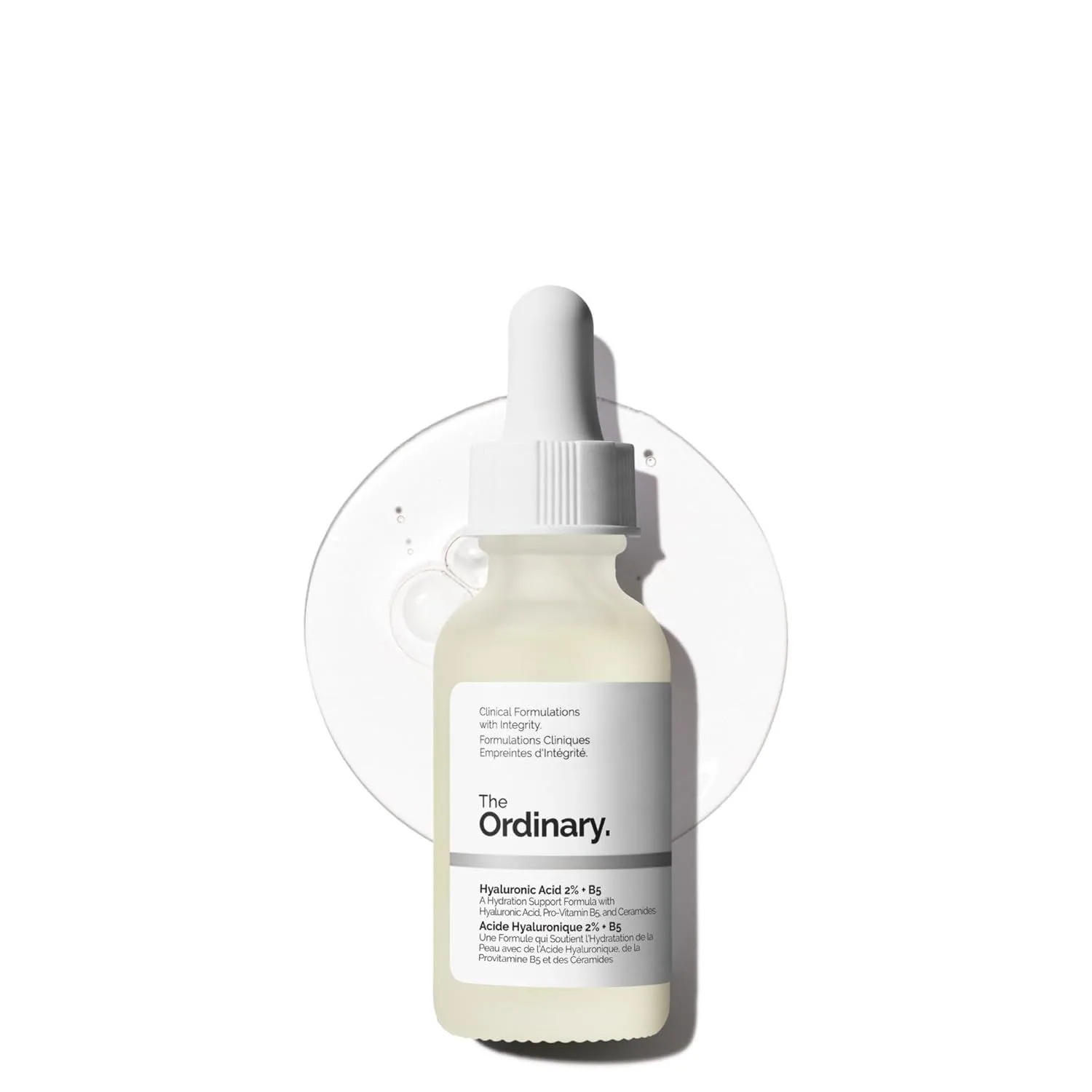
Best pure HA serum — multi-weight molecules at an unbeatable price
Get Our Top 3 Picks
Get our top 3 picks for your budget — one email, then only updates.
Only when something changes. Unsubscribe anytime.
Ready to Buy? Start Here
Based on this guide, our #1 recommendation:
La Roche-Posay Hyalu B5 Best dermatologist-grade repairing hydrator Read Full Review →