Building Your First Skincare Routine
Starting a skincare routine feels overwhelming when every brand promises miracles and every influencer recommends 12 products. The truth is simpler than the industry wants you to believe. Three products are all you need to start. Everything else is optional enhancement. This guide builds your foundation step by step, with product recommendations at every budget level. If you are a man starting from zero, our luxury skincare for men guide builds a streamlined routine tailored to male skin.
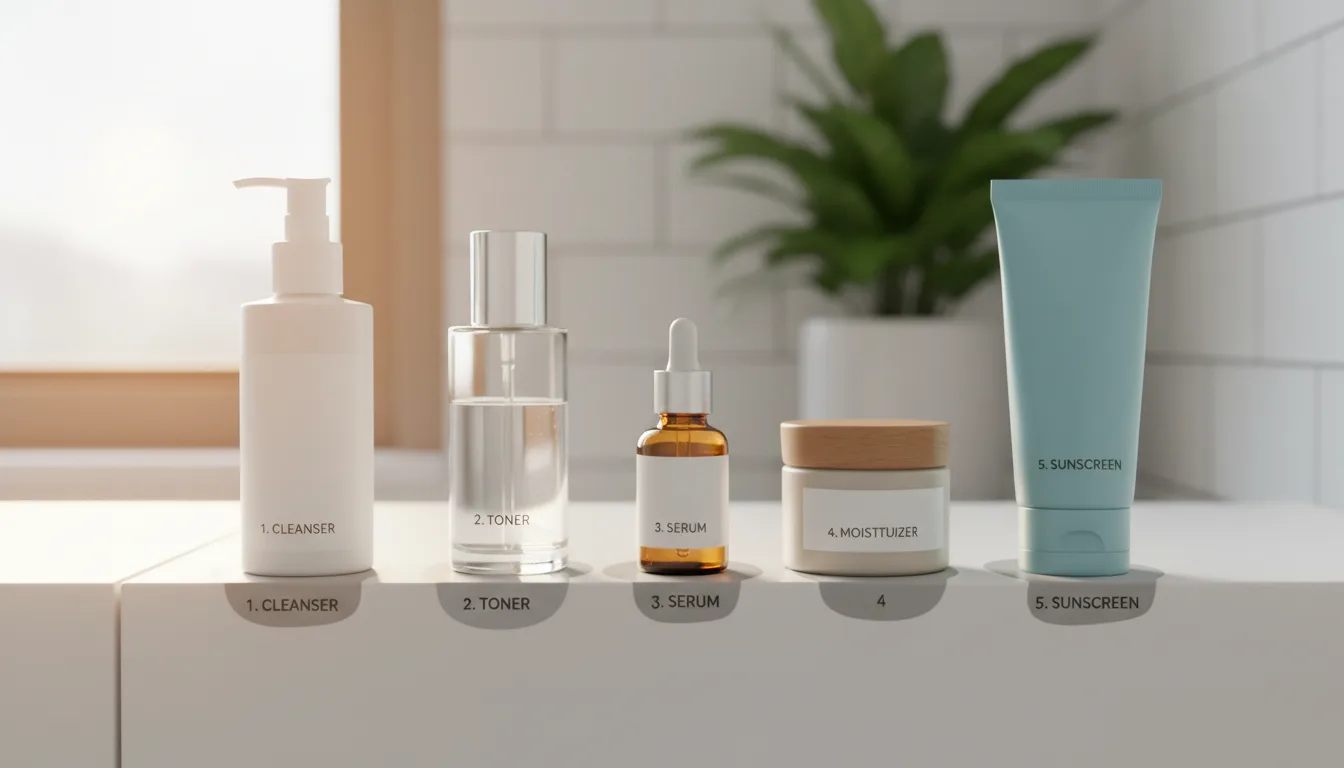
Step 1: Cleanser (Non-Negotiable)
Every routine starts with clean skin. A gentle cleanser removes dirt, oil, makeup, and environmental pollution without stripping your skin's natural moisture barrier.
Look for a cleanser labeled "gentle," "hydrating," or "pH-balanced" (pH 4.5-5.5). Avoid anything that makes your skin feel tight or squeaky after rinsing — that means the cleanser stripped too much.
Foaming cleansers suit oily skin. Cream or milk cleansers suit dry skin. Gel cleansers work for most people. This is the one step where spending more rarely translates to better results.
Massage your cleanser for at least 60 seconds. Most people rinse after 10-15 seconds, which is not enough time for surfactants to dissolve SPF, makeup, and sebum. Set a timer. The extra 45 seconds make a noticeable difference in how clean your skin feels.
Step 2: Moisturizer (Non-Negotiable)
Moisturizer locks in hydration and strengthens your skin's protective barrier. Every skin type — including oily — needs it. Skipping moisturizer causes your skin to overcompensate by producing more oil.
For normal to oily skin, choose lightweight gel or gel-cream moisturizers. For dry skin, look for rich creams with ceramides, squalane, or shea butter. Kiehl's Ultra Facial Cream works across all skin types — it is one of the most universally effective moisturizers in the category.
Application technique matters more than most beginners realize. Apply moisturizer to slightly damp skin — within 60 seconds of rinsing your face. Damp skin absorbs hydrating ingredients more efficiently, and the moisturizer traps that surface water against your skin. Pat gently rather than rubbing, especially around the eyes and nose where skin is thinner. A pea-sized amount covers the full face. More product does not mean more hydration — it means clogged pores and wasted product.
Step 3: SPF (Morning Only, Non-Negotiable)
Sunscreen prevents more skin aging than any serum, cream, or treatment you will ever buy. UV exposure causes approximately 80% of visible skin aging, including wrinkles, dark spots, and loss of elasticity. SPF 30 or higher, applied every morning, is the single highest-impact step you can take.
Apply SPF as the last step in your morning routine, after moisturizer. If you wear makeup, SPF goes underneath. Reapply every two hours if you are outdoors. For office days with minimal sun exposure, morning application is sufficient.
The texture objection is the most common reason beginners skip SPF. Older sunscreen formulas felt greasy, left white casts on darker skin tones, and pilled under makeup. Modern formulations have largely solved these problems. Chemical sunscreens with avobenzone or newer filters like tinosorb absorb into the skin without a white residue. Mineral sunscreens using micronized zinc oxide sit lighter than their predecessors. If you tried sunscreen five years ago and hated the feel, the category has changed enough to warrant another attempt. Finding an SPF you actually enjoy wearing is more valuable than finding the "best" SPF that sits in your drawer untouched.
These three steps — cleanser, moisturizer, SPF — are your complete beginner routine. Use them consistently for 2-3 weeks before adding anything else. Your skin needs time to stabilize, and you need a baseline to compare against when you introduce new products.
Step 4: Adding Your First Serum (Week 3+)
Once your baseline routine is stable, a serum is the highest-impact addition. Start with one serum targeting your primary concern.
For hydration (safest starting point): The Ordinary Hyaluronic Acid 2% + B5 — five molecular weights of HA at an accessible price. Apply to damp skin, morning and night, before moisturizer.
For brightening: TruSkin Vitamin C Serum or CeraVe Vitamin C Serum — morning use only, before SPF. Vitamin C is an antioxidant that boosts sun protection while brightening.
For texture and anti-aging: CeraVe Retinol Serum — evening use only. Start with twice per week. The encapsulated formula reduces irritation for first-time retinol users.
The One-Product-at-a-Time Rule
This is the most broken rule in skincare — and the most costly mistake. Introduce one new product at a time. Wait at least two full weeks before adding another. If your skin reacts badly, you know exactly what caused it.
If you add a new cleanser, serum, and moisturizer simultaneously and break out three days later, you have no way to identify the problem. You end up abandoning all three and starting over.
This rule also applies to switching products within a category. Replacing your moisturizer with a new one while simultaneously adding a retinol serum creates two variables. If irritation appears, is it the new moisturizer or the retinol? Keep your existing routine stable whenever you introduce something new. The discipline feels slow, but it prevents the frustrating cycle of trial, reaction, and restart that drives many beginners away from skincare entirely.
Before applying any new product to your face, test it behind your ear or on your inner forearm for 24 hours. If no redness, itching, or bumps appear, apply a small amount on one side of your jawline for 3 days. Only then go full-face. This catches reactions before they cover your entire face.
What to Expect in Your First Month
Week 1: Your skin adjusts to the new cleanser and moisturizer. Slight changes in how your skin feels — possibly a bit oilier or drier than usual as your skin recalibrates. This is normal. Do not change products yet.
Week 2: Your skin settles into the new routine. Surface hydration improves. If you introduced SPF for the first time, you may notice your skin looks slightly more even-toned from UV protection already preventing new damage.
Week 3-4: First full skin cell turnover cycle completes. Subtle texture improvement becomes noticeable — smoother, more uniform surface. If you added a serum in week 3, the first effects (brightening from Vitamin C, or mild flaking from retinol) begin appearing.
Month 2 and beyond: This is when real changes become visible. Retinol starts softening fine lines. Vitamin C begins fading dark spots. Hyaluronic acid has built up consistent hydration layers. The routine you committed to in week 1 is now producing the results that validate the patience it required.
Common Beginner Mistakes
- Too many products too fast. Your skin cannot process ten actives at once. Three to four products is a complete routine. Five to six is advanced.
- Skipping SPF. Every anti-aging product is undermined without sun protection. SPF is the foundation, not an optional extra.
- Expecting overnight results. Skin cell turnover takes 28 days. Real changes take 6-8 weeks. If you quit after one week, you never gave the product a chance.
- Following influencer routines. A 15-step routine with products from 12 brands is not skincare — it is content creation. Your skin does not need that much.
- Ignoring irritation signals. Mild tingling for 30 seconds is normal with active ingredients. Persistent burning, redness, or flaking that lasts hours means the product is too strong or not right for your skin. Listen to those signals.
Understanding Your Skin Type
Your skin type determines which products and ingredients will work best for you. For a deeper dive into the science behind skin classification, see our complete skin types guide.
Oily skin: Visible shine by midday, especially on the forehead, nose, and chin. Pores appear larger. Prone to blackheads and occasional breakouts. Choose gel or lightweight moisturizers and foaming cleansers. Avoid heavy creams — they feel suffocating and can trigger more oil production.
Dry skin: Tight, flaky, or rough texture. Fine lines appear more visible because the skin lacks moisture. Dullness is common. Choose cream cleansers and rich moisturizers with ceramides or squalane. Avoid stripping products — anything labeled "mattifying" or "oil control" will make dryness worse.
Combination skin: Oily in the T-zone (forehead, nose, chin) but dry on the cheeks. The most common skin type and the most confusing to shop for. Use a gentle gel cleanser everywhere, a lightweight moisturizer on the T-zone, and a slightly richer one on the cheeks if needed. Multi-zone application takes 30 extra seconds and solves the combination dilemma.
Sensitive skin: Reacts to new products with redness, stinging, or itching. May have visible redness even without product application. Fragrance and essential oils are the most common triggers. Choose fragrance-free products from brands like CeraVe, La Roche-Posay, or Vanicream. Patch test everything. Introduce products more slowly — wait three weeks between new additions instead of two.
Normal skin: Balanced moisture, minimal breakouts, no persistent dryness or oiliness. If this is you, your skin type is the easiest to care for. Almost any well-formulated product will work. Focus on prevention (SPF) and maintain what you have rather than trying to fix problems that do not exist.
How to Build Beyond the Basics
Once your three-step routine is stable for 3-4 weeks, here is the order of priority for adding products:
- Vitamin C serum (morning): The highest-impact addition after SPF. Brightens, protects against UV damage, and starts gentle anti-aging. Apply after cleansing, before moisturizer.
- Retinol serum (evening): The most evidence-backed anti-aging ingredient. Start with the lowest concentration available (CeraVe encapsulated retinol). Apply after cleansing, before moisturizer. Begin twice per week and increase gradually.
- Hyaluronic acid serum: Adds deep hydration for any skin type. Apply to damp skin — HA draws moisture from the environment into the skin, so it needs water to work with. Works morning and evening.
- Eye cream (optional): The skin around your eyes is thinner and more delicate. A dedicated eye cream is not strictly necessary in your 20s — your regular moisturizer applied gently around the orbital bone works. After 30, a targeted eye cream with peptides or caffeine can address dark circles and early fine lines.
How to Read Product Labels as a Beginner
Skincare labels are designed to sell, not to inform. "Dermatologist-tested" means a dermatologist looked at the product — it does not mean they approved it or that it passed any specific test. "Clinically proven" requires a published study, but the study might have tested 12 people for 2 weeks. "Hypoallergenic" has no legal definition — any brand can use it.
The ingredient list is the only part of the label that is legally regulated. Ingredients appear in descending order of concentration. Water is almost always first. The active ingredients you care about should appear in the top half of the list. If a product advertises hyaluronic acid but lists it near the bottom after preservatives and fragrance, the formula contains a trace amount — not enough to hydrate meaningfully.
Fragrance deserves special attention on labels. Listed as "fragrance," "parfum," or "essential oil blend," scented ingredients are the most common cause of contact dermatitis in skincare. A product can contain dozens of individual fragrance chemicals under the single word "fragrance" because regulations treat it as a trade secret. For beginners, fragrance-free formulas reduce the risk of irritation while you figure out how your skin responds to active ingredients. Once your routine is established and your skin is stable, you can experiment with fragranced products if you prefer them — but starting fragrance-free gives you a cleaner baseline.
Starter Sets That Simplify Everything
If choosing individual products feels paralyzing, starter sets bundle a coordinated routine in one purchase.
- Tree of Life Brightening Trio — three full-size serums (Vitamin C, retinol, HA) at an ultra-affordable price. The best way to test which actives your skin responds to.
- YEOUTH 8-Piece Set — eight full-size products covering every step. Overwhelming in breadth, but the per-product value is extraordinary.
- Estee Lauder Dream Skin Set — four prestige nighttime products at an accessible set price. A taste of luxury skincare without the full commitment.
- Sadoer 6-Piece Hydrating Set — a complete six-step routine including eye cream and sleeping mask at an ultra-budget price. Ideal for learning which steps matter most.
- artnaturals Vitamin C Set — four Vitamin C products (toner, serum, moisturizer, mask) for a themed active collection. Best for testing how your skin responds to Vitamin C across multiple formats.
Watch: Dr. Daniel Sugai breaks down the Building Your First Skincare Routine (143K views)

Frequently Asked Questions
What is the minimum skincare routine everyone should follow?
Three steps: cleanser, moisturizer, and SPF in the morning. That is it. Everything else — serums, exfoliants, masks — is an addition to this foundation. Master the basics for 2-3 weeks before adding anything new.
How do I know if a product is breaking me out?
Introduce one product at a time and wait at least two weeks before adding another. If you break out, you know exactly which product caused it. If you introduce three products at once and get pimples, you have no way to identify the culprit.
Do I really need to wash my face in the morning?
A morning rinse with water is usually sufficient for most skin types. Overnight, your skin produces sebum and sheds cells, but a full cleanser in the AM can strip beneficial oils. If you have oily skin or used heavy products the night before, a gentle cleanser in the morning makes sense.
When should I start using anti-aging products?
Prevention starts in your mid-20s with SPF and antioxidants (Vitamin C). Active anti-aging ingredients like retinol are appropriate starting in your late 20s to early 30s. There is no rush — starting retinol at 28 or 35 both produce meaningful results.
How long does it take to see results from a new routine?
Skin cell turnover takes approximately 28 days. You need at least two full turnover cycles (6-8 weeks) to evaluate whether a routine is working. Immediate improvements (within days) are usually hydration and smoothness. Actual structural changes (fewer wrinkles, faded spots) take 8-12 weeks.
Is expensive skincare better than affordable skincare for beginners?
Not necessarily. Beginners benefit most from proven, well-formulated products with transparent ingredient lists — and those exist at every price point. CeraVe, The Ordinary, and La Roche-Posay deliver dermatologist-grade formulations at accessible prices. Save your luxury purchases for after you understand what your skin responds to.
Should I use the same routine morning and night?
Your morning and evening routines should differ. Morning focuses on protection: antioxidant serum (Vitamin C) and SPF. Evening focuses on repair: treatment serum (retinol) and a richer moisturizer. Cleanser and moisturizer can be the same AM and PM, but serums should be split.
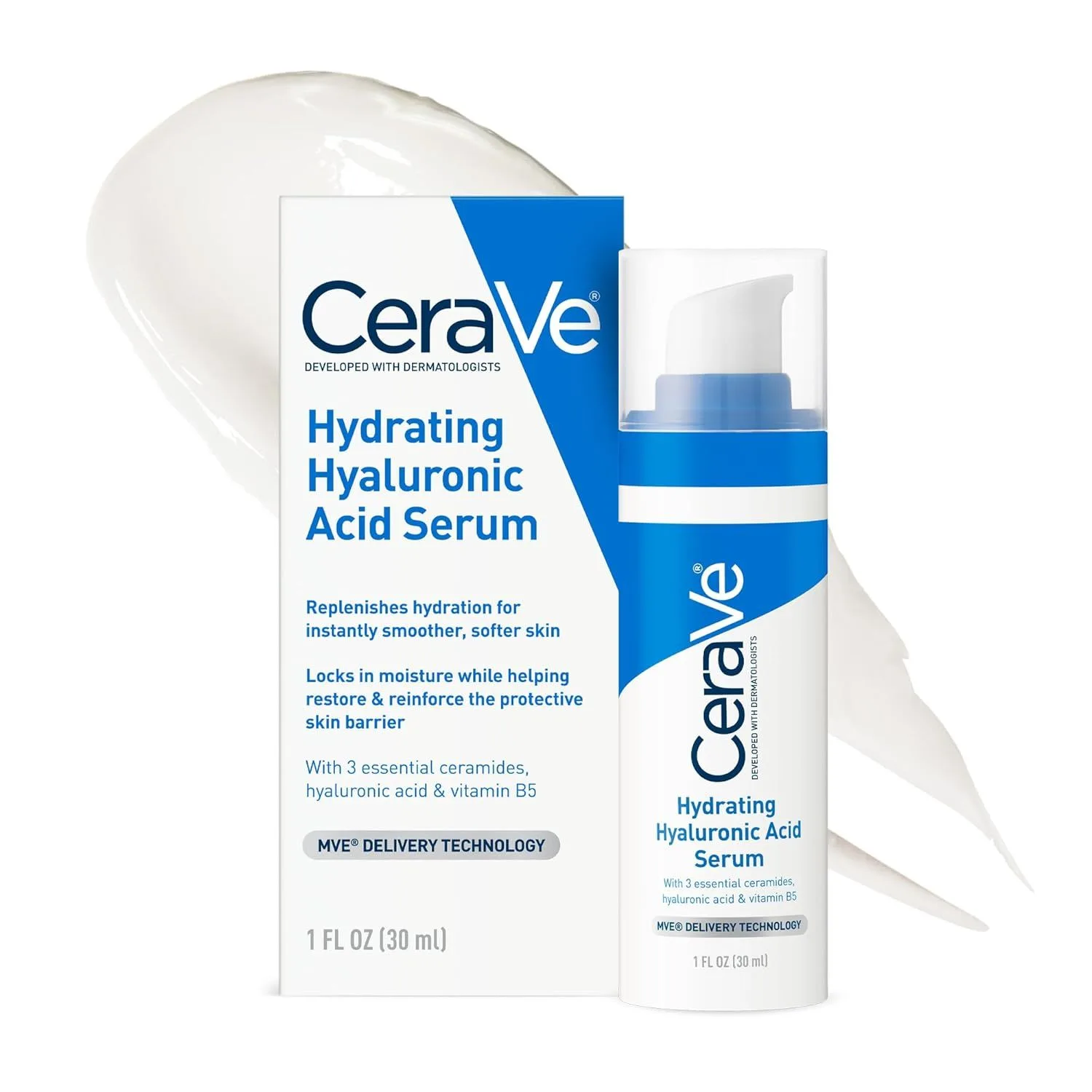
Best starter serum — dermatologist-backed with ceramide barrier support
Get Our Top 3 Picks
Get our top 3 picks for your budget — one email, then only updates.
Only when something changes. Unsubscribe anytime.
Ready to Buy? Start Here
Based on this guide, our #1 recommendation:
CeraVe Retinol Serum Best affordable retinol for beginners Read Full Review →