Anti-Aging Skincare: What Actually Works
Anti-aging skincare is a multi-billion-dollar market built on promises. Some of those promises are backed by decades of published research. Many are not. This guide cuts through the marketing to identify the ingredients, concentrations, and products that have genuine clinical evidence behind their anti-aging claims.
The Three Pillars of Evidence-Based Anti-Aging
Dermatology research identifies three primary mechanisms for topical anti-aging. Every effective product works through one or more of these pathways. Products that claim anti-aging benefits without targeting any of these pathways are, to be direct, mostly moisturizer with marketing.
- Prevention (UV protection): SPF prevents approximately 80% of visible skin aging. No serum compensates for unprotected sun exposure.
- Repair (retinoids): Retinol, retinaldehyde, and tretinoin stimulate collagen production and accelerate cell turnover. The most-studied anti-aging actives in existence.
- Protection (antioxidants): Vitamin C, Vitamin E, and ferulic acid neutralize free radicals that damage collagen and cause hyperpigmentation.
Retinoids: What the Research Actually Shows
Tretinoin (prescription retinoid) reduces fine wrinkles by 30-40% in controlled clinical trials at 0.025-0.1% concentrations over 6-12 months. Over-the-counter retinol produces similar but slower results — it must convert twice in the skin before becoming the active retinoic acid form.
Retinaldehyde sits between these two. One conversion step to retinoic acid instead of two. Medik8's Crystal Retinal 10 uses this form with double-layered encapsulation. Published data shows retinaldehyde delivers results 11x faster than equivalent retinol concentrations.
The irritation question matters as much as efficacy. Retinoid dermatitis — the redness, flaking, and tightness that accompanies early retinol use — drives most people to quit before seeing results. Encapsulated delivery systems reduce this problem by releasing the active ingredient gradually rather than flooding the skin all at once. This is why we consistently recommend starting with encapsulated retinol formulas regardless of age. The best retinoid is the one you actually keep using for three months straight, not the strongest one you abandon after two weeks of peeling.
Start at the bottom and climb slowly. Weeks 1-4: encapsulated retinol (CeraVe), every other night. Weeks 5-8: standard retinol (La Roche-Posay 0.3%), every night. Months 3-6: retinaldehyde (Medik8 Crystal Retinal). Each step up increases potency while your skin builds tolerance.
Vitamin C: The Daytime Defense
L-ascorbic acid at 10-20% concentration provides photoprotection that amplifies your SPF. The Duke University study by Dr. Sheldon Pinnell demonstrated that combining Vitamin C with Vitamin E and ferulic acid increases UV protection 8-fold.
But Vitamin C's role in anti-aging extends beyond sun defense. It inhibits tyrosinase, the enzyme responsible for melanin production, fading dark spots over 4-8 weeks. And it directly stimulates collagen synthesis — a slower process, but measurable in studies at 3-6 months.
Stability is the practical challenge with Vitamin C. L-ascorbic acid oxidizes when exposed to light, air, and water — turning yellow-brown and losing potency. A fresh bottle works. A six-month-old bottle sitting on your bathroom counter may not. Look for formulas packaged in opaque, airless pump containers. Store them away from direct sunlight. And pay attention to color: a clear or faintly yellow serum is active, while a dark amber or brown serum has degraded past the point of usefulness. Some brands solve this with stabilized derivatives like ascorbyl glucoside or ethylated ascorbic acid. These forms resist oxidation better but convert to active Vitamin C more slowly in the skin, producing gentler but less potent results.
Peptides: The Supporting Cast
Peptides signal your skin cells to produce more collagen and elastin. Unlike retinoids, which work by accelerating cell turnover, peptides work by biochemical messaging — telling existing cells to ramp up protein production.
Copper tripeptide-1 (GHK-Cu) has the strongest evidence, originating from wound-healing research. Medik8 Liquid Peptides centers its formula around this ingredient. Results take 8-12 weeks but the firmness improvement at three months is consistent across user reports.
Peptides are best positioned as a complement to retinoids, not a replacement. They work through a different pathway, so the effects compound rather than overlap.
One category of peptides worth understanding separately is neuropeptides, sometimes called "Botox-like" peptides. Argireline (acetyl hexapeptide-3) is the most common example. These peptides work by limiting the signal between nerves and facial muscles, theoretically reducing the depth of expression lines. The clinical evidence is more modest than the marketing suggests — studies show mild improvement in crow's feet depth at high concentrations, but nothing approaching the muscle-relaxing effect of injectable neurotoxins. Still, for people who want a non-invasive option to soften expression lines around the eyes and forehead, neuropeptides offer a low-risk addition to an evening routine. Apply them to specific areas of concern rather than across the entire face.
Anti-aging actives work best in combination. Morning: Vitamin C serum + SPF (protect). Evening: retinol + peptide serum (repair). This two-phase approach targets aging through both prevention and active treatment.
What Does Not Work (Despite Marketing)
Topical collagen molecules are too large to penetrate skin. They provide surface moisturization but do not replenish your skin's collagen supply. For collagen stimulation, use ingredients that signal your own cells to produce more — retinoids and peptides.
Stem cell extracts from plants operate on fundamentally different biology than human cells. There is no mechanism by which apple stem cells influence human skin cell behavior.
Products marketed as "anti-aging" that contain only moisturizing ingredients (glycerin, shea butter, dimethicone) hydrate and temporarily plump fine lines through water retention. But they do not alter skin biology. Moisturization and anti-aging are different things.
Building Your Anti-Aging Routine by Decade
20s — Prevention phase. SPF every day. A basic antioxidant serum (Vitamin C) in the morning. That is the entire anti-aging routine for your 20s. Retinol is optional at this stage but does not hurt if introduced gently. The goal is not repair — your collagen production is still strong. The goal is protecting what you have from UV damage, which causes roughly 80% of visible aging. Every sunburn and every unprotected beach day in your 20s shows up as fine lines and dark spots in your 40s. The investment now is SPF discipline.
30s — Introduction of actives. This is when most people notice the first fine lines around the eyes and forehead. Collagen production begins declining around 1% per year starting in the mid-20s, and by 30 the cumulative loss becomes visible. Add a retinol serum at night (start with CeraVe's encapsulated formula). Continue Vitamin C in the morning. Consider adding a peptide serum if your budget allows. The 30s are when the gap between "uses sunscreen religiously" and "never bothered" becomes visibly apparent between friends of the same age.
40s — Targeted treatment. Fine lines are present. Possibly deeper expression wrinkles. Dark spots from sun damage are materializing. This is when stepping up from beginner retinol to intermediate formulations (La Roche-Posay 0.3%, Medik8 Crystal Retinal) makes a measurable difference. Add a rich night cream with peptides. Eye cream becomes worthwhile for the thinner skin around the eyes. The routine expands from 3 products to 5-6, because skin at this stage responds to multi-active treatment more than single-product approaches. For those who want to consolidate without sacrificing coverage, the U Beauty Resurfacing Compound combines retinol, Vitamin C, and niacinamide into a single step through its SIREN Capsule delivery system.
50s and beyond — Repair and maintenance. Collagen loss is significant. Skin barrier function weakens. Hydration retention drops. This stage benefits from the richest, most comprehensive formulas — Estee Lauder Night Repair, Augustinus Bader, Cle de Peau La Creme for overnight renewal, and prestige retinaldehyde systems. The focus shifts from prevention to active repair and structural support. Ceramide-rich moisturizers help rebuild the weakened barrier. Heavier Vitamin C formulas (15-20%) address accumulated hyperpigmentation. Retinoid use should be consistent but paired with richer barrier-repair products to offset the increased sensitivity of mature skin.
Common Anti-Aging Mistakes
Starting too many actives at once. Introducing retinol, Vitamin C, AHAs, and peptides in the same week overwhelms the skin barrier and causes irritation that people blame on the products themselves. Introduce one new active every 2-4 weeks. Let your skin fully adjust before adding the next ingredient.
Skipping SPF on cloudy days. UVA rays — the wavelength most responsible for photoaging — penetrate clouds and glass. A cloudy Tuesday at your desk near a window exposes your skin to aging radiation. Daily SPF is not weather-dependent.
Expecting overnight results from retinol. Collagen synthesis is a slow biological process. Visible wrinkle improvement from retinol takes 8-12 weeks of consistent nightly use. Most people abandon their retinol after 3-4 weeks because they see no change, missing the window where results actually begin to appear. Patience is the hardest part of anti-aging skincare.
Using retinol and strong acids together. Layering retinol with glycolic acid, salicylic acid, or high-concentration Vitamin C on the same night strips the moisture barrier and causes redness, peeling, and sensitivity. Alternate nights: retinol on Monday, acids on Tuesday. Or use acids in the morning and retinol at night. Never the same application.
Neglecting the neck and chest. Facial skincare stops at the jawline for most people. But the neck and decolletage age just as fast — sometimes faster, because they receive sun exposure without the SPF application that faces get. Extend every product (serum, moisturizer, SPF) past the jawline and down to the collarbone.
Chasing ingredient trends over proven actives. Every year brings a new "miracle" ingredient — bakuchiol, snow mushroom extract, blue tansy. Some of these have early promise, but none have the multi-decade evidence base that retinoids, Vitamin C, and SPF carry. Build your routine around the proven three first. If you want to experiment with newer ingredients, add them as supplements to a core routine that already works. Replacing retinol with the latest Instagram-trending botanical is a downgrade, no matter how appealing the marketing. The boring, well-studied ingredients are boring precisely because they have been validated so many times that researchers moved on to other questions.
The Role of Hydration in Anti-Aging
Dehydrated skin exaggerates the appearance of every aging sign. Fine lines look deeper on dry skin. Dark spots look more prominent against a dull, moisture-depleted background. Texture appears rougher. Before investing in active anti-aging ingredients, ensure your baseline hydration is solid. Hyaluronic acid serums, ceramide-rich moisturizers, and humectant-based formulas create the hydrated foundation that makes every anti-aging active work more effectively. A retinol applied to well-hydrated skin penetrates more evenly and causes less irritation than the same retinol on a dehydrated, compromised barrier.
The relationship between hydration and anti-aging is often underestimated. Adequate hydration makes fine lines less visible immediately — not through structural repair but through plumping the skin's surface with water. This is why morning skincare routines that include a hydrating serum before SPF produce a visibly smoother canvas. The structural anti-aging work (collagen stimulation from retinol) happens at night. The visual anti-aging work (hydration smoothing) happens every morning.
Anti-Aging at Every Budget
- Under $25: CeraVe Retinol Serum + SPF. The foundation of evidence-based anti-aging at the most accessible price point.
- $25-75: Add La Roche-Posay Vitamin C10 in the morning and La Roche-Posay Retinol B3 at night. Mid-range products with clinical backing.
- $75-150: Medik8 Crystal Retinal 10 + Drunk Elephant C-Firma. Advanced delivery systems at premium price points.
- $150+: Estee Lauder Advanced Night Repair or Augustinus Bader The Rich Cream. Multi-pathway prestige formulas backed by proprietary technologies.
The Order of Application for Anti-Aging Products
Morning: Cleanser → Vitamin C serum → moisturizer → SPF. The Vitamin C goes first because it is an active that needs direct skin contact for maximum absorption. Moisturizer seals it in. SPF goes last because it needs to form an even film on the skin surface.
Evening: Cleanser → retinol or peptide serum → eye cream (optional) → night moisturizer. Retinol goes directly on clean skin for the same reason as Vitamin C — active ingredients penetrate best without barriers. Wait 2-3 minutes after applying retinol before layering moisturizer to allow absorption.
Watch: Dr Dray breaks down the Anti-Aging Skincare: What Actually Works (142K views)

Frequently Asked Questions
At what age should I start anti-aging skincare?
Prevention starts in your mid-20s with SPF and antioxidants. Active anti-aging ingredients like retinol and peptides are appropriate from your late 20s. But starting at 40 or 50 still produces visible results — collagen stimulation and cell turnover improvement happen at any age.
What is the most effective anti-aging ingredient?
Retinoids have the strongest body of evidence — over 50 years of peer-reviewed research. Tretinoin (prescription) delivers the fastest results. Over-the-counter retinol and retinaldehyde are effective with less irritation. Vitamin C and peptides rank second and third respectively.
Can anti-aging products reverse wrinkles?
Retinoids can reduce the depth of fine lines by stimulating collagen production. Deep wrinkles (expression lines, deep creases) can be softened but not eliminated by topical products alone. Prevention is always easier than reversal — SPF prevents the UV damage that causes most wrinkles.
Is expensive anti-aging skincare better than affordable options?
Not inherently. CeraVe Retinol Serum and The Ordinary products deliver proven actives at accessible prices. Where luxury brands earn their premium is in delivery technology (Medik8 retinaldehyde encapsulation), formulation elegance, and multi-active systems (Estee Lauder Chronolux).
How long does it take to see anti-aging results?
SPF: prevents further damage immediately. Vitamin C brightening: 4-6 weeks. Retinol wrinkle reduction: 8-12 weeks for fine lines, 6 months for deeper lines. Peptide firming: 8-12 weeks. Collagen rebuilding is a slow biological process. Consistency over months matters more than product potency.
Do I need both retinol and Vitamin C?
They complement each other because they work through different mechanisms. Vitamin C is an antioxidant that protects against daily UV damage and brightens. Retinol stimulates cell turnover and collagen production. Use Vitamin C in the morning (pairs with SPF) and retinol at night (sensitive to UV).
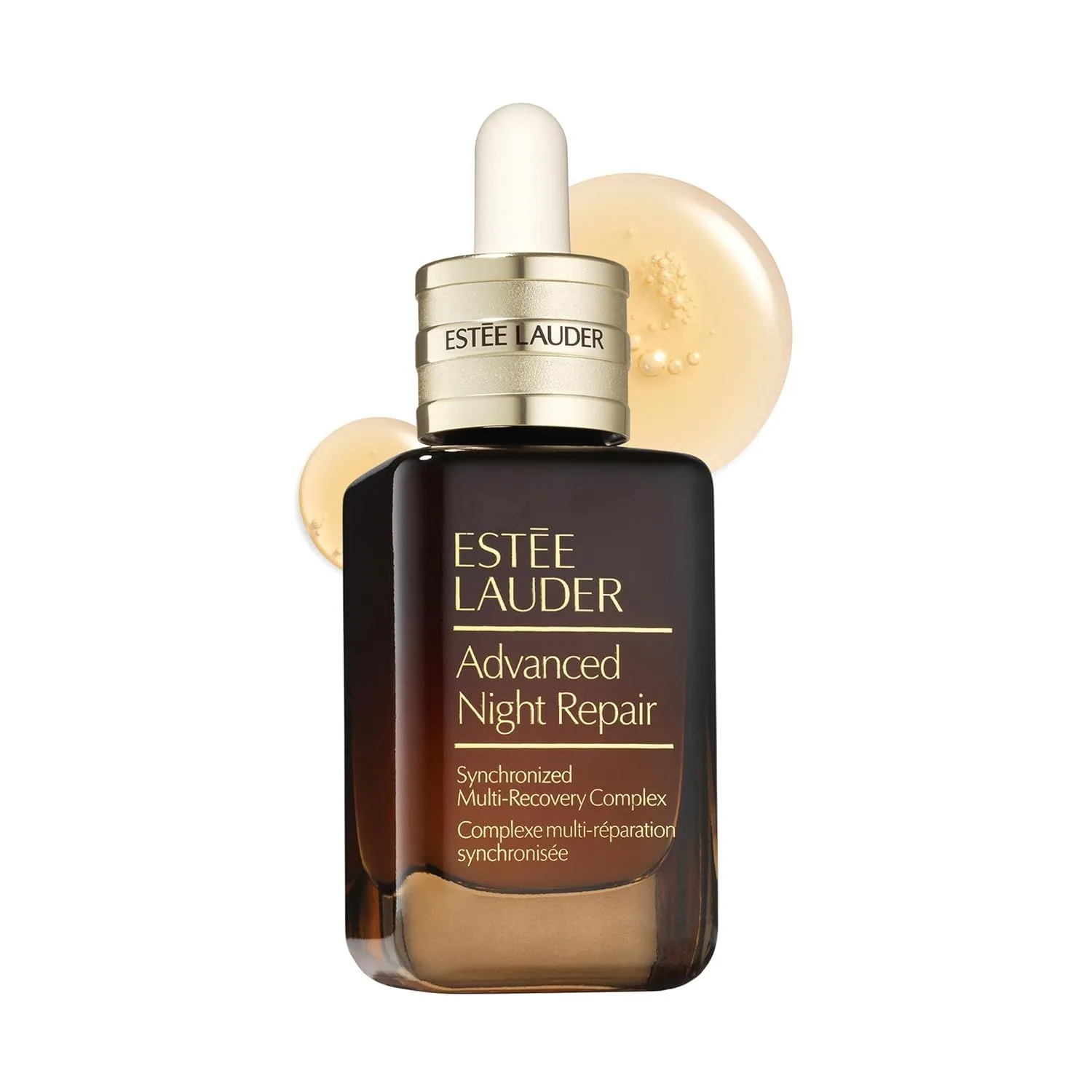
Best overall anti-aging serum — 50+ years of proven formulation science
Get Our Top 3 Picks
Get our top 3 picks for your budget — one email, then only updates.
Only when something changes. Unsubscribe anytime.
Ready to Buy? Start Here
Based on this guide, our #1 recommendation:
Estée Lauder Night Repair Best overnight repair and radiance serum Read Full Review →