ELEMIS Pro-Collagen Cream vs Tatcha Dewy Skin Cream: Which Is Better in 2026?
British marine biotechnology vs Japanese botanical heritage. ELEMIS built a gel-cream around Mediterranean algae and packed in SPF 30 — a moisturizer that eliminates your sunscreen step entirely. Tatcha engineered a rich cream around Japanese purple rice and Okinawan algae for the "glass skin" dewy finish that dry-skinned beauty lovers chase. ELEMIS is modestly more expensive than Tatcha, and that gap comes down to SPF inclusion vs luxury experience.
Quick Verdict: ELEMIS wins for practical daily use — anti-aging + SPF 30 in one step is hard to beat for morning routines. Tatcha wins for hydration depth and sensorial luxury — the dewy finish and Japanese botanical experience are unmatched at this price. Your morning priority (efficiency vs indulgence) decides this.
At a Glance
| Feature | ELEMIS Pro-Collagen Marine Cream SPF 30 | Tatcha The Dewy Skin Cream |
|---|---|---|
| Price Range | $50–$100 | $50–$100 |
| Size | 50ml / 1.7 fl oz | 50ml / 1.7 fl oz |
| Best Skin Type | All skin types | Dry to normal |
| Key Ingredient | Padina Pavonica + SPF 30 | Japanese Purple Rice + Okinawan Algae |
| Active Concentration | Marine botanical complex | Hadasei-3 complex |
| Texture | Gel-cream with SPF | Rich dewy cream |
| Fragrance | Light marine botanical | Light botanical |
| See Availability | See Availability |
SPF Inside vs SPF Not Included: Does Built-In Sun Protection Change the Game?
ELEMIS includes SPF 30 — broad-spectrum UVA/UVB protection built directly into the moisturizer formula. That eliminates an entire product step, an extra purchase, and the white-cast gamble that comes with layering separate sunscreen. For anyone who struggles to wear SPF consistently, having it already in the moisturizer removes the friction. Tatcha has no sun protection. You need a separate SPF product on top, which adds time, cost, and the risk of pilling between layers. For practical morning routines, this single feature gives ELEMIS a substantial advantage.
The SPF question also affects how both products age on the skin throughout a long day. ELEMIS's sunscreen agents create a protective film that stays intact under typical indoor conditions for 6-8 hours — adequate for an office day without reapplication. Tatcha's lack of SPF means your sun protection depends entirely on whatever standalone sunscreen you layer over it, and that additional layer introduces variables: texture conflicts, potential pilling around the nose and chin, and the cumulative heaviness of two cream-weight products sitting on the same skin.
During summer months especially, the single-product simplicity of ELEMIS pulls further ahead on practicality.
The "Glass Skin" Finish: Can ELEMIS Compete with Tatcha's Dewiness?
Tatcha owns this category. The Japanese purple rice and Okinawan algae blend delivers a dewy, lit-from-within finish that dry-skinned users describe as "glass skin" — luminous without looking oily. ELEMIS absorbs to a more matte, natural finish — beautiful in its own way, but not dewy. If your goal is moisturized radiance that people can actually see, Tatcha's finish is the more dramatic result. ELEMIS looks like well-hydrated skin. Tatcha looks like your skin is glowing.
Marine Algae Anti-Aging vs Japanese Botanical Hydration
ELEMIS backs its anti-wrinkle claims with Padina Pavonica — a Mediterranean algae with clinical trial data showing measurable wrinkle reduction. Chlorella and Ginkgo Biloba add antioxidant protection. The formula is designed to actively combat wrinkles, not just hydrate. Tatcha's Hadasei-3 complex hydrates and plumps, which visually softens fine lines through moisture expansion rather than structural repair. Both improve how skin looks. ELEMIS's approach targets the wrinkle itself; Tatcha's approach masks the wrinkle with hydration. For long-term anti-aging, ELEMIS has the deeper mechanism. See our best luxury moisturizers ranked for how both perform against the wider field.
The distinction matters most for buyers over 35, when collagen production drops measurably and hydration alone stops compensating for structural skin changes. Padina Pavonica's published data shows wrinkle depth reduction after 28 days of consistent use — a timeline that aligns with one full skin cell turnover cycle. Tatcha's plumping effect is immediate but temporary: skip a day or two, and the fine lines return to their pre-hydration state. ELEMIS aims for cumulative improvement. Tatcha delivers instant visual results. Both are valid strategies, but they serve different timelines and different expectations about what a moisturizer should accomplish.
The Morning Application Experience
Tatcha melts on contact. The cream transforms from rich to absorbed in seconds, leaving skin that feels cushioned and nourished. Applying it feels like a ritual — the texture, the subtle botanical scent, the visible dewiness. ELEMIS absorbs well for an SPF product — no white cast, minimal greasiness — but it feels like applying a sophisticated sunscreen-moisturizer. Functional. Clean. Not particularly luxurious. If your morning skincare is a moment of self-care, Tatcha makes it special. If your morning skincare is a task to complete efficiently, ELEMIS gets you out the door faster.
Skin Type Compatibility: Who Gets Left Out?
ELEMIS works across all skin types — the gel-cream texture is light enough for oily skin, hydrating enough for dry, and the SPF benefits everyone. Tatcha is explicitly designed for dry to normal skin. Oily or combination types often find the dewiness reads as excess shine, especially in warm weather. ELEMIS is the more adaptable choice. Tatcha is the specialist for dry skin that craves visible hydration.
Ingredient Philosophy: Marine Biotechnology vs Japanese Botanical Heritage
ELEMIS represents British marine biotechnology — a science-forward approach that identifies specific algae species (Padina Pavonica, Chlorella) with documented bioactive compounds and formulates around published research data. The brand's ingredient selection is driven by clinical evidence: what has been shown to work in controlled studies. This appeals to data-driven skincare buyers who want to see the research behind the claims.
Tatcha represents Japanese botanical heritage — the Hadasei-3 complex (rice, algae, green tea) draws on centuries of Japanese beauty tradition. The ingredients are chosen for their cultural significance and holistic skin benefits rather than isolated clinical trial data. Japanese purple rice is a traditional ingredient used in Okinawan beauty rituals; Tatcha modernized the delivery vehicle while preserving the botanical philosophy. This appeals to buyers who value tradition, ritual, and the sensorial experience alongside efficacy.
Nighttime Use: Can Either Replace a Night Cream?
Tatcha works well as a standalone night cream for dry skin. The rich texture and hyaluronic acid provide overnight hydration without needing an additional layer. ELEMIS Marine Cream's SPF 30 makes it a daytime product — SPF in a night cream is wasted (no UV exposure during sleep) and the SPF chemicals can be mildly comedogenic with 8+ hours of contact time. If you want one cream for both day and night, Tatcha is the more versatile option. ELEMIS is a dedicated morning moisturizer that requires a separate night cream. Tatcha can serve double duty, saving you a product and a step in your evening routine.
How Climate Affects This Decision
In humid climates (tropical, coastal summers), ELEMIS's lighter gel-cream texture prevents the heavy, congested feeling that rich creams cause when humidity is already providing environmental moisture. The SPF is also more critical in high-UV environments. In dry or cold climates (continental winters, arid regions), Tatcha's richer texture and deeper hydration counteract the moisture-stripping effects of dry air — see our luxury dry skin picks for more options. The dewiness that feels excessive in Miami humidity is exactly right in Denver winter. Your climate may make this decision for you.
Altitude adds another variable that most comparisons overlook. At higher elevations — Denver, Salt Lake City, Bogotá — UV intensity increases roughly 10-12% per 1,000 meters of elevation gain, and ambient humidity drops. That combination favors ELEMIS in summer (stronger UV demands built-in SPF) and Tatcha in winter (dry mountain air strips moisture faster than sea-level climates). Coastal dwellers face a different tradeoff: salt air and wind exposure accelerate surface dehydration, which gives Tatcha's richer barrier an edge, but the reflected UV off water makes ELEMIS's SPF more practical for beach-adjacent routines. Geography doesn't just influence comfort — it shifts which product delivers more measurable skin benefit.
Who Should Get Which?
Get ELEMIS Pro-Collagen Cream If...
- Built-in SPF 30 appeals to you — one fewer product in your morning routine
- Anti-wrinkle clinical efficacy matters more to you than a luxury application feel
- Your skin is oily, combination, or normal — you need hydration that works across skin types
- You value practical efficiency in your skincare over sensorial indulgence
- You live in a warm or humid climate where lighter textures are essential
Get Tatcha Dewy Skin Cream If...
- You have dry to normal skin and crave the "glass skin" dewy finish
- The daily application experience matters — skincare as a ritual, not a chore
- You already have a separate SPF you love and do not need it in your moisturizer
- Japanese beauty philosophy and botanical ingredients resonate with you
- You want a moisturizer that can serve as both morning and nighttime cream
Frequently Asked Questions
Which moisturizer is better for oily skin?
ELEMIS Pro-Collagen Marine Cream. Its gel-cream texture absorbs lighter than Tatcha's rich cream, and the built-in SPF 30 means one fewer product on oily skin. Tatcha's dewiness can read as shine on oily complexions.
Can I use Tatcha Dewy Skin Cream in the morning?
Yes, but you will need SPF on top. Tatcha does not include sun protection. ELEMIS has SPF 30 built in, making it the more practical morning choice. Tatcha works well as a morning moisturizer for dry skin types who plan to add separate SPF.
Which one actually reduces wrinkles?
ELEMIS makes the stronger anti-wrinkle claim backed by clinical trials. Padina Pavonica algae extract has published data on wrinkle reduction. Tatcha's Japanese botanicals hydrate and plump — which visually softens fine lines — but the mechanism is hydration rather than collagen stimulation.
Are both of these fragrance-free?
Neither is fully fragrance-free. ELEMIS has a light marine botanical scent from its seaweed ingredients. Tatcha has a subtle botanical fragrance from Japanese plant extracts. Both are mild, but strict fragrance-free seekers should note that neither qualifies.
Which jar lasts longer?
Both are 50ml / 1.7 fl oz — identical volume. At typical daily use (morning application), each lasts approximately 2-3 months. ELEMIS may last slightly longer if it is your only morning moisturizer (SPF included), while Tatcha users may apply more liberally for the dewy finish.
Jar Design and Hygiene
Both products use jar packaging — and both inherit the hygiene concerns that come with it. Every time you dip fingers into a jar, you introduce bacteria and oxidize the surface layer of product. Neither ELEMIS nor Tatcha provide a spatula in the box (though Tatcha sells one separately). The practical solution: use a clean spatula or spoon to scoop product rather than dipping fingers directly. This is especially relevant for ELEMIS — its SPF-containing formula may degrade unevenly when repeatedly exposed to finger contact and air.
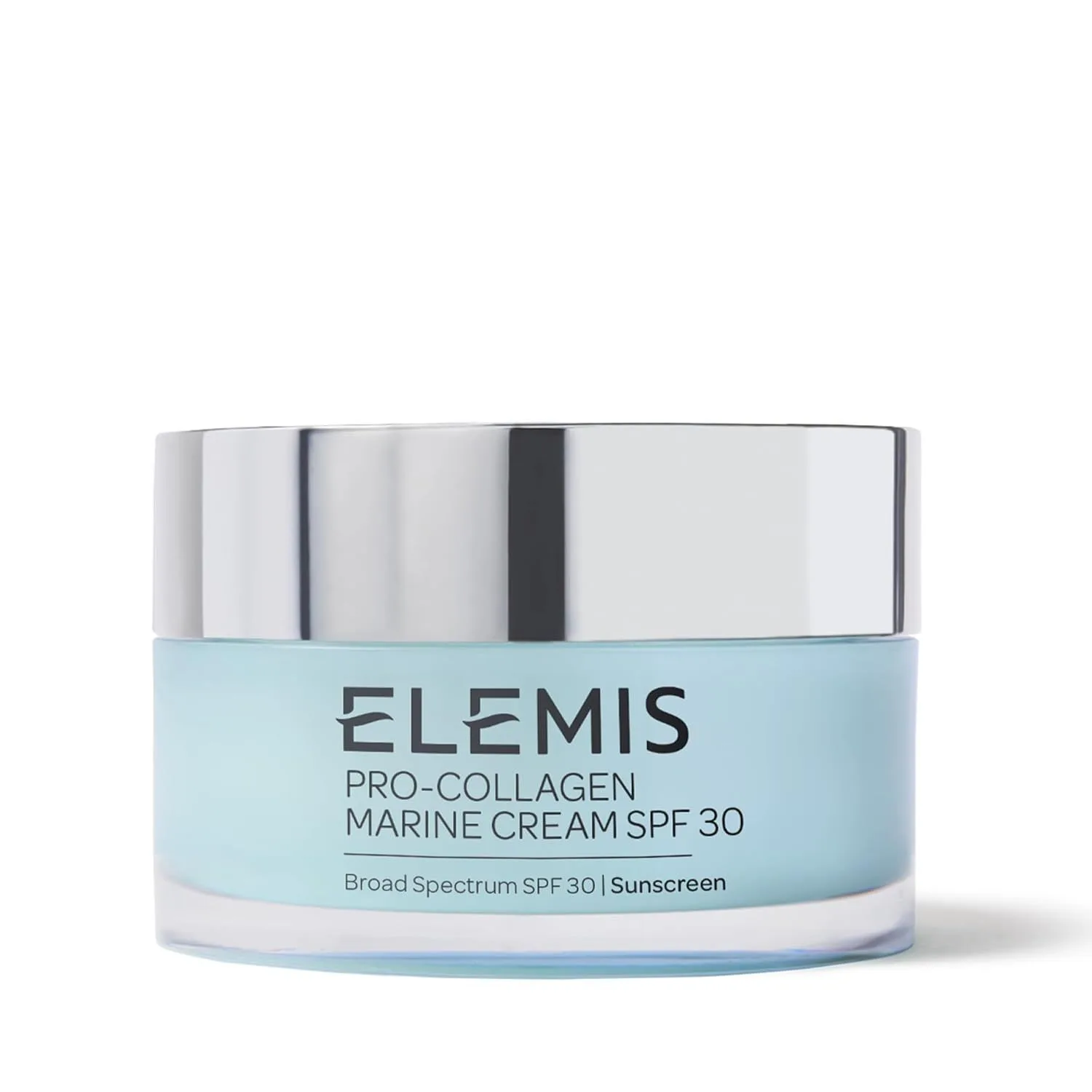
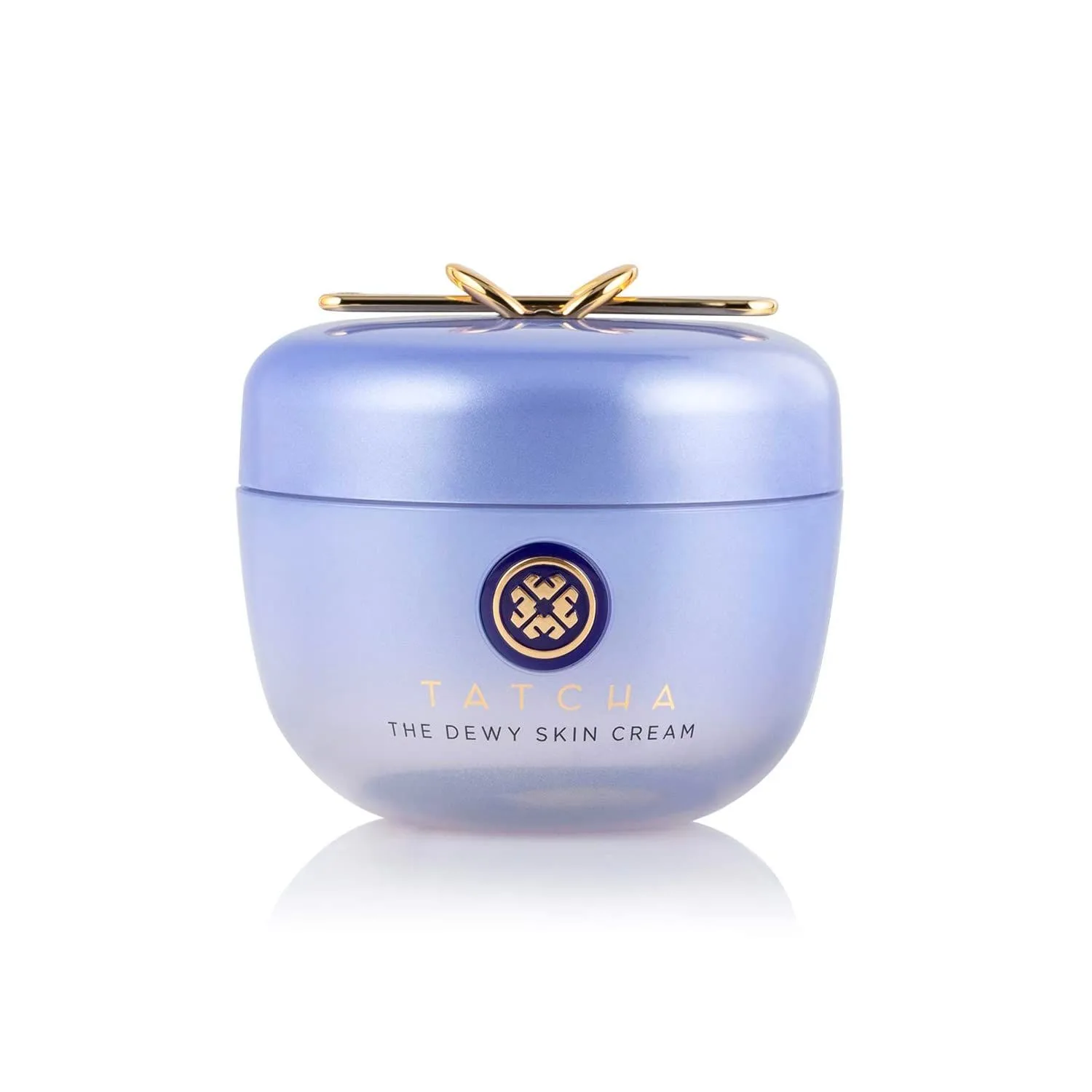
The jar design itself reflects each brand's identity. ELEMIS uses a heavyweight frosted glass jar with a matte silver lid — clinical, clean, modern. Tatcha's violet glass jar with gold accents draws from traditional Japanese apothecary aesthetics. Both feel premium in the hand. Neither wobbles on a wet countertop. But the aesthetic difference signals a broader philosophical split: ELEMIS positions itself as results-driven skincare that happens to look good, while Tatcha positions the visual and tactile experience as part of the product's value. Where you store your skincare — medicine cabinet vs displayed on a vanity — may quietly influence which jar you prefer living with.
For travel, both jars are heavy glass — not ideal for checked luggage where pressure changes can cause lids to loosen. Decant into a travel container for trips, or purchase travel-size versions if available. The full-size 50ml jars are meant for your bathroom shelf, not your carry-on.
Value Over Three Months
At typical daily use (morning application, pea-to-almond-sized amount), both 50ml jars last approximately 2-3 months. ELEMIS's value proposition includes the embedded SPF — factor in the cost of the standalone SPF 30 you would otherwise need, and ELEMIS saves you a separate purchase. Tatcha requires a separate SPF purchase on top, which adds to the total morning routine cost. Over three months, ELEMIS's all-in-one approach is the more economical option for someone who would otherwise buy both a moisturizer and a daily sunscreen.
Sensitive Skin: A Word on Fragrance
Neither product qualifies as fragrance-free. ELEMIS has a noticeable marine botanical scent — fresh and clean, but present. The scent comes from the seaweed and algae extracts that are central to the formula, not from added synthetic fragrance. Tatcha has a softer botanical scent from its Japanese plant extracts. Both fragrances are mild enough that most users find them pleasant rather than irritating. But for anyone with confirmed fragrance sensitivity, eczema, or rosacea that flares in response to scented products, neither ELEMIS nor Tatcha is the safest choice. CeraVe, La Roche-Posay, or Augustinus Bader's fragrance-free line would be more appropriate for reactive skin types.
Patch testing matters here more than ingredient lists suggest. Both formulas contain botanical extracts that can trigger contact dermatitis in a small percentage of users — even those without a prior fragrance sensitivity history. Apply a small amount behind the ear or on the inner forearm for 48 hours before committing to full-face use. ELEMIS's marine extracts and Tatcha's rice ferment are both low-risk ingredients by industry standards, but "low-risk" is a population average, not an individual guarantee. If you have a history of reactions to algae-derived ingredients or fermented botanical compounds, request samples before purchasing a full jar at this price tier.
How Each Performs Under Makeup
ELEMIS's gel-cream texture creates a smooth, slightly matte base that foundation adheres to cleanly. The built-in SPF means no additional sunscreen layer between moisturizer and makeup — one fewer product that can cause pilling or texture interference. Primer is optional over ELEMIS because the finish is already smooth enough for most foundations. Tatcha's dewy finish creates a luminous base that works well with "skin-like" or radiant foundations. But matte or full-coverage foundations can slide on Tatcha's dewy surface during the first hour, requiring a setting powder or spray. If your makeup routine is minimal (tinted moisturizer, concealer, blush), Tatcha's glow shows through beautifully. If your makeup is full coverage, ELEMIS provides the more stable canvas.
What Users Report After Switching
Users who switch from Tatcha to ELEMIS commonly report appreciating the SPF convenience and the lighter texture, but missing the sensorial pleasure of Tatcha's application ritual. The glass-skin finish is the most-cited thing people miss — ELEMIS simply does not produce the same visible dewiness. Several reviewers describe ELEMIS as "the practical upgrade" — better for their routine, but less enjoyable.
A recurring theme across Amazon reviews and skincare forums: buyers who initially chose ELEMIS for rational reasons (SPF, anti-aging data, skin type compatibility) sometimes drift to Tatcha after sampling it elsewhere — at a Sephora counter, from a friend's bathroom, in a subscription box. The reverse switch is less emotional and more logistical: Tatcha users who add a baby or a longer commute to their mornings start prioritizing speed, and ELEMIS's one-step SPF coverage becomes the deciding factor. Life stage quietly reshapes which product fits better, independent of either formula's quality.
Users who switch from ELEMIS to Tatcha report the opposite: the dewy finish feels like a luxury they did not know they wanted, but the loss of built-in SPF creates friction. Adding a separate sunscreen adds time, cost, and the risk of pilling between layers. The most common compromise: Tatcha on weekends and evenings (when SPF is not needed), ELEMIS on weekday mornings (when efficiency matters). Both products store well, so keeping two jars is not a stability concern.
Reapplication and Touch-Ups Throughout the Day
ELEMIS's SPF 30 provides morning protection, but dermatologists recommend reapplying sunscreen every 2 hours of direct sun exposure. A single morning application of ELEMIS covers indoor workday protection adequately — UVA through windows is lower intensity than direct outdoor exposure. For outdoor days, reapplication over makeup is easiest with a powder SPF or SPF setting spray rather than reapplying cream. Tatcha users face a different consideration: the dewy finish can intensify throughout the day as the skin's natural oils mix with the cream's hydrating ingredients. Blotting papers at midday reduce shine while preserving the underlying hydration. A quick press with a clean tissue removes surface oil without disturbing the moisturizer layer underneath.
Final Verdict
ELEMIS beats Tatcha on everyday practicality — SPF 30 inclusion alone makes it the clear winner for anyone who wants anti-aging and sun protection in one step. Tatcha wins on hydration depth and the dewy "glass skin" finish that no other moisturizer in this price range replicates. ELEMIS is the smarter daily moisturizer — SPF 30 inclusion, clinical anti-wrinkle ingredients, and a texture that works across all skin types. Tatcha is the more indulgent moisturizer — deeper hydration, a visible dewy finish, and an application experience that makes mornings feel special. Both sit at mid-range price points and both are worth their investment. The practical choice is ELEMIS. The pleasure choice is Tatcha. Our dry skin luxury skincare guide covers more options if neither fits perfectly. Only you know which your morning needs more.
Track Both Products
We'll email you if either price drops or availability changes.
Only when something changes. Unsubscribe anytime.