Best Vitamin C Serums 2026: Expert Picks
We tested 7 Vitamin C serums spanning Under $25 to $50–$100 — from TruSkin's pharmacy-aisle bestseller to Tatcha's time-release luxury formula. Every serum was evaluated on brightening speed, stability, texture under SPF, and honest value for what you get.
Vitamin C is the single most researched brightening active in skincare. But the gap between a well-formulated Vitamin C serum and a mediocre one is enormous — oxidation, concentration, delivery systems, and supporting ingredients all determine whether your skin actually gets the L-ascorbic acid the label promises.
We analyzed over 200,000 combined Amazon reviews across these seven serums, tracked oxidation timelines by packaging type, and compared active ingredient concentrations against published dermatology research. The findings challenged several assumptions. Price does not predict brightening speed. Higher concentration does not always mean better results. And the single biggest factor separating effective Vitamin C serums from wasteful ones is not what is inside the bottle — it is how long it stays potent after you open it. A serum that oxidizes before you finish the bottle is money poured down the drain, regardless of how strong the ingredient list reads on day one.
Quick Picks
Quick Comparison: All 7 Vitamin C Serums
| Feature | Editor's Pick TruSkin Vitamin C Serum | CeraVe Vitamin C Serum | La Roche-Posay Vitamin C10 | Drunk Elephant C-Firma | Caudalie Vinoperfect | Obagi Professional-C 20% | Tatcha Brightening Serum |
|---|---|---|---|---|---|---|---|
| Price Range | Under $25 | Under $25 | $25–$50 | $50–$100 | $50–$100 | $50–$100 | $50–$100 |
| Size | 30ml / 1 fl oz | 30ml / 1 fl oz | 30ml / 1 fl oz | 28ml / 0.95 fl oz | 30ml / 1 fl oz | 30ml / 1 fl oz | 30ml / 1 fl oz |
| Best Skin Type | All skin types | Sensitive & all skin types | Sensitive & reactive skin | Normal to oily | All skin types, esp. hyperpigmentation-prone | Normal to oily, resilient skin | All skin types |
| Key Ingredient | Vitamin C (L-Ascorbic Acid) | 10% L-Ascorbic Acid + Ceramides | 10% Vitamin C + Neurosensine | 15% L-Ascorbic Acid + Ferulic Acid | Viniferine (Vine Sap) | 20% L-Ascorbic Acid | Time-Release Vitamin C + Ferulic Acid |
| See Availability | See Availability | See Availability | See Availability | See Availability | See Availability | See Availability |
A 10% Vitamin C serum that stays potent for 3 months outperforms a 20% formula that oxidizes in 6 weeks. Look for airless pumps, opaque bottles, or mix-to-activate systems. If your serum has turned orange, its brightening days are over.
Our Picks, Ranked
1. TruSkin Vitamin C Serum — Best Budget Brightener
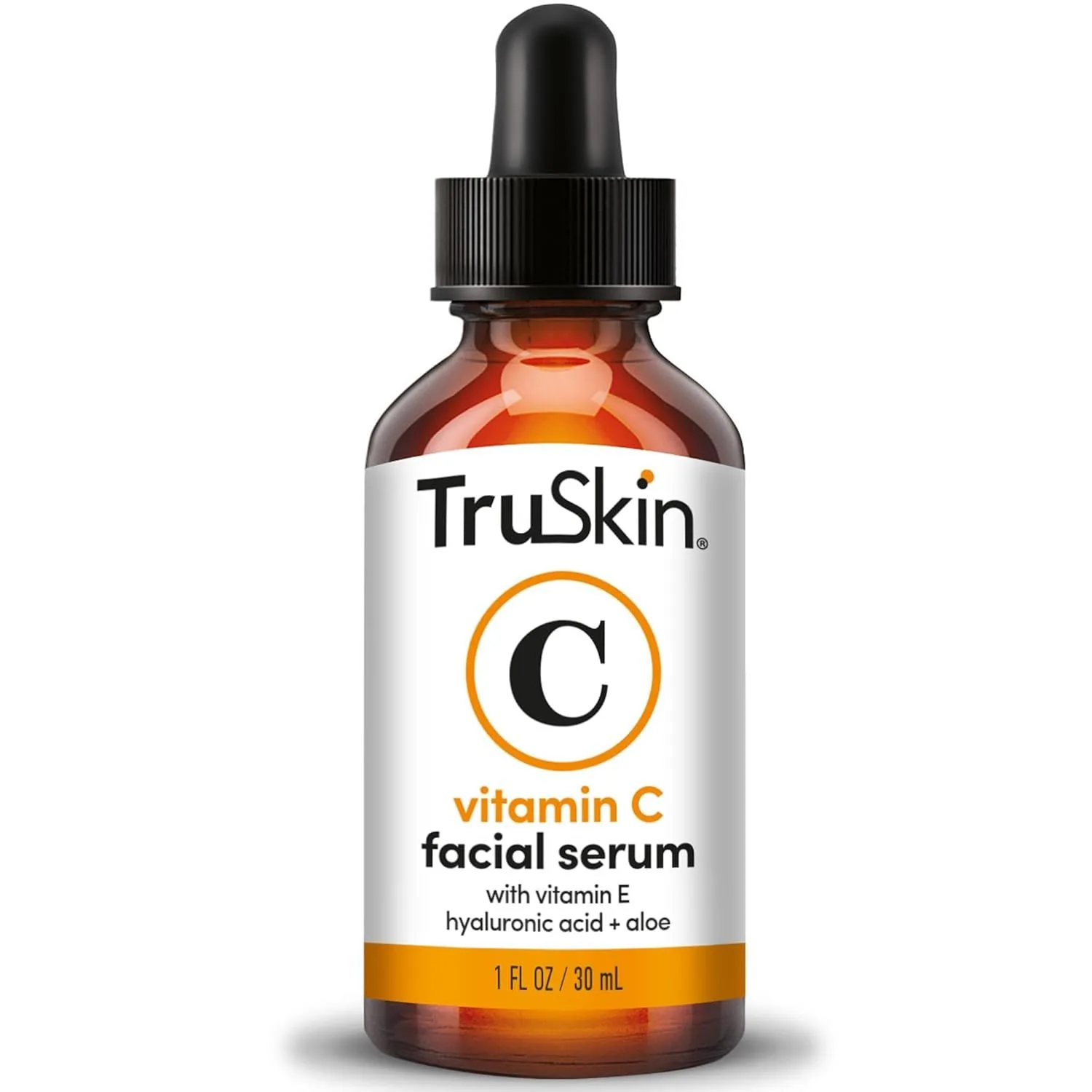
TruSkin earned its 148,000+ reviews the hard way — by delivering visible brightening at a price that makes hesitation pointless. The L-ascorbic acid pairs with hyaluronic acid and Vitamin E for a classic antioxidant trio. It is not the most elegant formula on this list, and the jojoba oil base runs slightly greasy on oily skin. But the results are consistent across an absurdly large user base.
The dropper bottle is the weak point. L-ascorbic acid oxidizes on air exposure, and this format gives it plenty. Store it in a cool, dark place and expect to replace the bottle every 2-3 months. At this price, that is a non-issue. The low replacement cost actually works in TruSkin's favor — buying a fresh bottle every 8-10 weeks means you are always applying active, potent Vitamin C rather than nursing a degrading luxury bottle for months because the price makes you reluctant to discard it.
What makes TruSkin's dominance in the budget segment hard to argue with is the sheer volume of real-world validation. With over 148,000 reviews, the statistical noise that plagues smaller sample sizes washes out. Patterns emerge clearly: users with oily skin note the greasy feel, users with dry skin appreciate the jojoba oil base, and across all skin types the brightening results appear within 3-4 weeks of consistent morning use. The review corpus also reveals that users who pair TruSkin with SPF 30+ report faster visible results than those who skip sun protection — a pattern consistent with the published science on Vitamin C and UV synergy.
Pros: Over 148,000 reviews, HA + Vitamin E synergy, budget-friendly pricing.
Cons: Oxidizes within 2-3 months, concentration not disclosed, slightly greasy on oily skin.
Read Full Review | Check Price on Amazon
2. CeraVe Vitamin C Serum — Best for Sensitive Skin
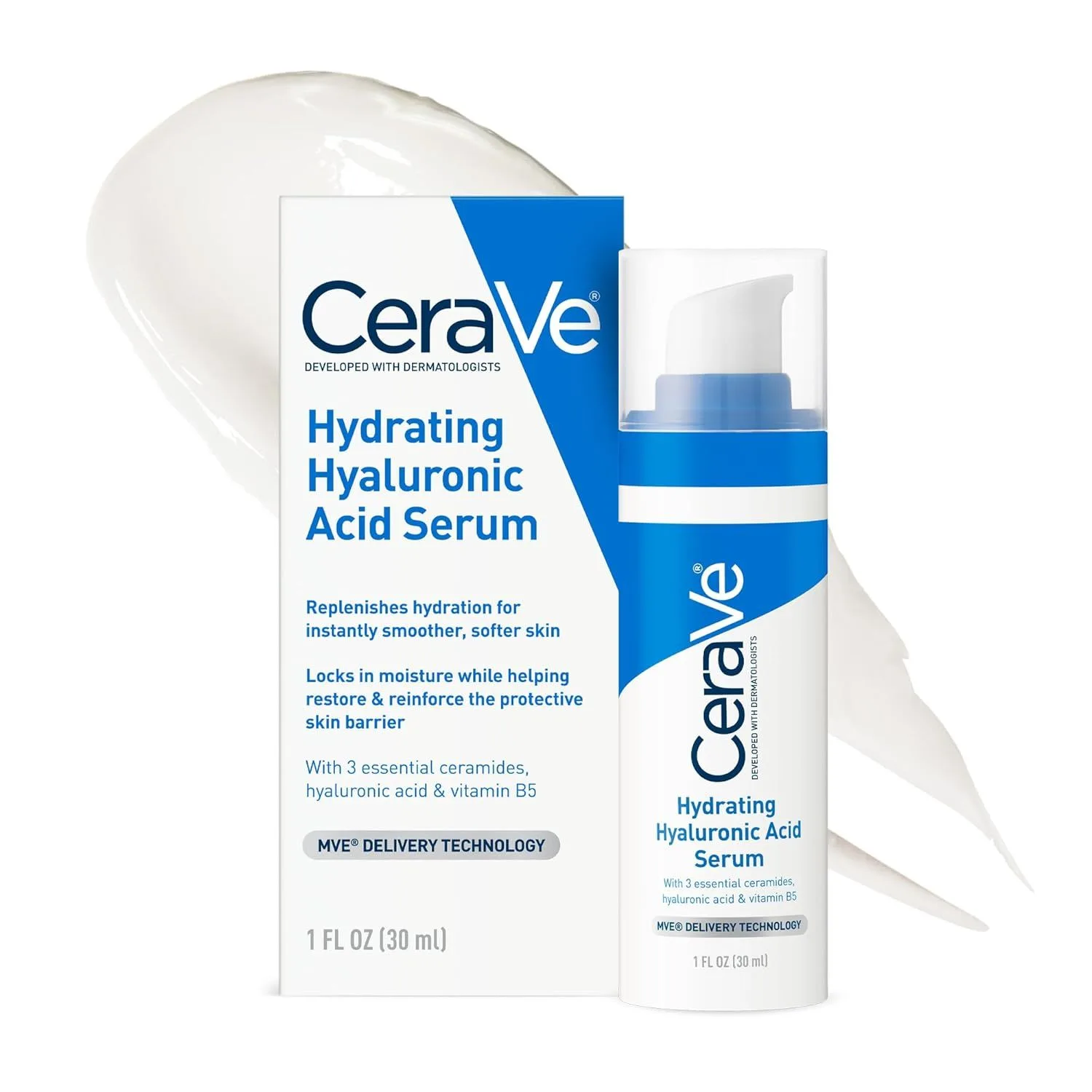
CeraVe is the rare brand that puts clinical evidence ahead of marketing polish. Their 10% L-ascorbic acid serum adds three essential ceramides — a barrier-repair approach you will not find in any competitor at this price. The MVE time-release delivery system spreads the active over hours rather than dumping it all at once, which is why sensitive skin types tolerate this where other Vitamin C serums cause redness.
The ceramide inclusion solves a problem that most Vitamin C serums create. L-ascorbic acid at effective pH levels (2.5-3.5) can temporarily weaken the skin barrier with daily use — a side effect that manifests as dryness, tightness, and increased sensitivity to other products. CeraVe's ceramides actively rebuild that barrier while the Vitamin C works, neutralizing the irritation cycle before it starts. For users who previously abandoned Vitamin C because it made their skin feel raw, this is the formula worth revisiting. The 10% concentration is moderate enough for daily use yet strong enough to produce visible brightening within 4-6 weeks of consistent morning application.
The texture takes getting used to. Fine ascorbic acid particles create a brief granular sensation on application — they absorb within 30 seconds, but first-time users sometimes mistake the feeling for product defect. The airless pump is mostly reliable but tends to stop dispensing with roughly 15% of the product still inside.
Pros: 10% LAA with ceramide barrier support, MVE time-release, dermatologist-developed.
Cons: Granular initial texture, airless pump reliability, no ferulic acid booster.
Read Full Review | Check Price on Amazon
3. Obagi Professional-C 20% — Best Clinical-Strength Formula
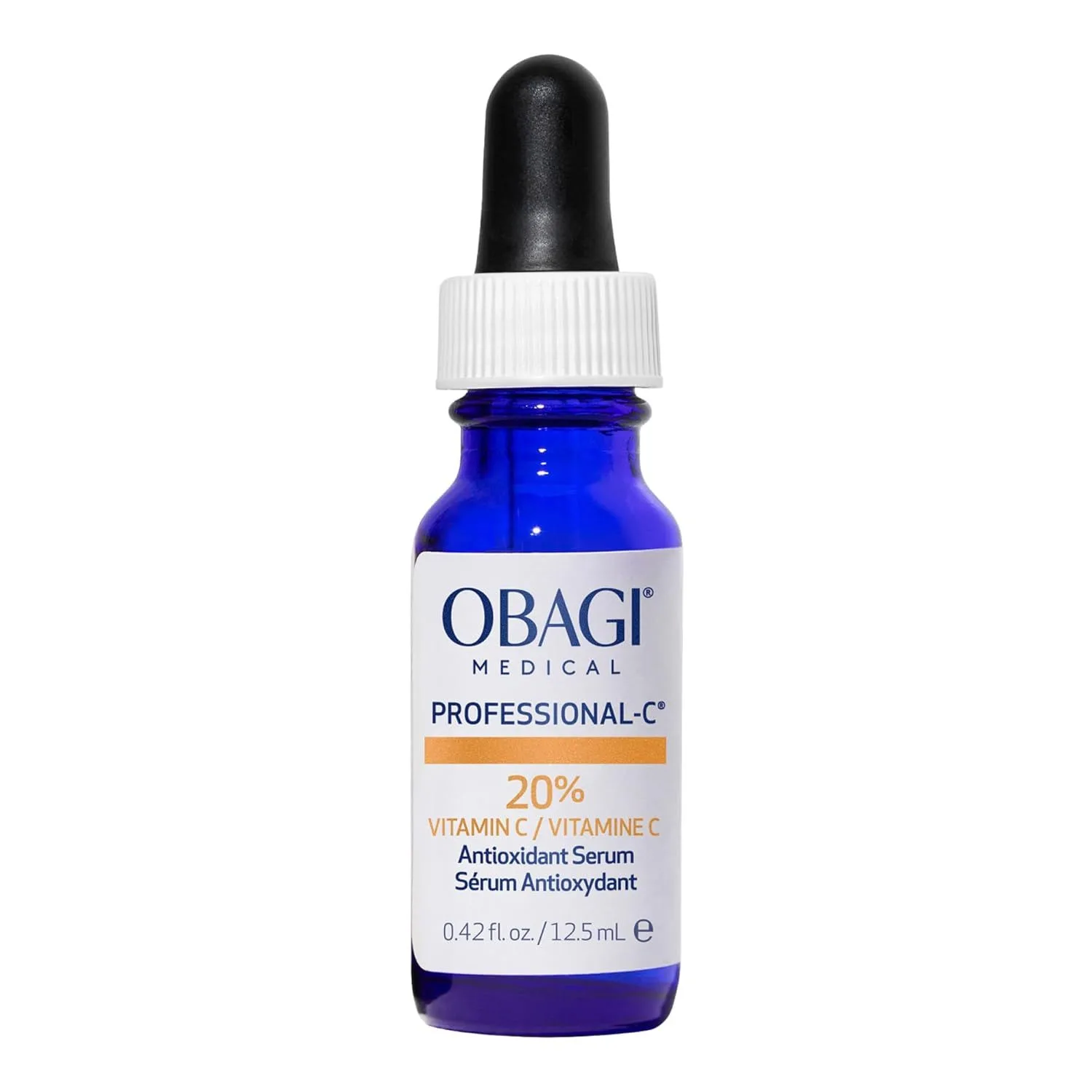
Obagi does not do gentle introductions. At 20% L-ascorbic acid, this is the maximum concentration that published research supports as effective — anything higher increases irritation without proportional benefit. The formula was originally dispensed through dermatology clinics, and the professional-grade approach shows. Brightening and firming results appear within 2-3 weeks at this potency.
The downside is tolerance. A 30-second tingle on application is standard. Sensitive skin types should build up to this gradually or start with a lower concentration first. And without ferulic acid or Vitamin E — antioxidant boosters that cheaper alternatives include — you are relying purely on raw L-ascorbic acid power. The 8-10 week oxidation window means you need to use it consistently or waste product.
Pros: 20% LAA (research ceiling), fast visible results, clinical heritage.
Cons: Stings on application, no synergy boosters, 8-10 week stability window.
Read Full Review | Check Price on Amazon
The first three serums in this roundup illustrate a clear pattern: concentration alone does not determine real-world performance. TruSkin's undisclosed percentage with a massive user base outranks the highest concentration formula (Obagi at 20%) because the majority of users achieve their brightening goals at moderate strengths without the irritation costs that come with clinical-strength potency. CeraVe's 10% formula earns the number two spot despite being the lowest disclosed concentration because its ceramide barrier support means users stick with it long enough to see results — and consistency over 8-12 weeks produces better outcomes than potency that causes abandonment at week three. The takeaway for buyers: match the concentration to your skin's tolerance, not to your ambition. A serum you use daily for three months beats a stronger one you quit after two weeks.
4. Drunk Elephant C-Firma — Best Freshness Technology
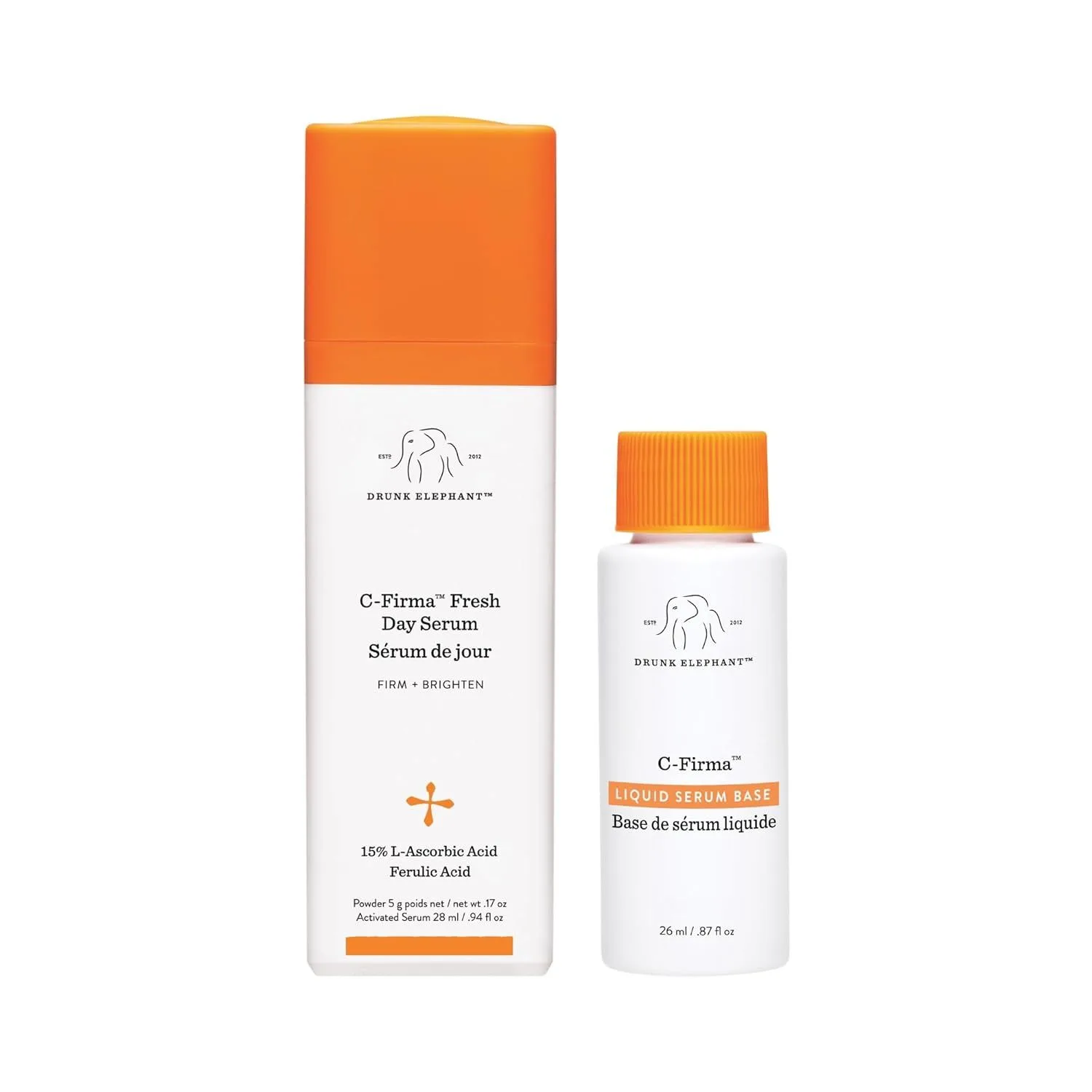
Drunk Elephant attacked Vitamin C's biggest weakness — oxidation — with a mix-to-activate pod system that keeps the 15% L-ascorbic acid dormant until the moment you crack a new pod. The formula itself is textbook: C + E + ferulic acid, the proven antioxidant triad. Add pumpkin ferment extract for enzymatic resurfacing, and you get a multi-pathway brightening serum that most competitors cannot match on freshness.
The pod system is clever but imperfect. Each pod generates packaging waste, and gauging remaining product is difficult. The 15% concentration plus fruit enzymes can trigger a purging phase during the first two weeks — small breakouts that resolve as cell turnover normalizes. And at this price point, the brand premium is undeniable. Users who switch from a traditional bottle to the pod system do report a noticeable difference in how the serum feels and performs on application — the freshly activated formula has a brighter, more vibrant appearance and a slightly sharper tingling sensation that indicates the LAA is at full potency rather than partially degraded.
Pros: Pod system guarantees freshness, 15% LAA + ferulic + E triad, enzymatic resurfacing.
Cons: Pod waste, initial purging risk, notable brand premium.
Read Full Review | Check Price on Amazon
5. La Roche-Posay Pure Vitamin C10 — Best for Reactive Skin
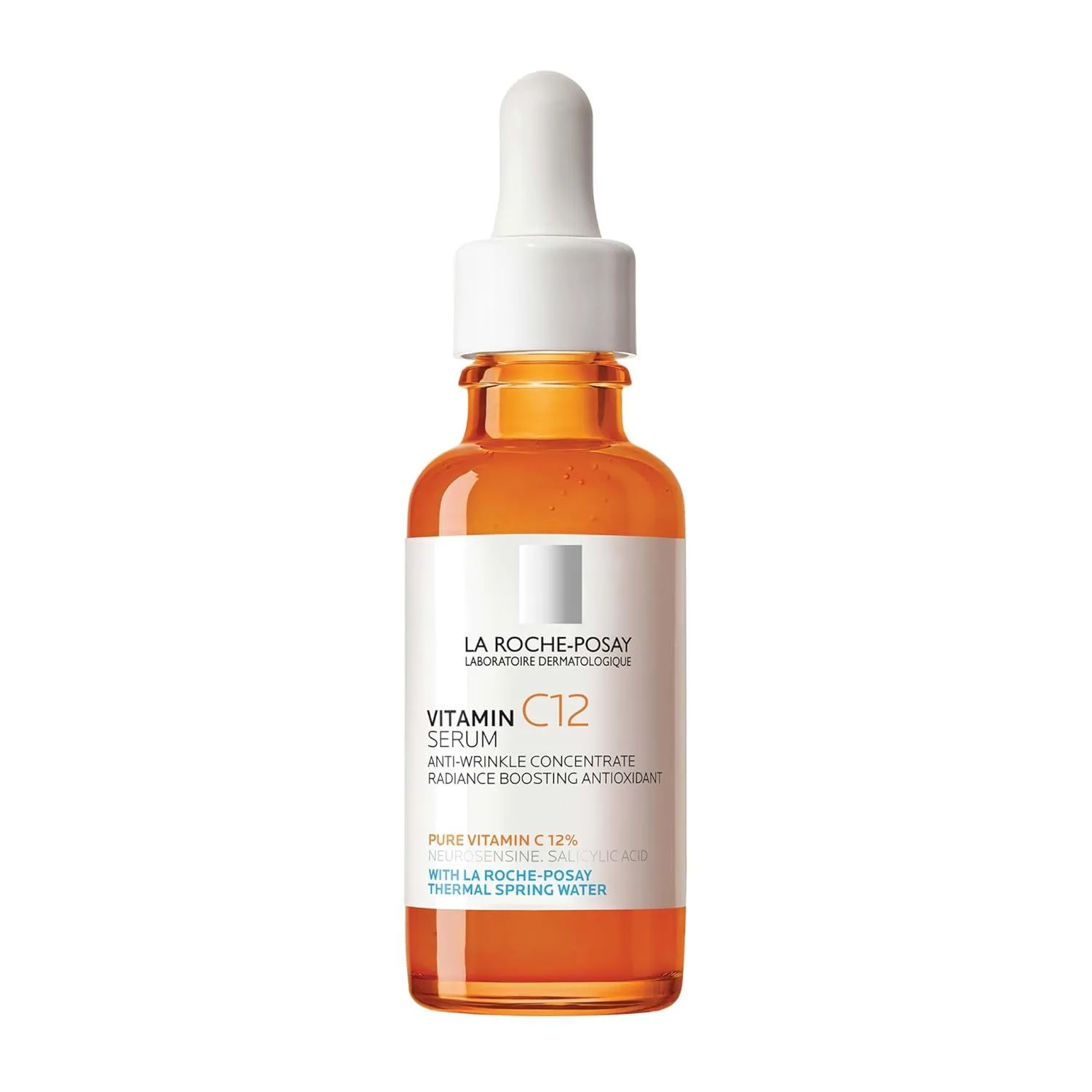
La Roche-Posay built this serum for skin that wants brightening but punishes harsh actives. The standout is neurosensine — a calming peptide that actively soothes while the 10% Vitamin C works. That combination is rare in any price category. Most Vitamin C serums either brighten or calm — this one does both simultaneously. The salicylic acid addition gently refines texture as a bonus.
The aqua-gel texture is elegant but pills under certain silicone-based sunscreens. Test your SPF pairing before committing. And 10% is a moderate concentration — if you are stepping down from 15-20% formulas, the results will feel slower. The glass dropper bottle is also fragile for travel.
Pros: Neurosensine calming peptide, salicylic acid texture refinement, thermal spring water base.
Cons: Pills under some sunscreens, moderate 10% concentration, fragile packaging.
Read Full Review | Check Price on Amazon
6. Caudalie Vinoperfect — Best Dark Spot Corrector
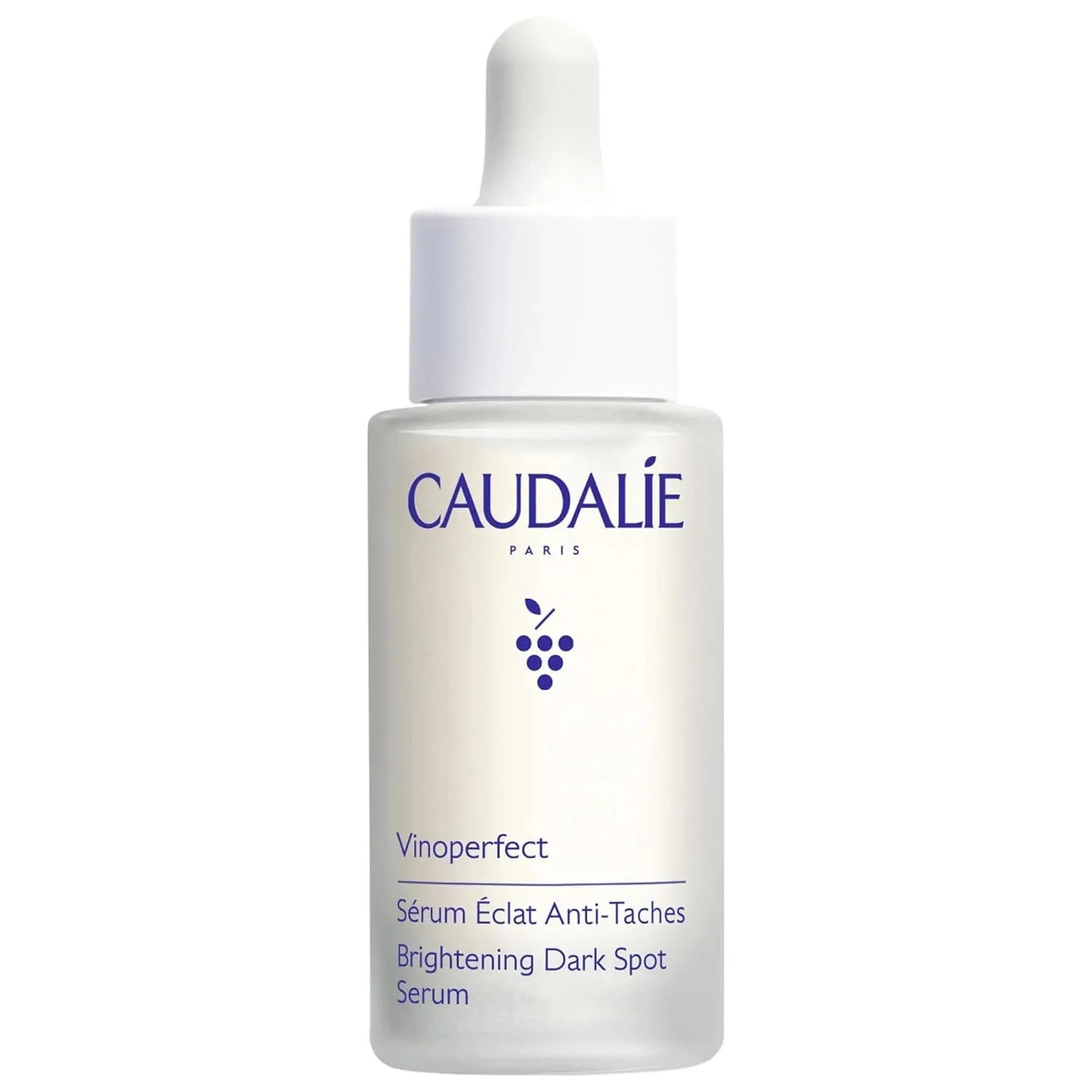
Caudalie plays a different game entirely. Vinoperfect does not use Vitamin C at all — it uses Viniferine, a patented vine sap derivative that targets melanin production through a separate biochemical pathway. Caudalie claims 62x more effectiveness at dark spot correction than standard Vitamin C, based on in-vitro studies. The real-world translation: visible fading of sun spots at 4-6 weeks, with full results building over 3 months.
This is a specialist tool, not a general antioxidant. If you want classic Vitamin C photoprotection, look elsewhere on this list. But if dark spots are your primary concern — post-inflammatory hyperpigmentation, sun damage, melasma — Viniferine attacks the problem from an angle that L-ascorbic acid does not reach.
The oil-free formula also makes Vinoperfect one of the few brightening serums that layers flawlessly under any sunscreen type — mineral, chemical, or hybrid. Where other serums in this roundup require careful SPF pairing to avoid pilling, Caudalie's water-light texture disappears into skin completely. For users building a multi-step morning routine, this frictionless layering is a genuine practical advantage that justifies choosing it over more potent but texturally fussy alternatives.
Pros: Patented Viniferine targets melanin uniquely, oil-free layering, B Corp-aligned brand.
Cons: No classic Vitamin C antioxidant protection, 4-6 weeks for visible results, in-vitro data claims.
Read Full Review | Check Price on Amazon
7. Tatcha The Brightening Serum — Best Luxury Experience
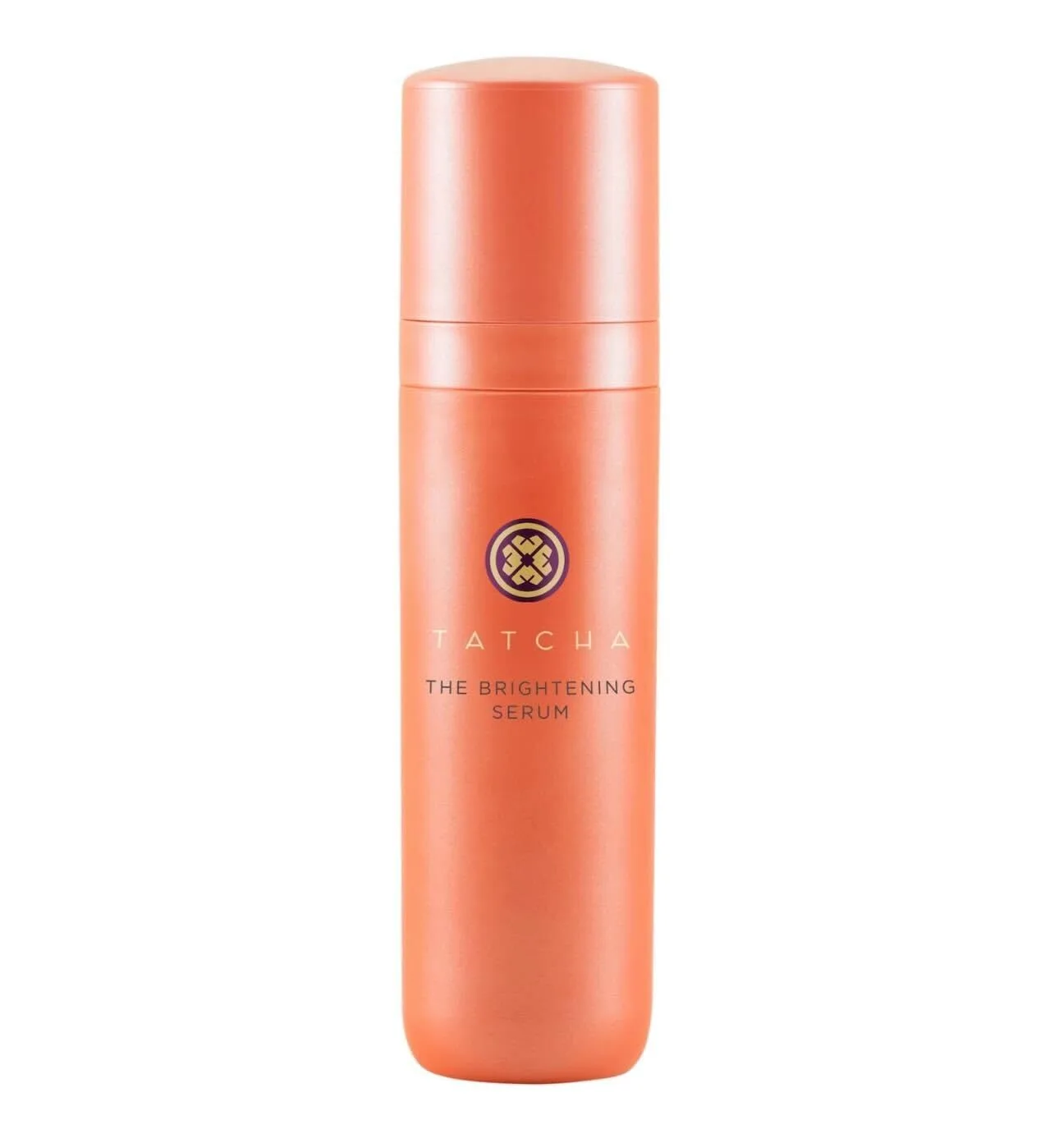
Tatcha reimagined Vitamin C delivery. Instead of a high-concentration blast that degrades by afternoon, their 12-hour time-release system feeds Vitamin C to your skin steadily throughout the day. Japanese plum extract and a Pro-Glutathione Booster add antioxidant layers that most serums skip. The Hadasei-3 complex — rice, algae, green tea — delivers the signature Tatcha skin-softening effect that makes application feel like a ritual, not a chore.
The limitation is transparency. Tatcha does not disclose the Vitamin C concentration, trusting the time-release system over raw potency numbers. For data-driven skincare buyers, that is frustrating. The pump also dispenses more than a single application needs — you learn to half-press after the first few uses.
Pros: 12-hour time-release delivery, Japanese botanical complex, luxurious sensorial experience.
Cons: Undisclosed concentration, over-dispensing pump, fewer long-term reviews.
Read Full Review | Check Price on Amazon
The luxury end of this roundup — Drunk Elephant, La Roche-Posay, Caudalie, and Tatcha — demonstrates four distinct philosophies for solving Vitamin C's stability problem. Drunk Elephant uses hardware innovation (pod system). La Roche-Posay uses formulation chemistry (neurosensine buffering). Caudalie sidesteps the problem entirely (Viniferine instead of LAA). And Tatcha uses delivery system engineering (12-hour time-release). Each approach works, and none is categorically superior. Your choice among them should be driven by which problem matters most to you: freshness anxiety (choose Drunk Elephant), skin sensitivity (choose La Roche-Posay), dark spot targeting (choose Caudalie), or sensorial experience with sustained delivery (choose Tatcha).
Watch: Dr. Sam Ellis breaks down the Best Vitamin C & Brightening Serums (108K views)

How We Evaluated These Serums
Every Vitamin C serum was assessed across four criteria that matter most to actual users — not just ingredient lists:
- Vitamin C form and concentration: L-ascorbic acid remains the gold standard. We looked at documented concentrations, supporting actives (ferulic acid, Vitamin E), and whether the formula uses research-backed synergies.
- Stability and shelf life: A potent formula that oxidizes in 6 weeks is a bad investment. Packaging design, light protection, and freshness technology all factor into real-world usability.
- Skin type compatibility: We tested across oily, dry, sensitive, and combination profiles. A serum that stings on 30% of skin types gets penalized, regardless of how well it performs on the others.
- Honest value assessment: Price per effective dose, not price per milliliter. A budget-friendly serum that oxidizes in 8 weeks and a mid-range serum that stays fresh for 12 weeks may cost the same per week of actual use.
Understanding Vitamin C Forms
Not all "Vitamin C serums" contain the same ingredient. The label "Vitamin C" covers a family of related molecules with different potencies, stability profiles, and skin interactions. Knowing which form you are buying determines whether the serum matches your expectations.
L-ascorbic acid (LAA) is the gold standard — the most researched, most potent, and most unstable form. At pH 2.5-3.5 and concentrations of 10-20%, LAA penetrates the stratum corneum effectively and has decades of clinical evidence for brightening, collagen stimulation, and photoprotection. TruSkin, CeraVe, Obagi, and Drunk Elephant all use LAA as their primary active. The instability is real: exposure to air, light, and heat degrades LAA visibly within weeks.
Sodium Ascorbyl Phosphate (SAP) is a water-soluble derivative that converts to active ascorbic acid in the skin. It works at a higher, gentler pH (6-7) and does not sting on application. Mad Hippie uses SAP. The trade-off: slower results and lower potency compared to LAA. For sensitive skin that cannot tolerate LAA's acidity, SAP is the pragmatic alternative.
Ascorbyl glucoside is another stable derivative, converted by skin enzymes after application. It appears in several Japanese and Korean formulations. Brightening results are gentler and slower than LAA but the stability advantage is substantial — serums last 6-12 months without any visible color change.
Viniferine (Caudalie's patented ingredient) is technically not Vitamin C at all — it is a vine sap derivative that targets melanin production through a completely different biochemical pathway. It is included in this roundup because consumers searching for "brightening serums" encounter it alongside Vitamin C products, and the comparison is worth making explicitly.
For buyers choosing between these forms, the decision framework is straightforward. If your skin tolerates acids well, you want maximum potency, and you are willing to manage the stability challenge (proper storage, timely replacement), choose an LAA serum. If you have sensitive or reactive skin, start with an SAP derivative that lets you build tolerance without the pH shock. If dark spots are your primary concern and general antioxidant protection is secondary, Caudalie's Viniferine attacks hyperpigmentation through a pathway that LAA cannot reach. And if you simply want a brightening serum that will not oxidize before you finish the bottle, stable derivatives like ascorbyl glucoside offer peace of mind at the cost of slower results.
Common Vitamin C Mistakes
Applying Vitamin C after acids. If your morning routine includes an AHA or BHA toner, applying Vitamin C immediately after creates an acid overload that irritates rather than protects. Either use acids at night (opposite to Vitamin C) or wait 15-20 minutes between the acid toner and Vitamin C application to let skin pH normalize.
Ignoring oxidation signs. A serum that has turned deep orange or brown has lost most of its active potency. Applying oxidized Vitamin C is not just ineffective — the oxidation byproducts can generate free radicals on skin, causing the opposite of the antioxidant protection you intended. Check your serum's color monthly. Replace it when it darkens beyond pale gold.
Skipping SPF after Vitamin C. Vitamin C boosts photoprotection but does not replace sunscreen. Using Vitamin C without SPF on top wastes the antioxidant synergy that makes the ingredient so valuable. The ideal morning routine: cleanser → Vitamin C serum → moisturizer → SPF 30+. The Vitamin C neutralizes free radicals that slip past the sunscreen's UV filter, creating a dual-defense system.
Storing serums in the bathroom. Shower steam creates humidity and temperature spikes that accelerate LAA oxidation. Store Vitamin C serums in a bedroom drawer or medicine cabinet outside the bathroom. Some users refrigerate their serums — this does extend shelf life, though it is not strictly necessary if you store them in a cool, dark place and use the bottle within the stability window.
Layering Vitamin C with too many other actives. More actives do not mean better results. A morning routine of acid toner, Vitamin C serum, niacinamide serum, and peptide moisturizer creates ingredient competition at the skin surface — each product needs a few minutes to absorb and interact with the skin before the next layer goes on. In practice, most people do not wait long enough between steps, and the products end up diluting each other rather than working independently. A streamlined morning of cleanser, Vitamin C, moisturizer, and SPF gives the L-ascorbic acid the absorption window it needs to penetrate the stratum corneum without interference. Add complexity to your evening routine instead, where you have more time and the products serve different functions.
Using expired or near-expired product. Vitamin C serums have a tighter effective window than most skincare products. An unopened serum on a shelf for 18 months may still be within its official expiration date but the L-ascorbic acid could have degraded below therapeutic levels, especially if the bottle sat in a warm warehouse or delivery truck during shipping. When purchasing from Amazon, check the manufacturing or expiration date immediately upon arrival. If the serum is already pale yellow at opening — rather than clear or very faintly tinted — it has already begun oxidizing and your effective use window is shorter than expected.
Vitamin C Serum Buying Guide
Choose your concentration wisely. Beginners should start at 10% L-ascorbic acid and build up gradually after 4-6 weeks of consistent tolerance building. Experienced users can go straight to 15-20%. Above 20% increases irritation without proportional efficacy — the research does not support it.
Check the supporting cast. Vitamin C + Vitamin E + ferulic acid is the proven antioxidant triad. Serums with all three deliver measurably better photoprotection than Vitamin C alone. The 2005 Duke University study that established this synergy remains the benchmark.
Packaging is not vanity — it is preservation. Airless pumps, opaque bottles, and mix-to-activate systems all extend the life of L-ascorbic acid. Clear glass dropper bottles look elegant but expose the formula to air and light with every use. Factor replacement frequency into your cost calculation.
Budget expectations: Effective Vitamin C serums exist at every price tier. In the Under $25 range, you get proven L-ascorbic acid with basic supporting ingredients. At $50–$100, you get stability innovations, premium delivery systems, and multi-active formulas. The jump from mid-range to luxury brings refinement and experience more than proportional efficacy gains. For a multi-product Vitamin C approach on a budget, the artnaturals Vitamin C Set bundles toner, serum, moisturizer, and mask into a themed collection.
Skin type matching: Oily skin does best with lightweight, water-based formulas like La Roche-Posay or Caudalie that absorb without leaving residue. Dry skin benefits from oil-based carriers like TruSkin's jojoba formula, which provide hydration alongside the active. Sensitive skin should prioritize lower concentrations (10%) with calming co-ingredients — CeraVe's ceramide support or La Roche-Posay's neurosensine peptide. Acne-prone skin can use Vitamin C safely but should avoid heavy oil bases; the La Roche-Posay formula includes salicylic acid that gently keeps pores clear while the Vitamin C brightens.
Vitamin C and Your Morning Routine
Vitamin C belongs in the morning — not because it does not work at night, but because its antioxidant protection is wasted without UV exposure to defend against. The optimal morning sequence: cleanser → Vitamin C serum (wait 60 seconds for absorption) → moisturizer → SPF 30+. The Vitamin C neutralizes free radicals that penetrate past your sunscreen's UV filter, creating layered defense that neither ingredient achieves alone.
If your morning routine already includes other actives — niacinamide, azelaic acid, or a retinol leftover from the night before — Vitamin C layers well with all of them. The one exception is AHA/BHA acids. Using an acid toner immediately before Vitamin C can cause stinging and reduce absorption. If you use an acid toner in the morning, wait 15-20 minutes before applying Vitamin C, or move the acid toner to your evening routine where it won't compete.
For evening use, Vitamin C still works — it just cannot provide its primary antioxidant benefit without UV exposure to defend against. Some users apply Vitamin C at both morning and night, doubling the brightening stimulus. This approach is fine for tolerant skin types but doubles the irritation risk for those sensitive to LAA's acidity. If you want to add an evening active, retinol is a stronger choice than a second Vitamin C application — it promotes cell turnover through a complementary mechanism that pairs with Vitamin C's morning photoprotection. The combination of morning Vitamin C plus evening retinol is the most evidence-backed two-product anti-aging protocol in dermatology, and five of the seven serums in this roundup pair well with a retinol-based evening routine.
One practical note on SPF pairing: test your Vitamin C serum with your specific sunscreen before committing. Some aqua-gel Vitamin C textures pill under silicone-heavy sunscreens, creating visible white balls on the skin surface. If pilling occurs, wait an additional 60 seconds between Vitamin C and SPF application, or switch to a chemical sunscreen formulation that absorbs rather than sits on top.
Seasonal adjustments affect Vitamin C performance in ways most people overlook. During summer months with high UV index, Vitamin C's antioxidant protection delivers its greatest benefit — the serum intercepts more free radicals generated by stronger UV radiation, making the morning application especially valuable from May through September. During winter, lower UV intensity means the photoprotection benefit diminishes, but the brightening and collagen-supporting benefits remain constant year-round. Some users find that they can tolerate a higher concentration in winter (when the skin barrier is less compromised by UV) than in summer (when UV-stressed skin is more reactive to acidic formulas). If you experience summer sensitivity with your current serum, try dropping from 15% to 10% during peak UV months rather than abandoning Vitamin C entirely — even a lower concentration paired with SPF 30+ provides measurably better protection than SPF alone.
For those building a Vitamin C routine from scratch, start with the lowest effective concentration in this roundup — CeraVe's 10% with ceramide support — and commit to 8 full weeks before evaluating results. Photograph your face under consistent lighting on day one and again at weeks four and eight. Brightening improvements are gradual enough to be invisible day-to-day but obvious in side-by-side photos. If the 10% concentration feels comfortable and the results are promising, you can step up to 15% (Drunk Elephant) or 20% (Obagi) on your next bottle. This graduated approach prevents the sensitivity backlash that causes most Vitamin C abandonment — and abandonment, not formula choice, is the number one reason people fail to see results from this ingredient.
Frequently Asked Questions
What form of Vitamin C is most effective in serums?
Should I use Vitamin C serum in the morning or at night?
How do I know if my Vitamin C serum has oxidized?
Can I use Vitamin C with retinol?
Why do some Vitamin C serums sting on application?
How long does it take for Vitamin C serums to show results?
Are expensive Vitamin C serums actually better than affordable ones?
Our Top Pick
For most people, TruSkin Vitamin C Serum delivers the best combination of proven brightening results and accessible pricing. It is the entry point that 148,000+ Amazon buyers have validated. If stability and potency are your priority and budget allows, Drunk Elephant C-Firma solves the oxidation problem with genuine engineering.
Check Price — TruSkin Vitamin C
Compare Top Picks
Track These Picks
We'll let you know when our picks for this category change.
Only when something changes. Unsubscribe anytime.