Best Retinol Treatments 2026: Expert Picks
Retinol is the single most evidence-backed anti-aging ingredient in skincare. We tested 5 retinol and retinoid treatments — from an budget-friendly beginner formula to an premium cellular technology serum — ranking each on anti-aging results, irritation management, and honest value.
The difference between retinol formulas is not just concentration. Delivery systems, encapsulation technology, and buffering ingredients determine whether your skin gets the benefit without the peeling, redness, and flaking that turn people away from the most proven anti-aging active available.
We analyzed over 14,000 verified Amazon reviews across these five products, cross-referenced ingredient lists with published dermatology research, and compared delivery systems head-to-head. The spread across this category is wider than most people expect. An encapsulated beginner retinol and a retinaldehyde serum are fundamentally different products solving different problems — grouping them under "retinol" is like calling both a sedan and a sports car "transportation." Our ranking reflects where each formula sits on the retinoid potency curve and which skin types will get the most from it.
Side-by-Side: All 5 Retinol Treatments
| Feature | Editor's Pick CeraVe Retinol Serum | La Roche-Posay Retinol B3 | Medik8 Crystal Retinal 10 | Obagi Retinol + PHA Cream | Augustinus Bader Retinol |
|---|---|---|---|---|---|
| Price Range | Under $25 | $25–$50 | $100–$250 | $100–$250 | $100–$250 |
| Size | 30ml / 1 fl oz | 30ml / 1 fl oz | 30ml / 1 fl oz | 30ml / 1 fl oz | 30ml / 1 fl oz |
| Best Skin Type | Sensitive & beginner skin | All skin types incl. sensitive | Retinol-experienced skin | Normal to dry, resilient skin | All skin types incl. sensitive |
| Key Ingredient | Encapsulated Retinol + Ceramides | 0.3% Pure Retinol + Niacinamide | 0.10% Retinaldehyde | Retinol + Polyhydroxy Acids | Retinol + TFC8 Complex |
| Active Concentration | Low (encapsulated) | 0.3% Pure Retinol | 0.10% Retinaldehyde | Professional-grade (undisclosed) | Undisclosed (TFC8-delivered) |
| Texture | Cream-serum hybrid | Fluid serum | Balm-cream hybrid | Rich night cream | Lightweight fluid serum |
| See Availability | See Availability | See Availability | See Availability | See Availability |
Quick Picks
Our Picks, Ranked
1. CeraVe Anti Aging Retinol Serum — Best Starting Point
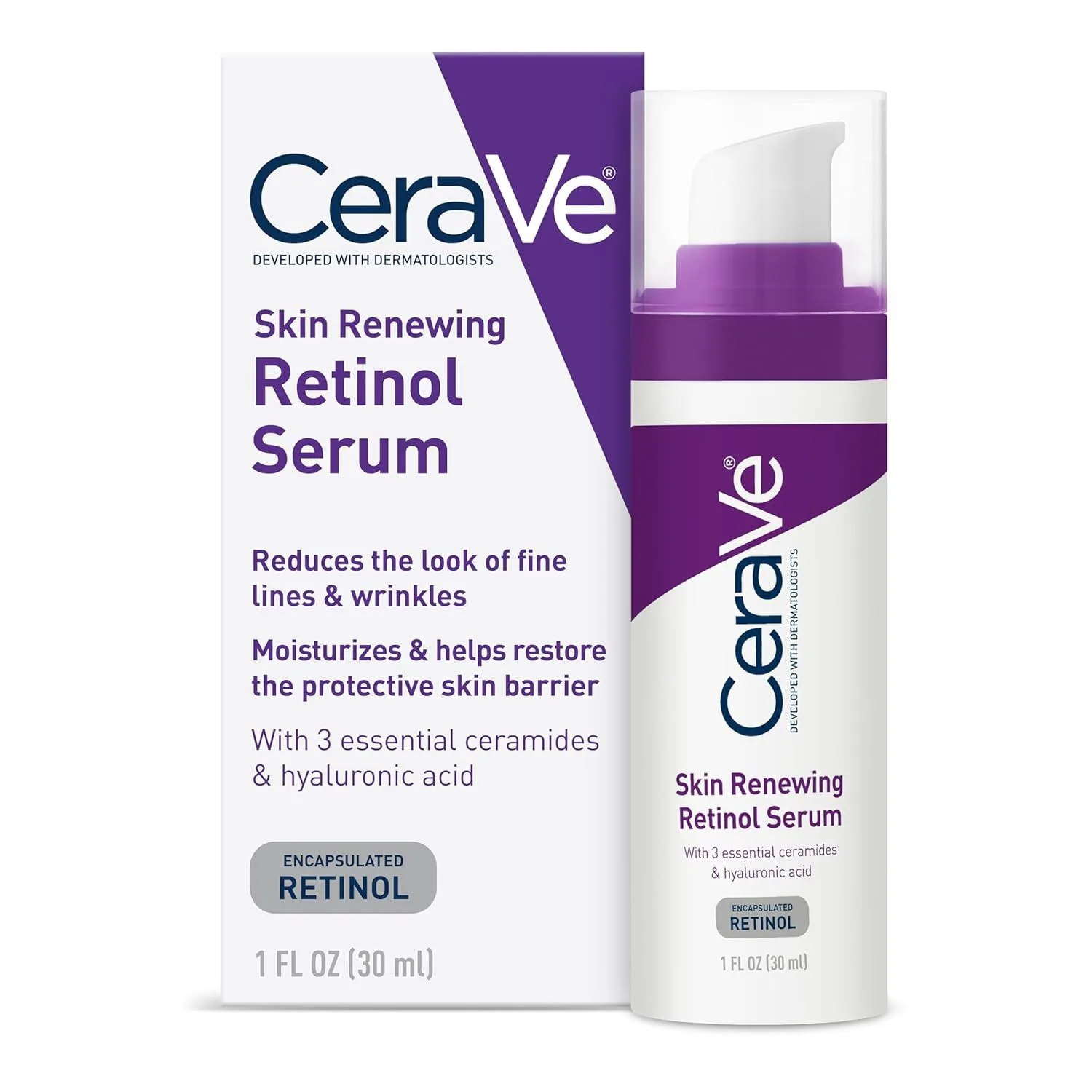
CeraVe cracked the beginner retinol formula. The encapsulated retinol releases gradually instead of hitting skin all at once — a delivery system that cuts the irritation window from weeks to days. Three essential ceramides rebuild the moisture barrier while the retinol resurfaces. And niacinamide calms inflammation in real time. The result: first-time retinol users who would normally quit after a week of peeling actually stick with it.
The formulation philosophy here is fundamentally different from luxury retinols. CeraVe developed this with dermatologists who see retinol dropout rates firsthand — patients who buy a high-concentration serum, experience two weeks of peeling, and abandon the ingredient entirely. By prioritizing tolerability over raw potency, CeraVe created a formula that people actually finish. And a bottle of retinol you use for three months outperforms a stronger product you quit after ten days. The MVE (MultiVesicular Emulsion) technology releases ceramides in layers throughout the night, continuously reinforcing the barrier as retinol works. No other formula in this price range combines time-release retinol with time-release ceramides.
The concentration is intentionally low. After 4-6 months of consistent use, experienced users will plateau and want to graduate to a stronger formula. The cream-serum hybrid texture also runs heavier than dedicated serums — it can feel like too much under a rich night cream.
Pros: Encapsulated slow-release, ceramide barrier support, budget-friendly pricing.
Cons: Low concentration (will plateau), heavier texture, occasional pump air bubbles.
Read Full Review | Check Price on Amazon
2. La Roche-Posay Retinol B3 Serum — Best Mid-Range Retinol
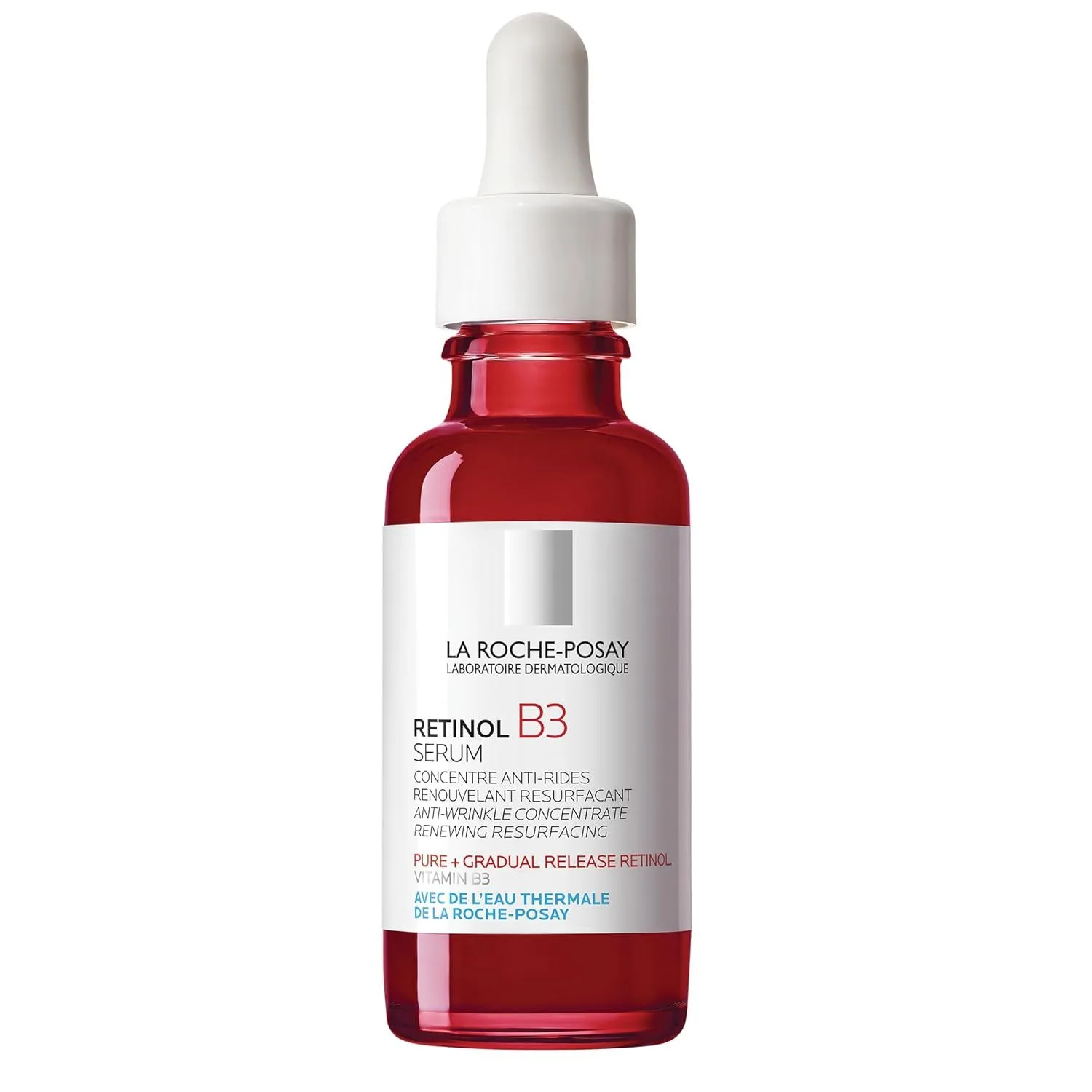
The step-up from beginner retinol that does not punish your skin for graduating. At 0.3% pure retinol, this sits at the sweet spot — potent enough for visible wrinkle reduction and dark spot fading, gentle enough that most skin types tolerate it from the first week. The high-dose niacinamide (Vitamin B3) is the real differentiator. It calms the inflammation that retinol triggers, compressing the adjustment period from the typical 4 weeks down to days.
The fluid texture absorbs fast but leaves a slight tackiness that heavier night creams can magnify. And the glass dropper bottle exposes the formula to air every use — retinol stability decreases over time. Users accustomed to prescription-strength tretinoin will find 0.3% underwhelming.
What sets the B3 formula apart from other 0.3% retinols at a similar price is the concentration of niacinamide. Most retinol serums include niacinamide as a supporting player at 1-2%. La Roche-Posay treats it as a co-star, pushing the percentage high enough to independently improve skin texture, minimize pores, and reduce post-inflammatory hyperpigmentation. This dual-active approach means the serum delivers visible results during the tolerance-building phase — before the retinol itself has had enough time to produce anti-aging changes. Users who switch from single-active retinol serums report noticeable brightness improvements within the first two weeks, well before the retinol benefits kick in at the 8-12 week mark.
Start with encapsulated retinol (CeraVe), graduate to 0.3% pure retinol (La Roche-Posay), then move to retinaldehyde (Medik8) before considering prescription tretinoin. Each step takes 4-6 months of consistent use. Skipping rungs leads to irritation, not faster results.
Pros: 0.3% sweet-spot concentration, niacinamide synergy, thermal spring water soothing.
Cons: Slightly tacky finish, dropper bottle stability concern, 0.3% ceiling may underwhelm some.
Read Full Review | Check Price on Amazon
3. Medik8 Crystal Retinal 10 — Best Next-Generation Technology
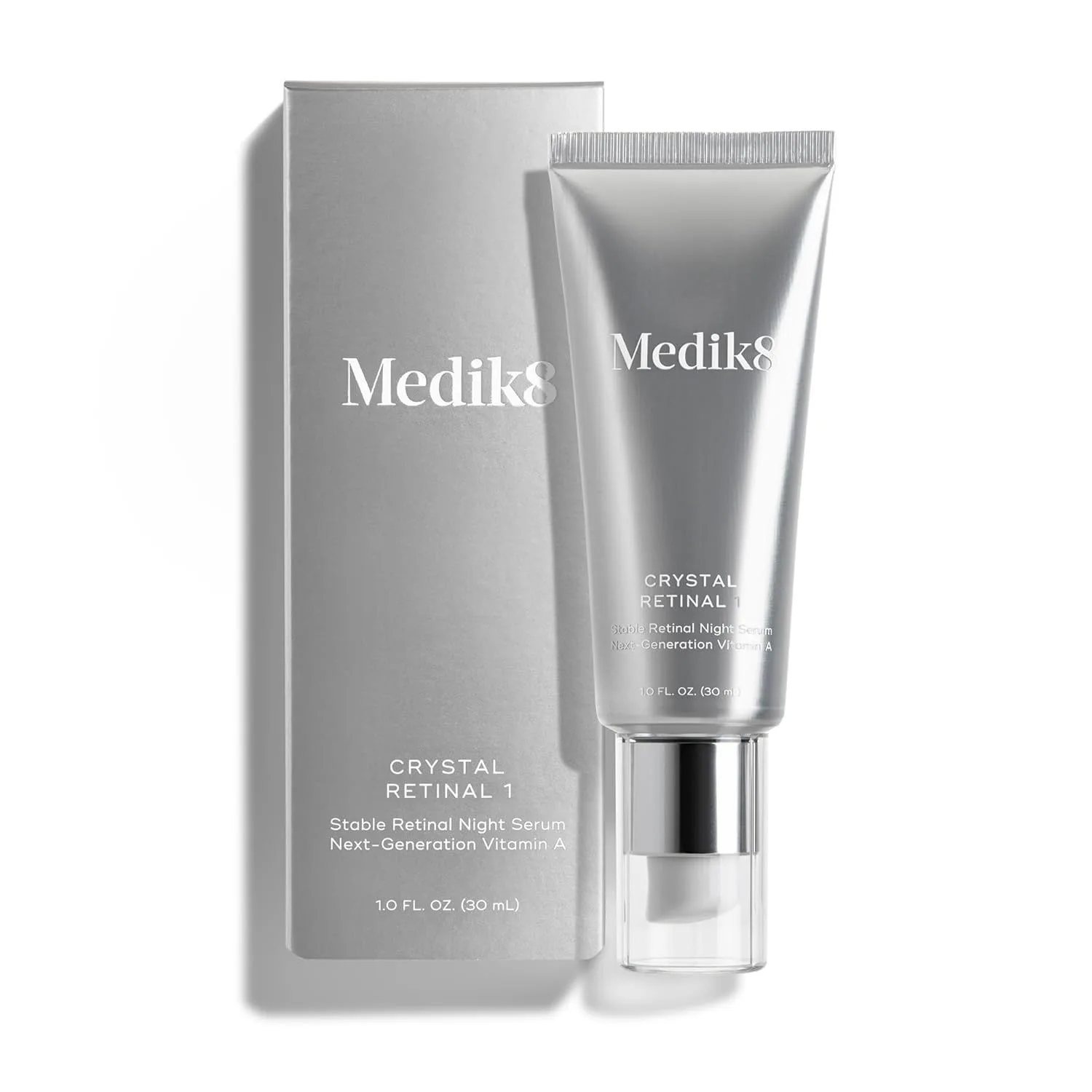
Medik8 brought retinaldehyde — previously a dermatology-clinic-only ingredient — into a consumer-friendly format. Retinaldehyde sits one conversion step closer to active retinoic acid than standard retinol. Published research shows it works approximately 11x faster. The double-layered crystal encapsulation controls the release rate, delivering retinaldehyde benefits without the irritation spike that scares off even retinol veterans.
The investment is real. This is mid-range for its category for the category, and the "10" in the name refers to the strength level in Medik8's system — not a 10% concentration. The balm-cream texture has a yellowish tint from the retinaldehyde that can temporarily stain lighter pillowcases. If you have used retinol for 6+ months and want to level up without jumping to prescription tretinoin, this is the bridge.
Pros: Retinaldehyde (11x faster than retinol), crystal encapsulation, B Corp certified.
Cons: Premium pricing, yellow tint on pillowcases, naming convention confuses buyers.
Read Full Review | Check Price on Amazon
4. Obagi Retinol + PHA Night Cream — Best Professional-Grade Treatment
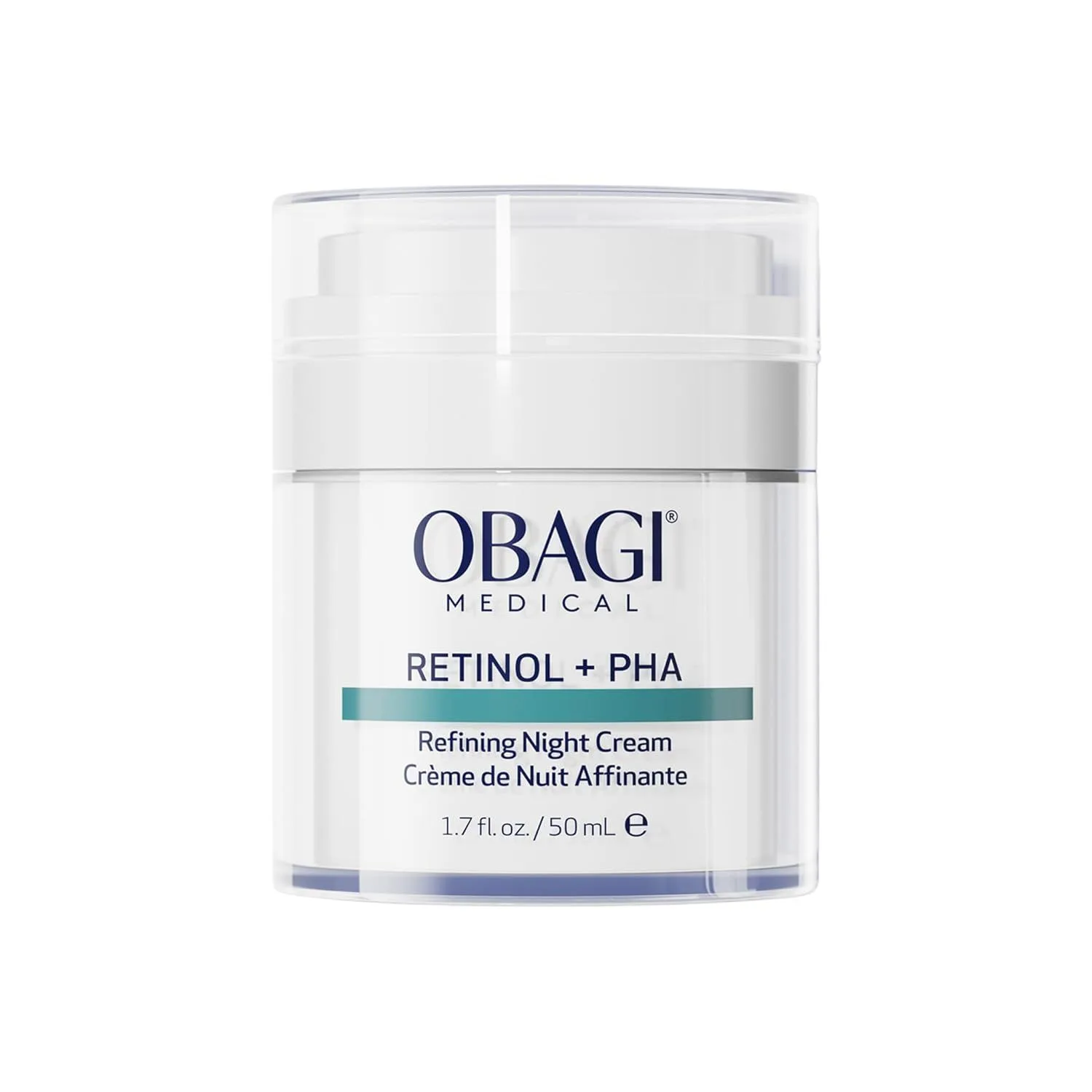
Obagi married retinol with polyhydroxy acid (PHA) exfoliation — dual resurfacing from two pathways in a single night cream. The professional heritage shows in the formulation density. This is not a lightweight serum; it is a treatment that commits to aggressive overnight renewal. Rich cream texture delivers sustained active release through the 8-hour repair window when skin is most receptive.
The dual-active approach increases sensitivity risk. Sunscreen the next morning is non-negotiable — your skin is more photosensitive after this formula than after retinol alone. The heavy cream texture rules out oily or acne-prone skin types entirely. And at above average for its category, Obagi keeps the exact retinol percentage proprietary.
Pros: Dual resurfacing (retinol + PHAs), clinical heritage, overnight sustained release.
Cons: Too heavy for oily skin, increased photosensitivity, undisclosed concentration.
Read Full Review | Check Price on Amazon
5. Augustinus Bader The Retinol Serum — Best Zero-Irritation Luxury Retinol
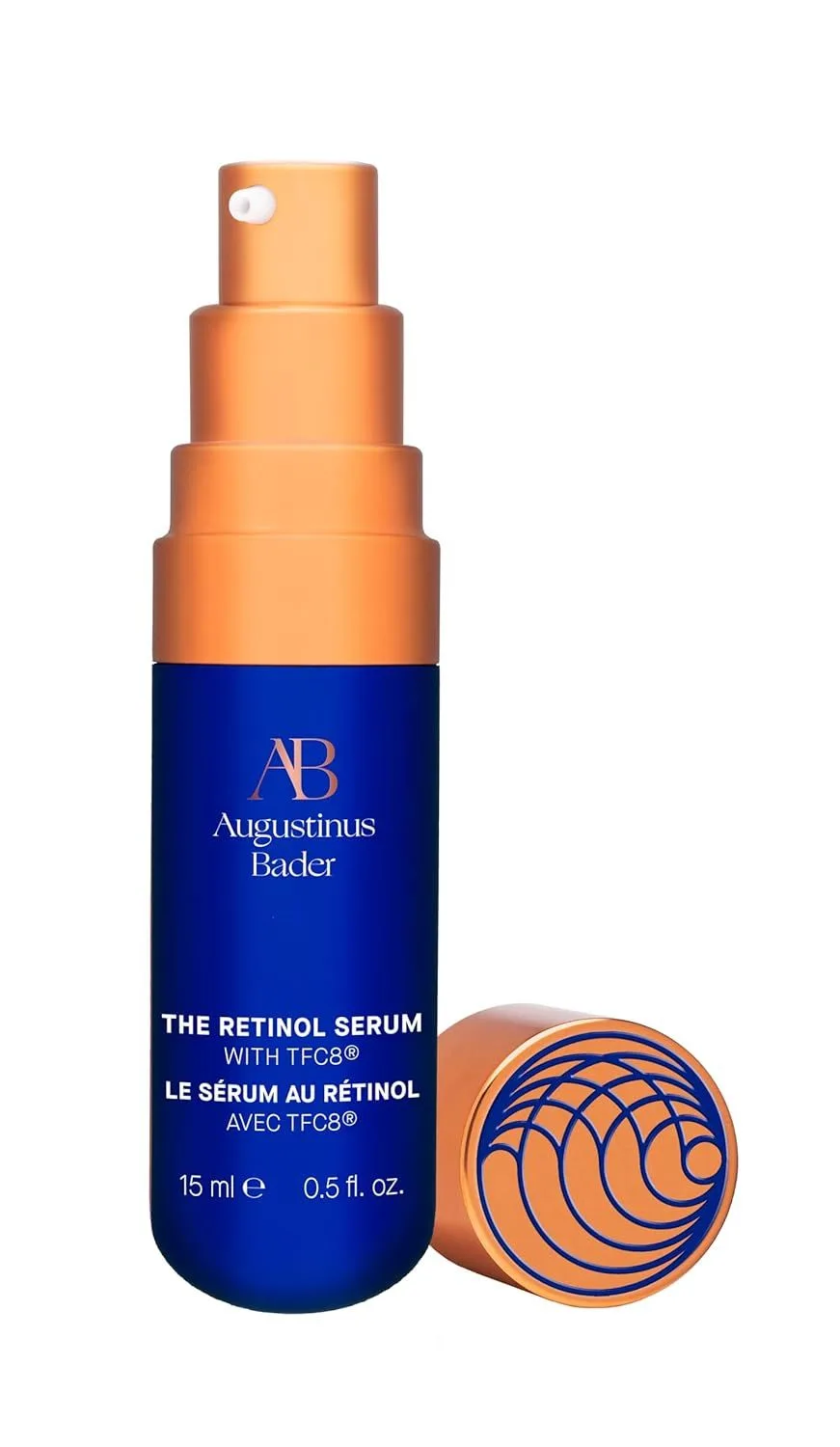
Augustinus Bader asks a question no other retinol brand has answered: what if retinol could be targeted instead of blanket-applied? The patented TFC8 (Trigger Factor Complex) guides retinol specifically to cells showing oxidative stress. The result, based on user reports, is something rare in this category — virtually zero irritation. Across hundreds of reviews, the peeling and redness associated with retinol are almost entirely absent.
The price is the conversation. This is the most expensive retinol in our catalog by a wide margin. TFC8 is proprietary, and while it is rooted in Professor Bader's 30 years of stem cell research, the peer-reviewed data comes from wound-healing contexts — the translation to cosmetic anti-aging is extrapolated. Whether the zero-irritation experience justifies the premium over a well-formulated retinol at a fraction of the price depends on how reactive your skin is.
Pros: TFC8 targeted delivery, virtually zero irritation, 30 years of stem cell research.
Cons: Highest-priced retinol in catalog, limited independent validation, steep per-ml cost.
Read Full Review | Check Price on Amazon
Watch: Mad About Skin's take on the Best Retinol & Retinoid Treatments

How We Selected These Retinols
Each retinol treatment was evaluated across four dimensions:
- Retinoid type and strength: Standard retinol, retinaldehyde, and professional-grade blends each have distinct performance profiles. We assessed documented concentrations and conversion efficiency.
- Irritation management: The best retinol in the world is worthless if your skin cannot tolerate it. Encapsulation, buffering ingredients, and gradual-release technology separate usable formulas from punishing ones.
- Supporting ingredients: Ceramides, niacinamide, PHAs, and proprietary complexes all influence how effectively the retinol delivers results without side effects.
- Value across the tolerance curve: A beginner formula that costs less but graduates you in 4 months may cost more long-term than a mid-range formula you can use for years.
Understanding the Retinoid Family
Not all retinoids are the same. The term "retinoid" covers a family of Vitamin A derivatives that vary dramatically in potency, conversion speed, and irritation potential. Understanding where each product in this roundup sits on the retinoid ladder helps you choose the right starting point.
Retinyl palmitate — the gentlest form, requiring three conversion steps to become active retinoic acid. Found in some entry-level products. Minimal irritation but minimal results — not recommended as a standalone anti-aging treatment. Works better as a maintenance ingredient in moisturizers.
Retinol — the most common over-the-counter form, requiring two conversion steps. CeraVe, La Roche-Posay, and Obagi all use retinol as their active. Effective at concentrations of 0.025% (beginner) through 1% (advanced). The industry standard for at-home anti-aging.
Retinaldehyde (retinal) — one conversion step from active retinoic acid, making it approximately 11x faster-acting than standard retinol. Medik8 Crystal Retinal is the standout in this category. Gentler than tretinoin but more potent than retinol — the sweet spot for experienced users who want stronger results without a prescription.
Tretinoin (retinoic acid) — prescription-only. No conversion needed — it is the active form. Most potent but most irritating. Not in this roundup because it requires a dermatologist prescription, but it represents the level above retinaldehyde for those who want maximum anti-aging efficacy.
One point that catches many buyers off guard: the conversion efficiency between these forms is not linear. Retinol loses a portion of its potency at each conversion step as enzymes in your skin metabolize it. Published studies suggest that only a fraction of applied retinol actually converts to retinoic acid — estimates range from 5-20% depending on skin type, enzyme activity, and formula pH. This is why a 0.3% retinol serum and a 0.05% retinaldehyde product can produce comparable results — the retinaldehyde skips the lossy conversion step. It also explains why some people respond well to retinol and others see minimal change at the same concentration. Your individual enzyme activity plays a larger role than most brands acknowledge.
The Retinol Tolerance Ladder
Building retinol tolerance is not optional — it is the difference between successful long-term anti-aging and abandoning the ingredient after two weeks of peeling. Here is the graduated approach that dermatologists recommend:
Weeks 1-2: Apply retinol two nights per week. Use a pea-sized amount on dry skin, 20 minutes after cleansing. Follow with a ceramide-rich moisturizer. Skip retinol on nights you use AHAs, BHAs, or Vitamin C.
Weeks 3-4: Increase to three nights per week. Some dryness and flaking is normal — this is your skin accelerating cell turnover. Do not add exfoliants. Let the retinol do the exfoliation work on its own.
Weeks 5-8: Move to alternate nights (every other night). Your skin should be adjusting — less redness, less peeling. If irritation persists at this stage, drop back to three nights and stay there for another month before trying to advance.
Weeks 9+: Nightly use. At this point, your skin has adapted and the visible results begin compounding. Fine lines soften, texture evens out, and dark spots begin to fade. The full anti-aging benefit of retinol requires 3-6 months of consistent nightly use at this stage.
Concentration graduation: After 6 months of nightly use at one concentration, you can consider moving up. CeraVe's encapsulated retinol → La Roche-Posay Retinol B3 → Obagi Clinical → Medik8 Crystal Retinal represents a logical progression from beginner to advanced. Each step increases potency while the formulation supports tolerance.
Common Retinol Mistakes
Starting too strong. The most common retinol mistake is choosing a high-concentration formula from day one. A 1% retinol serum is not "better" than a 0.1% — it is more potent, which means more irritation for unprepared skin. Starting with a lower concentration and building tolerance over months produces better long-term results than starting strong, experiencing severe peeling, and quitting within two weeks. The skin's retinoid receptors need time to upregulate.
Using retinol on damp skin. Applying retinol immediately after washing — while skin is still damp — increases penetration speed and irritation. Wait at least 20 minutes after cleansing, or apply your moisturizer first as a buffer. Damp skin absorbs actives faster, which sounds good in theory but causes the retinol to hit deeper skin layers before the surface is ready. The result is redness, stinging, and flaking that would not happen on dry skin with the same formula.
Mixing retinol with AHAs or BHAs on the same night. Chemical exfoliants and retinol both increase cell turnover. Using both on the same evening doubles the exfoliation load on your barrier, leading to raw, sensitized skin. Alternate nights: retinol Monday-Wednesday-Friday, AHA/BHA Tuesday-Thursday-Saturday, rest on Sunday. Your skin gets the benefit of both actives without the compounded irritation.
Forgetting SPF the morning after. Retinol accelerates cell turnover, exposing newer skin cells that have not developed their full UV defense. Going outside without SPF 30+ the morning after retinol use exposes these vulnerable cells to damage that the retinol was supposed to prevent. It is counterproductive in the most literal sense — the anti-aging ingredient causes aging if you skip sun protection. A broad-spectrum SPF 50 applied generously every morning is the non-negotiable companion to any retinol routine.
Expecting overnight results. Retinol works by stimulating collagen production and accelerating cellular renewal — processes that take 8-12 weeks to produce visible changes. The peeling and purging in weeks 1-4 are adjustment side effects, not results. Real anti-aging improvement (softer fine lines, more even tone, smoother texture) emerges after 3 months of consistent nightly use. If you quit at week 3, you endured all the irritation without any of the reward.
Retinol Treatment Buying Guide
Match the formula to your experience level. First-time retinol users should start with encapsulated, low-concentration formulas like CeraVe. After 4-6 months of tolerance building, graduate to 0.3% pure retinol like La Roche-Posay Retinol B3. Experienced users ready for more can move to retinaldehyde (Medik8 Crystal Retinal). Prescription tretinoin sits above all of these — consult a dermatologist for that step.
Night use only. Retinol degrades rapidly in sunlight and increases photosensitivity. Apply at night, always. Morning after retinol use requires SPF 30 or higher — this is non-negotiable regardless of which retinol you choose. UV exposure during retinol use not only reduces the retinol's effectiveness but increases your risk of sun damage because the accelerated cell turnover exposes newer, more vulnerable skin cells.
Buffering matters. Applying retinol on dry skin is more potent than on damp skin. Beginners should apply moisturizer first, then retinol on top — this "buffer" technique reduces penetration speed and irritation. As tolerance builds, switch to retinol first, then moisturizer on top. Advanced users can apply retinol directly to clean dry skin for maximum penetration.
Budget expectations: Effective retinol starts in the Under $25 range with encapsulated beginner formulas. Mid-range options at $25–$50 offer higher concentrations with better delivery systems. The premium tier ($100–$250 and above) brings next-generation retinoid technology (retinaldehyde) and luxury delivery systems that minimize irritation while maximizing results.
Supporting ingredients to look for: Ceramides (CeraVe) rebuild the barrier that retinol temporarily compromises. Niacinamide (La Roche-Posay) reduces inflammation and redness. PHAs (Obagi) provide gentle exfoliation without the harshness of AHAs. Hyaluronic acid (found in most formulas) counteracts the dryness that retinol causes. The best retinol formulas anticipate their own side effects and include ingredients to manage them.
Retinol and Skin Type Compatibility
Oily skin: Retinol is well-tolerated by oily skin types because the natural sebum production provides a built-in moisture buffer that reduces irritation. Lightweight serum formulas (CeraVe, La Roche-Posay) absorb cleanly without adding heaviness. Oily skin types can often advance through the tolerance ladder faster than dry skin types — the excess oil acts as a natural barrier that moderates retinol penetration.
Dry skin: The dryness that retinol triggers compounds existing dryness, making the adjustment period rougher. Start with the lowest concentration available and always buffer with a ceramide-rich moisturizer before application. Rich cream formulas (Obagi night cream) provide built-in hydration that offsets retinol-induced moisture loss. Skip retinol entirely during extreme winter dryness when your barrier is already compromised.
Sensitive skin: Encapsulated and time-release formulas are essential. Direct application of free retinol causes inflammation that sensitive skin cannot recover from quickly. CeraVe's encapsulated retinol or Augustinus Bader's TFC8-guided delivery are the safest options. Start at once per week — not twice — and extend the tolerance-building timeline to 12 weeks instead of 8.
Combination skin: Apply retinol to the T-zone and areas of concern, avoiding the driest patches (usually cheeks and around the nose). The oily zones tolerate retinol well; the dry zones may need a separate, richer moisturizer after retinol application. This zone-based approach gives you anti-aging benefits where your skin can handle it without punishing the areas that cannot.
Acne-prone skin: Retinol is one of the few anti-aging ingredients that also fights acne. It increases cell turnover, preventing dead skin cells from clogging pores — the root cause of most breakouts. But the purging phase hits acne-prone skin harder than other skin types. Expect existing congestion to surface as active breakouts during weeks 2-4. This is not new acne; it is existing clogs being pushed out faster. Stick with a lightweight serum formula and avoid cream-based retinols (like the Obagi night cream) that can trap sebum. The CeraVe encapsulated retinol is the safest starting point for acne-prone users — its ceramide complex supports barrier repair without adding pore-clogging oils, and the gradual release prevents the inflammatory spike that triggers fresh breakouts.
Frequently Asked Questions
What is the difference between retinol and retinaldehyde?
When should I start using retinol?
Can retinol make my skin worse before it gets better?
Should I use retinol every night?
Can I use retinol with Vitamin C?
Why is retinol more expensive at higher concentrations?
Our Top Pick
For most people starting or continuing their retinol journey, CeraVe Anti Aging Retinol Serum is the smartest entry point — encapsulated delivery with ceramide barrier support at budget-friendly pricing. For experienced retinol users ready to advance, Medik8 Crystal Retinal 10 brings the science of retinaldehyde into an accessible, consumer-friendly format.
Check Price — CeraVe Retinol Serum
Compare Top Picks
Track These Picks
We'll let you know when our picks for this category change.
Only when something changes. Unsubscribe anytime.