Best Hydrating Serums 2026: Expert Picks
We tested 6 hydrating serums spanning Under $25 to $50–$100 — from The Ordinary's five-weight HA formula to Tatcha's portable squalane stick. Ranked by moisture depth, texture feel, and how well each plays with the rest of your routine.
Hydration is the foundation every other skincare step builds on. Actives like retinol and Vitamin C perform better on well-hydrated skin, makeup sits smoother, and fine dehydration lines disappear before you reach for the anti-aging serums. The right hydrating serum is the simplest upgrade with the most visible payoff.
We analyzed over 80,000 combined Amazon reviews across these six products to identify patterns that individual product pages miss. The most consistent finding: hydrating serums have the highest satisfaction rates of any skincare category. Even the lowest-rated serum in this roundup sits above 4.3 stars. The reason is straightforward — hydration works on virtually every skin type and shows results within days, not weeks. That universal effectiveness makes the choice here less about "which one works" and more about which formula fits your specific routine, climate, and skin type preferences. If you are unsure which active to prioritize, our serum selection guide walks through the decision by skin type and goal.
The hydrating serum category spans an enormous price range — from under ten dollars to well over fifty — and the ingredient at the center of most formulas, hyaluronic acid, is the same molecule regardless of price. What separates these six products is everything surrounding that core ingredient: the number of molecular weights, the supporting actives, the delivery vehicle, and how the formula behaves when layered with the rest of your routine. We ranked based on measurable hydration depth, real-world usability, and whether the price premium (when it exists) delivers a proportional improvement in results.
Head-to-Head: All 6 Hydrating Serums
| Feature | The Ordinary HA 2% + B5 | Editor's Pick Vichy Minéral 89 | DIME Beauty HA Serum | La Roche-Posay Hyalu B5 | Drunk Elephant B-Hydra | Tatcha Serum Stick | LANEIGE Water Bank Cream |
|---|---|---|---|---|---|---|---|
| Price Range | Under $25 | $25–$50 | $25–$50 | $25–$50 | $25–$50 | $50–$100 | $25–$50 |
| Size | 30ml / 1 fl oz | 50ml / 1.69 fl oz | 30ml / 1 fl oz | 30ml / 1 fl oz | 50ml / 1.69 fl oz | 8g / 0.28 oz | 50ml / 1.6 fl oz |
| Best Skin Type | All skin types | All skin types | All skin types | All skin types incl. sensitive | Oily to combination | Dry to normal | Dry to normal, sensitive |
| Key Ingredient | 5 Forms of Hyaluronic Acid + B5 | 89% Vichy Volcanic Water + HA | Multi-Weight Hyaluronic Acid | Dual HA + B5 + Madecassoside | Pro-Vitamin B5 + Pineapple Ceramide | 80% Squalane + Hadasei-3 | Blue Hyaluronic Acid + Squalane + Ceramide NP |
| See Availability | See Availability | See Availability | See Availability | See Availability | See Availability | See Availability |
Apply every hydrating serum in this roundup to damp skin — within 60 seconds of washing or after a mist spray. Hyaluronic acid is a humectant that attracts water from its surroundings. On damp skin, it pulls surface moisture in. On dry skin in low humidity, it can pull moisture out of your skin instead.
Quick Picks
Our Picks, Ranked
1. The Ordinary Hyaluronic Acid 2% + B5 — Best Value Per Drop
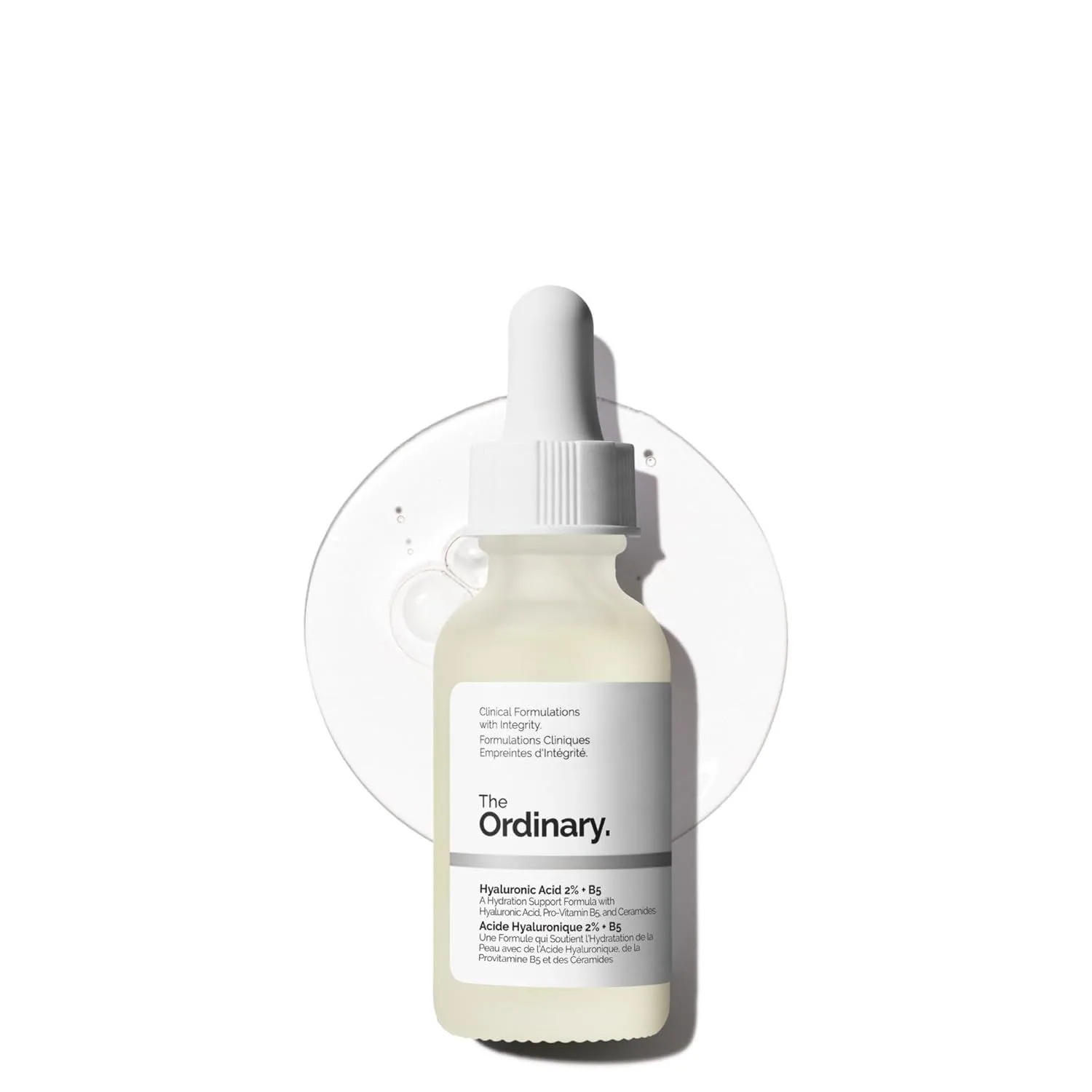
The Ordinary proved that five molecular weights of hyaluronic acid do not require a luxury price tag. This formula hydrates from the skin surface down to deeper layers — not just the surface plumping that single-weight HA delivers. The addition of Ceramide NP is unusual at this price: it strengthens the moisture barrier while HA fills it with water. At budget-friendly, the value is almost absurd.
The viscous gel texture is the one compromise. It can feel tacky when applied too generously, and some silicone-heavy moisturizers pill over it. The fix is technique: apply a thin layer to damp skin, wait 30 seconds, then proceed. Minimal additional actives mean this is pure hydration — you handle treatment steps with other products.
Pros: Five HA weights, ceramide NP barrier support, budget-friendly pricing.
Cons: Tacky texture if over-applied, pills under some moisturizers, hydration-only formula.
Read Full Review | Check Price on Amazon
2. Vichy Mineral 89 — Best All-Around Hydrating Serum
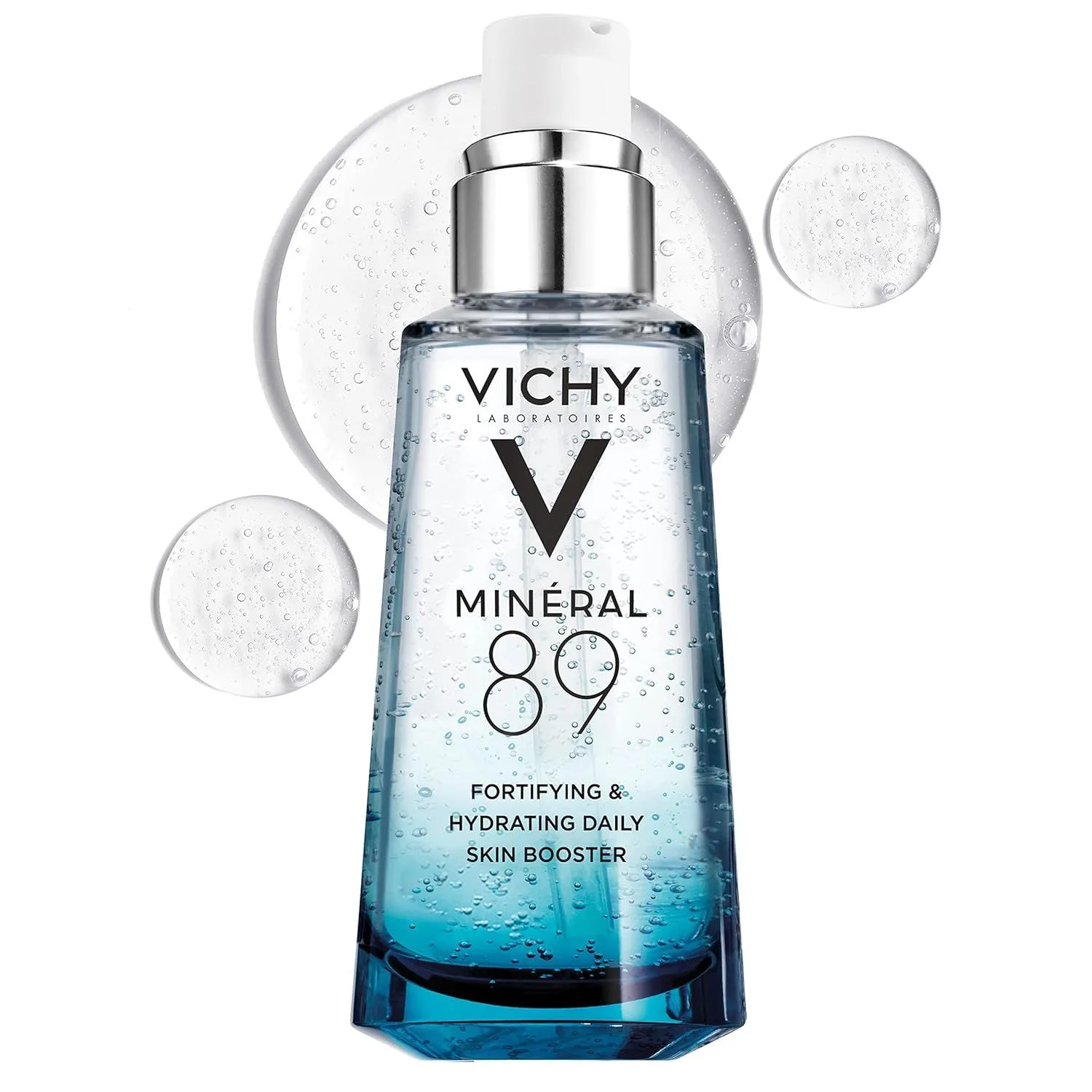
With 32,000+ reviews and a 4.6 average, Vichy Mineral 89 is the hydrating serum that the widest cross-section of skin types agrees on. The 89% Vichy volcanic mineral water is not marketing — clinical studies show those 15 rare minerals strengthen the skin barrier measurably. The lightweight gel-serum absorbs in seconds and layers under anything without interference. One pump covers the full face.
The formula is deliberately simple. Hyaluronic acid is the only hero active — no peptides, no antioxidants, no multi-tasking. The volcanic water story is backed by Vichy's own clinical data, but the measurable difference versus purified water in a formula is debated among formulation chemists. And the pump dispenses a full dose with minimal control — you learn to half-press quickly.
Pros: 89% volcanic mineral water, 32,000+ reviews at 4.6 rating, instant absorption.
Cons: HA-only formula, debatable volcanic water premium, imprecise pump dispensing.
Read Full Review | Check Price on Amazon
3. La Roche-Posay Hyalu B5 — Best Repair-Focused Hydrator
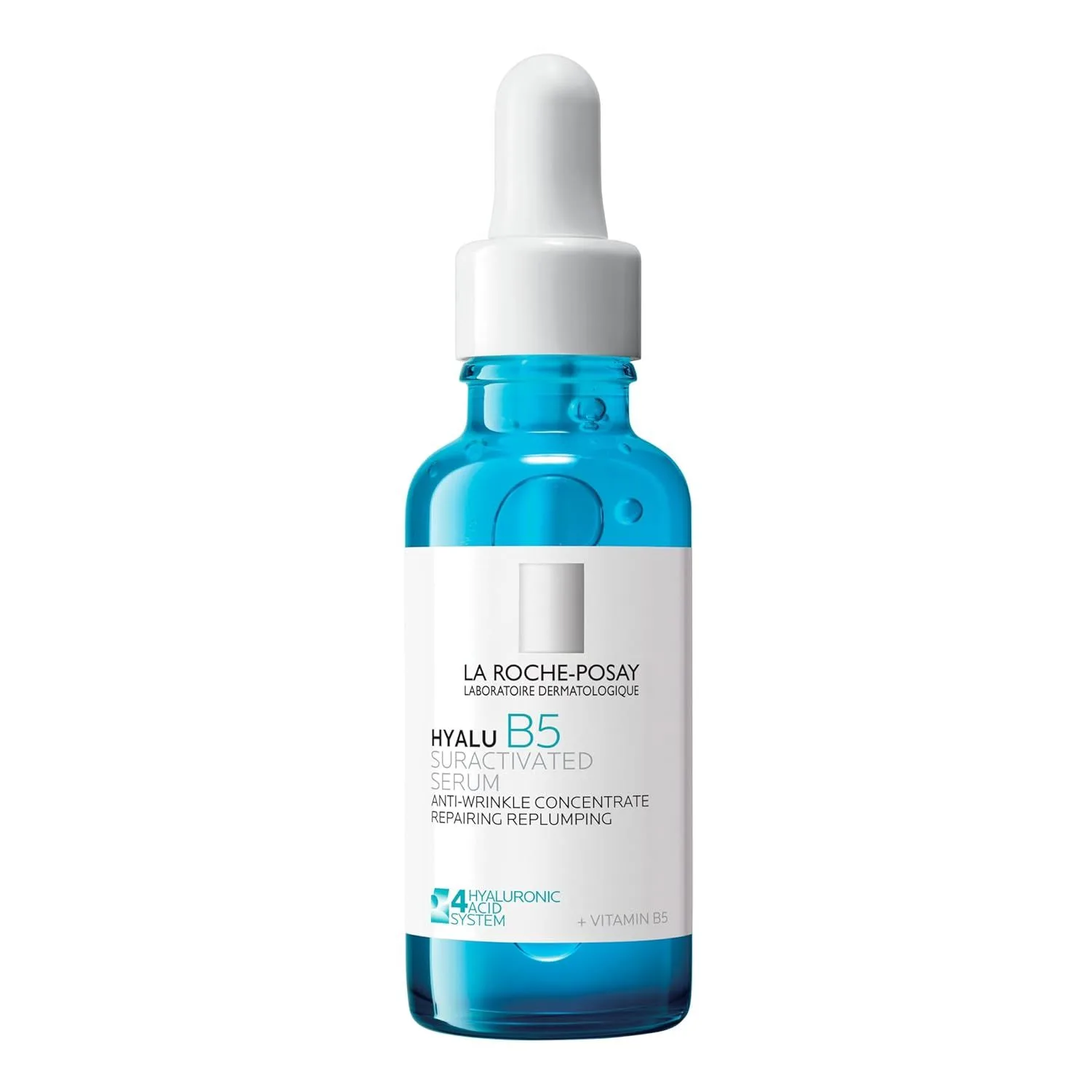
La Roche-Posay pushed beyond simple hydration into repair territory. The standout is Madecassoside — derived from Centella Asiatica — which adds wound-healing and anti-inflammatory properties that most HA serums lack entirely. Two molecular weights of hyaluronic acid plus Pro-Vitamin B5 create a three-pronged approach: hydrate, soothe, repair. Dermatologists regularly recommend this for post-procedure recovery, and it works equally well for daily use.
The dual-HA formula is effective but not as multi-layered as The Ordinary's five-weight approach. Slightly higher viscosity than Vichy Mineral 89 means it takes a moment longer to absorb. Oil-free and non-comedogenic testing makes it safe for acne-prone skin — a concrete advantage over some competitors.
Pros: Madecassoside healing, three-pronged hydration + repair, oil-free non-comedogenic.
Cons: Dual-weight HA (vs five-weight competitors), slightly viscous, faint clinical scent.
Read Full Review | Check Price on Amazon
The mid-tier serums in this roundup — Vichy and La Roche-Posay — represent the sweet spot where formulation science meets accessible pricing. Both brands are backed by L'Oreal's dermatological research division, which gives them access to clinical testing infrastructure that indie brands cannot match. The difference between these two comes down to philosophy: Vichy leads with mineral water and simplicity, La Roche-Posay leads with active repair ingredients. For someone choosing between them, the deciding factor is whether your skin needs pure hydration (Vichy) or hydration plus healing (La Roche-Posay for post-procedure, sensitized, or barrier-compromised skin).
4. DIME Beauty Hyaluronic Acid Serum — Best Clean-Beauty Hydrator
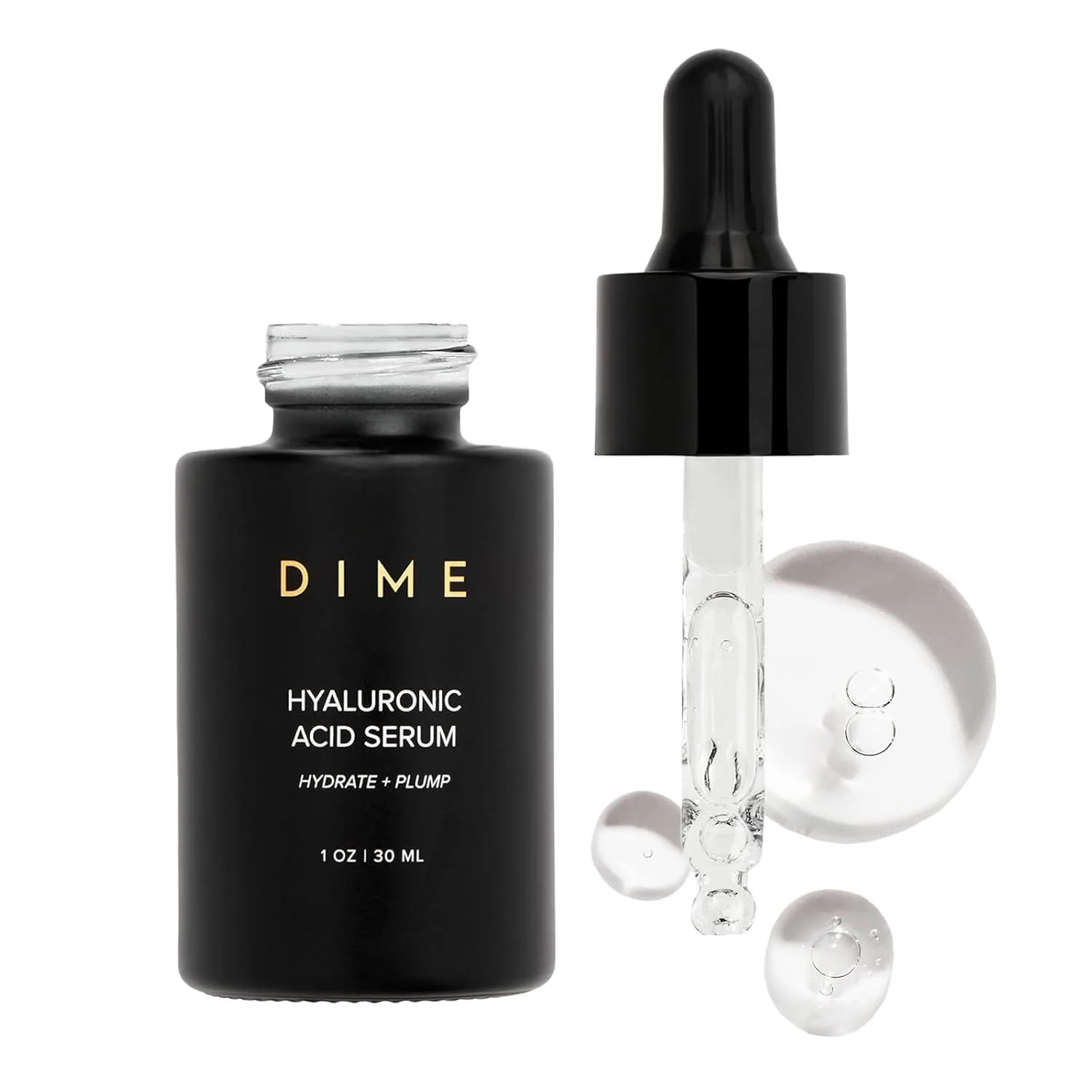
DIME carved a clean-beauty niche in the HA serum market. Multi-weight hyaluronic acid delivers hydration at different depths, but the real differentiator is what is NOT in the formula — no parabens, phthalates, sulfates, or synthetic fragrance. Full ingredient transparency and plant-based sourcing for buyers who scrutinize every component. The lightweight gel absorbs completely without tackiness and layers beautifully under makeup.
The clean-beauty positioning adds a modest premium over comparable HA serums at similar concentrations. Limited additional actives beyond hyaluronic acid mean you are paying for ingredient purity, not formulation complexity. And the smaller review community compared to The Ordinary or Vichy means less collective long-term data.
Pros: Clean-beauty formulation, multi-weight HA, zero-tackiness gel texture.
Cons: Slight clean-beauty premium, HA-only active, smaller review community.
Read Full Review | Check Price on Amazon
5. Drunk Elephant B-Hydra — Best for Oily Skin Types
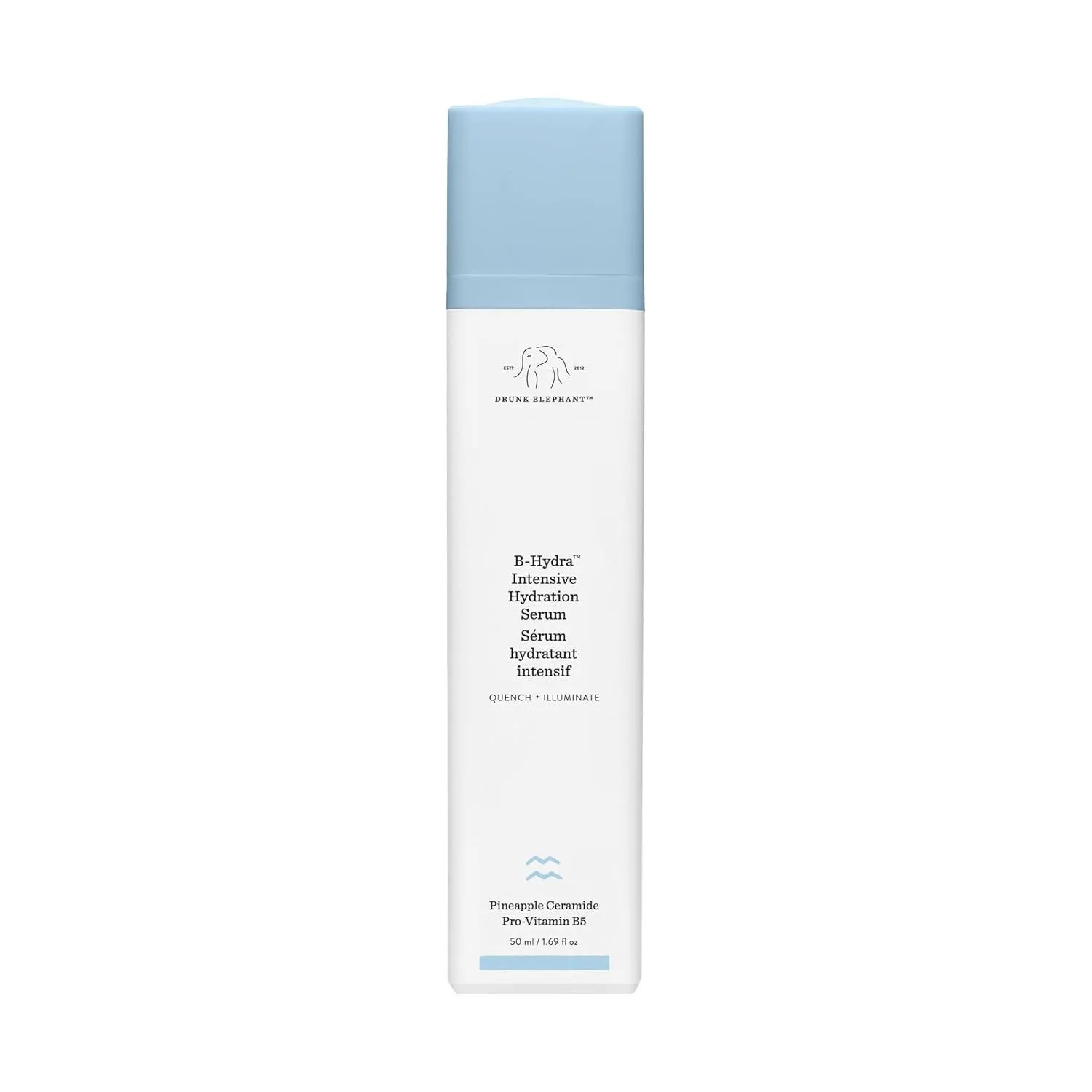
Drunk Elephant deliberately skipped hyaluronic acid and built an alternative hydrating serum around pineapple ceramide, watermelon rind extract, and Pro-Vitamin B5. The result is a gel-serum so lightweight that oily skin types actually enjoy using it — a rare achievement in a category dominated by viscous, sometimes sticky formulas. Barrier strengthening happens through ceramide delivery without adding any oiliness.
The exotic ingredient list reads well on paper, but efficacy data for pineapple ceramide and watermelon rind is limited compared to decades of HA research. No hyaluronic acid — a deliberate choice, but it means missing the most proven humectant in skincare. At above average for its category, you are paying a brand premium over equally effective budget alternatives.
Pros: Featherlight gel for oily skin, pineapple ceramide barrier support, HA-free alternative.
Cons: Limited data on key ingredients, no HA, brand premium pricing.
Read Full Review | Check Price on Amazon
6. Tatcha The Serum Stick — Best Portable Hydration
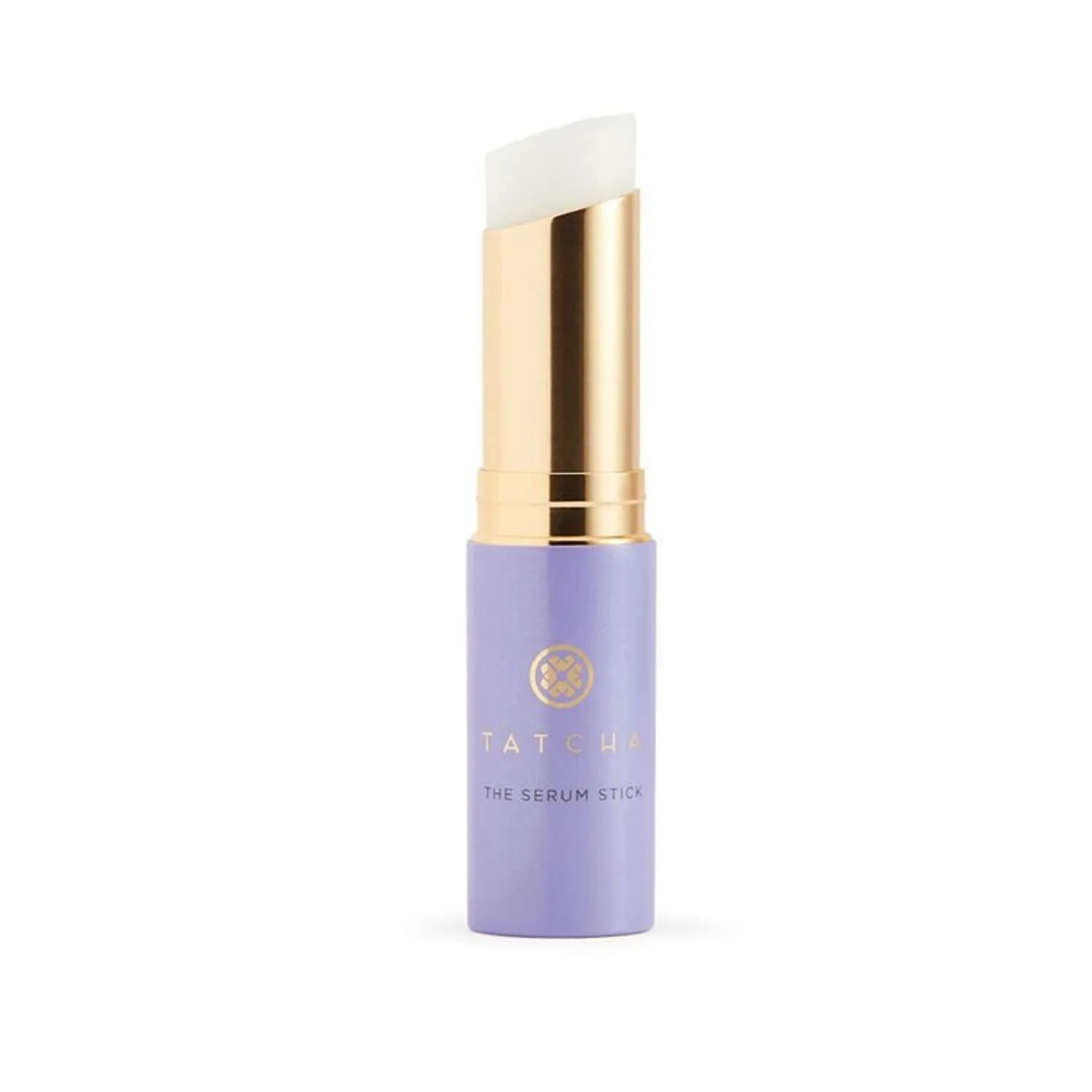
Tatcha turned hydration into a twist-up applicator. The 80% squalane stick solves a real problem — dry patches that appear at 3pm when you are wearing makeup and a liquid serum is not an option. Apply directly over makeup without disruption. The Hadasei-3 complex (rice, algae, green tea) adds antioxidant protection beyond pure moisture. It fits in a pocket.
This is a companion product, not a replacement for your morning hydrating serum. The stick format is less precise than liquid serums — better for targeted dry patches than full-face coverage. Squalane-heavy formulation can feel too rich for oily skin, especially in warm weather. And the small product volume (8g) delivers less hydration per dollar than traditional liquid serums.
Pros: 80% squalane in portable stick, applies over makeup, Hadasei-3 antioxidants.
Cons: Companion product (not primary serum), too rich for oily skin, lower volume per dollar.
Read Full Review | Check Price on Amazon
Also Worth Considering: LANEIGE Water Bank Blue Hyaluronic Cream
Not a serum, but a moisturizer that deserves mention in any hydration conversation. LANEIGE Water Bank Cream uses Blue Hyaluronic Acid — a proprietary derivative designed to bind more moisture per molecule than standard HA. The lightweight gel-cream texture sits in the space between a serum and a traditional moisturizer, making it a strong pairing with any of the HA serums above. For anyone whose hydrating serum alone does not carry them through a dry office afternoon, this cream extends the hydration window without adding heaviness.
Watch: Dr Dray's take on the Best Hydrating Serums

How We Ranked These Serums
Ranking hydrating serums is harder than ranking treatment actives because the core ingredient — hyaluronic acid — is effectively identical across formulations. The molecule is the molecule. What separates a mediocre HA serum from a standout is the surrounding formulation: how many molecular weights are included, what supporting ingredients strengthen the barrier alongside hydration, and whether the texture works with real-world routines rather than demanding special accommodation. We weighted practical usability heavily because the best hydrating serum is the one you apply consistently, twice a day, without friction.
- Moisture depth and duration: Multi-weight HA formulas that hydrate at multiple skin depths outranked single-weight alternatives. We assessed how long hydration lasted (4-hour, 8-hour, 24-hour claims) and whether the formula maintained moisture under varying humidity levels.
- Texture and layering: A hydrating serum must layer under everything — SPF, moisturizer, makeup — without pilling or interference. Tacky or viscous formulas got penalized. Instant-absorbing textures scored highest.
- Supporting actives: HA alone is a commodity ingredient. Serums with ceramides, Madecassoside, mineral complexes, or unique barrier-repair ingredients received higher marks for going beyond basic hydration.
- Price per effective dose: A 50ml bottle at $25–$50 delivers more value than a 30ml bottle at the same price. We factored volume, dispensing efficiency, and how many applications each bottle yields.
Why Hydration Is the Foundation of Every Routine
Dehydrated skin undermines every other product you apply. Retinol causes more irritation on dehydrated skin because the barrier is already compromised. Vitamin C absorbs less effectively when the skin's water content is low. Even sunscreen applies unevenly on a flaky, dehydrated surface. A well-hydrated base amplifies the performance of every treatment product in your routine — it is the cheapest way to make expensive products work better.
Age compounds the problem. Skin naturally produces less hyaluronic acid as you get older — by age 50, your body produces roughly half the HA it made at 20. That decline is one reason skin looks increasingly dull and creped over time, independent of sun damage or collagen loss. Topical HA serums cannot fully replace what the body stops making, but they provide an external source of hydration that partially compensates for declining internal production. Starting a consistent HA serum in your 30s or 40s creates a visible difference in skin plumpness that accumulates over months.
Dehydration and dryness are different problems. Dry skin lacks oil (a skin type). Dehydrated skin lacks water (a temporary condition). You can have oily skin that is also dehydrated — a common combination that produces tightness, flakiness, and excess oil simultaneously. Hydrating serums address the water deficit regardless of your skin type. If your skin feels tight after cleansing, looks dull by midday, or absorbs moisturizer too quickly, dehydration is the likely culprit.
Environmental factors accelerate dehydration in ways most people underestimate. Air-conditioned offices run at 30-40% humidity — well below the 50%+ threshold where hyaluronic acid performs optimally on its own. Airplane cabins drop to 10-20% humidity, which is why skin feels papery after a long flight. Central heating in winter creates similar conditions at home. In these environments, a hydrating serum is not a luxury — it is damage prevention. The cost of not hydrating is a compromised barrier that then requires repair products, which cost more than the serum you skipped.
The six serums in this roundup tackle hydration through different mechanisms. The Ordinary and Vichy use multi-weight hyaluronic acid to pull water into multiple skin layers. La Roche-Posay adds repair ingredients to hydration. DIME removes everything that is not clean. Drunk Elephant skips HA entirely for a ceramide-based alternative. And Tatcha reinvents the format as a portable stick. The right choice depends on your skin type, routine complexity, and whether hydration alone is sufficient or you need additional support.
Hydrating Serum Buying Guide
Know your HA weights. Look for formulas listing multiple molecular weights or "multi-weight" on the label. Single-weight HA only hydrates one skin depth — you miss the deeper layers that contribute to sustained plumpness. Five weights is the current gold standard (The Ordinary achieves this). Two or three is still effective for most skin types.
Pair with an occlusive. Hyaluronic acid pulls water into skin but cannot keep it there alone. Always follow with a moisturizer containing occlusives (ceramides, squalane, shea butter) to seal the hydration in. Skipping this step lets the moisture evaporate back out — and in low-humidity environments, HA without occlusion can actually dehydrate your skin by pulling moisture from deeper layers to the surface where it evaporates.
Consider your climate. In humid environments (above 50% relative humidity), any HA serum performs well because there is abundant atmospheric moisture for it to attract. In dry climates or during winter, multi-weight HA formulas with barrier-strengthening ingredients (ceramides, Madecassoside) outperform pure HA because they reduce the moisture that escapes while also pulling in what is available. If you live in an arid climate, La Roche-Posay Hyalu B5's repair-focused approach may outperform higher-rated HA-only formulas.
Application technique matters. Every hydrating serum in this roundup works measurably better on damp skin. Apply within 60 seconds of washing, or mist your face with water before application. The difference in hydration depth between applying to damp versus dry skin is not subtle — it is the single most impactful technique upgrade you can make with any HA serum.
Watch the full ingredient list, not just the hero active. Two serums can both headline "hyaluronic acid" on the front label and contain vastly different formulations. Some include silicones that improve immediate texture feel but block subsequent product absorption. Others add fragrance that sensitive skin reacts to. The Ordinary and DIME stand out for ingredient-list transparency — what you see is what you get, with no filler ingredients hidden behind vague terms like "fragrance" or "parfum." If you have reactive skin, read past the marketing claims and check the full INCI list before purchasing.
Budget expectations: Effective hydrating serums start under Under $25 with The Ordinary's five-weight formula — among the best values in all of skincare. The $25–$50 range adds mineral water, repair ingredients, or clean-beauty formulations. Above that, you are paying for texture refinement, portable formats, or alternative humectant technologies. Hydration is the one skincare category where the budget option holds its own against with luxury alternatives on pure efficacy.
Frequently Asked Questions
Do I need a hydrating serum if I use a moisturizer?
Should I apply hydrating serum to damp or dry skin?
What molecular weight of hyaluronic acid is best?
Can hyaluronic acid cause breakouts?
How often should I use a hydrating serum?
Is expensive hyaluronic acid better than cheap hyaluronic acid?
Common Hydrating Serum Mistakes
Applying to dry skin in low humidity. Hyaluronic acid is a humectant — it attracts water from its surroundings. In a well-humidified room, it pulls atmospheric moisture into your skin. In a dry heated room or arid climate, it can pull moisture OUT of deeper skin layers to the surface, where it evaporates. The fix: always apply to damp skin, and always follow with an occlusive moisturizer to seal the hydration in.
Using too much product. More serum does not mean more hydration. HA serums work by forming a thin hydrating film — excess product sits on the surface without absorbing, creating tackiness and potentially causing pilling under moisturizer. Two to three drops are sufficient for the full face. If you are using half a dropper per application, you are wasting product and creating texture issues.
Skipping the occlusive step. A hydrating serum without a moisturizer on top is incomplete. The serum pulls water in; the moisturizer keeps it there. Skipping the seal means the hydration you just applied evaporates within hours. Think of it like filling a glass and then leaving the lid off — the water does not stay.
Assuming all HA serums are equal. A single-weight HA serum only hydrates one skin depth. A five-weight formula reaches from the surface down to deeper layers, providing more thorough and longer-lasting hydration. Read the label for "multi-weight," "multi-molecular," or specific molecular weight callouts. The difference in daily hydration quality between a single-weight and multi-weight formula is noticeable within the first week.
Layering too many hydrating products. If you already use a HA serum, adding a second hydrating toner and a hydrating essence on top creates diminishing returns. Your skin can only hold so much water. Beyond a certain point, additional humectant layers sit on the surface and interfere with the products that follow. One well-formulated hydrating serum applied to damp skin, sealed with a good moisturizer, is more effective than three overlapping hydrating products competing for the same water.
Building Hydration Into Your Full Routine
A hydrating serum works best when your entire routine supports moisture retention. Start with a gentle cleanser that does not strip your lipid barrier — foaming cleansers with sulfates can undo a hydrating serum's work before you even start. After cleansing, apply your hydrating serum to still-damp skin. Follow with any treatment serums (Vitamin C in the morning, retinol at night). Seal everything with a moisturizer containing ceramides, squalane, or shea butter. Finish with SPF in the morning.
In dry climates or heated indoor environments, consider layering two hydrating products — a HA serum plus a ceramide-rich moisturizer, or a HA serum underneath a facial oil. The HA pulls water in, the oil or ceramide prevents it from escaping. This two-layer approach provides all-day hydration that a single hydrating serum cannot achieve alone, especially when the surrounding air is pulling moisture away from your skin.
Seasonal adjustments matter more than most people realize. During summer humidity, a lightweight HA serum like Vichy Mineral 89 or DIME is typically sufficient on its own — atmospheric moisture provides the water that HA attracts. During winter, when indoor heating drops humidity below 30%, switch to a richer approach: multi-weight HA (The Ordinary) layered under an occlusive moisturizer, or add a facial oil as the final seal. The same serum that kept your skin plump in July may leave it feeling tight in January if you do not adjust the products around it. Track how your skin feels at 3pm — if tightness or dullness appears by mid-afternoon, your hydration strategy needs reinforcement for that season.
At night, apply your hydrating serum before any heavier treatments. A lightweight HA serum underneath a thick retinol cream creates a buffer that can reduce irritation — the hydrated skin tolerates actives better than dehydrated skin does. Many dermatologists recommend this "hydrating buffer" technique for patients who struggle with retinol sensitivity. The HA serum does not dilute the retinol — it prepares the skin to receive it more evenly and with less reactive dryness. This approach is especially valuable when introducing retinol for the first time or when increasing retinol concentration.
Travel routines benefit from a paired strategy. Bring a liquid HA serum for your hotel routine and Tatcha's serum stick for in-flight and midday touch-ups. Airport security limits liquid sizes, but the solid stick format bypasses those restrictions entirely. Apply the stick every two hours during long-haul flights — cabin humidity hovers around 10-15%, and even well-hydrated skin starts losing moisture within the first hour at altitude. The combination of a proper liquid serum for morning and evening, plus a portable stick for the hours between, provides continuous hydration coverage that neither format achieves alone.
Our Top Pick
Vichy Mineral 89 is the hydrating serum we recommend to the widest audience — 32,000+ reviews confirm its universal compatibility, the mineral-rich formula strengthens the barrier while hydrating, and the texture layers under anything. For pure value, The Ordinary HA 2% + B5 is unbeatable — five HA weights at a fraction of the competition. And for anyone who needs hydration on the go, Tatcha The Serum Stick fills a niche that no liquid formula can match — pocket-sized, applies over makeup, and solves the 3pm dryness problem that office workers and frequent travelers know too well.
Check Price — Vichy Mineral 89
Compare Top Picks
Track These Picks
We'll let you know when our picks for this category change.
Only when something changes. Unsubscribe anytime.