Best Cleansers & Facial Oils 2026: Expert Picks
Cleansing and facial oils occupy two different steps in a skincare routine, but they share a philosophy: oil-based formulas that work with your skin instead of stripping it. We tested a pure single-ingredient facial oil and a cult-favorite cleansing balm — two mid-range for its category products that represent the best of their respective categories.
This is a focused category. Rather than padding the list with mediocre options, we selected two products that each excel at their one job. One nourishes. One cleanses. Both turn their respective skincare steps from routine obligation into something you look forward to.
We deliberately kept this roundup small. The cleansing balm and facial oil market is saturated with products that overpromise — balms that leave a waxy residue, oils cut with cheap fillers to pad the volume. After testing dozens of options across multiple price tiers, these two stood apart because they do their one thing with zero compromise. A longer list would have diluted the recommendation with products we had reservations about, and that does not serve you.
Both products share one trait that separates quality oil-based formulas from the rest: they rinse clean. Many cleansing balms and facial oils leave a film that forces an aggressive second cleanse, negating any gentleness the first step provided. The two picks here emulsify fully or absorb without residue, which means your subsequent products — serums, retinol, moisturizer — contact bare skin and absorb as intended.
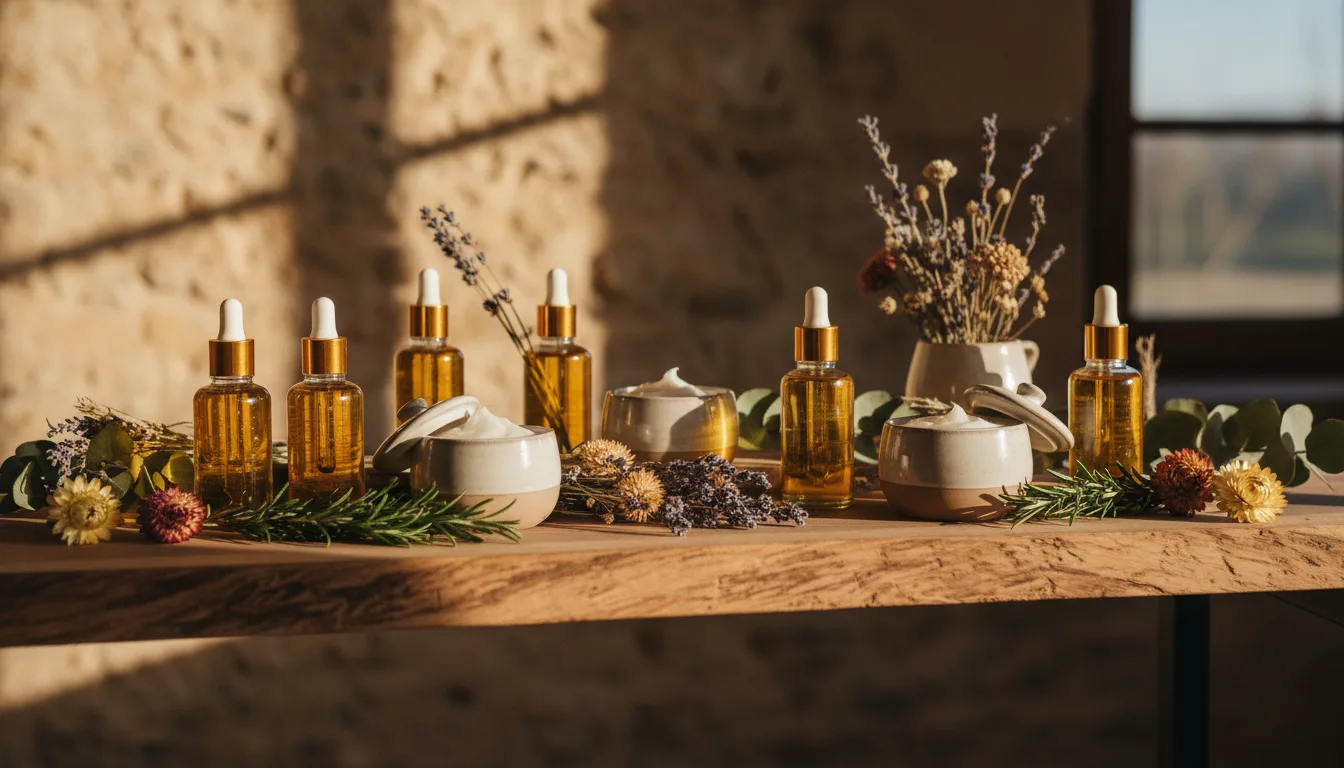
Side-by-Side: Both Products Compared
| Feature | Editor's Pick Drunk Elephant Marula Oil | ELEMIS Cleansing Balm |
|---|---|---|
| Price Range | $25–$50 | $25–$50 |
| Size | 15ml / 0.5 fl oz | 100g / 3.5 oz |
| Best Skin Type | Dry to combination | All skin types |
| Key Ingredient | 100% Virgin Marula Oil | Rose Wax + Padina Pavonica + Elderberry |
| Active Concentration | 100% pure | Concentrated balm |
| Texture | Lightweight facial oil | Solid balm (melts to oil) |
| Fragrance | Fragrance-free (natural nutty scent) | Herbal aromatherapy scent |
| See Availability | See Availability |
Quick Picks
Our Picks, Ranked
1. Drunk Elephant Virgin Marula Luxury Facial Oil — Best Single-Ingredient Oil
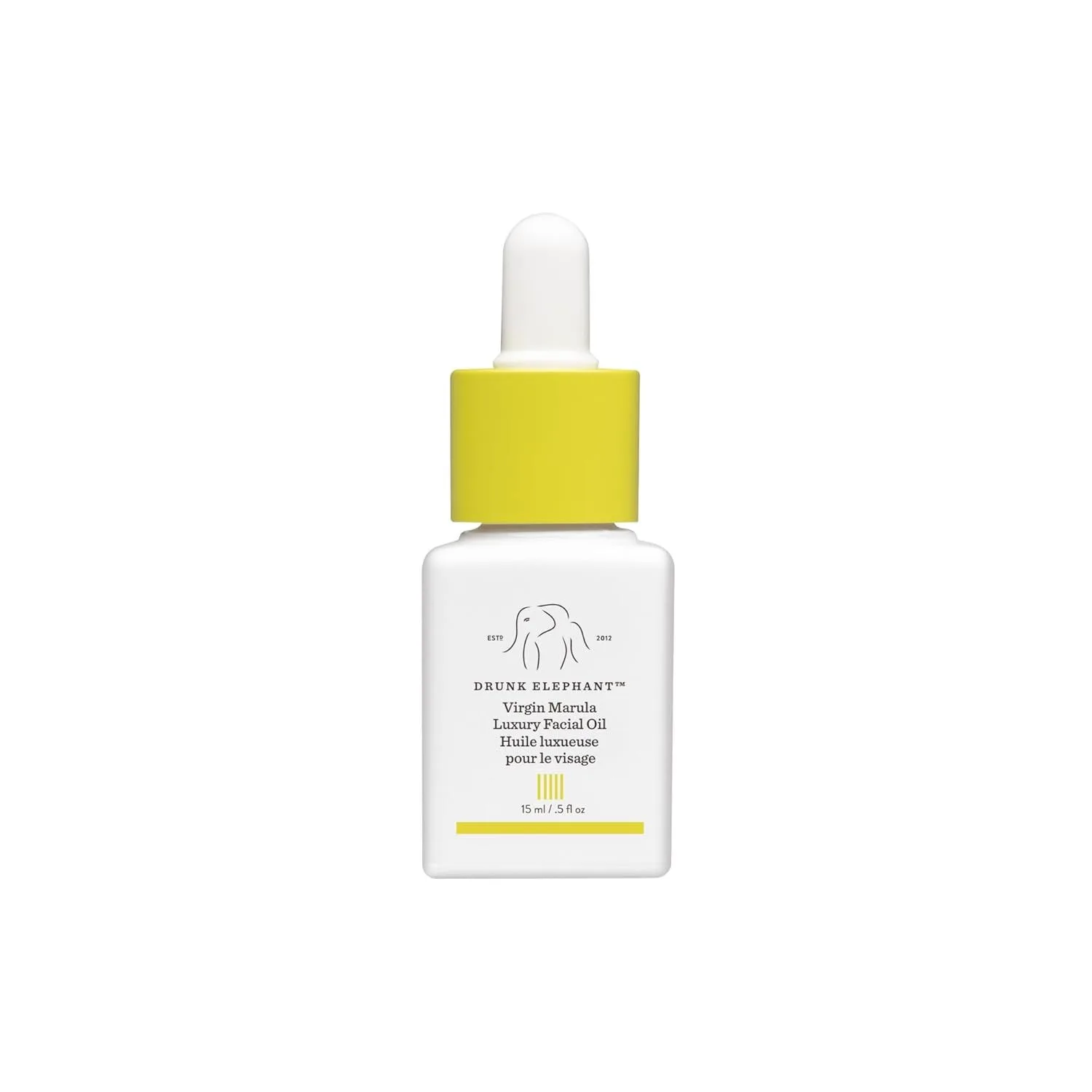
One ingredient. That is the entire formula. Drunk Elephant's Marula Oil is 100% cold-pressed, unrefined Marula — no fragrance, no fillers, no blending agents. The result is a facial oil that absorbs faster than you would expect, leaving skin with a dewy sheen rather than an oily film. Omega 6 and 9 fatty acids strengthen the lipid barrier, and the natural antioxidant profile protects against free radical damage.
The simplicity is both the strength and the limitation. You get maximum-potency Marula and nothing else — no retinol, no Vitamin C, no peptides. This is a nourishing barrier treatment, not a multi-active serum replacement. The amber glass dropper bottle looks beautiful on a shelf but exposes the oil to light and air with every use. Store it in a drawer, not a sunlit bathroom window.
Apply facial oil AFTER all water-based serums and treatments, but BEFORE a heavy occlusive cream. Oil sits on top of water-based products and creates a seal. If you apply oil first, your serum cannot penetrate through it. Two to three drops are sufficient for the full face — more creates slip without added benefit.
Pros: 100% pure cold-pressed Marula, zero fillers, fast-absorbing for an oil.
Cons: Single ingredient (no added actives), light-sensitive packaging, high per-ml cost for a pure oil.
Read Full Review | Check Price on Amazon
2. ELEMIS Pro-Collagen Cleansing Balm — Best Luxury Cleansing Experience
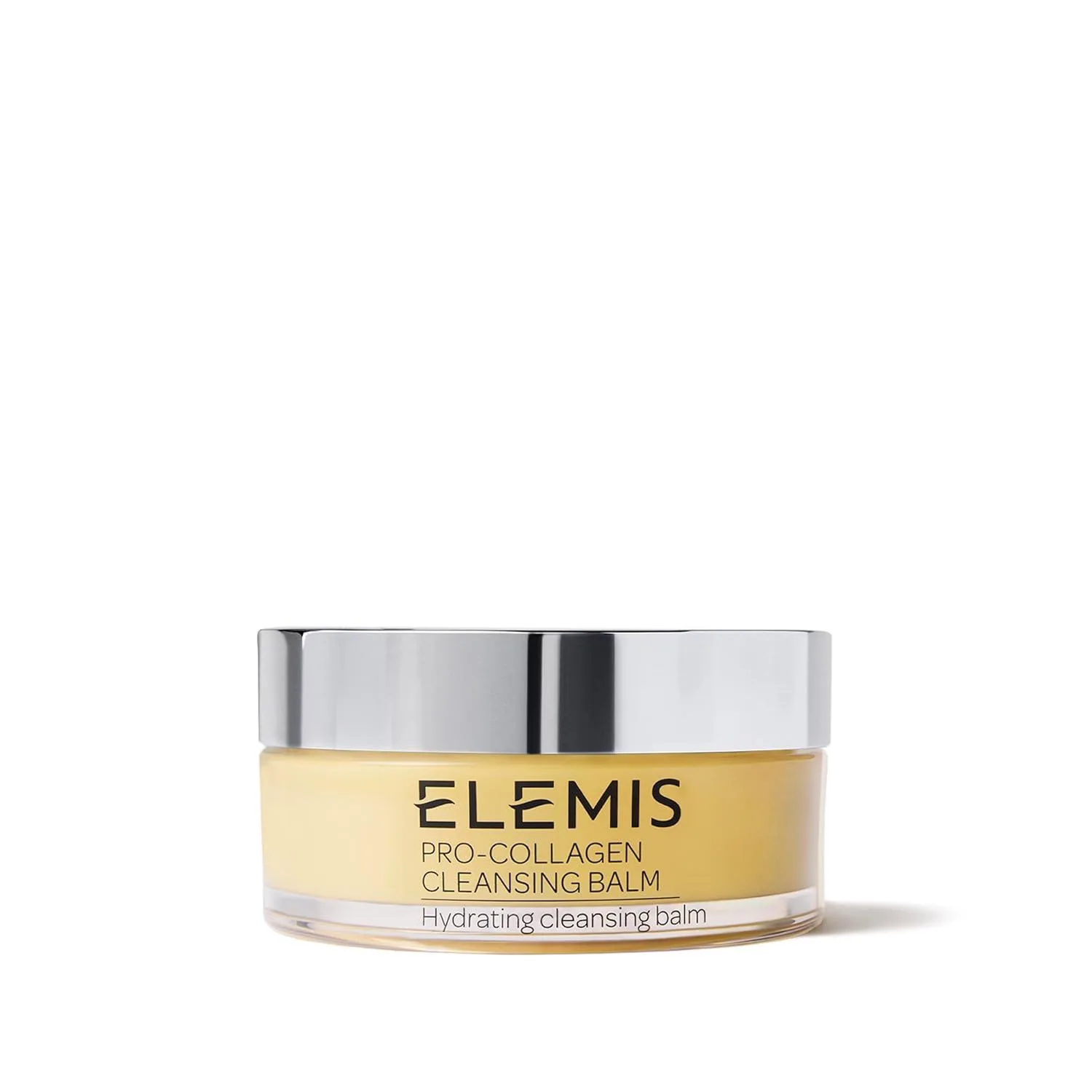
ELEMIS turned the first step of skincare — the step most people rush through — into a sensory experience. The solid balm melts on contact with warm skin, transforming into a silky oil that dissolves waterproof mascara, SPF 50, and a full day of environmental grime without tugging or friction. Rose and Mimosa waxes nourish while cleansing, and Padina Pavonica (a Mediterranean algae) adds a dose of marine minerals. Your skin feels moisturized after rinsing, not tight.
The technique matters with this product. Massage the balm in circular motions for 60 seconds to fully dissolve everything, then add warm water to emulsify before rinsing. Rushing the process — scooping and rinsing in 15 seconds — leaves a waxy residue that defeats the purpose. The herbal aromatherapy scent (star anise forward) is polarizing. Most people find it spa-like and calming. A small minority finds it medicinal.
Pros: Balm-to-oil transformation dissolves everything, skin feels nourished post-cleanse, 15,800+ positive reviews.
Cons: Premium pricing for a cleanser, requires proper technique, herbal scent is not neutral.
Read Full Review | Check Price on Amazon
A note on value: the ELEMIS balm sits at a price point that makes some people hesitate — spending premium money on something you wash off feels counterintuitive. But consider how many nights per year you cleanse your face. At roughly 365 uses from a single tub (a small amount goes far with proper technique), the per-use cost drops to pennies. Compare that to the cumulative cost of replacing a compromised skin barrier — extra moisturizer, repair serums, dermatologist visits — because a cheap cleanser stripped your skin nightly for six months. The math favors investing in the cleansing step.
Why Cleansing and Oils Deserve Better
Most skincare budgets concentrate on serums and moisturizers while treating cleansing as an afterthought. That is a mistake. A harsh cleanser strips the lipid barrier every single day, undoing what your expensive serum spent all night building. And a well-chosen facial oil can deliver fatty acids and antioxidants more efficiently than many cream-based products because oils penetrate the lipid layer directly.
The skincare industry spends billions marketing serums and moisturizers — the products with the highest margins — while under-investing in cleansing education. The result is a market full of consumers who own three serums and zero proper cleansers. Your actives cannot perform on a poorly prepped canvas. A well-formulated cleansing step removes the invisible layer of oxidized sebum, mineral sunscreen residue, and environmental particulates that accumulate throughout the day. Without that removal, your serum sits on top of debris instead of penetrating into clean, receptive skin. Every dollar spent on a quality cleanser amplifies the return on every product that follows it.
We evaluated these two products across four dimensions:
- Ingredient sourcing and purity: Cold-pressed extraction, single-source botanicals, and transparent ingredient lists signal genuine quality over marketing packaging.
- Skin feel and absorption: Oils should absorb without leaving a heavy film. Cleansing balms should rinse clean without residue or tightness.
- Skin type compatibility: Both products work across skin types, but each has specific conditions where it performs best.
- Daily usability: A product you dread using — because it is messy, slow, or smells wrong — will not get used consistently, regardless of its ingredients.
The Double Cleanse Method Explained
Double cleansing is the foundation of Korean and Japanese skincare routines, and it solves a genuine problem: water-based cleansers cannot fully dissolve oil-based impurities like sunscreen, sebum, and long-wear makeup. Step one uses an oil-based cleanser (like ELEMIS's balm) to dissolve oil-soluble debris. Step two uses a gentle water-based cleanser to remove any remaining residue and address water-soluble impurities.
The result is skin that is thoroughly clean — not stripped, not tight, not squeaky. When skin is properly cleansed, every product that follows (serum, moisturizer, treatment) absorbs more effectively because it is not competing with a layer of leftover sunscreen or oxidized sebum. A 60-second investment in proper cleansing amplifies the performance of your entire routine.
Not everyone needs to double cleanse every day. If you skip sunscreen and makeup on a weekend at home, a single gentle cleanser is sufficient. But on any day you wore SPF 30 or higher — and you should be wearing it daily — the first oil-based cleansing step makes a measurable difference in how clean your skin actually gets.
Understanding Facial Oil Types
Not all facial oils are created equal. The three main categories serve different skin needs:
Dry oils (rosehip, squalane, jojoba): Lightweight, fast-absorbing, minimal residue. Best for normal to oily skin or anyone who dislikes the feel of oil on their face. These oils mimic your skin's natural sebum composition, making them the most universally compatible.
Rich oils (Marula, argan, avocado): Medium weight with noticeable nourishment. Best for normal to dry skin. Marula (used by Drunk Elephant) falls in this category — it absorbs faster than you would expect for its richness level, which is why it works across more skin types than typical rich oils.
Heavy oils (coconut, wheat germ, castor): Very occlusive, slow-absorbing, high risk of clogging pores. Best used sparingly or mixed with lighter oils. We do not recommend pure heavy oils for facial use unless prescribed by a dermatologist for specific conditions.
The Marula oil in this roundup sits in the "rich but well-behaved" sweet spot — nourishing enough for dry skin, absorbed fast enough for combination types. That balance is why it earned the top spot despite being a single-ingredient formula.
One factor that rarely gets discussed: oxidation rate. Lighter oils like squalane resist oxidation well and stay stable for 12+ months after opening. Rich oils like Marula oxidize faster — typically within 6-8 months if stored properly, sooner if left in a warm bathroom. Heavy oils like coconut can turn rancid within weeks in humid environments. The shelf life of your facial oil directly affects its performance. A six-month-old bottle of oxidized oil delivers fewer antioxidants and more free radicals than a fresh one, which is the opposite of what you want on your face. Buy sizes you can finish within the stability window, not the largest bottle available.
Seasonal Considerations
Winter: Cold air and indoor heating strip moisture from the lipid barrier faster than any other season. A facial oil becomes essential — not optional — during winter months. Apply a few drops of Marula oil as your last step at night to create an occlusive seal that prevents overnight transepidermal water loss. Your morning skin will feel noticeably less tight and dehydrated. The ELEMIS cleansing balm is particularly important in winter because it cleanses without stripping — a foam or gel cleanser in cold weather can exacerbate dryness.
Summer: Oily skin types may want to skip facial oil entirely during humid months, or reduce to one drop mixed into moisturizer rather than applied as a standalone layer. Cleansing balm becomes even more critical in summer because waterproof sunscreen, sweat, and increased sebum production create a stubborn oil-based film that water-based cleansers alone cannot fully dissolve. The double-cleanse method shines from June through September — and if you wear mineral sunscreen with zinc oxide, which is notoriously hard to remove, a cleansing balm is nearly mandatory for a truly clean canvas.
Travel: Both products travel well. The ELEMIS balm is a solid-to-oil formula that will not leak in luggage. Marula Oil's dropper bottle requires a bit more care but the small 15ml size fits easily in a carry-on toiletry bag. Airplane cabin humidity typically drops below 20% — apply Marula oil mid-flight to keep skin from dehydrating. It absorbs quickly enough to apply without looking shiny for the rest of the flight.
Skin Type Guide: Which Product Fits You
Oily and acne-prone skin: The ELEMIS cleansing balm is safe for oily skin — the emulsifiers rinse clean without leaving pore-clogging residue. Use it as step one of a double cleanse, followed by a salicylic acid or gentle foam cleanser. The Marula Oil is trickier for oily skin. While Marula is low on the comedogenic scale, adding any oil on top of naturally high sebum production can cause congestion. If you want to try it, use one drop only on dry patches rather than full-face application, and observe your skin for two weeks before committing.
Dry and dehydrated skin: Both products are ideal. The ELEMIS balm cleanses without stripping moisture — a genuine advantage over foam cleansers that leave dry skin feeling tight and raw. The Marula Oil delivers fatty acids directly to the lipid barrier, providing nourishment that water-based serums cannot match. For severely dry skin, apply 3-4 drops of Marula Oil and then layer a rich cream on top for maximum barrier protection.
Sensitive and reactive skin: The ELEMIS balm's star anise fragrance may cause irritation for highly sensitive skin types. Patch test on your jaw for three nights before committing to full-face use. The Drunk Elephant Marula Oil, being a single pure ingredient with zero fragrance or additives, is one of the safest facial oil options for reactive skin. Pure oils rarely cause sensitivity reactions — it is the added fragrance, preservatives, and essential oils in blended products that typically trigger problems.
Combination skin: Use both strategically. The ELEMIS balm cleanses the entire face uniformly — it works well across oily and dry zones simultaneously. For the Marula Oil, apply to dry areas only (typically cheeks, forehead edges, under-eye) and skip the T-zone where your skin produces sufficient oil on its own. This targeted approach gives dry zones the nourishment they need without adding oil where it is not wanted.
Watch: Hyram's take on the Best Cleansers & Facial Oils

Cleansing & Oil Buying Guide
Match the format to the function. If you need to remove makeup and sunscreen, a cleansing balm or cleansing oil is the first step of a double-cleanse routine. If you want to seal in moisture and deliver fatty acids, a leave-on facial oil goes at the end of your routine. These are not interchangeable — one removes, the other adds. We see this confusion frequently in product reviews where someone buys a cleansing oil expecting it to nourish like a treatment oil, then complains it did nothing for their dry skin. The names sound similar, but the formulation intent is completely different.
Check the ingredient list length. For pure facial oils, shorter is often better — fewer ingredients means fewer potential irritants and higher concentration of the star oil. For cleansing balms, a moderate ingredient list reflects the emulsifiers and botanical extracts needed for the balm-to-oil transformation.
Test the rinse. A good cleansing balm emulsifies completely with water — meaning it turns milky white and rinses clean without leaving an oily film. If you have to scrub or use a cloth to remove it, the formula's emulsifier system is not doing its job. ELEMIS excels here: add warm water and it transforms into a milky rinse that washes away completely.
Storage matters for oils. Facial oils oxidize when exposed to heat, light, and air. Store in a cool, dark place. If your oil smells rancid or has changed color, it has oxidized and should be replaced. Amber glass bottles (like Drunk Elephant's) slow oxidation, but they do not prevent it — use the product within 6-8 months of opening. Consider keeping your oil in a bedroom drawer rather than a steamy bathroom cabinet — the temperature and humidity swings from daily showers accelerate degradation faster than most people realize.
Budget expectations: Quality cleansing balms and pure facial oils both sit in the $25–$50 range for prestige formulas. Drugstore alternatives exist at lower price points, but the sensory experience and ingredient purity tend to scale with price in this category. A poorly formulated cleansing balm that does not rinse clean costs you more in follow-up products and skin issues than spending more upfront on one that works.
Frequently Asked Questions
What is the difference between a cleansing balm and a facial oil?
Can facial oils cause breakouts?
Should I double cleanse every night?
When in my routine should I apply facial oil?
Are expensive facial oils worth it over drugstore options?
Common Mistakes With Cleansers and Facial Oils
Rushing your cleansing balm. A cleansing balm needs 60 seconds of massage to fully dissolve oil-based debris. Scooping, smearing, and rinsing in 15 seconds leaves sunscreen residue on your skin — residue that your water-based cleanser in step two will not fully remove. Invest the full minute. The difference in how clean your skin feels is noticeable.
Applying facial oil on dry skin. Oil and water do not mix — if you apply oil to dry skin, it sits on the surface without pulling moisture into the skin. Apply facial oil over a damp layer (hydrating serum, toner, or just a mist of water) and it creates a much more effective hydrating seal. Two drops over damp skin outperforms five drops over dry skin.
Using comedogenic oils on acne-prone skin. Not all facial oils cause breakouts — but coconut oil, wheat germ oil, and cocoa butter are highly comedogenic and should be avoided on the face. Marula, squalane, jojoba, and rosehip have low comedogenic ratings and rarely cause congestion. Check the specific oil, not the category.
Skipping the second cleanse. A cleansing balm dissolves oil-based debris. A water-based cleanser removes water-based impurities and any remaining balm residue. Using only step one leaves a thin film. Using only step two misses the sunscreen and makeup. The combination is what delivers properly clean skin — and properly clean skin is what makes your serum and moisturizer work at full capacity.
Over-cleansing in the morning. Your skin does not accumulate sunscreen and pollution while you sleep. A heavy cleansing balm in the morning strips the natural oils your skin produced overnight for barrier repair. Morning cleansing should be gentle — a splash of water, a micellar water, or at most a mild gel cleanser. Save the full double-cleanse protocol for your evening routine when there is actually something to remove. Over-cleansing twice daily is one of the fastest paths to a compromised barrier, which then requires expensive repair serums to fix.
How These Products Fit Your Routine
The ELEMIS cleansing balm belongs at the very start of your evening routine — step one of a double cleanse. Massage for 60 seconds on dry skin, add warm water to emulsify, rinse, then follow with a gentle gel or foam cleanser. Your skin should feel nourished and clean, not tight or stripped.
The Drunk Elephant Marula Oil belongs at the very end — after all water-based serums and treatments, before or instead of a heavy night cream. Apply 2-3 drops to palms, press into skin. In the morning, apply before moisturizer and sunscreen (if your SPF formula layers well over oil). Some people find facial oil under sunscreen creates too much slip — experiment with your specific SPF to find the right combination.
Together, these two products bookend your routine — ELEMIS opens it with thorough, nourishing cleansing, and Marula closes it with pure fatty acid protection. Everything in between (serums, treatments, actives) benefits from both: a cleaner canvas to absorb into, and a richer seal to hold everything in.
For those introducing both products at once, stagger the adoption. Start with the ELEMIS cleansing balm for one week to establish the double-cleanse habit and confirm your skin tolerates the formula. Then add the Marula Oil as your final step in week two. Introducing two new oil-based products simultaneously makes it harder to identify which one is responsible if your skin reacts — and while both are well-tolerated by most skin types, individual responses always vary.
Our Top Pick
Both products earned their spot for different reasons. Drunk Elephant Virgin Marula Luxury Facial Oil is the purist's choice — one ingredient, maximum potency, zero compromises. ELEMIS Pro-Collagen Cleansing Balm is the experience — a cleansing ritual that makes the first step of skincare feel like the best part. If you are building a routine from scratch, start with the ELEMIS (everyone needs a cleanser) and add the Marula Oil when your barrier needs extra support.
Check Price — Drunk Elephant Marula Oil
Compare Top Picks
Track These Picks
We'll let you know when our picks for this category change.
Only when something changes. Unsubscribe anytime.