Beauty of Joseon Revive Eye Serum vs Tatcha Serum Stick: K-Beauty Eye Treatment or Portable Luxury Hydrator?
Beauty of Joseon wins for anti-aging treatment; Tatcha wins for portable hydration. The Beauty of Joseon Revive Eye Serum is a K-beauty treatment built around retinal and ginseng root extract, engineered for one job: anti-aging around the eyes. The Tatcha Serum Stick is a solid-format hydrator you can swipe across your face, lips, cuticles, and yes, the eye area — designed for portability and instant moisture at several times the price. They share almost no formulation philosophy, target different problems, and occupy different moments in a skincare routine. The reason they end up compared is simple: both touch the eye area, and people want to know which one deserves that real estate.
Quick Verdict: Beauty of Joseon wins on anti-aging potency, ingredient specificity, and cost per result. Tatcha wins on portability, multi-use flexibility, texture elegance, and the immediate hydration experience. If your goal is treating fine lines, dark circles, and crepiness around the eyes, Beauty of Joseon is the functional pick. If your goal is keeping the eye area (and the rest of your face) hydrated throughout the day with a product that feels luxurious and travels well, Tatcha fills a gap that no liquid serum can. Many users keep both — Beauty of Joseon at night for treatment, Tatcha during the day for maintenance.
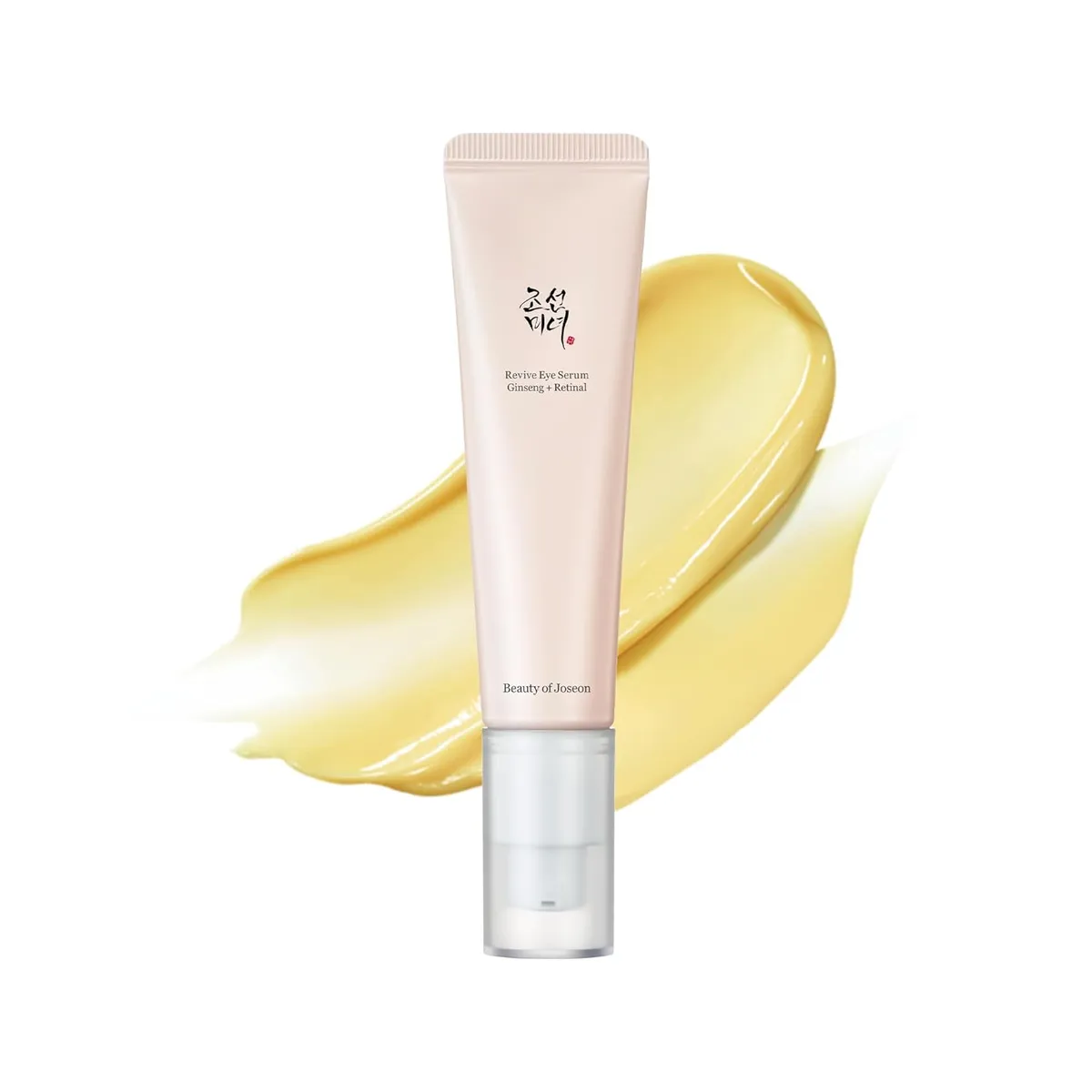
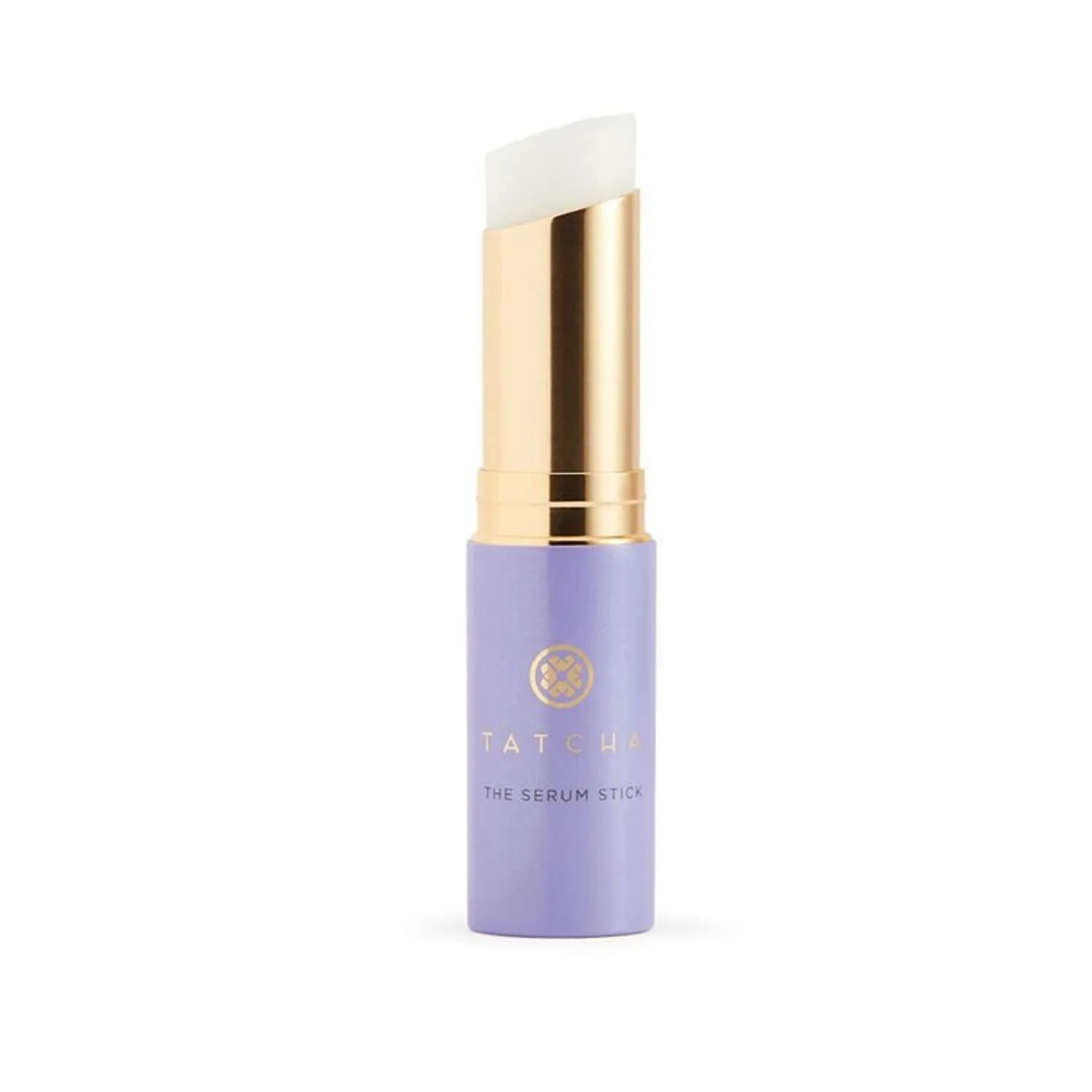
At a Glance
| Feature | Beauty of Joseon Revive Eye Serum — Ginseng + Retinal | Tatcha The Serum Stick |
|---|---|---|
| Price Range | Under $25 | $50–$100 |
| Size | 30ml / 1.01 fl oz | 8g / 0.28 oz |
| Best Skin Type | All skin types | Dry to normal |
| Key Ingredient | Ginseng + Retinal | 80% Squalane + Hadasei-3 |
| Active Concentration | Retinal (undisclosed %) | 80% Squalane |
| Texture | Lightweight gel serum | Solid balm stick |
| Fragrance | Fragrance-free | Light botanical |
| See Availability | See Availability |
What Each Product Actually Does
The Beauty of Joseon Revive Eye Serum is a treatment product. Its active architecture centers on retinal (retinaldehyde) — a vitamin A derivative that sits one conversion step away from retinoic acid, the form of retinol that directly stimulates collagen production and accelerates cell turnover. Retinal works faster than standard retinol because the skin only needs one enzymatic conversion instead of two. Paired with ginseng root extract — a Korean herbal ingredient with documented circulation-boosting and antioxidant properties — the formula targets fine lines, dark circles, puffiness, and early crepiness around the orbital area. This is a nighttime product meant to work while your skin repairs itself during sleep.
The Tatcha Serum Stick is a hydration product in a solid delivery format. It contains squalane, Japanese lemon balm, and Tatcha's proprietary Hadasei-3 complex (a fermented blend of green tea, rice, and algae). The stick melts on contact with warm skin and deposits a thin, dewy layer of moisture that absorbs within seconds. It is not designed to treat wrinkles, boost collagen, or reverse aging signs. It is designed to deliver instant hydration to any area that feels dry or tight — face, under-eyes, lips, hands, cuticles. The solid format means no leaks, no pumps, and no application tools. You swipe and go.
Understanding this distinction is the foundation of the entire comparison. One product treats. The other hydrates. They solve different problems through different mechanisms, and expecting anti-aging results from a hydration stick — or expecting portable daytime convenience from a retinal serum — sets up the wrong comparison. The overlap happens at the eye area, where both products can be applied, but what they do once applied is fundamentally different.
Anti-Aging Actives and Eye-Area Specificity
Beauty of Joseon owns this category outright. The retinal in its formula is one of the most effective non-prescription anti-aging actives available for the eye area. Retinal converts to retinoic acid in a single enzymatic step, which means it delivers visible results — softer fine lines, brighter under-eye skin, improved texture — faster than conventional retinol. Most users report noticing changes within 4-6 weeks of consistent nightly use. The ginseng root extract adds a second anti-aging vector: it supports microcirculation under the skin, which helps reduce the bluish-purple tint of dark circles caused by sluggish blood flow in the thin periorbital tissue.
The formula is built specifically for the eye area. The concentration of retinal is calibrated for the thinner, more reactive skin around the eyes — strong enough to produce results, moderate enough to avoid the peeling and redness that full-face retinoids can cause. The tube dispenses a small, controlled amount. Every aspect of the product is designed for one zone and one purpose. That specificity translates to results: across 5,800+ Amazon reviews, the most common praise centers on visible dark circle reduction and fine line softening around the crow's feet area.
Tatcha's Serum Stick contains no retinoids, no peptides, and no active ingredients designed to treat aging signs. The squalane and botanical extracts provide surface-level hydration and a temporary plumping effect — well-moisturized skin looks smoother and more supple, which can mask the appearance of fine lines for a few hours. But this is a cosmetic smoothing effect, not a structural change. Once the hydration fades or gets absorbed, the fine lines return. For users whose primary concern is treating aging around the eyes, the Beauty of Joseon eye serum is the only option in this comparison that addresses the underlying biology.
Portability and Multi-Use Flexibility
Tatcha designed the Serum Stick to travel. The solid format eliminates every liquid-product inconvenience: no TSA concerns, no leaking in bags, no need for a mirror or clean hands for precise application. The twist-up mechanism dispenses product without contact, and the cap clicks shut securely. It fits in a coat pocket, a clutch, a gym bag, a desk drawer. The product does not degrade with temperature fluctuations the way liquid serums can — it softens slightly in heat and firms up in cold, but the formula remains stable and effective across conditions.
Beyond portability, the Tatcha Serum Stick earns its price through use-case breadth. It works on the under-eye area, yes — but also on dry patches along the jawline, flaking around the nose in winter, chapped lips, rough cuticles, dry elbows, and the backs of hands. A single product replacing four or five single-purpose items creates real practical value, especially for people who travel frequently or want a simplified on-the-go kit. The stick format also layers over makeup without disrupting it — pat gently over foundation or concealer to refresh hydration without smearing.
The Beauty of Joseon Eye Serum is a liquid in a tube with a fine-tip applicator. It belongs on a bathroom shelf as part of a nighttime routine. Carrying it in a bag risks leaking, and applying it without a mirror risks getting retinal where it should not go (eyelids, mucous membranes). It is a stationary, single-purpose product — and that is not a flaw, it is a design decision that prioritizes efficacy over convenience. But in the portability and flexibility category, the Tatcha Serum Stick occupies territory that the Beauty of Joseon cannot enter.
Texture, Application, and Sensory Experience
The Tatcha Serum Stick glides onto skin with a waxy-smooth, balm-like slip that melts immediately on contact. The finish is dewy without being greasy — a thin, luminous film that makes the skin look hydrated and alive. The scent is subtle, clean, and slightly botanical. Using the product feels indulgent in a way that solid skincare rarely achieves. Tatcha has invested heavily in the sensory engineering of this stick, and it shows. The immediate skin feel — cool, smooth, plumped — creates a satisfaction loop that encourages regular use. People reach for the Serum Stick not because they need to, but because they want to.
The Beauty of Joseon Eye Serum is a lightweight, slightly viscous liquid that dispenses from a narrow-tip tube. You dot it along the orbital bone and pat gently with your ring finger until absorbed. The texture is functional and clean — it absorbs in about 20-30 seconds, leaves no residue, and layers well under a night cream or eye cream if you use one. There is no noticeable scent. The experience is clinical in the best sense: efficient, no-fuss, designed to deliver actives without sensory distraction. It does not feel luxurious the way Tatcha does, but it does not feel cheap either. It feels like a tool.
Sensory experience affects compliance. A product that feels beautiful gets used more consistently, and consistency drives outcomes in skincare more than almost any other variable. The Tatcha Serum Stick wins the texture battle by a wide margin — it was designed to be a pleasure to use, and it succeeds. The Beauty of Joseon wins the efficiency battle — it absorbs fast, deposits its actives, and gets out of the way. For a nighttime treatment step, that efficiency is appropriate. For a daytime hydration moment, Tatcha's sensory appeal is a genuine advantage.
The Price Equation
Beauty of Joseon sits in the budget-to-mid-range tier at budget-friendly for 30ml of product. At nightly eye-area application rates, that tube lasts 2-3 months. The per-month cost is among the lowest for any retinal-based eye treatment on the market — comparable products from Western brands often cost three to five times more for smaller volumes. K-beauty pricing philosophy drives this: high-quality actives at accessible prices, distributed through direct-to-consumer and Amazon channels with lower markup structures than department-store brands.
Tatcha occupies the prestige tier at mid-range for 12g — a solid format where weight, not volume, determines quantity. With daily use on the face alone, the stick lasts 6-8 weeks. Heavy multi-zone users burn through it faster. The per-gram cost is high even within the luxury skincare segment, and the cost-per-active-ingredient ratio is less favorable than the Beauty of Joseon because the Tatcha formula prioritizes hydrating and cosmetic ingredients over treatment-grade actives. You are paying for the format innovation, the brand experience, the texture engineering, and the Japanese-inspired ingredient philosophy.
Measuring value depends on what you value. If you define value as anti-aging results per dollar, Beauty of Joseon delivers more potent actives at a fraction of the cost — this is not a close contest. If you define value as daily-use enjoyment, portability convenience, and the elimination of multiple single-purpose products from your routine, Tatcha's price makes more sense as a lifestyle purchase. Both definitions of value are valid. The budget difference between the two is large enough that many users simply buy both and assign each to its appropriate role in their routine.
Ingredient Philosophy: K-Beauty Function vs Japanese Luxury Ritual
Beauty of Joseon represents the Korean skincare approach at its most focused: identify a skin concern, find the most effective active for that concern, formulate around it, and price it so everyone can access it. The brand draws on traditional Korean herbal medicine — ginseng has been used in Korean skincare for centuries — and pairs it with modern dermatological actives like retinal. The result is a product where every ingredient has a job. There is no filler designed to create a luxury texture or a pleasant scent. The formula exists to work, and the packaging exists to protect the formula.
Tatcha takes the Japanese approach: skincare as ritual, not just treatment. The Hadasei-3 complex — fermented green tea, rice, and algae — references centuries of Japanese beauty tradition, where the process of caring for skin carries as much value as the clinical outcome. The squalane provides practical hydration, but the formulation philosophy extends beyond function into experience. The stick format itself is an innovation in how skincare is delivered, not just what skincare contains. Tatcha sells an idea about what skincare should feel like, and the product validates that idea every time you use it.
Neither philosophy is superior. The K-beauty functional approach produces better clinical outcomes per dollar. The Japanese ritual approach produces better compliance and emotional satisfaction per use. For the eye area specifically — where aging concerns are real, visible, and progressive — the functional approach has a measurable advantage. For overall skincare enjoyment and daily-life integration, the ritual approach creates habits that compound over years. Our full Beauty of Joseon review covers the functional ingredient approach in more depth.
Hydration Mechanisms and Duration
The Tatcha Serum Stick delivers immediate, perceptible hydration. Squalane — a lipid that mirrors the skin's own sebum — coats the surface and reduces trans-epidermal water loss within seconds of application. The Japanese lemon balm and botanical extracts provide lightweight emollience. The hydration effect peaks within 2-3 minutes of application and persists for 3-5 hours depending on climate, skin type, and activity level. In dry environments — air-conditioned offices, airplane cabins, winter cold — the hydration window shortens, which is why many users reapply 2-3 times throughout the day.
The Beauty of Joseon Eye Serum provides secondary hydration through its base formula, which includes hyaluronic acid and moisturizing agents that keep the retinal from drying the eye area. This hydration is supportive — it exists to make the retinal tolerable and to prevent the tight, dry feeling that some retinoid products cause. It is not the product's primary purpose, and the hydration duration is shorter than a dedicated moisturizing product. Most users follow the Beauty of Joseon with a separate eye cream or night cream to seal in moisture overnight.
For pure hydration performance — how fast, how deep, how long the moisture lasts — Tatcha outperforms the Beauty of Joseon because hydration is its entire reason for existing. The Beauty of Joseon provides enough moisture to support its active ingredients but does not attempt to compete as a standalone hydrator. If you need the eye area to feel immediately dewy, comfortable, and plump, the Tatcha Serum Stick delivers that sensation on demand. If you need the eye area to be treated while adequately moisturized overnight, the Beauty of Joseon handles both in one application step.
Real User Results: What Amazon Reviews Reveal
The Beauty of Joseon Revive Eye Serum carries 5,800+ Amazon reviews at a 4.5-star average — a strong dataset for a K-beauty eye product on a Western marketplace. The most frequent positive themes: visible dark circle reduction within 3-4 weeks, fine line softening around the outer eye corners by week 6, and zero irritation despite containing retinal. The negative reviews cluster around two concerns — some users found the tube dispensed too much product per squeeze (leading to waste), and a subset of users with very sensitive skin experienced mild stinging during the first few applications. Both criticism patterns appear in under 8% of reviews.
The Tatcha Serum Stick holds 4,500+ reviews at a 4.3-star average. The praise focuses on texture, portability, and the immediate skin-feel improvement. Users repeatedly describe it as the product they reach for most throughout the day — a "comfort item" that provides both physical hydration and a moment of self-care. The negative reviews are more pointed: the product runs out faster than expected given its price, the packaging mechanism occasionally sticks or fails to retract smoothly, and some users with acne-prone skin report that the squalane base triggered breakouts along the jawline and chin. About 12% of reviews mention the value-for-size concern.
Both products maintain healthy review profiles with authentic user feedback. The Beauty of Joseon reviews skew more clinical — people discuss specific skin changes with timelines. The Tatcha reviews skew more experiential — people discuss how the product fits into their day and how it makes them feel. This difference in review character mirrors the product philosophies: one invites measurement, the other invites enjoyment. Neither review pool shows signs of the review manipulation patterns (sudden spikes, identical phrasing, compensated language) that plague some beauty categories on Amazon.
Who Gets Which
Get Beauty of Joseon Revive Eye Serum If...
- Your primary concern is aging around the eyes — fine lines, dark circles, early crepiness, or crow's feet that you want to treat at the biological level
- You want a retinal-based product at a fraction of the cost that Western prestige brands charge for comparable actives
- You already have a daytime moisturizer and just need a dedicated nighttime eye treatment with proven actives
- You prefer a K-beauty philosophy: functional ingredients, transparent formulas, accessible pricing
- You are building a targeted anti-aging routine and need an eye-specific step with real retinoid potency
Get Tatcha Serum Stick If...
- You want a portable, multi-use hydrator that works on the eye area plus face, lips, cuticles, and dry patches throughout the day
- Texture and sensory experience are high priorities — you want skincare that feels luxurious and creates a moment of indulgence
- You need something that layers over makeup without disruption for mid-day touch-ups
- Your eye-area concerns are dryness and dehydration, not wrinkles or dark circles
- You travel often and want a leak-proof, TSA-friendly product that replaces multiple hydrating items in your bag
Can You Use Both? The Case for Pairing Them
Yes — and this is the recommendation that many dermatologists would support if asked. The two products occupy completely separate functional lanes. Beauty of Joseon at night delivers treatment-grade retinal and ginseng to the eye area during the skin's natural repair window. Tatcha during the day provides on-demand hydration and a protective moisture barrier against environmental dryness. They do not compete for the same moment in a routine, and their ingredients do not conflict or cancel each other out.
The pairing works financially too. The combined cost of both products falls below what many single prestige eye treatments charge — and you get both active anti-aging treatment AND daytime portable hydration. A typical luxury eye cream at the department store counter sits in the mid-to-high prestige range for 15ml with no portability and often less potent actives than what the Beauty of Joseon delivers. Splitting the job between two specialized products instead of asking one product to do everything produces better results at each task.
The practical routine: cleanse at night, apply Beauty of Joseon Revive Eye Serum to the orbital area with your ring finger, follow with your night cream or sleeping mask. In the morning, do your regular routine. Keep the Tatcha Serum Stick in your bag, at your desk, or in your gym kit. Swipe it over the eye area, cheekbones, lips, or anywhere that feels dry throughout the day. This split maximizes what each product does best and avoids asking either one to perform outside its design intent.
Packaging and Practicality
The Beauty of Joseon comes in a slim, opaque tube with a fine-tip applicator. The tube protects the retinal from light degradation — retinal is even more photosensitive than standard retinol, so the opaque packaging is a functional necessity, not a design choice. The fine tip allows precise application along the orbital bone without getting product on the eyelid or into the eye itself. The tube is lightweight, compact, and does not take up much shelf space. It is not designed for travel — the soft tube could leak under pressure, and the fine tip benefits from controlled application in front of a mirror.
The Tatcha Serum Stick uses a twist-up mechanism housed in a metallic-finish tube that looks and feels like a premium lip product. The cap clicks securely, the twist mechanism advances the product in small increments, and the solid format means zero leak risk. The packaging is designed to be seen — it sits well in a handbag, on a desk, or on a bathroom counter as an object that signals care and quality. The metallic casing also protects the product from temperature swings better than most liquid packaging, though extreme heat (above 95°F) can soften the stick enough to deform inside the tube.
For home use on a bathroom shelf, both packages are fine. For on-the-go use, Tatcha's solid stick format is categorically superior — it was engineered for exactly that scenario. The Beauty of Joseon tube belongs in a controlled environment where you can apply with precision and store it upright in the dark. These packaging differences reinforce what the products are: one is a clinical tool for a nighttime routine, the other is a portable luxury item for daily life.
Long-Term Skin Impact
Over months and years of consistent use, the Beauty of Joseon Revive Eye Serum produces cumulative structural changes in the skin around the eyes. Retinal stimulates collagen production, accelerates cell turnover, and promotes smoother, firmer skin with each cycle of use. Ginseng supports these changes by maintaining healthy circulation and delivering antioxidant protection against free radical damage. Users who stick with the product for 6+ months report that their eye area looks measurably younger than it did before they started — not a subjective feeling, but observable changes in line depth, skin tone, and texture.
The Tatcha Serum Stick provides long-term hydration maintenance but does not produce structural skin changes. Squalane supports the skin's moisture barrier and helps prevent the cumulative damage that chronic dehydration causes — dry skin ages faster because the barrier dysfunction accelerates collagen breakdown and environmental damage. In that indirect sense, consistent hydration protects against premature aging. But the Tatcha Serum Stick does not reverse existing aging signs or build new collagen. Its long-term benefit is maintaining the skin's current state, not improving it beyond baseline.
For anyone thinking about the eye area over a 5-year horizon, the Beauty of Joseon offers a trajectory — measurable improvement that compounds with continued use. The Tatcha offers maintenance — keeping the skin comfortable, hydrated, and protected against dryness-driven damage. Both matter. Prevention and treatment are complementary strategies, not competing ones. But if you can only choose one product for long-term eye-area investment, the one with active retinal and documented collagen-stimulating properties will produce more visible change over time.
See Both Products in Action


Final Verdict
The Beauty of Joseon Revive Eye Serum is the better product for treating the eye area. It contains retinal and ginseng — active ingredients with documented anti-aging mechanisms — at a price that undercuts most Western competitors by 60-80%. If wrinkles, dark circles, and crepiness are your concerns, this serum addresses all three through biological pathways that produce cumulative, lasting results. It is a clinical tool that does exactly what it promises.
The Tatcha Serum Stick is the better product for hydrating the eye area — and the face, lips, hands, and anywhere else that needs moisture throughout the day. It does not treat aging. It does not contain retinoids. What it does is deliver immediate, perceptible hydration in a format that no liquid product can match for portability and convenience. The sensory experience is among the best in all of skincare, and the multi-use flexibility justifies its prestige price for users who will actually carry it and use it daily.
The honest answer for most people: get the Beauty of Joseon for your nighttime routine and add the Tatcha if your budget allows and your lifestyle involves enough time away from home to use it. The K-beauty treatment handles the hard work of anti-aging while you sleep. The Japanese luxury stick handles the daily maintenance of keeping skin comfortable and hydrated in real-world conditions. Together, they cover the eye area more thoroughly than any single product in either brand's lineup.
Frequently Asked Questions
Can I use both Beauty of Joseon Eye Serum and Tatcha Serum Stick together?
Yes, and they pair well because they serve different functions. Apply the Beauty of Joseon Revive Eye Serum at night as your treatment step — the retinal and ginseng work best during overnight skin repair cycles. Use the Tatcha Serum Stick during the day for on-the-go hydration, touch-ups over makeup, or whenever the eye area feels tight. The two products occupy separate slots in a routine and do not interfere with each other.
Is the Tatcha Serum Stick just for eyes?
No. The Tatcha Serum Stick is designed for multi-zone use — face, lips, cuticles, elbows, and any dry patch that needs immediate hydration. The eye area is one application zone, but not the primary one. This is a portable hydration tool, not a targeted eye treatment. That flexibility is part of its appeal, but it also means the formula is not optimized specifically for the thin, delicate skin around the eyes the way a dedicated eye serum is.
Does the Beauty of Joseon Eye Serum contain retinol or retinal?
It contains retinal (retinaldehyde), which is one step closer to retinoic acid in the conversion pathway than retinol. Retinal converts to the active form in one enzymatic step instead of two, which means faster visible results at the same concentration. The distinction matters: retinal is more potent than retinol but less irritating than prescription retinoic acid, making it a strong middle ground for the eye area where skin is thinner and more reactive.
Will the Tatcha Serum Stick work over makeup?
Yes. The solid stick format is specifically designed to layer over makeup without disrupting it. Pat gently rather than dragging — the warmth of your skin softens the stick enough to deposit a thin hydrating layer without smearing foundation or concealer underneath. This is one of the main advantages of the stick format over liquid serums, which would dissolve or streak over makeup.
How long does each product last with daily use?
The Beauty of Joseon Eye Serum (30ml) lasts roughly 2-3 months with nightly application to both eyes, since you only need a rice-grain-sized amount per eye. The Tatcha Serum Stick (12g) lasts about 6-8 weeks with once-daily facial use, though heavy multi-zone users (face, lips, hands, cuticles) may go through it in 4-5 weeks. Per-month cost favors the Beauty of Joseon by a wide margin.
Is the Beauty of Joseon Eye Serum safe for sensitive skin around the eyes?
Most users with sensitive skin tolerate it well. The retinal concentration is calibrated for the eye area, and the ginseng root extract has anti-inflammatory properties that offset potential irritation. Start with every other night for the first two weeks to gauge your skin response. If you experience stinging, redness, or flaking, reduce to twice weekly and build up gradually. The formula does not contain fragrance, which removes one of the most common irritation triggers for the eye area.