Augustinus Bader Rich Cream vs La Mer Moisturizing Cream: Which Is Better in 2026?
The modern challenger vs the reigning icon. Augustinus Bader's Rich Cream burst onto the ultra-luxury scene with TFC8 technology born from 30 years of stem cell research, collecting 120+ industry awards in a few short years. La Mer's Creme de la Mer has been the benchmark of luxury skincare since an aerospace physicist created the Miracle Broth in the 1960s. La Mer is modestly more expensive than Augustinus Bader — but La Mer's 100ml jar is double the volume. Ounce for ounce, the investment is closer than it appears.
Quick Verdict: Augustinus Bader wins on modern science and industry recognition. La Mer wins on heritage, hydration depth, and the ritual experience. Both deliver real results at the ultra-luxury level. Bader is the science-forward choice; La Mer is the heritage choice. Your skin will benefit from either — the deciding factor is what kind of luxury resonates with you.
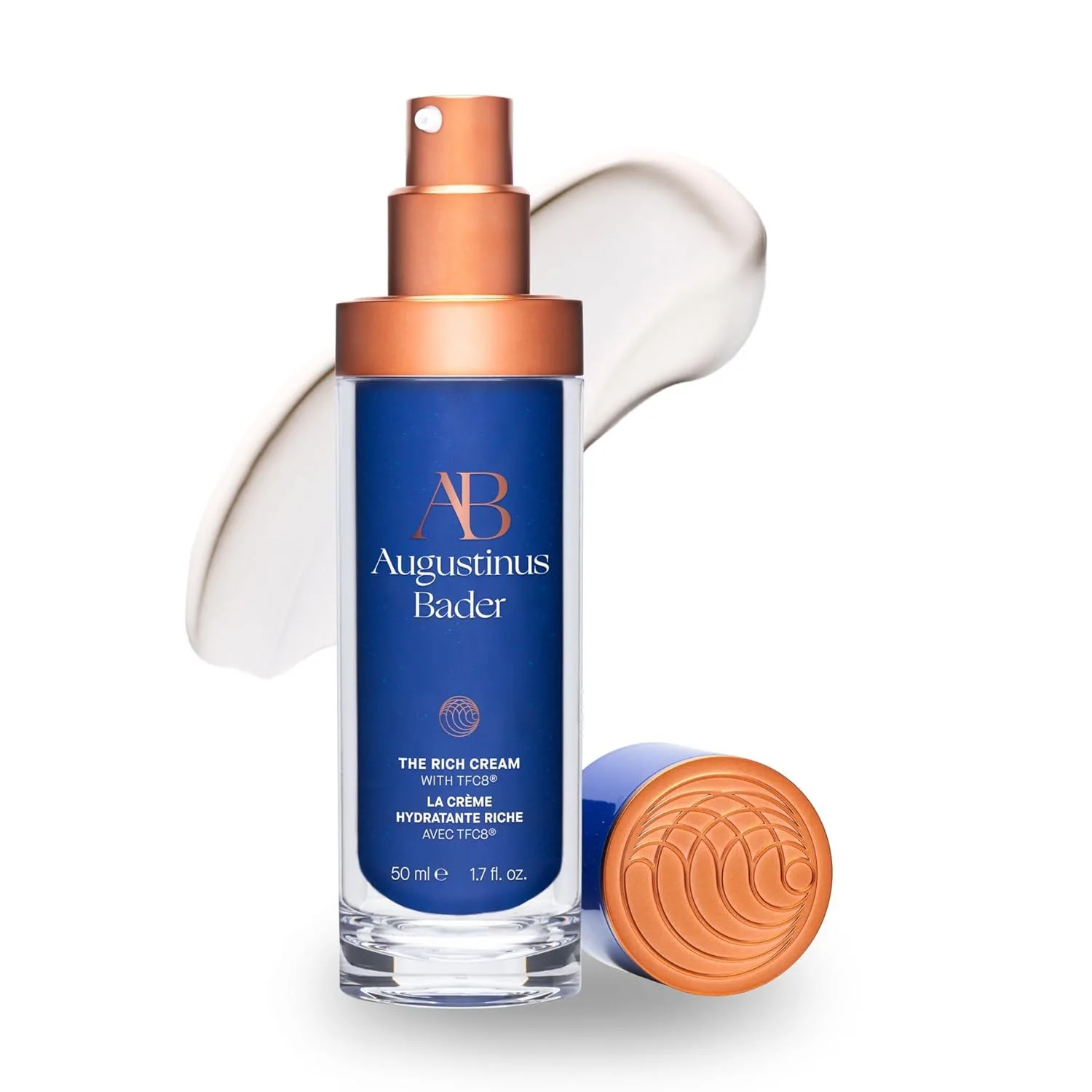
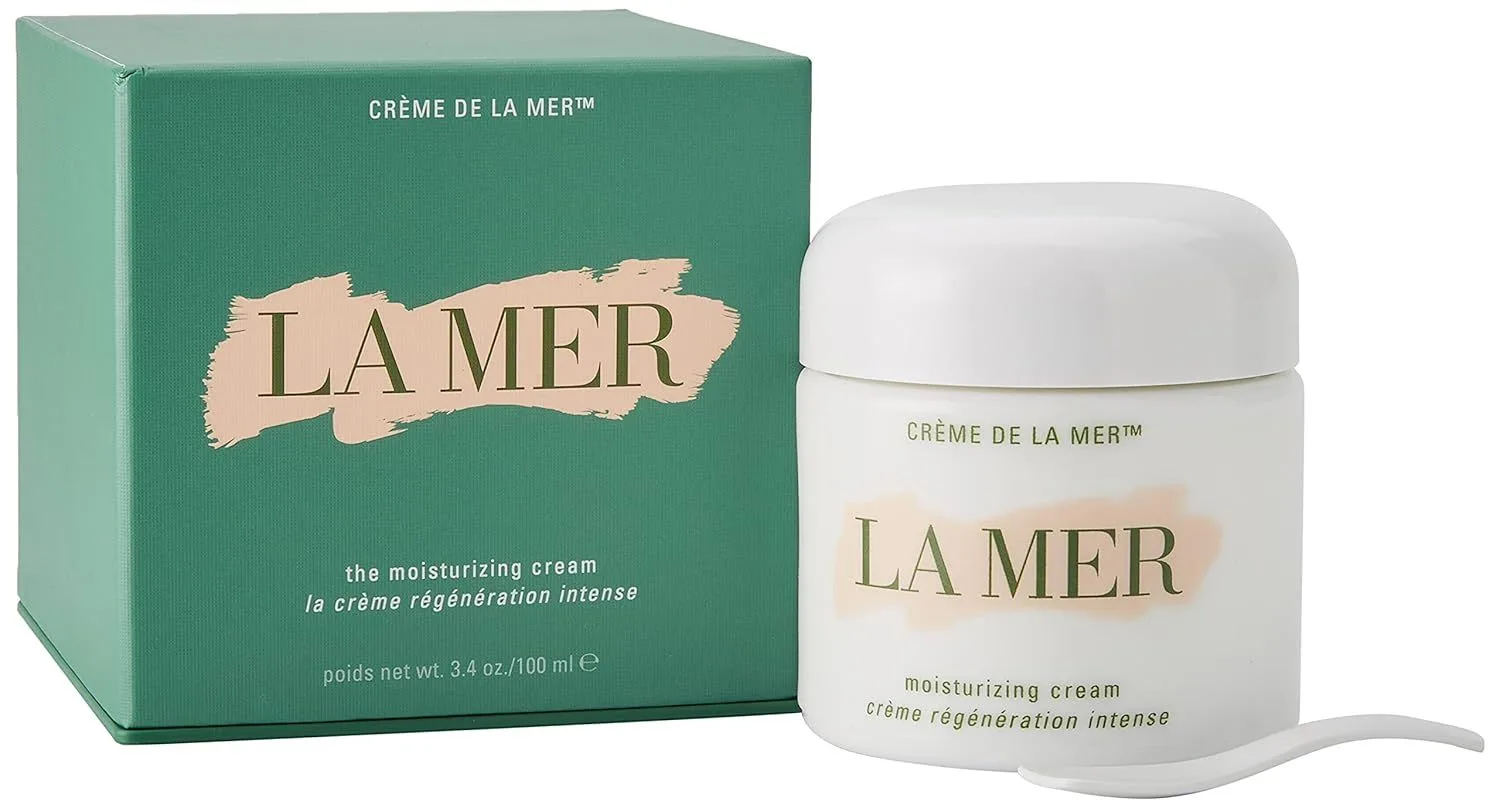
At a Glance
| Feature | Augustinus Bader The Rich Cream | La Mer Moisturizing Cream |
|---|---|---|
| Price Range | $250–$500 | $250–$500 |
| Size | 50ml / 1.7 fl oz | 100ml / 3.4 fl oz |
| Best Skin Type | All skin types (esp. dry to normal) | Dry to normal |
| Key Ingredient | TFC8 Cellular Renewal Complex | Miracle Broth (Bio-Ferment) |
| Active Concentration | TFC8-delivered | Concentrated Miracle Broth |
| Texture | Rich nourishing cream | Dense rich cream (warming ritual) |
| Fragrance | Fragrance-free | Subtle signature scent |
| See Availability | See Availability |
TFC8 Stem Cell Science vs Miracle Broth Bio-Fermentation
Augustinus Bader's TFC8 (Trigger Factor Complex) originated from Professor Bader's wound-healing research at Leipzig University. The theory: a specific combination of amino acids, vitamins, and synthesized molecules signals skin cells to repair themselves. The clinical data behind TFC8 comes primarily from wound-healing contexts — the translation to cosmetic anti-aging is an extrapolation, but it is an educated one backed by published research.
La Mer's Miracle Broth is a bio-fermented blend of sea kelp, vitamins, minerals, and oils. The fermentation process takes months and creates bioavailable nutrients that skin absorbs more readily than their raw forms. Max Huber, an aerospace physicist who suffered severe burns in a lab accident, developed the original formula over 12 years and 6,000 experiments to heal his own damaged skin. The science is older, less documented in peer-reviewed journals, but supported by over 50 years of continuous consumer repurchase — arguably the most powerful clinical trial possible.
TFC8 has the more modern, academically rigorous scientific story. Miracle Broth has the longer real-world track record. Both represent proprietary technologies that competitors cannot replicate — and both have scientific narratives that extend beyond typical cosmetic marketing into serious research territory. The question is where you place more weight — on published research credentials or on a half-century of accumulated consumer proof.
120 Awards vs 50 Years of Worship: Which Reputation Matters More?
Augustinus Bader collected 120+ beauty industry awards in under a decade — a pace no other skincare brand has matched. Beauty editors, dermatologists, and professional reviewers collectively validate TFC8 with an intensity that is hard to explain as mere hype. These are not pay-to-play awards — they come from publications like Allure, Harper's Bazaar, British Vogue, and Tatler, each with independent editorial review processes.
La Mer's reputation was built over half a century through celebrity devotees, word-of-mouth, and the simple passage of time. Victoria Beckham, Kim Kardashian, and Jennifer Aniston have all publicly credited La Mer — unsolicited endorsements that no marketing budget can manufacture. Awards are concentrated expert opinion. Heritage is distributed consumer loyalty across generations and continents.
Both forms of proof are legitimate. But awards are verifiable, timestamped, and specific. Heritage is cumulative, emotional, and harder to falsify. For someone making a first-time purchase decision today — choosing between two ultra-luxury creams they have never tried — Augustinus Bader's modern expert consensus offers more actionable confidence than La Mer's generational reputation. For someone who has used La Mer for years and knows what it does for their skin, no award count will convince them to switch.
There is also a geographic dimension to these reputations worth noting. La Mer dominates in Asian luxury markets — particularly Japan, South Korea, and China — where the brand carries a prestige weight that Augustinus Bader has not yet matched. Department store counters in Tokyo and Seoul dedicate prime real estate to La Mer displays, and the brand's association with the Japanese skincare philosophy of patience and ritual resonates deeply with those consumer bases. Augustinus Bader has gained faster traction in European and North American markets, where the science-forward narrative and editorial award culture align more closely with how consumers evaluate skincare. If you travel frequently and want a cream that is easily repurchased internationally, La Mer's distribution network is broader — available in over 50 countries through established luxury retail channels. Bader is expanding fast but still harder to find outside major Western markets.
The Texture Experience: Clinical Cream vs Sacred Ritual
La Mer requires a ritual. Warm the cream between your palms for 10-15 seconds until it begins to melt, then press — not rub — it into your skin. Hold your palms against your face for a moment to let body heat drive the Miracle Broth into the skin. The dense texture transforms through this process from a thick balm into something almost fluid. It does not simply absorb — it activates.
This ritual is not theater. The warming step is engineered into the formula: the bio-fermented ingredients are designed to become more bioavailable at body temperature. Pressing (not rubbing) avoids creating friction that can irritate sensitive or aging skin. La Mer devotees consider this ritual part of the cream's identity — and they are not wrong that the technique affects the results.
Augustinus Bader's Rich Cream is rich but comparatively straightforward — apply and let it absorb. No warming, no pressing, no ritual. It just works. The cream spreads easily, absorbs within a minute, and does not require any specific application technique to deliver its TFC8 payload. For skincare minimalists who view their routine as maintenance, Bader respects your time. For skincare ritualists who view their routine as self-care, La Mer transforms a 30-second step into a 2-minute experience you look forward to.
Hydration Intensity: Which Cream Feeds Drier Skin?
La Mer's dense texture includes mineral oil and petrolatum — effective occlusive agents that lock moisture in aggressively. Petrolatum has been shown to reduce transepidermal water loss (TEWL) by over 98%, making it one of the most effective barrier-repair ingredients in dermatology. The Miracle Broth adds nourishing sea kelp nutrients on top of that occlusive seal. For severely dry, dehydrated, or winter-damaged skin, La Mer's heavy occlusive approach provides more immediate hydration relief than almost any other prestige cream.
Augustinus Bader's lighter texture relies on TFC8 to stimulate the skin's own moisture production rather than layering external occlusion. The philosophy is fundamentally different: La Mer gives your skin moisture from the outside; Bader signals your skin to generate moisture from the inside. Both hydrate well in normal conditions. But when skin is cracked, flaking, or compromised by cold weather, the immediate occlusive rescue of La Mer's dense formula provides faster visible relief. Bader's approach yields better long-term moisture balance but requires the skin to be functional enough to respond to the cellular signals.
Clean Beauty Credentials: What Is Actually in Each Jar?
Augustinus Bader is fragrance-free, lighter on controversial ingredients, and positions itself as a science-forward clean formulation. The ingredient list is shorter, more focused, and avoids many of the items that the clean-beauty movement flags as concerns. For sensitive skin types that react to fragrance (which represents 8-15% of the population, according to dermatological surveys), Bader's fragrance-free approach eliminates a common irritant.
La Mer contains mineral oil, petrolatum, fragrance, and several ingredients that clean-beauty advocates avoid. The counterargument: mineral oil and petrolatum are among the most studied, safest, and most effective occlusive ingredients in dermatology. The "dirty" label reflects consumer sentiment, not safety data. Fragrance in La Mer is carefully formulated to be part of the luxury sensorial experience — and for most skin types, it poses no irritation risk.
Both are effective. Ingredient controversies in skincare are often more about values and philosophy than clinical safety. But if clean formulation influences your purchasing decisions — or if you have fragrance sensitivity confirmed by a dermatologist — Augustinus Bader aligns more closely with that requirement. For a broader look at how these two stack up against the full luxury moisturizer market, see our best luxury moisturizers roundup.
One underexamined factor in the clean-beauty debate: ingredient stability over time. Augustinus Bader's simpler formula with fewer volatile compounds maintains its efficacy profile from first use to the bottom of the jar. La Mer's bio-fermented Miracle Broth is inherently more complex, and some users report a slight textural shift in the final quarter of the jar — the cream can become denser as lighter volatile components evaporate with repeated opening and closing. This does not indicate spoilage or reduced effectiveness, but it does mean the application experience on day one may differ from day ninety. Storing La Mer in a cool, stable environment (not in a steamy bathroom) and using the provided spatula rather than fingers helps maintain consistency throughout the jar's life span.
Layering and Routine Fit
Augustinus Bader layers well over active serums — retinol, Vitamin C, peptides. Its lighter texture absorbs quickly and does not interfere with what is underneath. Use it as the final seal both morning and night. In the morning, apply over serum and before sunscreen. At night, apply over your treatment serum as the last step.
Sunscreen compatibility is another practical concern at this tier. Augustinus Bader's matte-satin finish pairs well with both chemical and mineral sunscreens — no pilling, no white cast amplification, no greasy residue that destabilizes SPF films. La Mer's richer, more occlusive base can occasionally cause pilling when layered under mineral sunscreens with high zinc oxide concentrations. Users who rely on mineral SPF formulas should allow a full five minutes for La Mer to absorb before applying sunscreen, or consider switching to a chemical SPF to avoid texture conflicts. For this reason, many La Mer users reserve the original Creme exclusively for nighttime and use a lighter product under their morning sunscreen.
La Mer's warming-and-pressing ritual means it works best as a standalone night treatment with minimal layers underneath. A lightweight hydrating serum, then La Mer, then sleep. Heavy serums under La Mer create too much product density — the Miracle Broth needs direct skin contact to perform optimally. In the morning, most La Mer users switch to the brand's lighter "Moisturizing Soft Cream" or use a separate lightweight moisturizer under SPF.
Who Should Get Which?
Get Augustinus Bader Rich Cream If...
- Modern cellular science backed by 120+ industry awards influences your purchasing confidence
- You prefer a fragrance-free, clean-formulation approach and have sensitive skin
- Your skin responds to repair-focused, lightweight formulas rather than heavy occlusion
- You want a no-fuss cream with no required application technique — apply and go
- Sustainability matters — Bader's refillable jar system reduces waste and lowers repeat cost
- You value scientific transparency and research credentials over brand heritage
Get La Mer Moisturizing Cream If...
- Heritage and 50+ years of proven results across millions of users inspire more trust than recent expert awards
- Your skin is dry to very dry and needs the strongest occlusive moisture barrier at any price
- The warming-and-pressing ritual is part of the luxury experience you are investing in
- You want the larger 100ml jar — double the volume means better per-ounce economics over time
- Fragrance is a feature, not a concern — the sensorial experience enhances your nightly routine
- You already know La Mer works for your skin and see no reason to experiment with alternatives
The Per-Ounce Economics
Augustinus Bader's Rich Cream comes in a 50ml jar. La Mer's Creme de la Mer comes in a 100ml jar — double the volume. The shelf price gap is real, but the per-ounce difference is much smaller than the sticker shock suggests. Factor in La Mer's denser texture (requiring less product per application) and its 100ml volume, and the actual cost per month of use may favor La Mer for some application styles. Bader's refillable system, meanwhile, reduces the packaging cost component on every repurchase after the first. Calculate your actual monthly consumption before comparing prices — the per-jar number misleads both ways. If you apply generously twice daily, Bader's 50ml jar may last only six weeks, while La Mer's 100ml jar used once nightly could stretch past four months — a dramatically different cost-per-use equation than the shelf price alone suggests.
Frequently Asked Questions
Is Augustinus Bader actually better than La Mer?
They excel at different things. Augustinus Bader's TFC8 technology targets cellular repair with a modern scientific approach. La Mer's Miracle Broth delivers intensive hydration and radiance through bio-fermented sea kelp. Neither is objectively "better" — the right choice depends on whether your skin needs repair or nourishment.
Why is La Mer more expensive for a simpler-sounding formula?
La Mer's pricing reflects heritage, the Miracle Broth fermentation process (which takes months), and decades of brand equity. Augustinus Bader's pricing reflects patented TFC8 technology and stem cell research. Both have premium pricing that goes beyond ingredient cost — you are paying for proprietary processes, research investment, and brand positioning.
Which cream works better for dry skin?
La Mer. The dense, occlusive texture locks in moisture more aggressively than Augustinus Bader's lighter Rich Cream. The warming-and-pressing application ritual also drives the Miracle Broth deeper into dehydrated skin. For severe dryness, La Mer's approach is more immediately effective.
Can I see results from Augustinus Bader in the first week?
Most users report a noticeable improvement in skin texture and hydration within 7-10 days. Visible fine line reduction takes 3-4 weeks. The 120+ beauty industry awards reflect consistent results across diverse reviewers — but expect gradual improvement rather than overnight transformation.
Do either of these contain retinol or active anti-aging ingredients?
Neither contains retinol, Vitamin C, or traditional active ingredients. Augustinus Bader relies on TFC8 (a complex of amino acids, vitamins, and synthesized molecules) to signal cellular repair. La Mer relies on the Miracle Broth bio-ferment for nourishment and resilience. Both take a recovery-focused approach rather than an active-ingredient approach.
Skin Type Compatibility: Which Cream Fits Your Skin?
Augustinus Bader Rich Cream works across a wider range of skin types. The lighter texture suits normal, combination, and dry skin equally well. Oily skin types may find even Bader's Rich Cream too heavy — the brand offers a lighter "The Cream" alternative for those who prefer less richness. Sensitive skin benefits from the fragrance-free formula and the absence of mineral oil.
La Mer Creme de la Mer is best suited for dry to very dry skin. The dense, occlusive texture provides maximum moisture retention but can feel too heavy for oily or combination skin types, especially in warm weather. Sensitive skin may react to the fragrance component — patch testing is advisable before committing to a full jar at this investment level. In winter, even normal skin types appreciate La Mer's protective density. In summer, many users switch to La Mer's lighter "Moisturizing Soft Cream" formulation.
Age is another variable that shapes the comparison. Users over 50 with thinning, drier skin tend to gravitate toward La Mer's richer occlusion — the dense barrier compensates for the reduced sebum production that comes with hormonal changes. Users in their 30s and 40s, whose skin still produces adequate oil but shows early signs of fine lines and uneven texture, often prefer Bader's lighter repair-focused approach. This is a generalization, not a rule — skin type matters more than age. But the pattern appears consistently across user reviews: La Mer's core demographic skews older, while Bader's early adopters tend to be younger luxury consumers who prioritize ingredient transparency and scientific backing over brand legacy.
See Both Products in Action


Final Verdict
Augustinus Bader beats La Mer on modern scientific validation, clean formulation, and refillable sustainability. La Mer wins on hydration depth for severely dry skin and the ritual experience that five decades of devotees swear by. Augustinus Bader is the science story. La Mer is the heritage story. Both stories deliver real results. Bader's TFC8 represents a modern, research-driven approach to cellular repair — the 120+ awards from industry experts reflect genuine efficacy. La Mer's Miracle Broth represents decades of bio-fermentation refinement — the millions of loyal users reflect deep satisfaction. At this price tier, both are exceptional investments in your skin. The question is not which cream is "better" — it is which philosophy of luxury you believe in.
Augustinus Bader also competes at this tier against other ultra-luxury creams — see how it performs in our Augustinus Bader vs Cle de Peau showdown. If you are choosing between these two for the first time, consider requesting samples from a department store counter before committing. Two weeks of consistent use with each cream will tell you more than any comparison article can. Your skin's response to TFC8 versus Miracle Broth is personal — biochemistry varies, and the cream that transforms one person's complexion may produce only modest results on another. At this investment level, a trial period is not optional — it is the only rational approach to a decision this expensive.
Track Both Products
We'll email you if either price drops or availability changes.
Only when something changes. Unsubscribe anytime.