Augustinus Bader Retinol vs CeraVe Retinol Serum: Which Retinol Serum Is Better in 2026?
Two retinol serums sit at opposite ends of the skincare market. Augustinus Bader's TFC8 retinol serum pairs the ingredient with a patented cellular complex and targets deep repair at premium pricing. CeraVe's encapsulated retinol serum wraps the same active in slow-release delivery with ceramides and niacinamide at several times the price — creating the widest price gap among retinol serums we review.
Quick Verdict: Augustinus Bader wins on irritation management, sensory experience, and cellular targeting technology. CeraVe wins on value, barrier support ingredients, volume of real-world evidence, and accessibility. Neither is the objectively better retinol — they serve fundamentally different buyers. If retinol results-per-dollar matters most, CeraVe is the rational pick. If you want retinol embedded in a broader cellular repair system and cost is not a constraint, Augustinus Bader delivers something CeraVe cannot replicate.
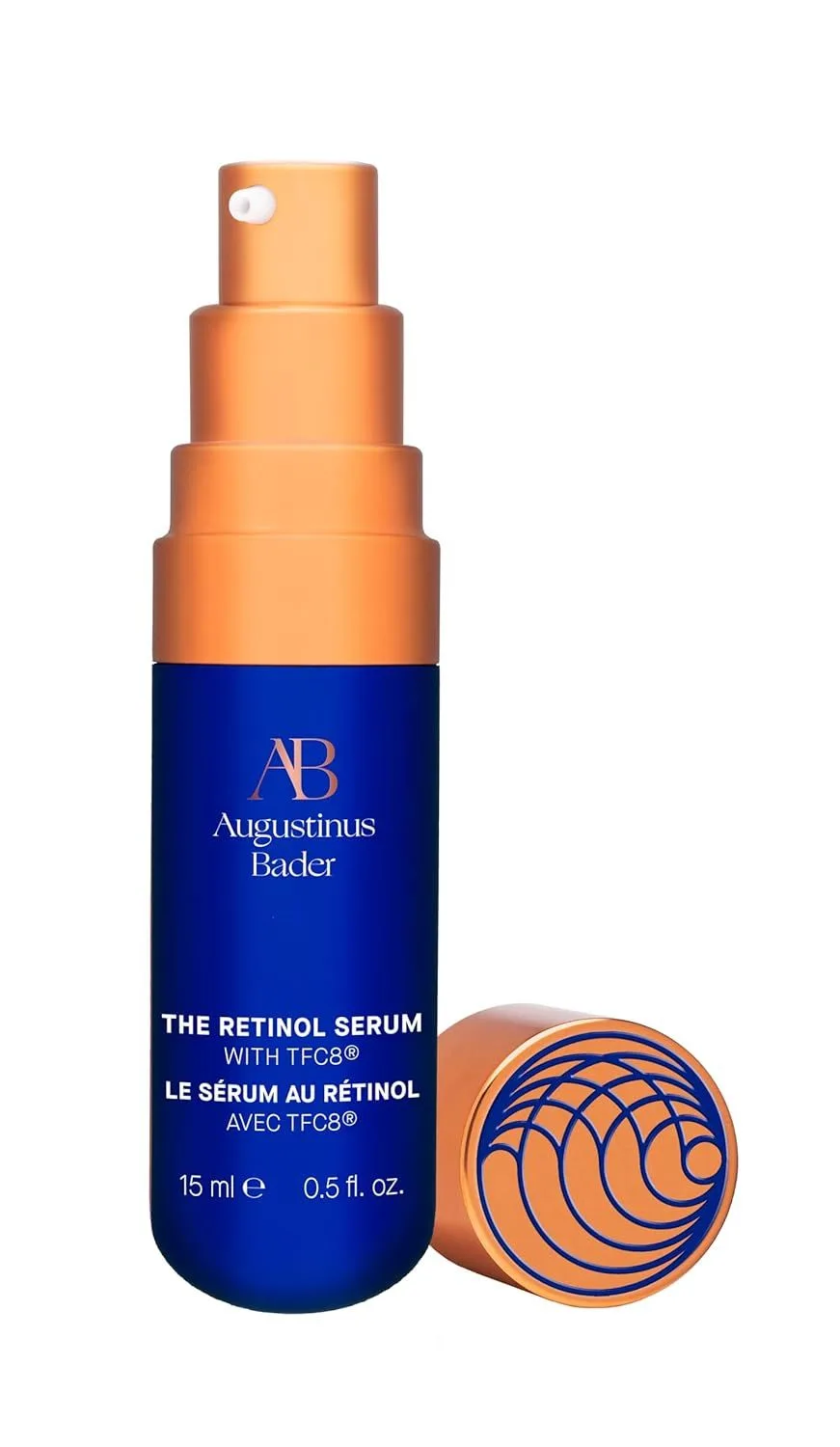
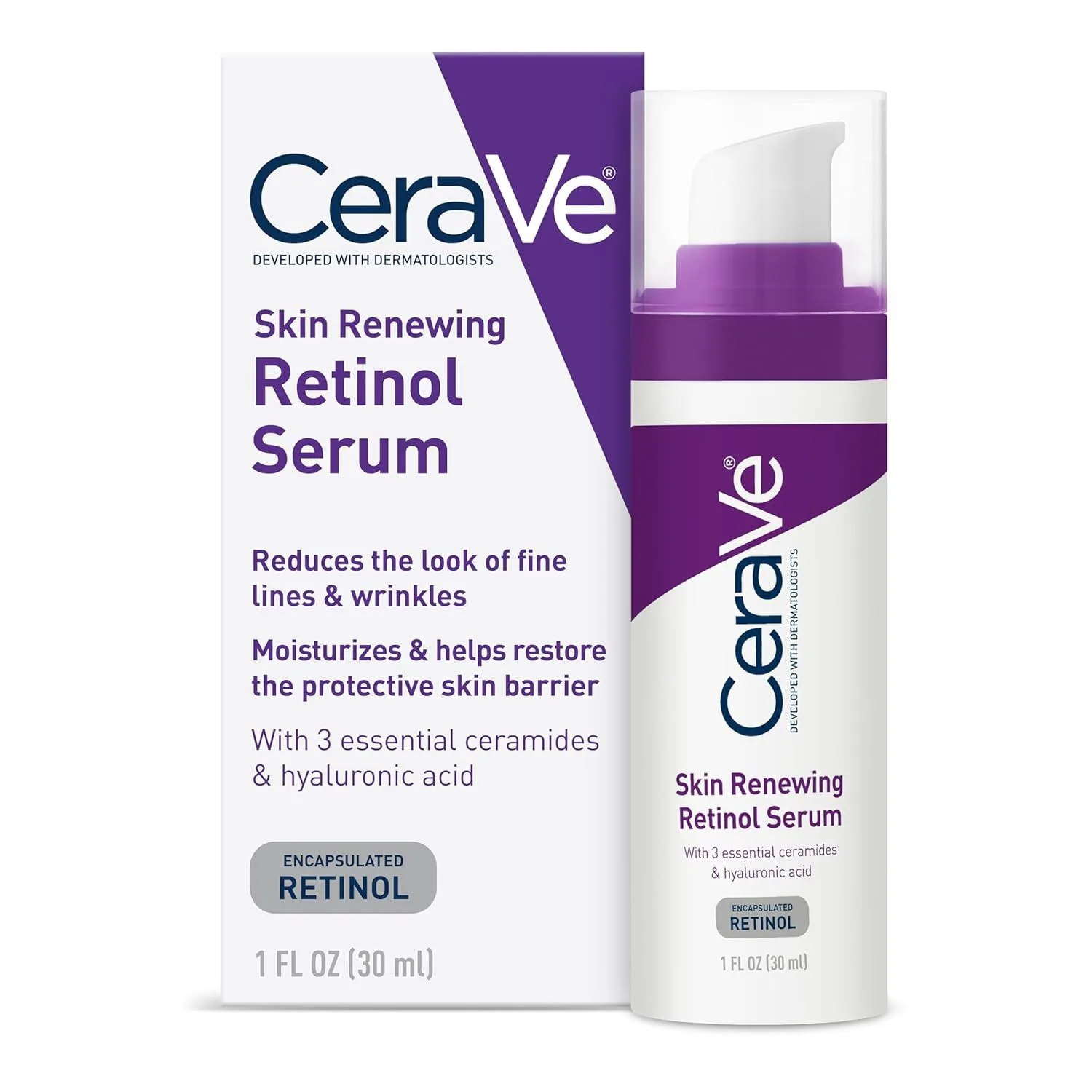
At a Glance
| Feature | Augustinus Bader The Retinol Serum | CeraVe Anti Aging Retinol Serum |
|---|---|---|
| Price Range | $100–$250 | Under $25 |
| Size | 30ml / 1 fl oz | 30ml / 1 fl oz |
| Best Skin Type | All skin types incl. sensitive | Sensitive & beginner skin |
| Key Ingredient | Retinol + TFC8 Complex | Encapsulated Retinol + Ceramides |
| Active Concentration | Undisclosed (TFC8-delivered) | Low (encapsulated) |
| Texture | Lightweight fluid serum | Cream-serum hybrid |
| Fragrance | Fragrance-free | Fragrance-free |
| See Availability | See Availability |
The Technology Behind Each Formula
Augustinus Bader builds its retinol serum around TFC8 — a proprietary complex of amino acids, vitamins, and synthesized molecules designed to guide active ingredients into skin cells more effectively. The retinol itself is one component within a broader delivery system that Augustinus Bader developed from stem cell research. The brand does not disclose the retinol concentration, positioning the formula as a holistic cellular treatment rather than a single-active product. Published research on TFC8 focuses on wound healing acceleration and cellular regeneration, with the retinol serum representing an extension of that technology into anti-aging skincare.
CeraVe takes the opposite approach: transparency and ingredient-level simplicity. Its retinol is encapsulated — wrapped in a slow-release coating that meters the active into the skin over hours rather than minutes. This encapsulation reduces the concentration spike that causes redness and peeling during retinol initiation. Alongside the retinol, CeraVe includes three ceramides (1, 3, 6-II) that mirror the lipids naturally present in healthy skin barriers, plus niacinamide for inflammation management. Every ingredient choice has decades of published dermatological research behind it.
These two philosophies create a meaningful split. Augustinus Bader bets on cellular intelligence — the idea that guiding ingredients to the right cells matters more than raw concentration. CeraVe bets on proven actives at safe concentrations with barrier protection — the dermatologist-endorsed approach that has worked for millions of people. Both are valid strategies, and neither can be dismissed.
Irritation and Skin Tolerance
Augustinus Bader reports near-zero irritation across its user base, and Amazon reviews corroborate this claim — complaints about redness, flaking, or stinging are almost absent from the 800+ reviews. The TFC8 complex appears to buffer the retinol's irritation potential at the cellular level, supporting the skin's tolerance mechanisms while the retinol works. Users with reactive skin, rosacea-adjacent sensitivity, and prior bad experiences with retinol repeatedly describe this serum as the first retinol that did not punish their skin.
CeraVe also manages irritation well, though through a different mechanism. The encapsulated delivery slows retinol release, and the ceramide matrix actively repairs barrier disruption as it occurs. Most beginners experience zero irritation with CeraVe. A small percentage report mild dryness during the first week — not peeling or redness, but a slight tightness that resolves within days. The 28,300+ Amazon reviews give CeraVe a 4.4 rating, and the irritation complaints are rare enough to be statistical noise at that sample size.
The difference between them narrows when you look at outcomes rather than mechanisms. Both products allow sensitive-skin users to introduce retinol without the painful initiation period that stronger retinoids cause. Augustinus Bader achieves this with proprietary cellular targeting. CeraVe achieves it with encapsulation and barrier support. The practical result — tolerable retinol from day one — is the same. Augustinus Bader gets the edge because its approach works even on the most reactive skin types, where encapsulated delivery occasionally still triggers mild responses.
What Does the Price Gap Actually Buy You?
The price difference between these two serums is roughly tenfold. That gap is the central question of this comparison, and it deserves a direct answer: the premium does not buy you ten times more retinol efficacy. Retinol is retinol — the molecule converts to retinoic acid in the skin regardless of the delivery vehicle's price tag. What Augustinus Bader charges for is the TFC8 delivery system, the formulation elegance, the sensory experience, and the brand's research infrastructure. Whether those factors justify the gap depends entirely on individual priorities.
CeraVe, for its part, is not cutting corners at its price point. The formula contains clinically validated concentrations of ceramides, niacinamide, and encapsulated retinol. The packaging is functional and protects the retinol from degradation. The brand invests heavily in dermatologist partnerships and clinical validation. At budget-friendly, CeraVe offers one of the highest value-per-active-ingredient ratios in the entire skincare market. It is not a discount product pretending to be effective — it is an effective product priced for mass accessibility.
For buyers who have tried CeraVe's retinol and want to understand what spending more could add, Augustinus Bader offers a genuinely different experience: the texture feels more refined on the skin, the absorption is faster, and the overall sensory quality signals luxury in a way that CeraVe does not attempt. Those experiential differences are real but subjective. The retinol's core anti-aging work — stimulating collagen, accelerating cell turnover, softening fine lines — happens at both price points. Where you allocate your skincare budget after the actives are covered is a personal decision, not a clinical one.
Barrier Support and Supporting Ingredients
CeraVe's ceramide trio (ceramides 1, 3, and 6-II) directly replenishes the lipids that form the skin's moisture barrier. This is not a supporting role — it is the foundation of CeraVe's entire skincare philosophy. When retinol accelerates cell turnover, the barrier can temporarily thin. CeraVe's ceramides counteract that thinning in real time, maintaining hydration and reducing trans-epidermal water loss during the retinol adjustment period. The niacinamide adds a second layer of barrier support by stimulating natural ceramide production within the skin itself. This dual mechanism — external ceramide delivery plus internal ceramide stimulation — makes CeraVe one of the most barrier-friendly retinol formulations available at any price.
Augustinus Bader's supporting ingredient list is less transparent. The TFC8 complex contains amino acids, high-grade vitamins, and synthesized molecules, but the specific concentrations and ratios are proprietary. The brand positions TFC8 as a "guided" delivery system that works at the cellular level, and the clinical research on TFC8 in wound healing supports the claim that it enhances cellular repair. What Augustinus Bader does not offer is the straightforward, well-published barrier support that CeraVe's ceramide-niacinamide combination provides. Users who want to know exactly what each ingredient does and at what concentration will find CeraVe's approach more satisfying.
For people whose primary concern is retinol tolerance and long-term barrier health — common priorities for anyone with dry skin, eczema tendencies, or a history of barrier compromise — CeraVe's formula is better designed for the job. The ceramide and niacinamide combination has decades of published evidence showing barrier repair and maintenance. Augustinus Bader's TFC8 may deliver comparable or superior results, but the evidence base is smaller and the mechanism is less publicly documented. Our full CeraVe Retinol Serum review covers the barrier approach in more depth.
Texture, Absorption, and the Nightly Routine
Augustinus Bader's serum has a lightweight, fluid texture that absorbs into skin within 30 seconds. There is no residue, no tackiness, and no pilling when layered under a night cream or sleeping mask. The formula feels expensive on the skin — a subtle distinction that regular users of luxury skincare recognize immediately. The pump dispenses a controlled amount, and the airless packaging prevents oxidation over the product's lifespan. Using it feels like a deliberate, considered step in an evening routine rather than a functional chore.
CeraVe's texture is a cream-serum hybrid — thicker than a traditional serum, with a slightly emollient finish. It absorbs in about 60-90 seconds and leaves a faint moisture film that some users appreciate and others find heavy. For minimalist routines (cleanser, retinol, done), CeraVe doubles as both treatment and light moisturizer. For layered routines, the richer texture can feel cumbersome under additional products, especially on oily or combination skin. The tube-and-pump packaging is practical and protects the formula well, though it lacks the polished design language of Augustinus Bader's bottle.
Routine integration matters because compliance determines results. A retinol that feels unpleasant to apply gets skipped more often. Users who enjoy the sensory experience of their evening skincare are more consistent, and consistency is the single biggest factor in retinol outcomes. Augustinus Bader's texture encourages nightly use through sheer pleasure. CeraVe's texture is adequate but does not inspire the same routine attachment. For a product that needs to be used 5-7 nights per week for months to deliver results, this experiential difference has practical consequences.
Real-World Evidence: Reviews and User Outcomes
CeraVe's 28,300+ Amazon reviews at a 4.4-star average represent one of the largest user datasets for any single retinol product. The volume alone provides statistical confidence that the formula works for a broad population. The most common praise: no irritation, visible texture improvement, and excellent compatibility with other CeraVe products. The most common criticism: results plateau after 3-4 months as the skin fully adapts to the low concentration. A smaller subset of users report that the pump mechanism fails before the tube is empty, wasting the final portion of product.
Augustinus Bader's 800 reviews at 4.2 stars tell a different story — smaller sample, slightly lower average, but with notably passionate positive reviews. Users who rate it 5 stars frequently describe it as the best retinol they have ever tried, with specific praise for zero irritation on previously retinol-intolerant skin. The negative reviews cluster around two themes: the price feels unjustifiable for the perceived results, and some users see no difference compared to their previous retinol product. This polarization is typical of ultra-premium skincare — the product delivers a different experience, and whether that experience justifies the cost is inherently subjective.
The evidence gap between 28,300 reviews and 800 reviews matters for risk assessment. With CeraVe, you can predict with high confidence how your skin will respond — the sample is large enough to cover virtually every skin type, climate, and routine combination. With Augustinus Bader, you are relying on a smaller dataset and trusting that TFC8's benefits translate to your specific skin biology. That is not a criticism of Augustinus Bader's formula — the smaller review count reflects a smaller buyer base at a premium price point, not a quality problem.
Long-Term Anti-Aging Trajectory
Both serums address the same anti-aging targets: fine lines, uneven texture, dullness, and early collagen loss. The retinol molecule in each formula converts to retinoic acid through the same enzymatic pathway in the skin. The difference lies in what happens around the retinol. Augustinus Bader's TFC8 supports cellular repair processes that extend beyond retinol's direct mechanism of action — the brand's research suggests that TFC8 creates an environment where cells repair themselves more efficiently, which could amplify the anti-aging benefits of retinol over months and years of consistent use.
CeraVe's long-term value comes from its barrier-building approach. After 6 months of consistent CeraVe retinol use, most users report skin that feels stronger, more hydrated, and more resilient to environmental stressors — benefits driven primarily by the ceramides rather than the retinol itself. The retinol's direct anti-aging effects (fine line reduction, texture smoothing) plateau after 3-4 months at CeraVe's low concentration, but the cumulative barrier benefits continue to compound. Users who later step up to a stronger retinol find that CeraVe's ceramide foundation makes the transition smoother because their barrier is already fortified.
For users planning a multi-year retinol journey, the trajectory looks different depending on which product they start with. CeraVe functions as a foundation-builder — it introduces retinol gently, fortifies the barrier, and prepares the skin for stronger formulations down the road. Augustinus Bader functions as a standalone solution — its TFC8-enhanced delivery is designed to remain effective long-term without requiring graduation to a higher concentration. Users who want a single retinol they can use indefinitely without increasing potency may find Augustinus Bader's approach more sustainable. Users who view retinol as a progressive ladder (low concentration to high over years) will outgrow CeraVe — but that is by design.
Who Should Get Which?
Get Augustinus Bader Retinol If...
- Your skin has reacted badly to every retinol you have tried — TFC8's cellular targeting offers a different tolerance mechanism than encapsulation
- You want a single retinol product for long-term use without needing to increase concentration over time
- The luxury experience matters — texture, packaging, and the nightly ritual are part of why you invest in skincare
- Budget is not a deciding factor, and you prioritize proprietary technology over proven-but-conventional ingredients
- You are already using other Augustinus Bader products and want the TFC8 system across your full routine
Get CeraVe Retinol Serum If...
- This is your first retinol product — the encapsulated delivery and ceramide buffer are specifically engineered for beginners
- Value matters — you want clinically validated retinol results without paying for luxury packaging or proprietary complexes
- Your skin is dry or barrier-compromised — the ceramide trio and niacinamide actively repair and maintain barrier integrity
- You prefer knowing exactly what is in your formula and why — CeraVe's ingredient transparency is unmatched at this price
- You plan to eventually step up to a stronger retinol — CeraVe is the ideal starting point before moving to Medik8, La Roche-Posay, or prescription tretinoin
Packaging and Retinol Stability
Retinol degrades when exposed to light, air, and heat. Packaging design directly affects how much active retinol remains in the formula by the time you reach the bottom of the container. Both products use airless pump mechanisms that limit oxygen exposure with each use, but the materials differ. CeraVe's opaque tube blocks light entirely — the retinol inside never sees a photon during normal use. Augustinus Bader's frosted glass bottle reduces light exposure but does not eliminate it. For a light-sensitive ingredient, CeraVe's packaging is the more scientifically sound design.
Storage habits amplify or neutralize the packaging difference. If both products live inside a closed medicine cabinet, the light exposure difference between opaque plastic and frosted glass becomes negligible. If they sit on an open bathroom shelf under bright lighting or near a window, CeraVe's opaque tube maintains potency more reliably. For travel — tossed into bags, exposed to variable temperatures, occasionally left in sunlight — CeraVe's flexible tube is also more practical than Augustinus Bader's glass bottle, which carries breakage risk in luggage.
Skin Type Compatibility
Oily skin: Augustinus Bader's lightweight fluid absorbs cleanly without adding unwanted moisture. CeraVe's cream-serum hybrid can feel heavy on oily skin, especially in warmer months. The niacinamide in CeraVe does help regulate sebum, but the texture works against it. For oily types, Augustinus Bader integrates into the routine more comfortably.
Dry skin: CeraVe's ceramide-enriched formula provides built-in hydration support that dry skin needs. The richer texture delivers both treatment and light moisture in one step. Augustinus Bader absorbs quickly and offers less occlusive moisture — dry skin types will need a dedicated moisturizer on top. CeraVe simplifies the routine for dry skin.
Sensitive or reactive skin: Both are engineered for sensitive skin, but Augustinus Bader's near-zero irritation track record across 800 reviews gives it a slight edge for the most reactive skin types. CeraVe's encapsulated delivery is gentle enough for the vast majority of sensitive users, and at its price point, it is the safer first experiment if you are unsure how your skin will respond.
Mature skin: Users over 45 looking for visible anti-aging benefits face a concentration question. CeraVe's undisclosed but low retinol concentration may not challenge mature skin enough to produce visible results beyond basic texture improvement. Augustinus Bader's TFC8-enhanced delivery may compensate for a moderate concentration by improving cellular uptake, though the retinol concentration is also undisclosed. Mature skin seeking aggressive retinol results may need a higher-concentration product than either of these.
Application Method and Best Practices
Apply either serum to clean, dry skin in the evening. Waiting 15-20 minutes after cleansing is recommended — freshly washed skin is more permeable, and applying retinol to damp skin increases penetration beyond the formula's intended rate, which can trigger unnecessary irritation. A pea-sized amount covers the full face for both products. Avoid the immediate under-eye area, where skin is thinner and more reactive. The eyelid and orbital bone are particularly vulnerable — keep retinol at least a centimeter away from the lash line.
Augustinus Bader's pump dispenses a controlled dose that covers the face evenly when pressed with fingertips in upward strokes. The formula spreads easily and does not require much manipulation. CeraVe's thicker texture benefits from dotting across the forehead, cheeks, chin, and nose before blending outward — this distributes the cream-serum more evenly than applying from a single point. Both products layer under a night cream or sleeping mask, though CeraVe's heavier texture means the moisturizer on top should be lightweight to avoid an overly occlusive stack.
Frequency matters more than application technique. Start with 2-3 nights per week and build to nightly use over 4-6 weeks. This applies to both products, regardless of how gentle they are. Retinol tolerance is cumulative — skin that handles a low-concentration retinol three nights a week can gradually accept nightly use without irritation. Rushing to nightly application in the first week is the most common mistake new retinol users make, and it accounts for the majority of negative retinol experiences across all brands and concentrations.
The Morning After: SPF Is Mandatory
Every retinol product — from CeraVe's gentle formula to prescription tretinoin — increases photosensitivity for 24-48 hours after application. This is a non-negotiable pairing. SPF 30 or higher every morning, applied as the final step in your morning routine, is required when using retinol at night. Without daily sunscreen, retinol can cause more UV damage than it prevents in aging signs. This rule applies equally to Augustinus Bader and CeraVe users, and it applies on cloudy days, indoor days near windows, and every other day you might consider skipping sun protection. UV penetrates clouds and glass. Protect what the retinol is building.
Final Verdict
This comparison does not produce a single winner because these products do not compete for the same buyer. Augustinus Bader Retinol Serum is a luxury product built on proprietary cellular technology, designed for users who have the budget for it and who value the TFC8 system's approach to skin repair. CeraVe Retinol Serum is a dermatologist-backed formula built on proven, transparent ingredients, designed for the broadest possible audience at the most accessible possible price. The retinol in both formulas does the same molecular work. Everything around the retinol — delivery system, supporting ingredients, texture, packaging — is where the two diverge.
If budget is not a concern and you have sensitive skin that has struggled with retinol, Augustinus Bader offers a tolerance mechanism that no other retinol on the market replicates. If you want the most clinically validated, highest-value retinol available, CeraVe delivers results that compete with products priced five, eight, or ten times higher. Both are excellent retinol serums. The right one depends on what you can spend and what you expect from the experience beyond the retinol itself.
For a deeper look at how each formula performs individually, read our Augustinus Bader Retinol Serum review and our CeraVe Retinol Serum review. Both reviews include detailed ingredient breakdowns, long-term user experience data, and application guidance tailored to each formula's specific characteristics.
Frequently Asked Questions
Is the Augustinus Bader Retinol Serum worth ten times the price of CeraVe?
That depends on what you value. Augustinus Bader delivers retinol through its patented TFC8 complex, which targets cellular repair pathways beyond what retinol alone can address. CeraVe pairs encapsulated retinol with ceramides and niacinamide — proven, effective ingredients at a fraction of the cost. If skin feel, packaging luxury, and cellular targeting matter to you, Augustinus Bader justifies the gap. If results-per-dollar is the priority, CeraVe is the clear winner.
Which retinol serum causes less irritation?
Both are formulated for minimal irritation, but they achieve it differently. Augustinus Bader uses TFC8 to support cellular tolerance alongside the retinol. CeraVe uses encapsulated retinol that releases gradually, plus ceramides to reinforce the skin barrier during the adjustment period. First-time retinol users report slightly fewer initial reactions with CeraVe, likely because the encapsulation slows delivery to a gentler rate.
Can I use either of these retinol serums with Vitamin C?
Yes, but not at the same time. Apply Vitamin C in the morning and your retinol serum at night. Layering them simultaneously increases irritation risk and can reduce the effectiveness of both. Both the Augustinus Bader and CeraVe retinol serums pair well with a morning Vitamin C when separated by 12 hours.
How long does each serum take to show visible results?
CeraVe users typically notice smoother texture in 4-6 weeks, with gradual improvement in fine lines over 3-4 months. Augustinus Bader users report a more immediate improvement in skin radiance — often within 2 weeks — though the anti-aging retinol benefits follow a similar 8-12 week timeline. The early glow from Augustinus Bader comes from TFC8 and supporting ingredients, not faster retinol conversion.
Do I need a separate moisturizer with either serum?
CeraVe's cream-serum texture provides light moisture on its own, and many users with normal-to-oily skin skip the extra moisturizer step. Augustinus Bader's serum texture is lighter and absorbs quickly — most skin types benefit from a moisturizer on top. Both brands recommend following with a night cream for dry or dehydrated skin.
Which has more clinical evidence behind it?
CeraVe has the volume advantage — over 28,000 Amazon reviews and extensive dermatologist backing for its ceramide-based approach. Augustinus Bader has peer-reviewed research on TFC8 in wound healing and cellular repair, but fewer published studies specifically on its retinol serum formulation. The retinol molecule itself is one of the most studied ingredients in skincare, and both products use it effectively.