Anua Niacinamide + TXA Serum vs The Ordinary HA 2% + B5: Brightening Treatment or Hydration Base?
These two serums cost about the same and sit in the same step of a skincare routine — but they do completely different jobs. Anua's Niacinamide 10% + TXA 4% Serum is a targeted brightening treatment built on two active ingredients that attack dark spots from separate angles. The Ordinary's Hyaluronic Acid 2% + B5 is a pure hydration serum that uses five molecular weights of HA to plump and moisture-lock skin at every depth. One treats. The other hydrates. The real question is not which is better — it is which problem you need to solve first.
Quick Verdict: Anua wins on dark spot correction, tone evening, and targeted treatment power. The Ordinary wins on pure hydration, formula simplicity, and the sheer volume of real-world evidence behind it. Neither replaces the other. If uneven skin tone, post-acne marks, or hyperpigmentation is your primary concern, Anua addresses it directly. If dehydration, flakiness, or plumping is the goal, The Ordinary delivers better results for less money. Many users will benefit from both — HA as a hydration base, Anua layered on top as the treatment step.
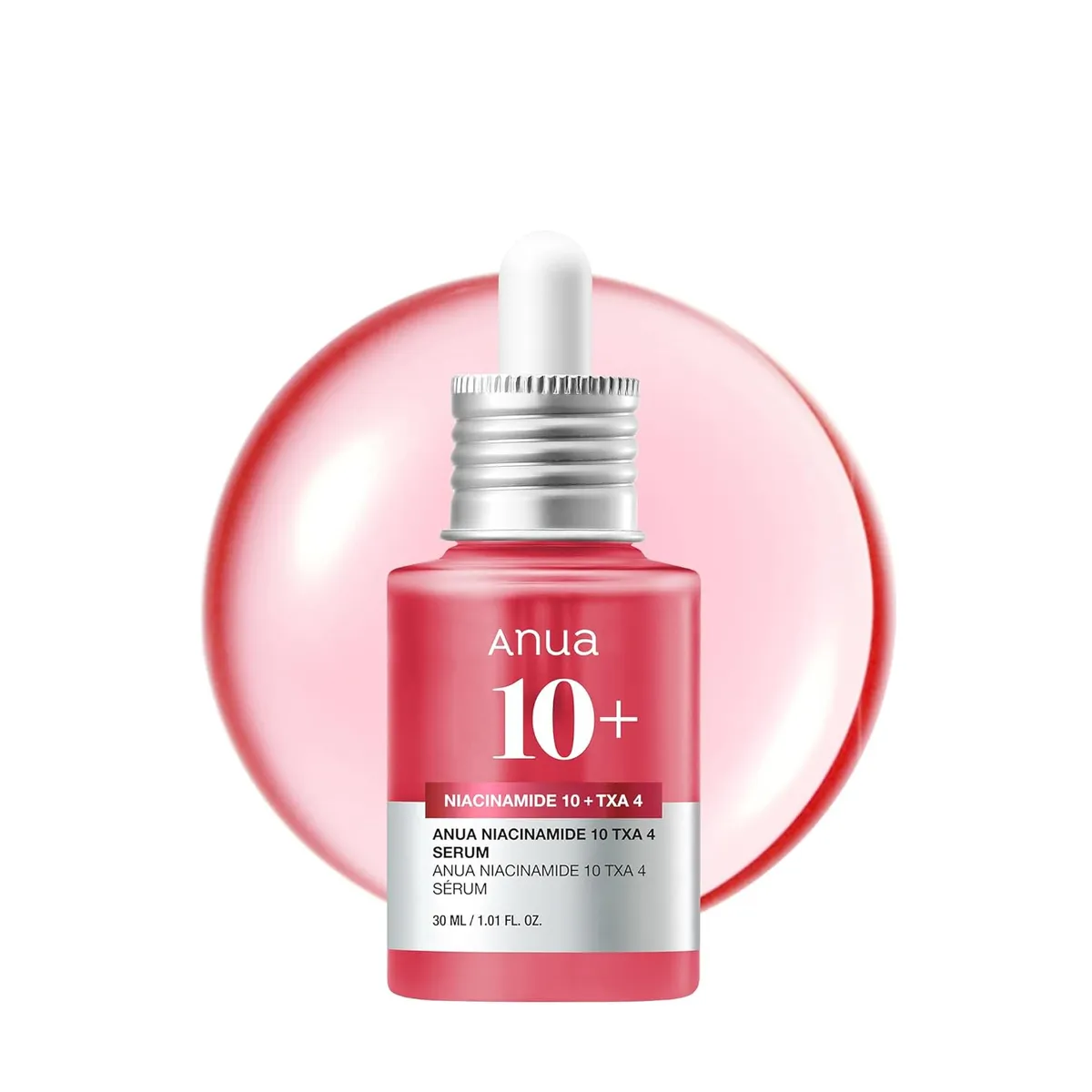
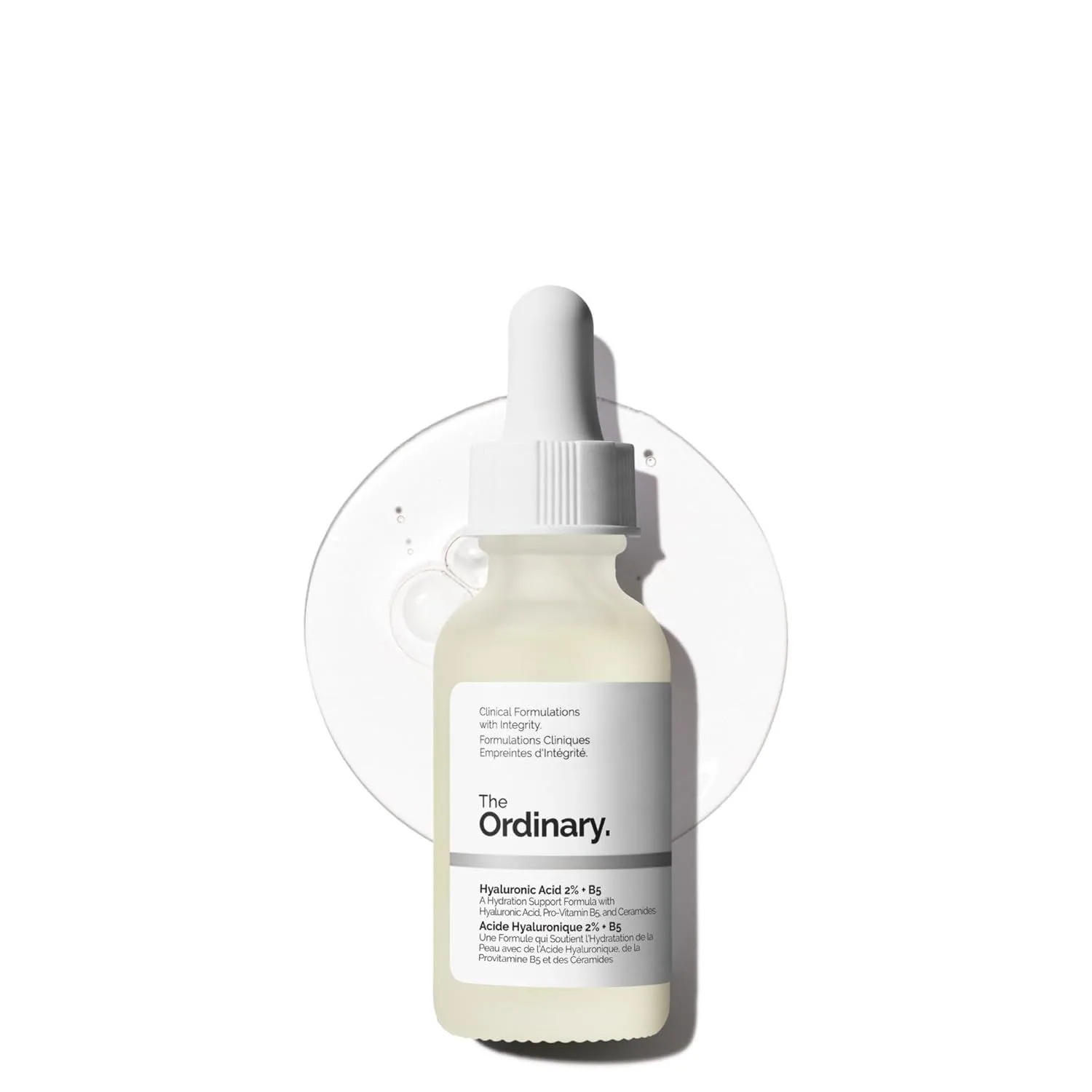
At a Glance
| Feature | Anua Niacinamide 10% + TXA 4% Dark Spot Serum | The Ordinary Hyaluronic Acid 2% + B5 |
|---|---|---|
| Price Range | Under $25 | Under $25 |
| Size | 30ml / 1.01 fl oz | 30ml / 1 fl oz |
| Best Skin Type | All skin types, especially uneven tone | All skin types |
| Key Ingredient | Niacinamide + Tranexamic Acid | 5 Forms of Hyaluronic Acid + B5 |
| Active Concentration | 10% Niacinamide / 4% TXA | 2% HA complex |
| Texture | Lightweight watery serum | Viscous gel serum |
| Fragrance | Fragrance-free | Fragrance-free |
| See Availability | See Availability |
What Each Serum Actually Does
Anua built this serum around two active ingredients that target pigmentation through separate biological pathways. Niacinamide at 10% inhibits the transfer of melanin from melanocytes to surrounding skin cells — it does not destroy melanin or bleach the skin, but slows the process that makes dark spots visible on the surface. Tranexamic acid at 4% works upstream, reducing the inflammatory signals (particularly plasmin activity) that trigger excess melanin production in the first place. The combination means Anua addresses both the cause and the visible result of hyperpigmentation in a single formula. A hyaluronic acid base keeps the serum hydrating rather than stripping, which matters when you are applying two potent actives nightly.
The Ordinary built its serum around a single concept: multi-depth hydration. Five molecular weights of hyaluronic acid — from high-weight surface plumpers to low-weight molecules that penetrate deeper into the epidermis — create a hydration gradient. Pro-Vitamin B5 (panthenol) supports the skin's natural repair processes and adds a secondary moisture-binding function. Ceramide NP, an unusual inclusion at this price point, reinforces the lipid barrier that prevents water from escaping. The formula is not trying to treat anything. It is trying to make skin hold more water, at every depth, for as long as possible.
This fundamental difference — treatment versus hydration — means comparing them on the same scale misses the point. Anua is medicine for your skin tone. The Ordinary is food for your moisture levels. Both are doing their specific job well, and the right choice depends entirely on which job your skin needs done.
The K-Beauty Multi-Active Philosophy vs Western Single-Ingredient Approach
Anua represents a specific school of Korean skincare thinking: stack multiple active ingredients in precise concentrations to address a concern from multiple angles simultaneously. This philosophy shows up across K-beauty — combination serums, multi-step routines, and formulas that pair actives rather than isolate them. The logic is that skin concerns like hyperpigmentation are complex, involving multiple cellular processes, and a single active ingredient can only interrupt one pathway at a time. Two pathways interrupted means faster, more complete results.
The Ordinary sits on the opposite end of that spectrum. The brand's entire identity is built on ingredient isolation — one serum, one job, one primary active at a transparent concentration. Their HA serum does include five forms of the molecule plus B5 and ceramide NP, but all of those ingredients serve the same goal: hydration. There is no secondary treatment objective. This approach gives users complete control over their routine because each product does exactly one thing, and layering conflicts are predictable.
Neither philosophy is superior. The K-beauty multi-active approach works best when you have a specific, targeted concern (dark spots, redness, texture) and want a single product to address it thoroughly. The Western single-ingredient approach works best when you want modular control — swapping individual products in and out of your routine without worrying about interaction effects. Your preference depends on whether you think about skincare as targeted intervention or modular assembly. Anua users tend to be problem-solvers. The Ordinary users tend to be system-builders.
Dark Spot and Tone Correction
This is not a close category. The Ordinary HA has zero brightening ingredients. It does not target melanin production, melanin transfer, or post-inflammatory pigmentation. Hyaluronic acid plumps the skin, which can make pores look smaller and skin look temporarily smoother, but that surface-level plumping does nothing to address the underlying pigmentation that creates uneven tone. If dark spots are your concern, The Ordinary HA is irrelevant to the conversation.
Anua, by contrast, was designed for exactly this purpose. The 10% niacinamide concentration matches the level used in clinical studies showing visible reduction in hyperpigmentation over 8-12 weeks. At 4%, the tranexamic acid is strong enough to inhibit plasmin-driven inflammation without triggering the irritation that higher concentrations can cause. User reviews on Amazon — across 13,100+ ratings at 4.3 stars — consistently report visible fading of post-acne marks within 6-8 weeks, with stubborn melasma responding more slowly but still improving by month three. The dual-pathway approach outperforms either niacinamide or tranexamic acid used alone because it addresses pigmentation at two different biological stages.
For anyone comparing these two products specifically because of uneven skin tone: the answer is Anua, and it is not close. The Ordinary HA is a fine serum, but it was never built to compete in this category. Our full Anua Niacinamide + TXA review breaks down the brightening timeline in more detail.
Pure Hydration Performance
The Ordinary built one of the most effective hydration serums on the market by solving a problem most HA serums ignore: molecular weight distribution. Standard hyaluronic acid serums use one or two molecular weights, which means they hydrate at one or two skin depths. The Ordinary uses five — from high-weight molecules that sit on the surface and prevent water loss, down to low-weight molecules small enough to reach the deeper epidermis. The result is hydration that does not just make skin feel wet on top but actually increases water content at multiple levels.
The Pro-Vitamin B5 (panthenol) in The Ordinary's formula adds a repair dimension that pure HA serums lack. Panthenol supports the skin's natural healing processes and binds additional moisture, acting as both a hydrator and a mild anti-inflammatory. The inclusion of Ceramide NP — a lipid that reinforces the moisture barrier — is unusual at this price point and shows a thoughtfulness in the formulation that goes beyond dumping HA into a bottle. This three-pronged approach (multi-weight HA + panthenol + ceramide) creates a hydration system rather than a single-ingredient product.
Anua includes hyaluronic acid in its base, but as a supporting player, not the star. The HA in the Anua formula keeps the serum from being drying (a risk when applying concentrated actives nightly) and adds a baseline layer of hydration. It is not multi-weight, not multi-depth, and not designed to compete with a dedicated hydration serum. If your skin is dehydrated — tight after cleansing, flaky despite moisturizing, unable to hold moisture through the day — The Ordinary HA is purpose-built for exactly that problem.
Texture, Application, and Routine Fit
Anua's watery serum texture is one of its strongest practical advantages. It absorbs in under 30 seconds, leaves no film or tackiness, and layers cleanly under any moisturizer, sunscreen, or additional serum. The lightweight feel makes it comfortable for morning and evening use without adjusting the rest of your routine. K-beauty formulations tend to prioritize fast absorption because multi-step routines demand it — if every product takes two minutes to sink in, a seven-step routine becomes a 15-minute commitment. Anua clearly optimized for speed.
The Ordinary HA has a thicker, more viscous gel texture that divides users. Applied correctly — to damp skin, in a thin layer — it absorbs in about 60 seconds and leaves a slight dewy finish. Applied to dry skin or in excess, it sits on the surface, stays tacky, and pills under the next product. The technique sensitivity is a real drawback. First-time users who apply it like any other serum often have a bad experience and blame the product when the issue is application method. The Ordinary does not include clear application instructions on the packaging, which contributes to the negative texture reviews.
For routine integration, Anua is the easier product. It plays well with every other serum, moisturizer, and sunscreen we have tested alongside it. The Ordinary HA requires more attention to application technique and product compatibility. Silicone-heavy moisturizers are the most common source of pilling complaints. If your routine includes dimethicone-based products, you may need to wait longer between layers or reduce the HA amount. Once you have the technique down, The Ordinary HA works smoothly. The learning curve exists, but it is short.
Value and Cost Per Use
Both serums sit in the budget tier — Anua at budget-friendly pricing and The Ordinary at budget-friendly pricing. The price gap between them is small in absolute terms, making this less about affordability (both are affordable) and more about what you get per dollar. The Ordinary edges ahead here because its formula delivers the most effective multi-weight hyaluronic acid available at any price, not just at budget pricing. You are not making a compromise by choosing The Ordinary over a more expensive HA serum — the formula genuinely competes with products priced five to ten times higher.
Anua's value proposition is different. At its price point, you get two clinical-grade actives (niacinamide at 10%, tranexamic acid at 4%) in a single serum — a combination that would cost more if you bought separate niacinamide and TXA products and layered them. The dual-active approach reduces the number of products in your routine, which saves both money and time. From a pure cost-per-active-ingredient perspective, Anua delivers more treatment power per dollar than many serums at double or triple the price.
Both bottles contain 30ml, which lasts 2-3 months at recommended usage (one application per day, pea-sized amount). The cost-per-day difference between them is negligible — we are talking about pennies. If you buy both and use them in the same routine (HA first, Anua second), the combined daily cost is still lower than a single mid-range serum. Our full Anua review covers how the dual-active formula stacks up against single-ingredient alternatives at various price points.
Real-World Evidence and User Base
The Ordinary HA has 95,000+ Amazon reviews at a 4.4-star average. That is not a product review count — that is a dataset. At that volume, you can predict with high confidence how the serum will perform on virtually any skin type, in any climate, at any age. The review distribution shows a massive clustering at 5 stars with a thin tail of 1-star reviews, most of which cite texture complaints rather than efficacy failures. When a product has this much data behind it, the risk of an unexpected bad reaction is vanishingly small.
Anua's 13,100 reviews at 4.3 stars represent a strong but smaller dataset. The product is newer to the Western market (K-beauty serums typically build their initial review base in Korea before Amazon adoption accelerates). The reviews are enthusiastic — users with persistent dark spots describe visible improvement that previous products failed to deliver. The most common praise centers on the dual-action approach and the lightweight texture. The most common criticism is the opaque bottle making it hard to gauge remaining product, and a subset of users reporting mild tingling during the first week (likely from the tranexamic acid, which settles after skin adjusts).
The evidence gap is real but context-dependent. The Ordinary has seven times more reviews because it has been available longer, costs less (lower purchase barrier), and appeals to a broader audience (everyone needs hydration, not everyone has dark spots). Anua's smaller review count does not indicate a lesser product — it indicates a more targeted product with a narrower buyer profile. Both have strong enough data to trust the results.
Ingredient Interactions and Safety
Niacinamide and hyaluronic acid are among the most compatible active ingredients in skincare. There is no pH conflict, no neutralization risk, and no increased irritation when layered. This is why using both Anua and The Ordinary HA in the same routine works — the ingredients do not compete or cancel each other out. Niacinamide actually benefits from a hydrated skin environment because its absorption into the stratum corneum improves when the skin is moisture-rich. Applying HA first creates that environment.
Tranexamic acid is the ingredient that requires more attention. At 4%, it is well-tolerated by most skin types, but it can cause mild irritation when combined with other exfoliating acids (glycolic, salicylic, lactic) in the same routine step. If your routine includes chemical exfoliants, apply them on alternate nights from the Anua serum rather than layering both in one session. Tranexamic acid and retinol can be used in the same routine — TXA in the morning, retinol at night — without conflict, and the combination accelerates dark spot correction because they work through entirely different mechanisms.
The Ordinary HA has no interaction concerns with any common skincare ingredient. It is a humectant, not an active, and it functions as a hydration vehicle regardless of what else is in the routine. The only practical caution is applying it to damp skin in arid climates. In very low humidity (below 30%), high-weight hyaluronic acid can pull moisture from the deeper skin layers if there is not enough environmental humidity to attract — moisturizer on top prevents this. Our Ordinary HA review covers the full breakdown on pairing hyaluronic acid with other actives in a layered routine.
Skin Type Match
Oily and acne-prone skin: Anua is the stronger pick. Niacinamide at 10% helps regulate sebum production — not drying the skin, but reducing the excess oil that contributes to breakouts and enlarged pores. The watery texture adds zero heaviness. The Ordinary HA's viscous gel can feel too heavy on oily skin, especially in summer, and the tackiness exacerbates the surface shine that oily skin types are already managing.
Dry and dehydrated skin: The Ordinary HA addresses the core problem directly. Multi-weight hyaluronic acid pulls water into the skin at multiple depths, and the ceramide NP reinforces the barrier that keeps it there. Anua's lightweight formula provides some hydration through its HA base, but it is not designed to solve dehydration. Dry skin types should consider The Ordinary HA as a foundational step and add Anua only if dark spots are a concurrent concern.
Combination skin: Both work well, but the choice depends on which concern dominates. If the oily T-zone comes with post-acne marks, Anua addresses both sebum regulation and pigmentation. If the dry cheeks need moisture while the T-zone stays balanced, The Ordinary HA applied to damp skin absorbs more evenly across mixed skin zones. For combination skin users with both concerns, the two-serum layering approach handles everything.
Sensitive and reactive skin: The Ordinary HA is the safer first choice. It has no actives that trigger irritation pathways — it is pure hydration with barrier support. Anua's 4% tranexamic acid can cause mild tingling in the first week for sensitive users, and the 10% niacinamide, while generally well-tolerated, sits at the upper limit for reactive skin. Start with The Ordinary HA alone, and introduce Anua on alternate nights after your skin has stabilized.
Who Should Pick Which
Get Anua Niacinamide + TXA Serum If...
- Dark spots, post-acne marks, or melasma are your primary skin concern — this is the product's entire reason for existing
- You want a multi-active treatment in one step rather than buying and layering separate niacinamide and TXA products
- Your skin is oily or combination and you want something that absorbs instantly without residue
- You are interested in K-beauty's targeted treatment approach and want a specific product that demonstrates why the philosophy works
- You already have a hydration step covered and need to add a brightening treatment to your existing routine
Get The Ordinary HA 2% + B5 If...
- Dehydration is the main issue — tight skin after cleansing, flaking, inability to hold moisture through the day
- You want the most effective pure hydration serum available without spending more than the cost of a coffee
- Sensitive skin rules out treatment serums for now, and you need a zero-irritation foundation step
- You prefer The Ordinary's modular approach — one product, one job, complete control over your routine
- You are building a skincare routine from scratch and need the most universally effective first serum
The Layering Verdict
This comparison does not produce a single winner because these serums were never competing. Anua Niacinamide + TXA is a treatment product — it exists to fix a specific problem (uneven tone, dark spots, hyperpigmentation) using two clinically validated active ingredients at effective concentrations. The Ordinary HA 2% + B5 is a hydration product — it exists to solve dehydration through multi-depth moisture binding. Asking which is better is like asking whether sunscreen or moisturizer is more important. They do different things. Both matter.
If forced to choose one, let your skin tell you. Look at your face after cleansing, before applying anything. If the first thing you notice is dryness, tightness, or flaking — start with The Ordinary HA. If the first thing you notice is uneven patches, dark marks, or dullness that moisturizing does not fix — start with Anua. If both problems are present, buy both. At their combined price point, you are still spending less than a single mid-range serum, and you are addressing two separate concerns with two purpose-built formulas instead of hoping one product can do everything.
The smartest move for most skincare routines is to own both. The Ordinary HA goes on damp skin right after cleansing. Anua layers on top once the HA absorbs. Moisturizer seals it all in. Three products, three jobs, three minutes. That is efficient skincare — not the kind that looks good on a shelf, but the kind that produces results month after month.
Frequently Asked Questions
Can I use Anua Niacinamide + TXA and The Ordinary HA together?
Yes — and the combination works well. Apply The Ordinary HA to damp skin first as your hydration layer, wait 30-60 seconds for absorption, then apply the Anua serum on top as your treatment step. The hyaluronic acid creates a hydrated base that helps the niacinamide and tranexamic acid absorb more evenly. Many K-beauty routines use this exact layering logic: hydration first, actives second.
Which serum works faster on dark spots?
Anua is the only option here — The Ordinary HA does not target pigmentation at all. The niacinamide in Anua inhibits melanin transfer to skin cells while the tranexamic acid reduces inflammation-driven pigmentation. Most users see visible fading of post-inflammatory marks within 6-8 weeks of consistent nightly use. Stubborn melasma patches may take 3-4 months.
Why does The Ordinary HA pill under my moisturizer?
Pilling happens when the viscous gel formula sits on top of the skin instead of absorbing. Two fixes: apply to damp skin (never dry — HA needs water to work with, not pull from), and use less product. A pea-sized amount for the full face is enough. If pilling persists, check your moisturizer — silicone-heavy formulas are the most common culprit for HA pilling.
Is 10% niacinamide too strong for sensitive skin?
For most people, no. The 10% concentration sits at the upper range of what clinical studies consider effective without irritation. Anua buffers it with hyaluronic acid and a lightweight serum base that reduces the flushing some people experience with high-dose niacinamide. If you have confirmed niacinamide sensitivity (redness within minutes of application), start with every-other-day use for the first two weeks. The 4% tranexamic acid is more likely to cause sensitivity than the niacinamide.
Which has a better texture for oily skin?
Anua wins here. Its watery serum texture absorbs in under 30 seconds and leaves no residue. The Ordinary HA has a thicker, gel-like consistency that can feel tacky on oily skin, especially in humid climates. If you have oily skin and want both hydration and brightening, applying a thin layer of The Ordinary HA followed by Anua keeps the routine lightweight without the sticky finish.
Do either of these serums replace a moisturizer?
Neither replaces a moisturizer. The Ordinary HA is a humectant — it attracts and holds water but does not seal it in. Without an occlusive layer on top, the hydration evaporates. Anua is a treatment serum with no occlusive properties. Both should be followed by a moisturizer, especially in dry climates or during winter months when trans-epidermal water loss increases.
See Both Products in Action

